Certain directors are so famous – or infamous – for crafting certain films that the spectator constructs a certain idea concerning what a certain director should deliver. While Takashi Miike has done everything is his power to escape his past, its shadow – the irresistible mix of shocking horror (Audition (1999)), brutal violent pieces (Ichi The Killer (2001)) and eccentric experiences (Visitor Q (2001), The Happiness of the Katakuris (2001)) – continues to haunt him up until this day.
In the case of Blazing Fists – a coming-of-age drama inspired by MMA Fighter Asakura Mikuru’s autobiographical novel Street Legend, spectators will surely expect to see some of the master’s signature indulgence in violence. However, such pre-existing expectations will not only set the spectator up for disappointment but also hinder him in appreciating Miike’s approach to the struggle of delinquent subjects to inscribe himself within the societal field.
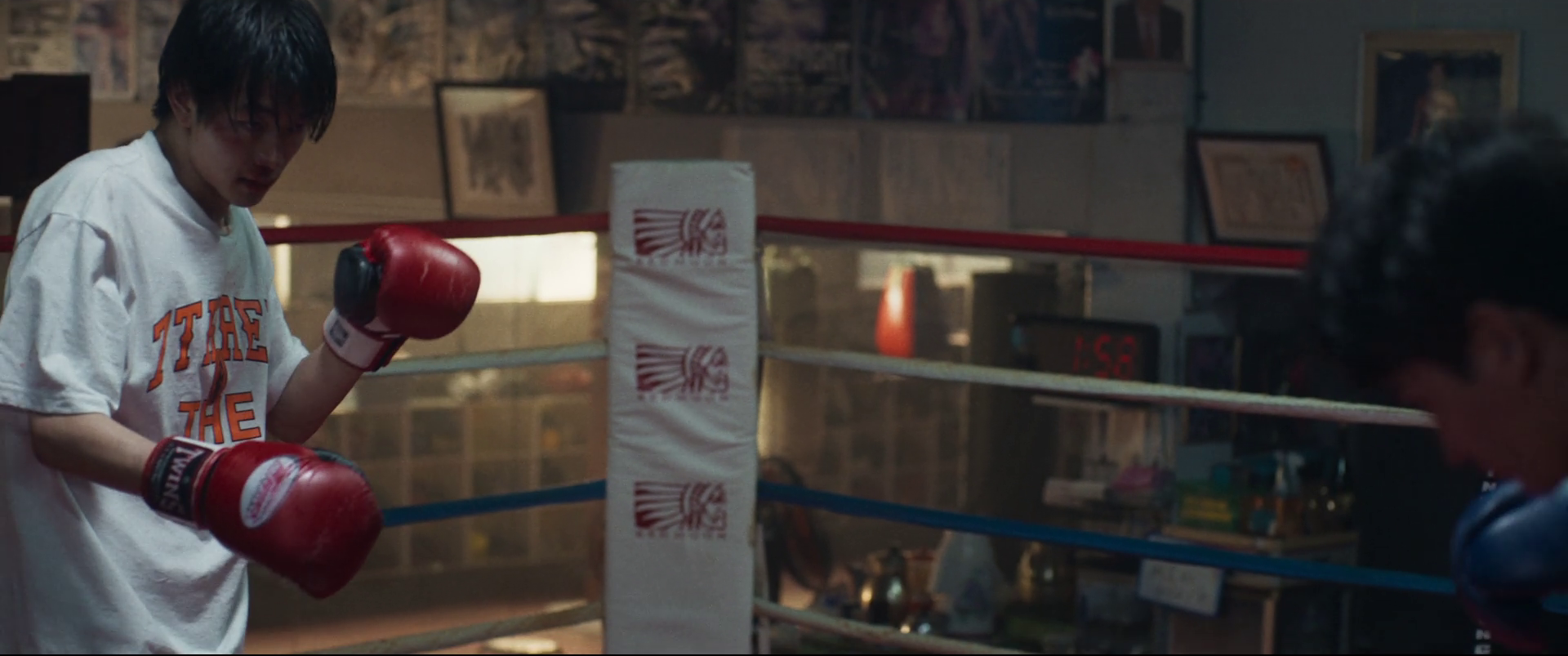
Takashi Miike’s coming-of-age commences with the encounter between Ryoma Akai (Kanato Yoshizawa) and Ikuto Yagura (Danhi Kinoshita). While Ryoma fully intended to quit violence after his discharge from youth detention, the encounter with Ikuto and the subsequent lecture by Mikuru Asakura makes him change his plan. Rather than laying low – radically breaking away from violence, he decides, just like Ikuto, to train for Asakura’s famous Breaking down event.
Not much later, Ryoma discovers, much to his shock, that Ikuto has been wrongfully incarcerated for a crime that he committed. Fear for being reduced to a bloody pulp, he stays silent. Carrying this secret, he trains together with Ikuto, whose resolve to enter the event keeps him on the straight path. Yet, the past is out to test their resolve.
With Blazing Fists, Miike does not offer the spectator a conventional boxing-drama, but a drama that explores the differences between two kinds of violence. He opposes brawling as a narcissistic defence or phallic demonstration of one’s ego with boxing as a formative act that allows the subject to rid himself of his inner and external demons and inscribe himself constructively within the societal field.
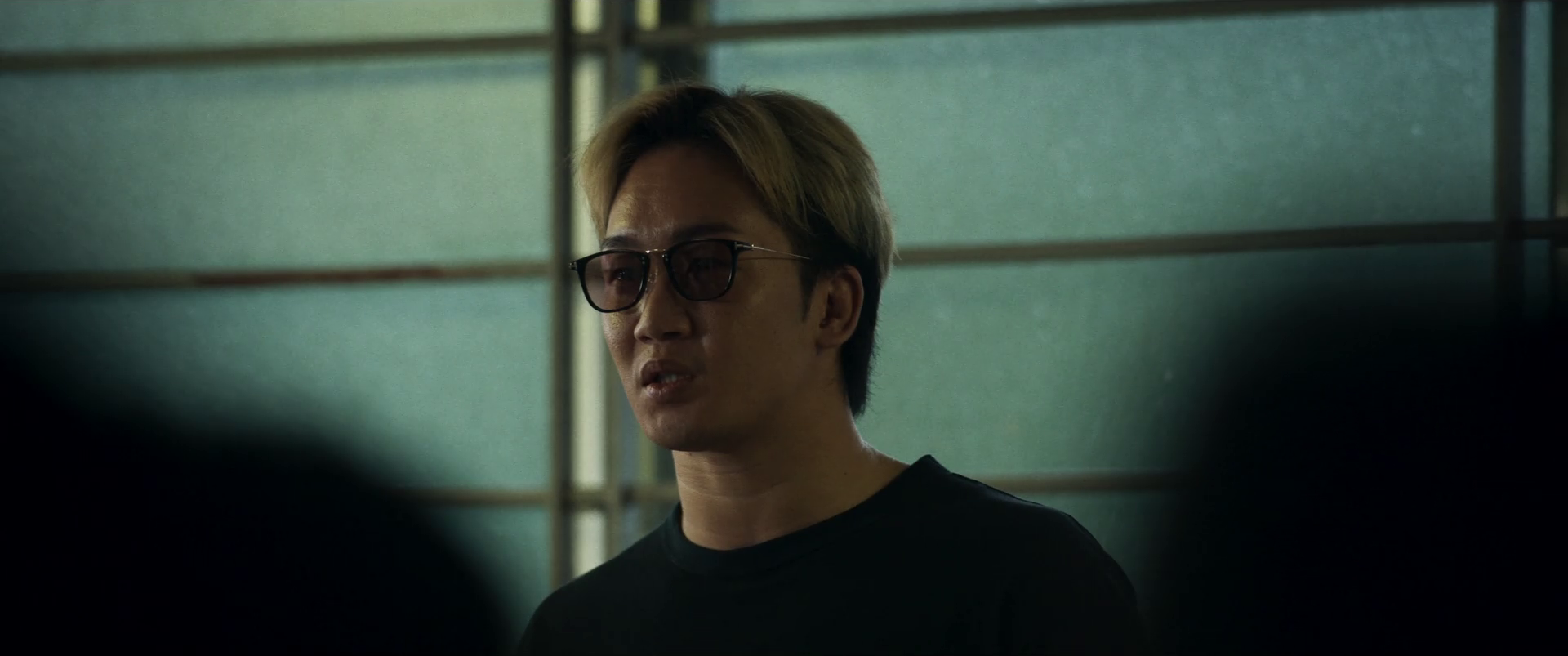
Miike explores this difference upon a frame structured around the sociological fact that criminal transgressions as well as parental sins are often exploited by others to de-subjectify the subject and utilize him to self-satisfy his sense of moral superiority. This interactional dynamic is highlighted in Blazing Fists by confronting the spectator with the contrast between the idea the societal Other has concerning the aim of youth detention – i.e. one is given the chance to rehabilitate oneself and reassess one’s future path – and the reality of the Other/other who is tasked into realizing this idea and give to this space of rehabilitation.
The concrete other these youths are often faced with is shaped by the problematic discourses concerning the origin of crime and the possibility of rehabilitation. Within Blazing Fists, Hakamada (Wataru Ichinose) exemplifies such Other/other, a subject whose presence perverts the aim of the youth detention. Hakamada, misguided by a radical disbelief in the possibility of rehabilitation, trots around the juvenile centre with disdain for the incarcerated. He reduces the delinquent subject to mere trash without realizing that his joyous reduction – this self-serving moral masturbation he subjects the other to – is one of main dynamics pushing young subjects to self-fulfill the criminal prophecy imposed by certain discourses within the societal Other. To put it differently, he does not (want to) realize that the struggle of the subject to get his shit together is intrinsically linked with being subjected to an Other who erases, for his own pleasure, the subject’s attempt to inscribe himself constructively into the societal field.
Hakamada’s abuse of power also indirectly highlights – a truth also verbalized by Ryoma – that a criminal misstep, a transgression of the law, clings socially to the subject (Narra-note 1, psycho-note 1, General-note 1). While the lack of a criminal record makes it easier for the youthful subject to re-inscribe himself in the societal field, the ‘narrative’ of transgression does colour the way the others of his immediate environment approach and interact with him.
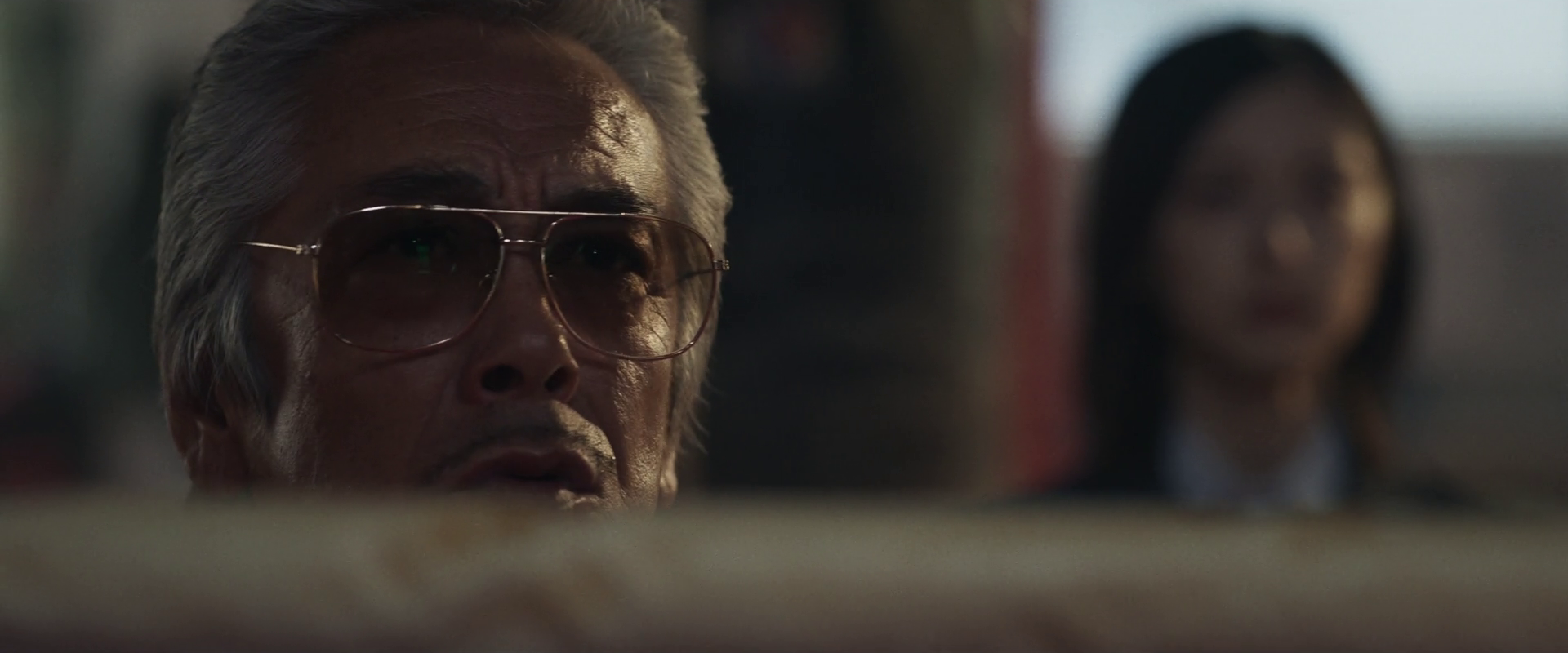
One subject who does believe in the process of rehabilitation is Asakura Mikuru – a mixed-martial artist whose own passage in juvenile detention saved him from joining the yakuza and paved the way to his career as mixed martial artist. His speech highlights that one of main problems these troubled youth have is the inability to dream, the inability to image a certain symbolic space for themselves in the societal field beyond the volatile imagery dynamic of ego versus alter-ego. It is not difficult to imagine that the disdaining signifiers from the Other pushes subjects into this prison volatile prison of imaginary dynamics.
The effect his speech has on the youthful subjects might not be evident at first glance. While he presents himself as an alter-ego, someone whom they can use as a mirror – “I made it happen, you can too”, he also presents himself as a different symbolic Other, an Other that trusts. If delinquency is a response to an Other who fails the subject and violence a tool to safeguard one’s frail ego, the encounter a different Other puts the door to a different path within the societal field ajar, a path that, by granting the subject a signifier other than delinquent, allows him to stow the tool of protective violence away. The only way Ikuto can hope to inscribe himself positively into the societal field is, in other words, by attacking this enjoying Other and smashing his reductive and disdaining pre-conceptions to pieces with his punches and kicks.
The narrative structure of Blazing Fists is built around teasing the spectator with violence that will burst forth in the finale. Miike teases us with a violent confrontation with the Krishna gang led by Mido (Gackt), the coming breaking-down event, and Ikuto’s discovery of Ryoma’s unvocalized truth. With this kind of structure, Miike puts a lot of weight on his finale. Whether Blazing Fists delivers a satisfying emotional pay-off, thus, depends on his ability to meet or surpass the expectations aroused by the narrative structure. The a-dramatic way Miike teases the spectator – through the signifier rather than by slowly increasing tension via the composition – puts even more weight on the finale. Miike’s choice to avoid overt drama might not sit well with some spectators (Drama-note 1). However, the lack of drama is in line with the film’s focus on overcoming external hurdles to realize one’s dream. Unlike characters in other boxing narratives, the main characters of Blazing Fists do not need to overcome any internal doubts or struggles: they have their goal set from the beginning.
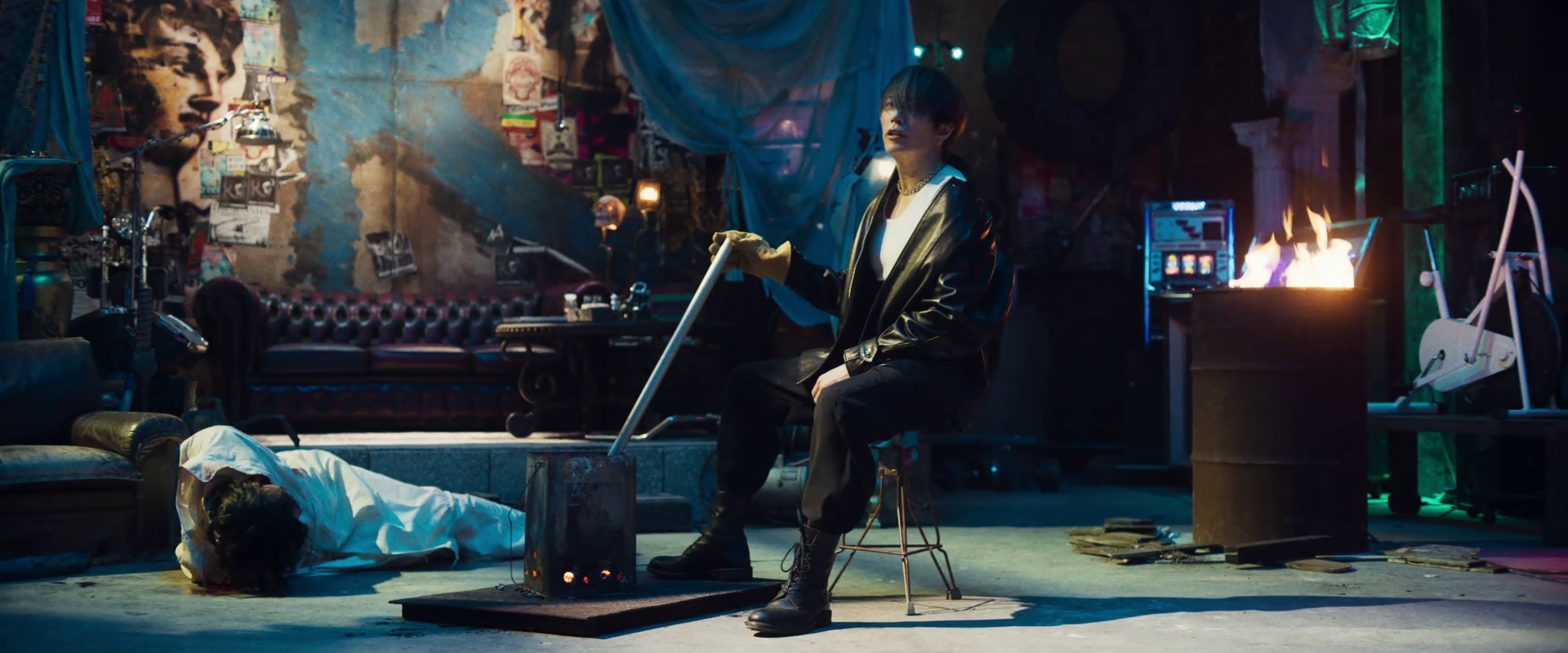
Given the fact that Miike takes a more a sociological approach to his coming-of-age sports-drama, it does not come as a big surprise that there is a big emphasis on interactional drama and that, to allow the interactional flow of the signifier to come to its full right, he relies heavily on static shots within his composition.
Miike relies on static shots and restraint tracking dynamism to frame many moments of violence within Blazing Fists. Be doing so, he does not merely push the spectator into the position of a passive bystander – we do not truly partake in the violence, but also evocatively signals that we should remain disinvested in this kind of ‘transgressive’ violence, a violence structured around the imaginary couple ego and alter-ego, a kind of violence that, to paraphrase Ikuto, hurls the subject downhill toward the cliff – the cliff being the delinquent fringes of society and the ravine that lies beyond the path towards one’s own societal destruction.
This reading is corroborated by the different way in which Miike frames the sparring and the boxing. He frames the boxing bouts more intimately and utilizes cruder dynamism to breathe tension within the rhythm of the fights. With this compositional shift, Miike does not merely seek to emphasize the crude viscerality of the sparring, but also signal that there is a kind of violence – the violence of the ring – that aims to go beyond the imaginarily, beyond mere narcissistic pleasure-seeking – I’m stronger than you, I have the phallus more than you – and vengeful repairing of the imaginary injuries inflicted by rivals (Psycho-note 2). Moreover, by framing the boxing bouts more intimately, Miike also seeks to pull the spectator into the dramatic emotionality of boxing and heighten his investment in Ryoma, Ikuto and Jun’s attempt to inscribe themselves constructively within the societal field through boxing (Music-note 1).
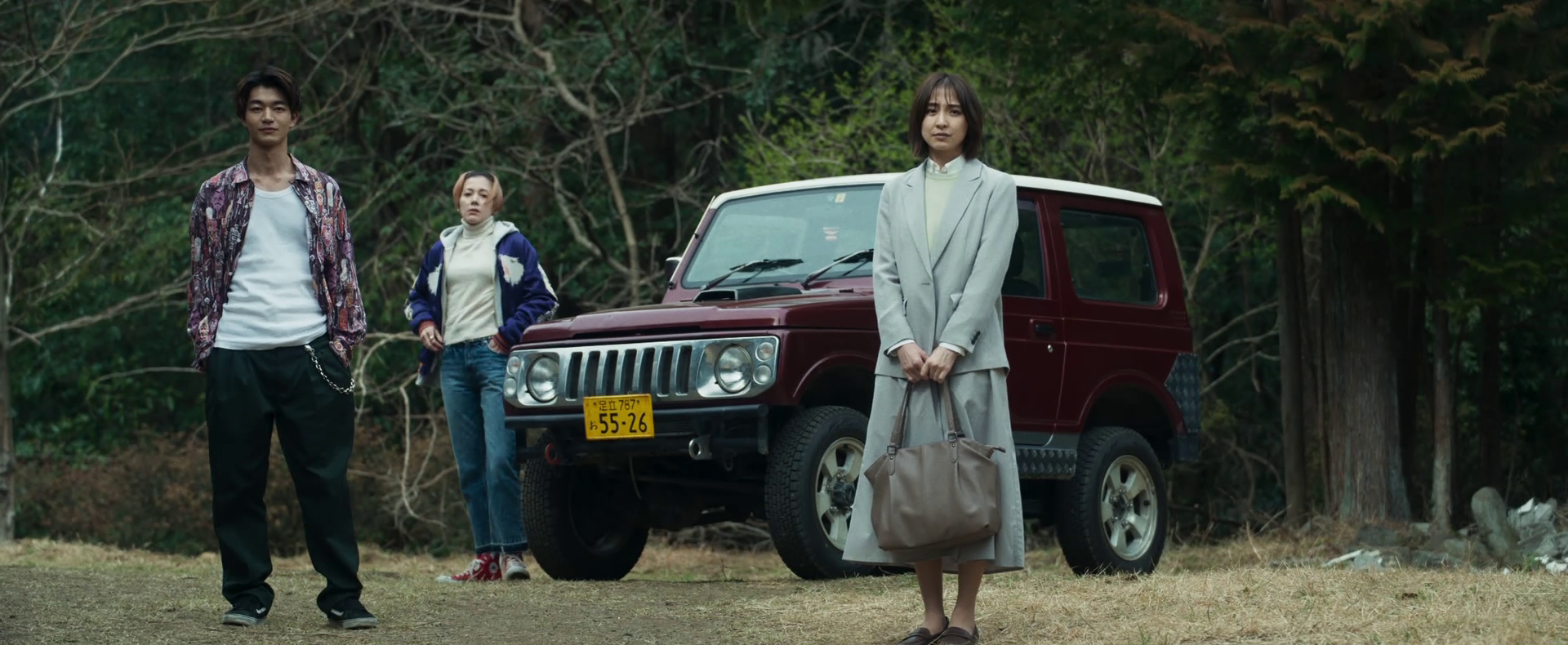
The spectator will also notice that Miike fluently interweaves moments of shaky dynamism into his composition. Contrary to one might except, he does not utilize these sudden infractions of crudeness to prepare the spectator for the brutal violence that is yet to come, but merely to infuse a quantum of intimate genuineness into Ryoma and Ikuto’s interactions and subtly emphasize that their fictional narrative is inspired by the subjective truth of Asakura Mikuru.
Another way Miike signals the autobiographical inspiration of his filmic narrative is by using a voice-over to orient the spectator. While the use of voice-over in film can be quite controversial – a sign of weak writing that complicates visual storytelling, it works extremely well in Blazing Fists. The sparse use of voice-over does not merely allow Miike to create a clear narrative structure that smoothens time-gaps, but also engage the spectator into the narrative as Ryoma’s speech directly addresses the spectator – we are the silent receiver of his personal story.
Those who are expecting a boxing-epic by Takashi Miike might feel sorely disappointed by Blazing Fists. Miike does not aim to celebrate the art of the boxing, but to show the difference between violence that merely seeks to support the ego – the imaginary phallic braggadocio – and violence that, while pleasing the ego, also produces a place for the subject within the societal field. Blazing Fists is a drama of hope, a narrative that shows, in a satisfying manner, that a subject can materialize himelf within in the ring and by punching and kicking the demeaning discourses concerning criminality within the Japanese Other into shreds.

Notes
Narra-note 1: To abuse Ikuto, Hakamada readily exploits the fact that his father is the pending trail for committing murder.He utilizes the supposed transgression the father committed to impose his belief that he will never amount to anything.
This moral tension returns much more dramatically in the conflict between kickboxer Joey Sadoshima (Shuzo Ohira), the son of the prosecutor in charge of the case against Ikuto’s father, and Ikuto, who believes in his father’s innocence. The misplaced moral superiority he approaches Ikuto with is exemplified in his statement: “I’ll show you the kind of scum you are”.
This imagined superiority is misplaced because the spectator knows very well that the true ‘scum’ within the narrative is the prosecutor who puts conviction over justice, image over truth. This is, in fact, a different way in which Blazing Fists highlights the negative effects of the imaginary, the structuring effect the image (ego as well as alter ego) has on our interactions with others.
Psycho-note 1: Ikuto does not only need to overcome the consequences of his wrongful incarceration, but also escape the dark shadow of the crime his father is accused off. To put it differently, the societal gaze he is subjected to – whether true or imagined – is distorted by the fabricated narrative that turned his father into the murderer of his female employee. The other subject can only see him through the lens of his father’s ‘supposed’ criminal offence.
Jun Kishomaru is, in his own way, a product of the negative shift in the Other/other’s perception of him due to the societal registration of the ‘sin’ of the parental Other.
General-note 1: Spectators who want to read more about the tensions that define the Japanese juridical apparatus should check out our in-depth review of Fujii’s Faceless (2024). Fujii’s film explores the dangerous consequences of prosecutors putting “image and message over justice (and) swift convictions over factual truth”.
Drama-note 1: Miike also add some highhearted touches into the unfolding of the narrative. While these moments are unnecessary, these fleeting false notes of light-heartedness do not derail the narrative nor sabotage the spectator’s ability to enjoy the narrative.
Psycho-note 2: Miike rightly shows that, within the sport of boxing, the imaginary dimension can never be erased – rivalry and the thirst to self-assert oneself as ego are ever in play. However, as this imaginary dynamic is contained and regulated by a symbolic structure – i.e. the rules of boxing – the subject can assume a constructive and productive position within the societal field. He can designate himself with the signifier fighter/boxer instead of being forced into suffocating confines of the signifier delinquent.
Miike, moreover, shows that the aim of the rules of boxing and the figure of the referee is to stop the subject from ripping the symbolic frame apart by succumbing to the destructive finality of the imaginary dynamic of rivalry.
Some spectators might feel that the director relies on anime-influences to bring the dramatic flow of the fighting sequences to life on the silver screen, yet such reading disregards the fact that the dramatism aims to directly stage the imaginary phallic braggadocio that structures and organizes gang-violence and boxing.
Music-note 1: There isa variety of musical pieces utilised throughout the narrative: subdued emotional pieces, subtle threatening pieces to temporary heighten the tension and mentally prepare the spectator for the coming violent confrontations, and one cooler musical piece to decorate the training-sequence.
 psychocinema