Introduction
Everyone even remotely interested in Japanese cinema knows the horror-classics Kiyoshi Kurosawa crafted. Of course, such skill is not born in vacuum. It only blossoms when the desiring fire to create is ignited and intensified by outside influences.
Kiyoshi Kurosawa’s second horror film, The Guard From Underground, utilizes the framework of the slasher film and B-movie thrillers of the eighties to challenge himself stylistically and hone the expression of his creative desire. Thanks to Third Window Films, who included this film in their Directors Company Collection, this forgotten film finally deserves the attention it deserves.

Review
One day, art expert Akiko Narushima (Makiko Kuno) hastes herself to Akebono Trading for her first day at her new job at section 12. Once at the door of the company, Mamiya (-), the guard. informs her that such section does not exist in the company. Luckily, when Narushima tells him that the department concerns art sales and acquisitions, he remembers the recent establishment of this section.
Not much later, while classifying some files, Nonomura (Kanta Ogata) asks her is she met Hyodo (Hatsunori Hasegawa) from HR. Despite getting the job due to his recommendation, she must admit that she has never met him. He warns her that he is scary and a weirdo. Mamiya is, later that day, approached by Shirai (-) with the demand to pay him back. When Mamiya introduces him to the new security guard Fujimaru (Yutaka Matsushige), he immediately cowers back. Not that much later, he is murdered.
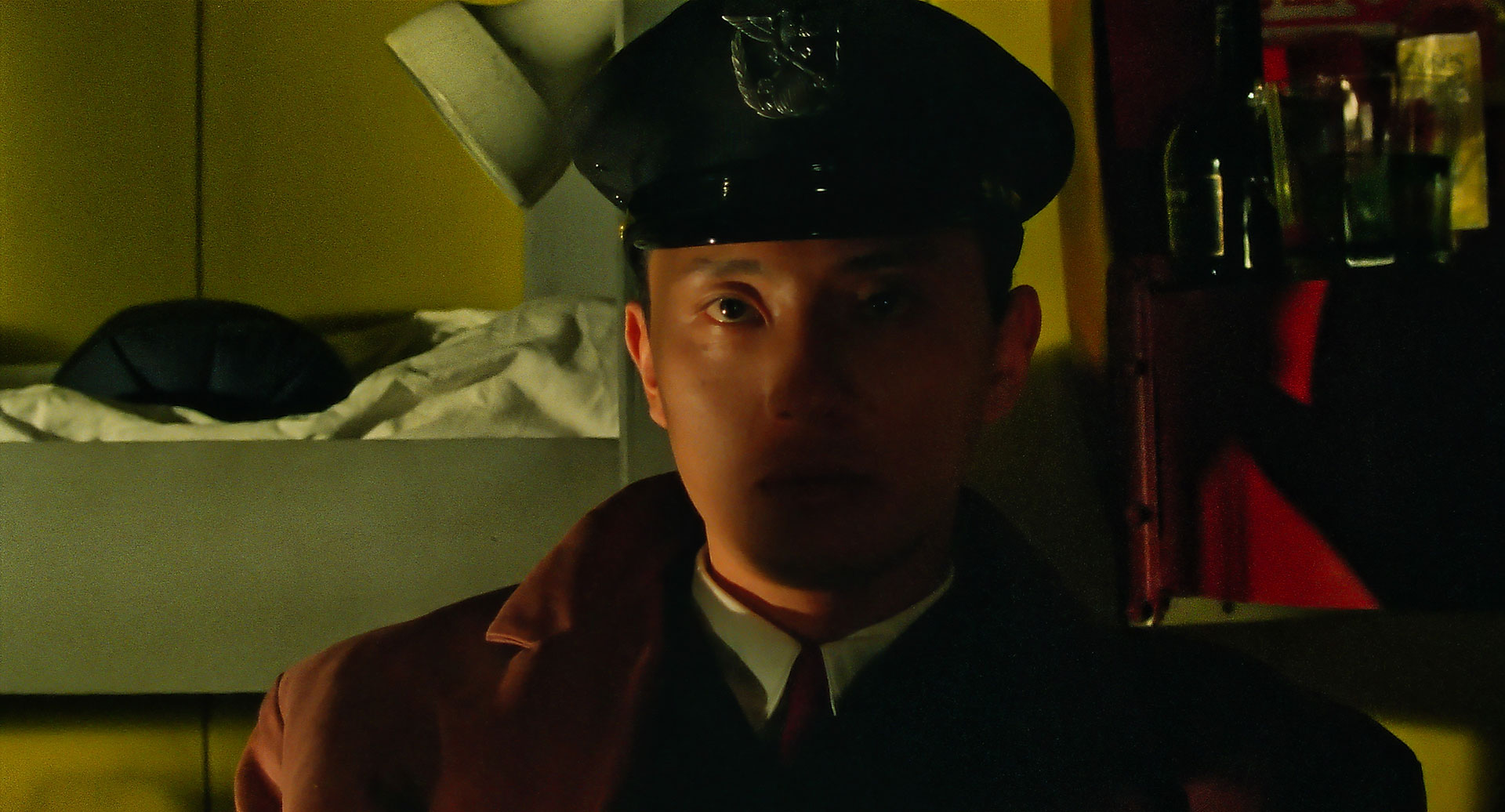
The Guard From Underground is an exercise in exploiting the voyeuristic dimension of cinema and an experiment to exploit the very element that disturbs the scopic field and dislodges the subject subjected to it: the gaze. As the emphasis lies on style and visuals, the spectator should not expect a horror narrative that subverts expectations. Rather, with his narrative, Kurosawa tries to make the gaze effective within the conventional confines of the slasher genre.
Before delving deeper into Kurosawa’s narrative, we need to explain what we mean by using the signifier gaze. In psychoanalysis, the gaze is a stain that confronts the spectator with the opaque nature of the Other’s desire. A subject who finds himself under such gaze is unable to know who or what he is for that Other, what his place is in that gaping desire.
To illustrate the effect of the gaze The Guard From Underground, let’s focus on the bond between Mamiya and Fujimaru. It is quite evident that, despite the formation of a minimal bond, something incalculable structures it. While the appearances of Mamiya’s vengeful wishes are indirectly explained within the narrative, the reason why Fujimaru follows Mamiya’s demands remains opaque to the spectator.
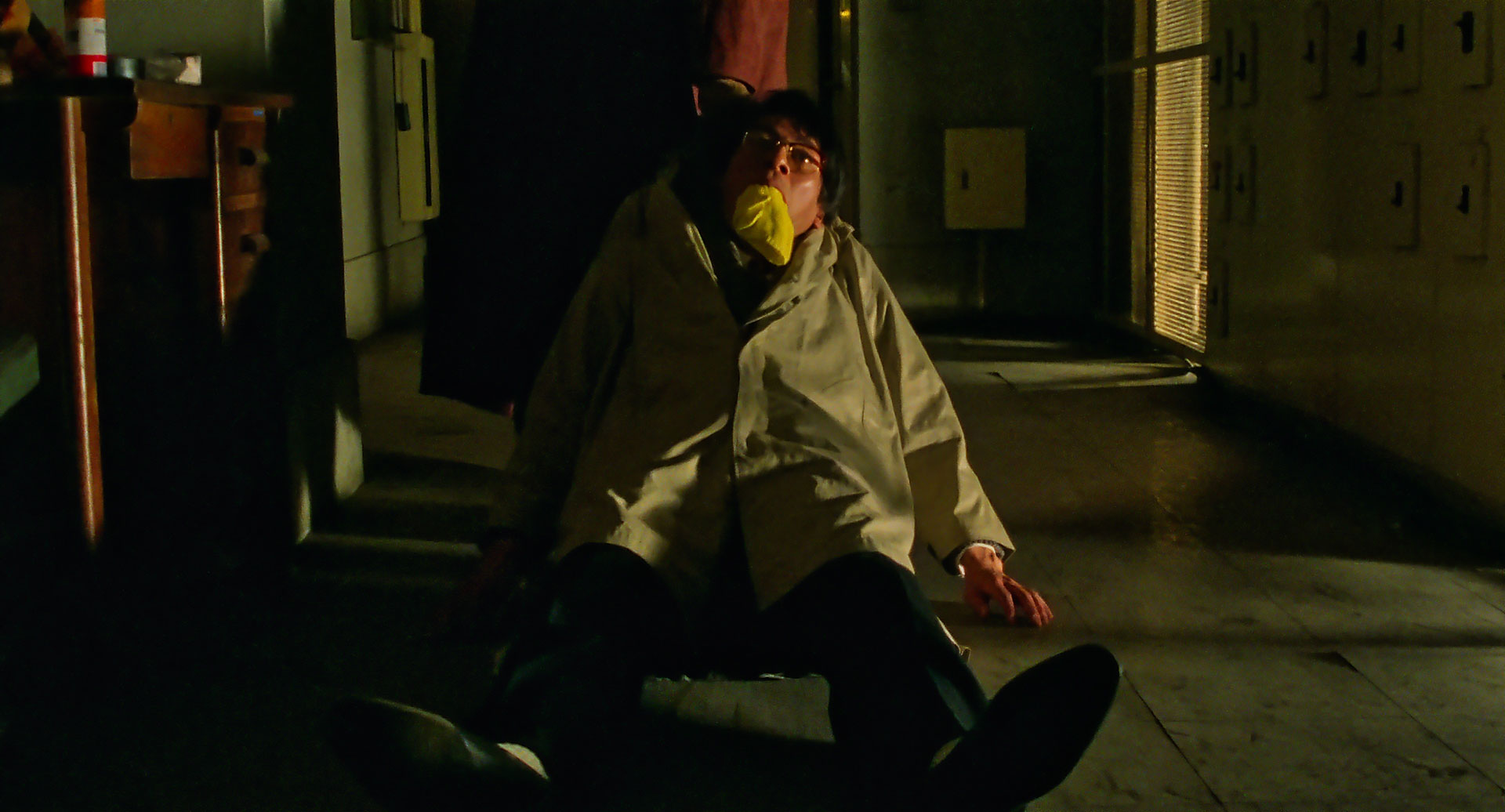
This opaque element only disturbs the spectator – only the voyeuristic spectator can feel the tremble that unsettles the mundane. Why? Because the spectator, unlike Mamiya, cannot erase the opaqueness of Fujimaru’s desire. The act of wishing allows Mamiya to wash away and render himself blind to the unorientable and troublesome element that marks Fujimaru’s subject. With his ego, he succeeds in protecting himself from Fujimaru as gaze/stain.
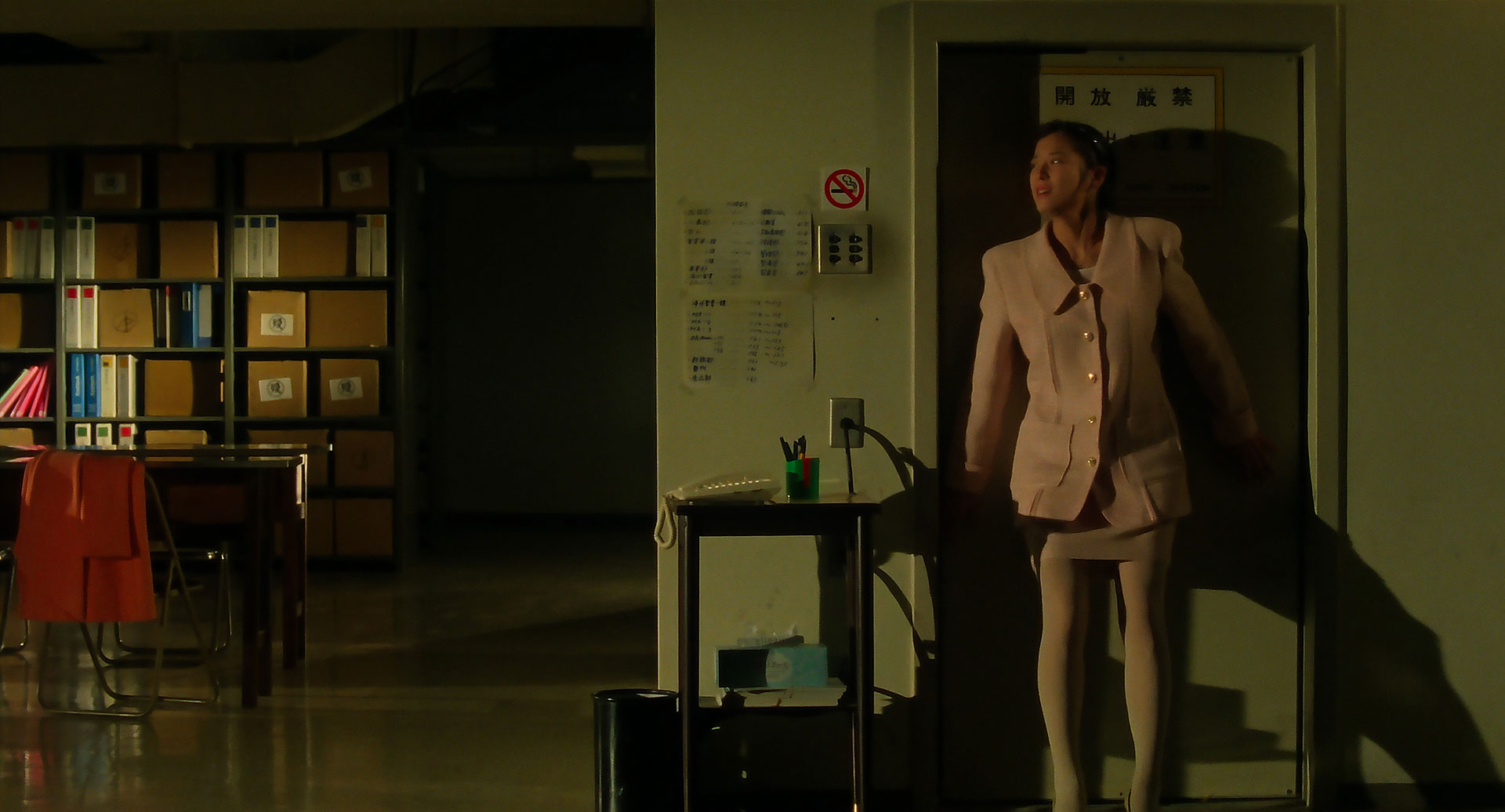
Narushima, for that matter, succeeds in avoiding the disorienting effect of the crack in the mirror, yet the discovery of her picture in Fujimaru’s lair and her lost earring dangling in Narushima’s ear confronts her with the gaze (Narra-note 1). Finding these objects resounds his desire loudly, yet Narushima has no way to translate Fujimaru’s desire nor to know who she is or what kind of object she is for him.
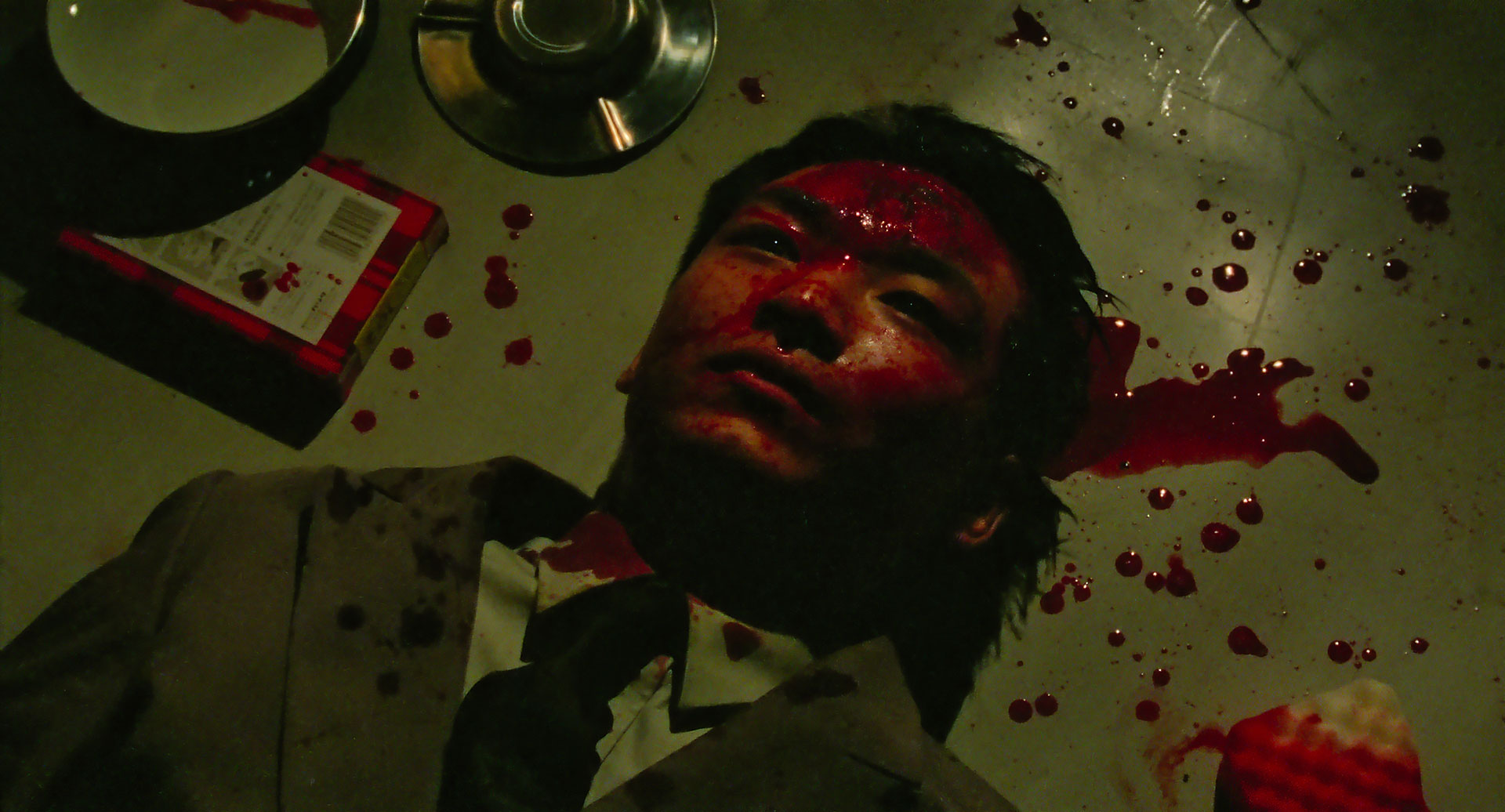
The insistence of this stain or, in other words, Kurosawa’s explicit refusal to make Fujimaru’s desire transparent makes The Guard From Underground ultimately so satisfying (Narra-note 2). In the few scenes where Fujimaru demands understanding for his violent acts – scenes that stage him as a subject who know his aim, we always end up more puzzled than before. It is, however, Kurosawa’s intent to use these scenes of confusion to highlight that he, despite his massive presence and coldly delivered signifiers, does not know what his violence aims at (Narra-note 3).
While some spectators might argue that this violent giant seeks understanding, such reading has its limits. It is more fruitful to contend that, despite his desire appearing opaque to others, there is no desire that animates him. Does the radical lack of emotion is his voice not imply that he finds himself beyond neurosis, beyond the confusing tangle of desire? If he tells Narushima that his time flows different, it is to underline the fact that his logic is radically different than the one from the neurotic.
The composition of The Guard From Underground offers a pleasant and effective combination between static and slow creeping dynamic movement. Of course, Kurosawa utilizes the slowness of the movement perfectly to infuse tension in the narrative’s atmosphere and generate a sense of uneasiness within the spectator. It is, in fact, clear from Kurosawa’s composition that he has a refined sensibility to elegantly stage that what disturbs the mundane.
However, what stands out the most in this composition is his elegant exploitation of the haunting quality of the stain, the gaze. The gaze is first visually introduced when Mamiya and Akiko talk to each other just outside the company’s building. The dark mini-van that forms the background of their exchange radically disturbs the equilibrium of the narrative space. It is, however, not so much the truck that arises as the gaze, but the crack that adorns its front-window. This crack, in short, signals the presence of a desire that cannot be read. The subject is rendered unable to answer the riddle of what this Other wants nor grasp who he is for him.
The stain, the gaze, is however not only found in the crack in the mirror. By carefully exploiting Fujimaru’s face – by turning it in a gaping smutch of darkness or to shadows wash out his expression-less face within the narrative space, Kurosawa succeeds in keeping the riddle of his desire wide open, disallowing the spectator and his characters to utilize their ego – i.e. their collection of signified about the Other’s desire – to anchor themselves firmly and safely.
With The Guard From Underground, Kurosawa proves that he perfectly knows how to utilize musical accompaniment to enhance the performances of the cast and to pull the spectator into the narrative. The music is not only utilized to evoke a foreboding and dangerous atmosphere and give certain interactions an estranging quality, but also to heighten the tension of certain tensive sequences.
Yet, the atmosphere is not merely determined by the sporadic musical accompaniment. Like many of Kurosawa’s later narratives, the ominous atmosphere is supported by a darkish and washed-out colour-palette. In his narrative spaces, the extraction of colour and light allows him to signal the presence of the evil darkness that lies beyond the imaginary equilibrium of the mundane societal field.
With The Guard From Underground, Kurosawa delivers a highly atmospheric and disturbing film that contains all the seeds that would come to full blossom in narratives like Cure (1997) and Pulse (2001). While it does not quite has the impact of the horror-classics he would end up delivering – he hits the limits of his budget, his conventional early slasher is nevertheless a film that fans of horror need to see.

Notes
Narra-note 1: Thedisorienting effect caused by being under the gaze does not take long. Once she has extracted herself from the gaze and narrativize the gaze-objects with her colleague, she mends her ego, the anchor-point that orients her in the societal field.
Narra-note 2: The sudden emphasis on Goya’s painting Saturn Devouring His Son in the composition might seduce some spectators to utilize the myth to interpret Fujimaru’s violence. Yet, in our view, the only effect of this visual association is the introduction of the element of violent madness. This painting does not offer any clues as to what Fujimaru’s desire aims at.
Narra-note 3: That the violence and desire is caused by a female element is evident – he tells as much to Narushima, yet such revelation does not solve the question of his desire’s aim. He is a riddle that keeps persisting.
 psychocinema