While Daigo Matsui has delivered some truly splendid narratives over the years – Japanese Girls Never Die (2016), Ice Cream and the Sound of Raindrops (2017),Remain in Twilight (2021),Just Remembering (2022), Hand (2022), he has remained, undeservedly, somewhat, under the radar of international audiences. Maybe, his adaptation of Yuna Takagi’s Fujimi Lovers can turn the tide, inviting audiences to explore his oeuvre more seriously.
With Undead Lovers, Daigo Matsui tries his hand at a more straight-forward romance narrative. Yet, while the ending might be predictable – a romantic relationship will be established between Rino and Jun, Matsui does deliver an original build-up to the finale that stages the dynamic of the imaginary phallus and the subjective of memory in a fresh and revealing way.
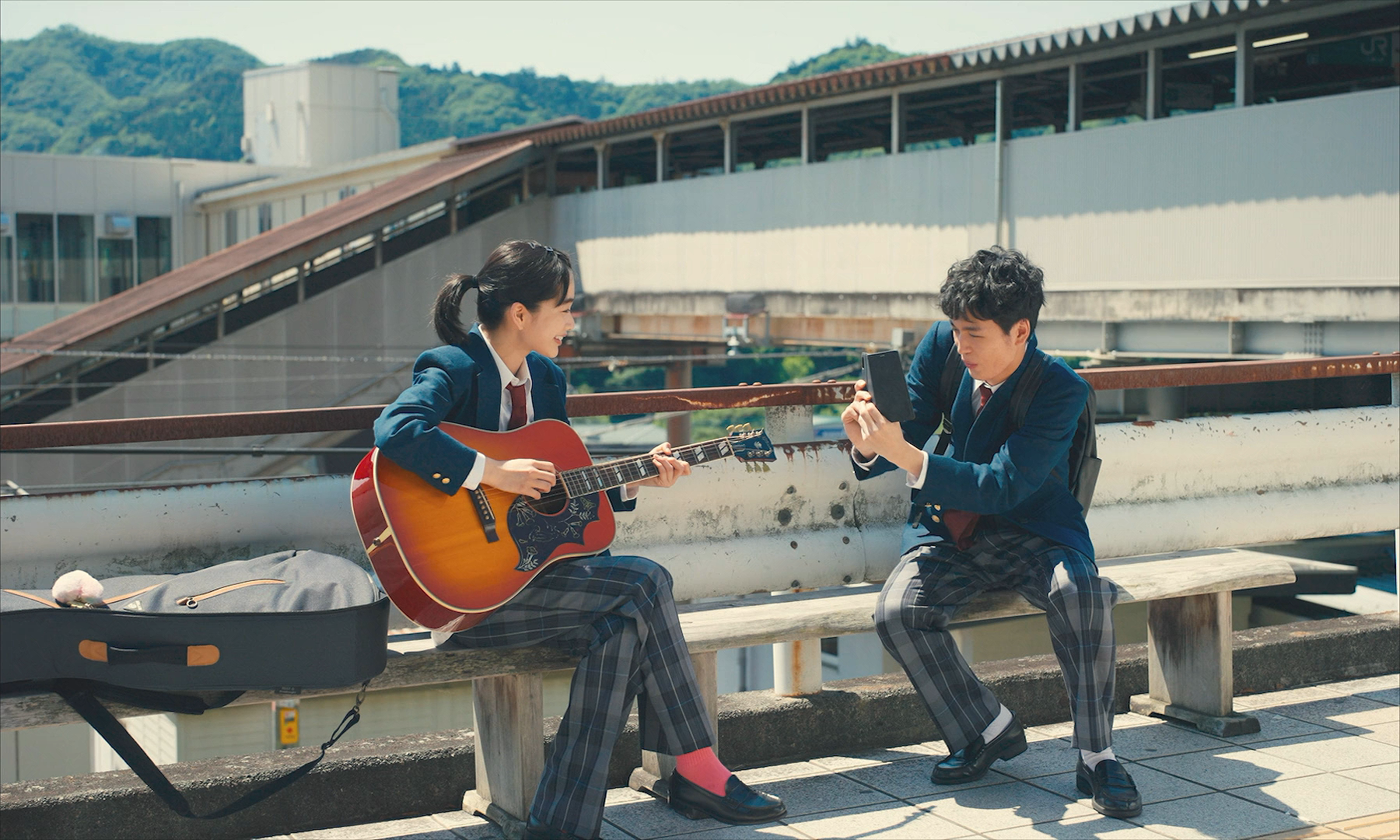
Undead Lovers tells the story of Rino Hasebe (Ai Mikami), who has, ever since Jun Kono appeared besides her hospital bed and saved her from an untimely death at the age of five, been looking for him (Kanta Sato). Yet, every time she finds her romantic destiny and the question of reciprocal love is raised, he disappears without a trace, leaving her with a mere jumble of memories.
Daigo Matsui invites the spectator into his narrative via a rather fast-paced concatenation of short vignettes and confronting him with a ‘dramatic’ and confusing kind of repetition. The main purpose of the energetic opening of Undead Lovers, of making the spectator as confused as Rino, is to confront him with the two following riddles: Why do confessional signifiers of love erase Kono’s existence and rewrite him differently within the societal field? And, how can Rino put a halt to this endless rewriting that prohibits the establishment of a romantic relationship with him?
Rino’s knowledge of the fact that romantic signifiers will cause him to disappear eventually ends up changing her stance towards him, towards the version of Jun Kono she is faced with within the societal field. The bubbly energy, which even compels her to ask the married Jun Kono out on a date, abates and makes place for a more inhibited and emotionally subdued approach towards her ‘romantic destiny’. However, even when she tries to keep her distance from Jun, he seems to gravitate towards her. The final Jun Kono that washes upon her subjective shore is, much to the spectator’s surprise, not a version that disappears as presence, but whose memory fades away after a good night’s sleep.
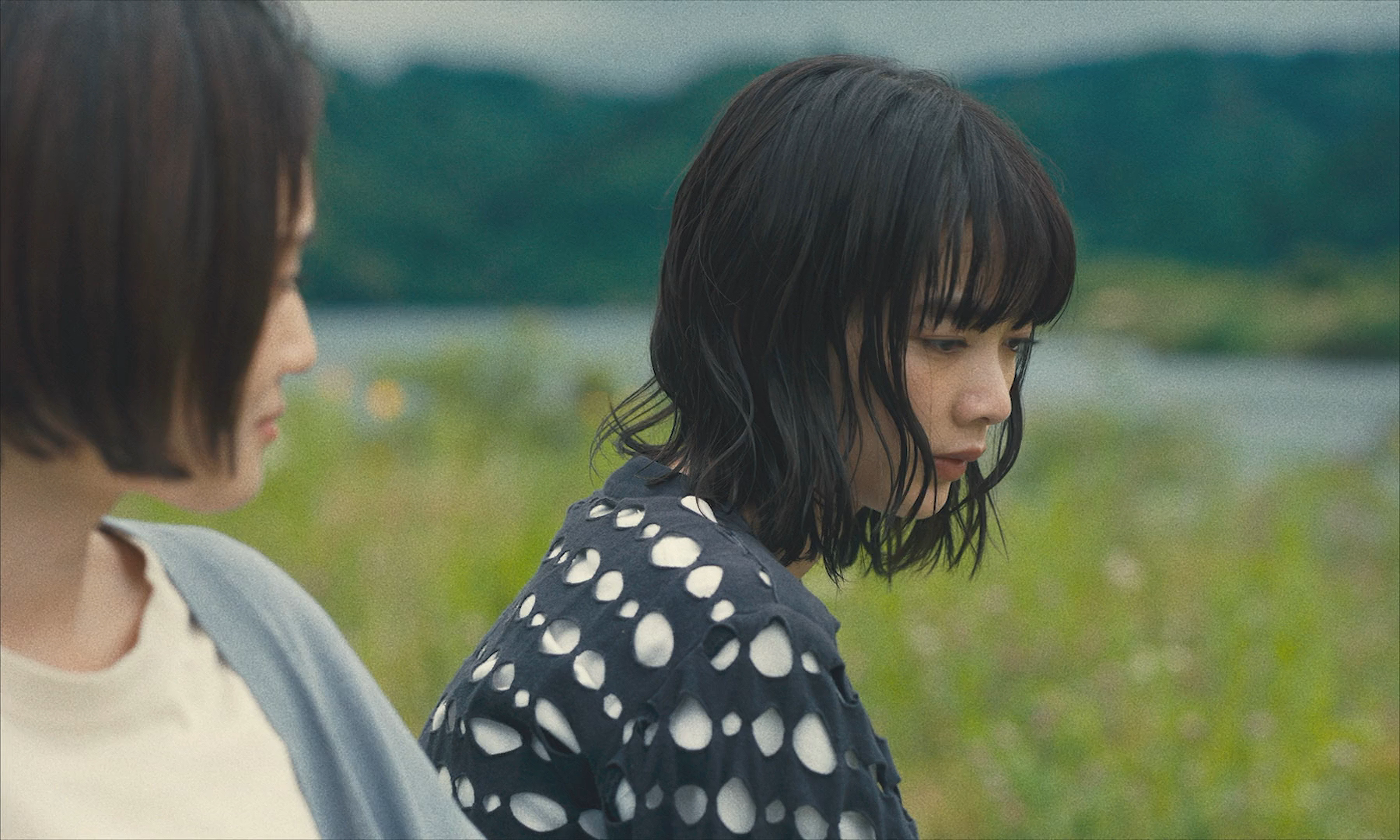
However, whether Jun Kono disappears or his memories fade away after sleeping, the fundamental problem remains the same. Rino can only realize the moment of professing her love, the establishment of a romantic bond remains out of her reach. Of course, even though she can confess her love every day – endlessly repeating the thrill of confessing, the inability of passing beyond the confession and break the endless repetition eventually starts weighing emotionally on Rino as well as on Jun (Narra-note 1).
Thematically speaking, Undead Lovers offers, at first glance, but a mere celebration of the need – a subjective need supressed by the demands of the societal field – to fully appreciate one’s presence within the moment. As the flow of time swiftly washes away the physical reality of the encounter, it is only by being subjectively present that one can transform these fleeting moments into more time-resistant emotionally charged memory-fragments. Moreover, Matsui signals that the possibility of falling in love is intimately connected with the ability to form an image of the other in one’s psyche.
Yet, this simple heartwarming thematical exploration is radically overturned by the expected twist that inaugurates the finale of Matsui’s romance narrative. Via this twist, the simple celebration of living the moment is transformed into a dramatic staging of the role the phallic object plays within romance and the radical way the subject shapes his memories (Psycho-note 1 (spoiler)). In other words, Undead Lovers confronts the spectator with the radical way he is implied in the arousal of desire – the phallus one’s encounters in the Other is an effect of one’s own subjective logic – and the way he organises his consciousness – he cuts, paste, reshuffles, and invents memories that fits with one’s ego (Narra-note 2 (spoiler), general-note 1).
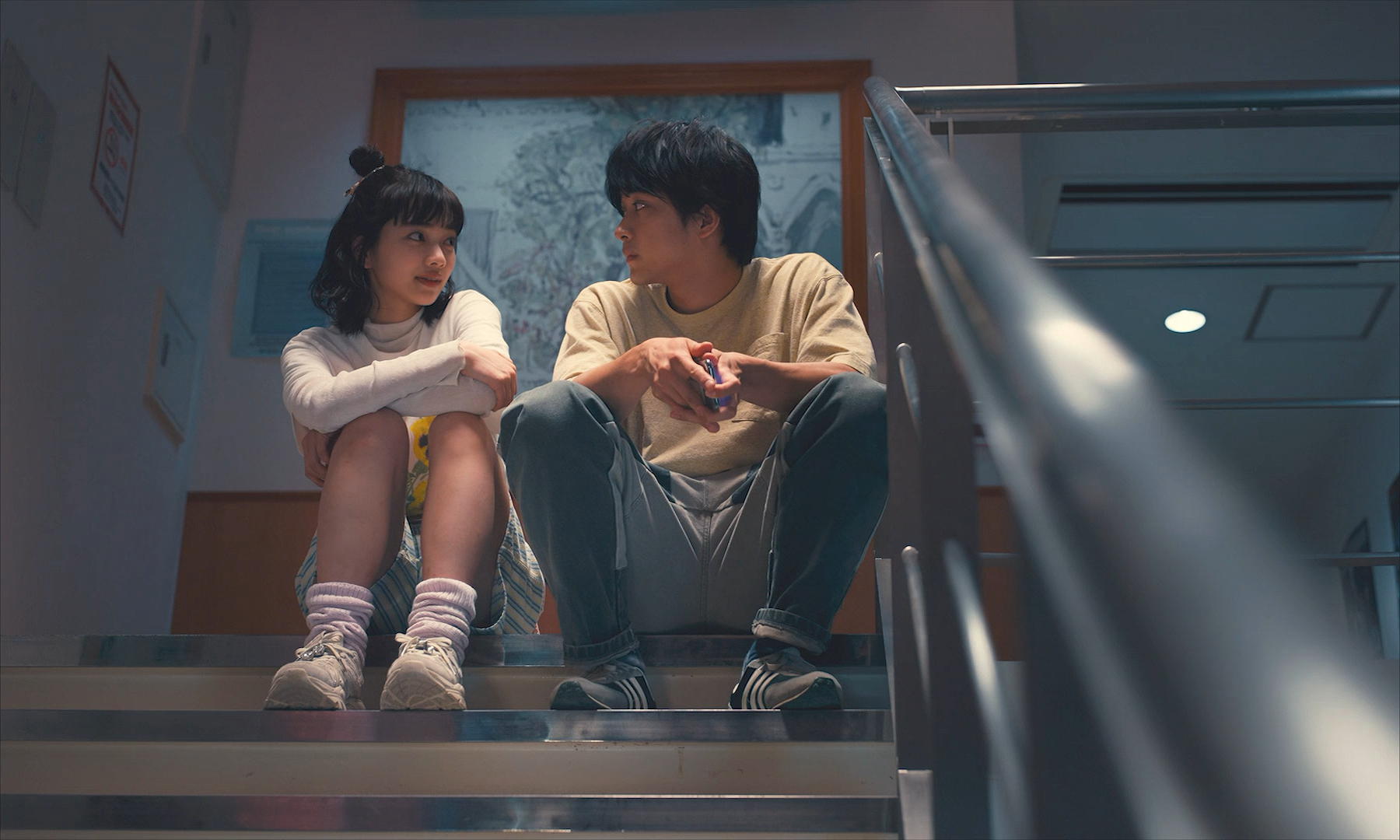
To bring the story of Rino and Jun visually to life, Daigo Matsui mixes static shots, moments of dynamism, and visual decorations (e.g. slow motion) together into to create a composition with a smooth but fluctuating visual flow. By thoughtfully manipulating the rhythm of his composition, Matsui does not only succeed in creating an effective support for the light-hearted and more comical moments within his narrative, but also succeeds in making the more heartwarming moments endearing and the dramatic moments affecting (Music-note 1, cine-note 1).
Ai Mikami delivers a surprisingly layered performance as Rino Hasebe. She charms the spectator with her light-hearted over-acting, but also succeeds in touching the spectator by giving her character’s emotional expressions a flavour of touching genuineness. Spectators afraid of over-acting can rest easy. Matsui ensures that the few surges of over-acting do not sabotage the spectator’s pleasure, because he installs a manzai-like dynamic that balances the expressive excess of Ai Mikami’s Rino with the more emotional grounded character – e.g. Tanaka (Yuzu Aoki).
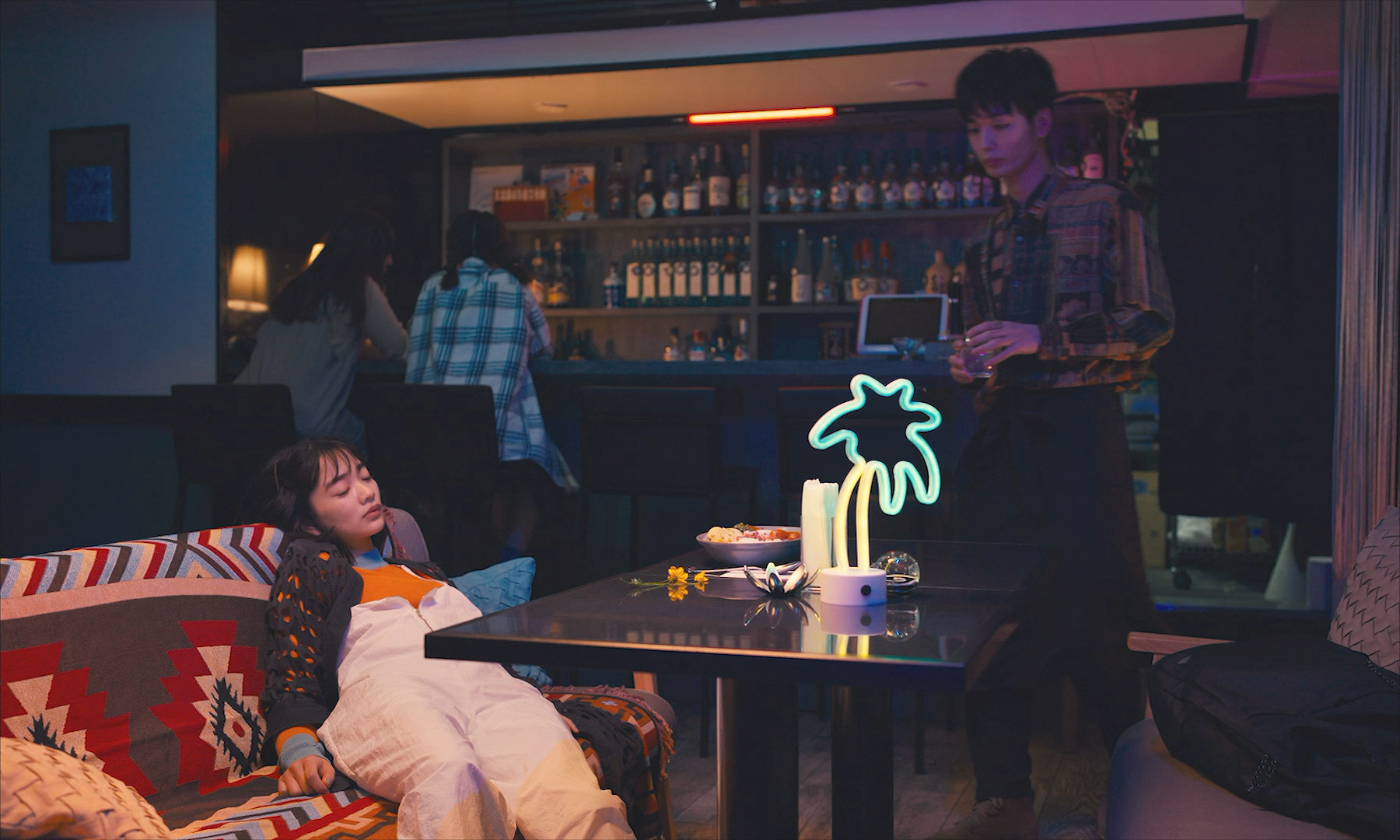
Of course, a romance-narrative stands or falls with the on-screen chemistry. Rest be assured, Matsui knows how to bring the best out of Ai Mikami and Kanta Sato and how to direct them so that they have no problem in infusing a heartwarming genuineness into their speech exchanges and the rhythm of their enunciations.
Daigo Matsui does not miss any beat with Undead Lovers (General-note 2). He delivers a heartwarming romance narrative that, due to its fresh approach to certain tropes of the genre, rises above the common derivative romance drivel Japan usually produces. This is not, like some commentators have argued, a narrative that celebrates the ‘purity’ of love, but a narrative that, in a light-hearted way, exposes the implication of the subject in the act of desiring and the construction of memories.

Notes:
Narra-note 1: Everyday, Jun is tasked to reconnect Rino’s written signifiers of love with her presence, with her existence.
Psycho-note 1: Daigo Matsui ultimately reveals that what the subject finds in another subject is not the subject as such, but a shine that signals the presence of the non-existing phallus and ensnares the subject’s romantic desire. For Rino, the male Other only captures her desire if he possesses a glance of Jun Kono-ness.
Narra-note 2: The narrative twist reveals that Rino’s inability of establishing a romantic relationship is caused by herself and not by any external circumstances.
Music-note 1: Within his composition, Daigo Matsui often relies on musical accompaniment to ensure that the heartwarming moments within his narrative do not miss their effect and smoothen the playful flow of repetitive imagery.
General-note 1: It is not the first time that Daigo Matsui touches upon importance of the imaginary phallus within the field of romance. In 2022, he explores the same thematic with his roman Porno Hand (2022).
Cine-note 1: In some cases, Daigo Matsui utilizes slow-motion to further heighten the emotional impact of certain narrative moments.
General-note 1: Whether the spectator can fully savour the film – and fully appreciate its revelatory twist – depends solely on his ability to accept the absurd premise that inaugurates the narrative.
 psychocinema
One Comment Add yours