Japan has gifted the world some very quirky musical narratives. In 1985, Makoto Tezuka delivered the charming The Legend of The Stardust Brothers and Takashi Miike crafted the shockingly delightful horror-musical The Happiness of the Katakuris.

With The Gesuidouz, Kenichi Ugana tries to create a quirky musical for a new generation. And while he surely delivers a fun narrative, Ugana’s love-letter to cult horror cinema and rock and punk music (Jim Morrison, Kurt Kobain, …) fails to reach the heights of Tezuka’s forgotten masterpiece and Miike adored musical genre-blender.
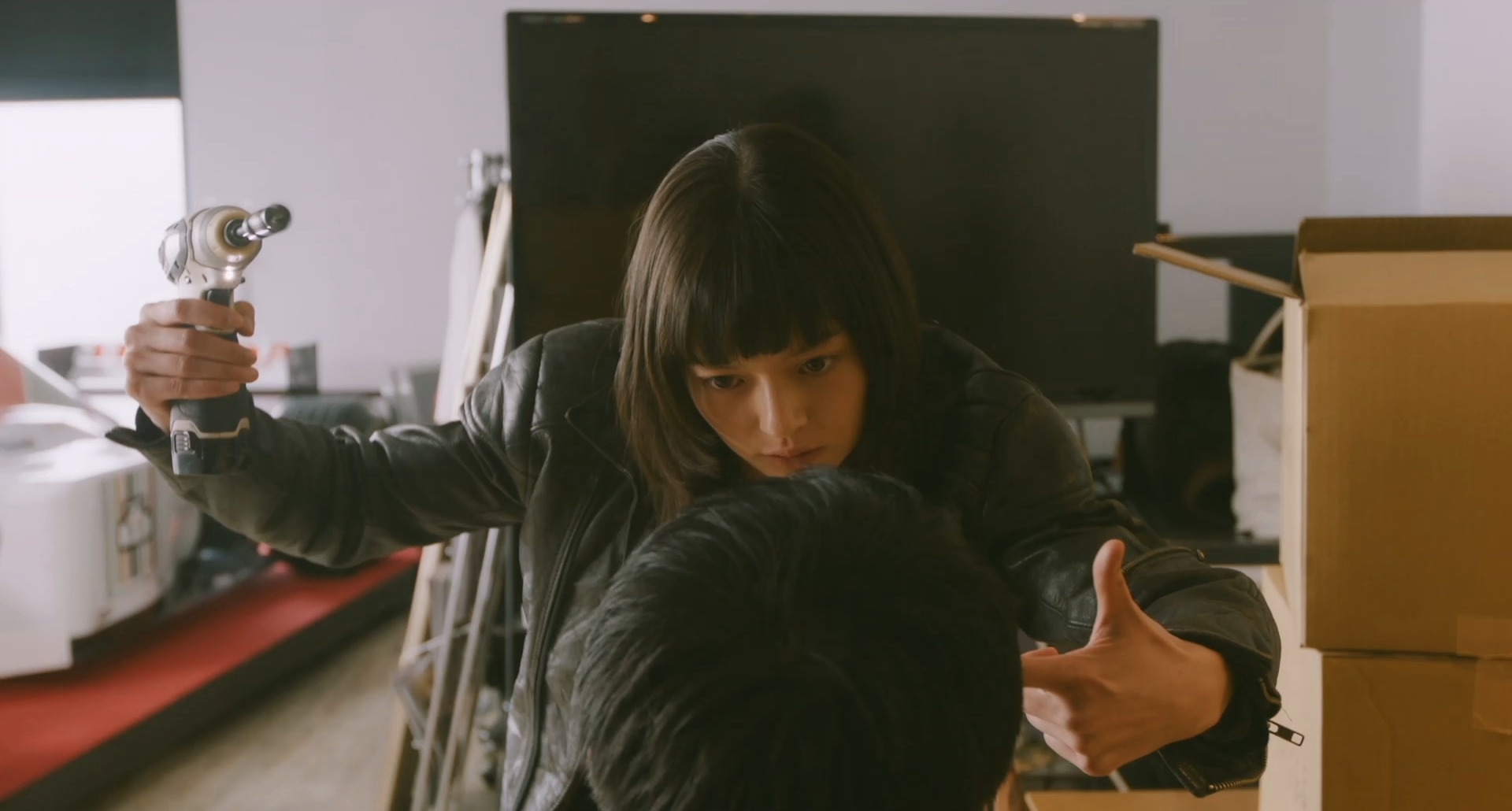
Kenichi Ugana’s The Gesuidouz starts with quite an outrageous premise. Punk band The Gesuidouz, a quartet of noise-makers with no fanbase at all, have landed a record deal. As can be expected from the empty venues at their performances, their first album is not selling well. To remediate the record company’s financial loss, their sardonic manager (Yuya Endo) orders them to go the countryside to work the land and compose a song there. Unlike her fellow meek band-members, Hanako (Natsuko), the motivated lead singer, happily takes on the challenge. For her, time is of the essence as she or so she believes will die when she turns 27.
The spectator will have no problem in realizing that, Hanako, the lead-singer, is the de-facto leader of the band. Not only does all important communication with others (e.g. their manager, …) happen through her, but the band-members also imitate her acts within the societal field – e.g. attacking the bus, hugging the manager, walking in a line, … etc.
This imitation becomes even more absurd when one realizes that is goes against the spirit of punk. However, one can easily surmise that, without a rebellious screamer to follow and imitate her fellow noise-makers would be mere empty shells. While Ugana exploits this dynamic for comical effect, he nevertheless illustrates that many subjects seek ideals to shape their self-image and their trajectory in life. While they are but a watered-down version of what punk embodies – punk as a superficial attire and not as subjective ethos, Hanako’s signifiers and acts grant them an aim they would otherwise not have.
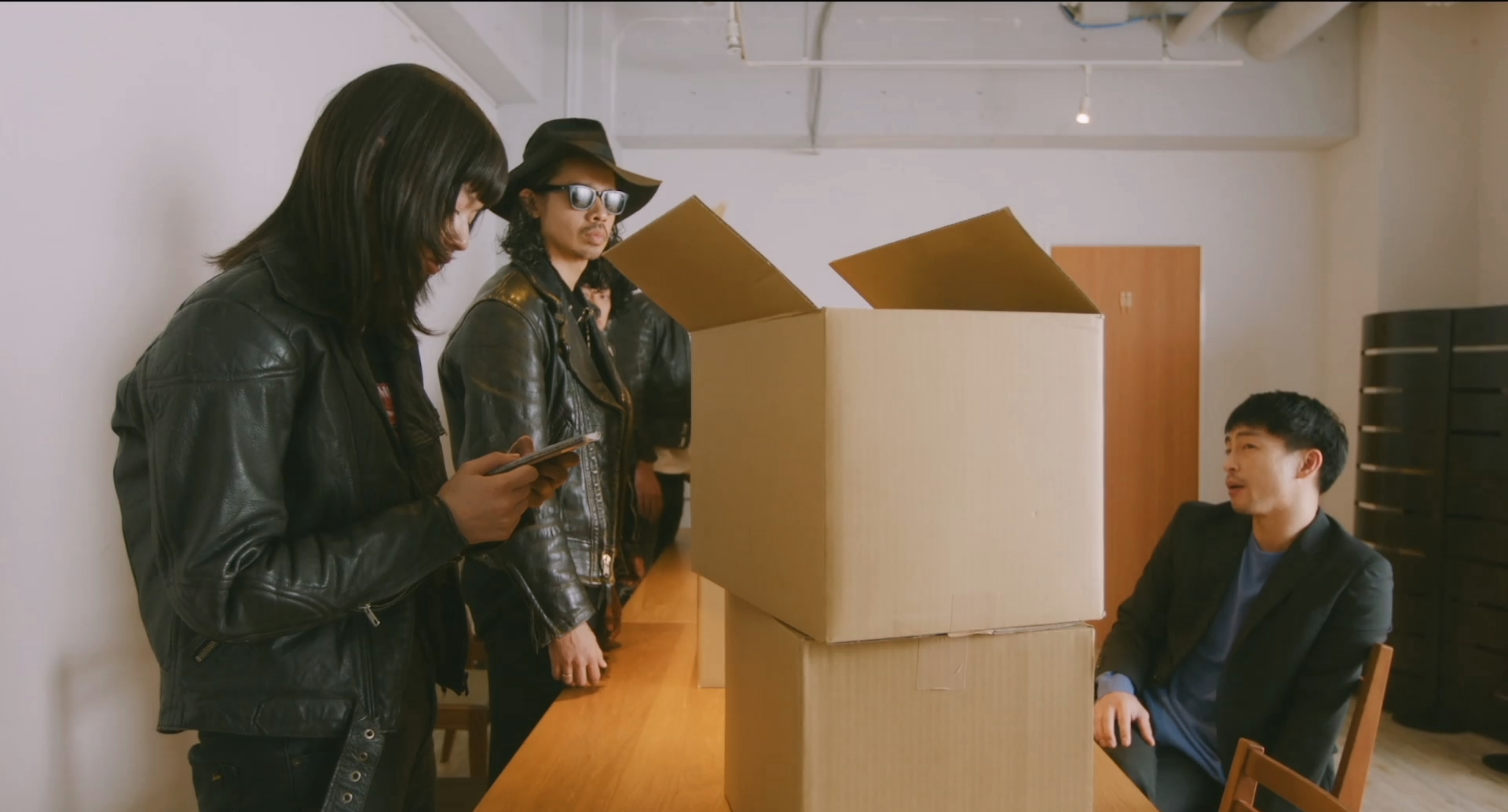
It is because Hanako, as the leader, as the punk-ideal they strive to realize, gives them an aim that they succeed in saying something – e.g. Bassist Ryuzo (Yutaka Kyan) introduces the others to the kimono’s left in the house gifted to them – and express some individuality – drummer Santaro (Ryoko Zevenbergen) proves to be talented at making traditional Japanese food, Ryuzo falls in love with Moe (Saori Izawa), and Guitarist Masao (Reo Imamura) succeeds in speaking before Hanako.
The main reason why the four members congregate around the punk-ideal that Hanako has embraced is the simply fact that they are radical societal misfits – they are, quite literally, unable to inscribe themselves as a ‘working adult’ (社会人) into the societal fabric. The punk-ideal is, in this sense, their last resort to stabilize themselves somewhat within the Other.
The forced expulsion from the city, as concocted by their sardonic manager, might offer them a chance to turn their societal failure around. Moreover, if they successfully gain a grasp on the nuts and bolts of farming, it might affect their music – allowing them to evolve the pure chaotic noise of Hanako’s unconscious – kill your mommy – to a form of music that can speak to others.
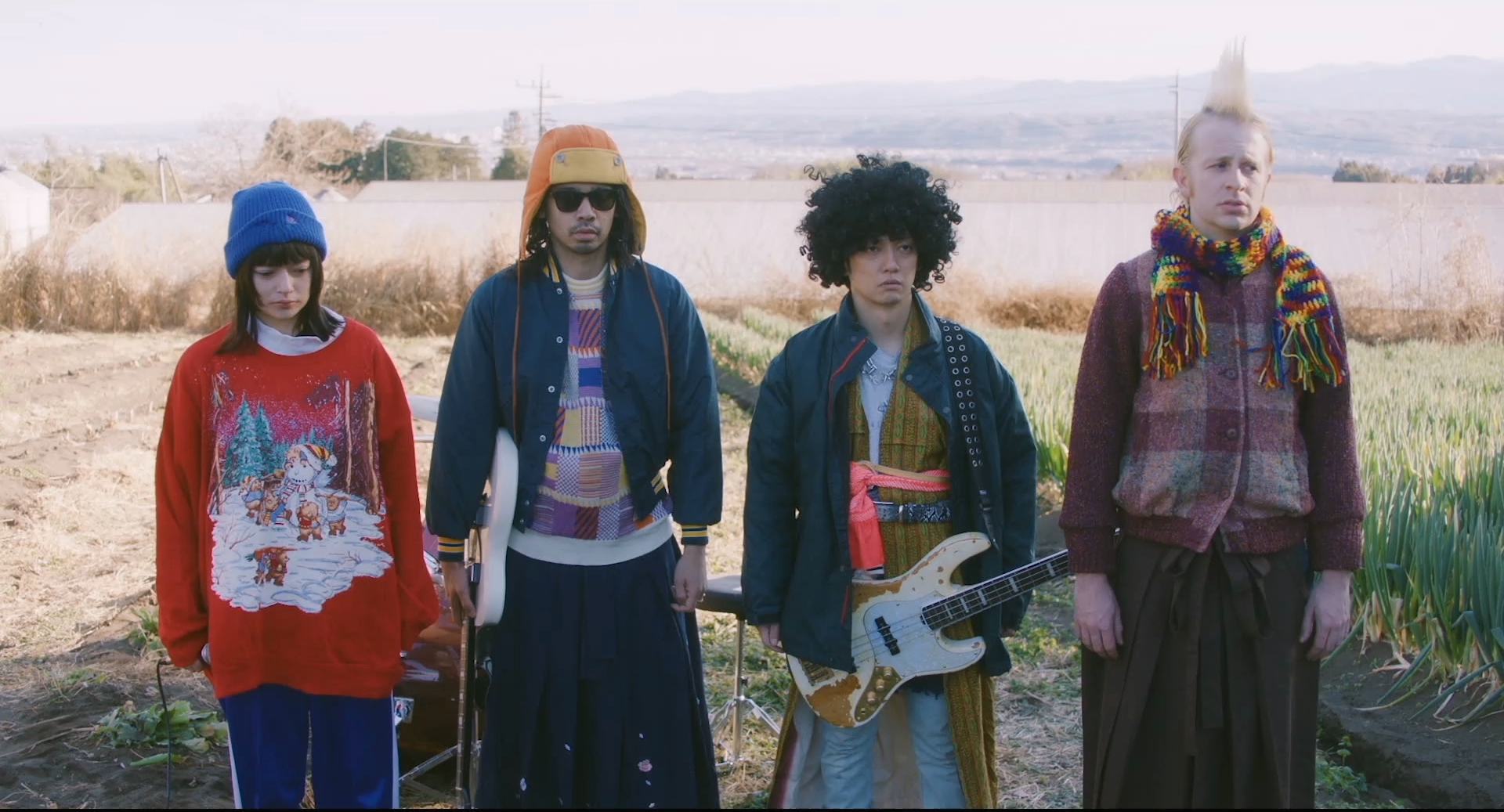
The path that might lead The Gesuidouz to redemption unravels in a space where punk forcefully blends with a rural atmosphere and Japanese tradition – kimono, calligraphy, and is littered with absurd flashes of inspiration, productive psychotic disturbances, paper ripping and eating, talking cassettes, strange addictions, and vegetable picking. Can they write a hit? And if so, can they avoid becoming a mere one-hit wonder?
While The Gesuidouz offers a fun quirky narrative, Kenichi Ugana fails to elevate his narrative in the latter half. While he tries to rise the stakes, he merely ends up offer an uninspired repetition of what came before. While repetition can be an important tool in delivering comical moments, Ugana merely wipes off the quirky shine of his deadpan moments – the same trick does not work twice.
Kenichi Ugana brings his narrative alive with a balanced mix of dynamic and static shots. While such straightforward composition works well for most narratives, we do feel that Ugana plays it a bit too safe – a bit more visual extravagance could have made the film’s thematical and emotional dimension more powerful.
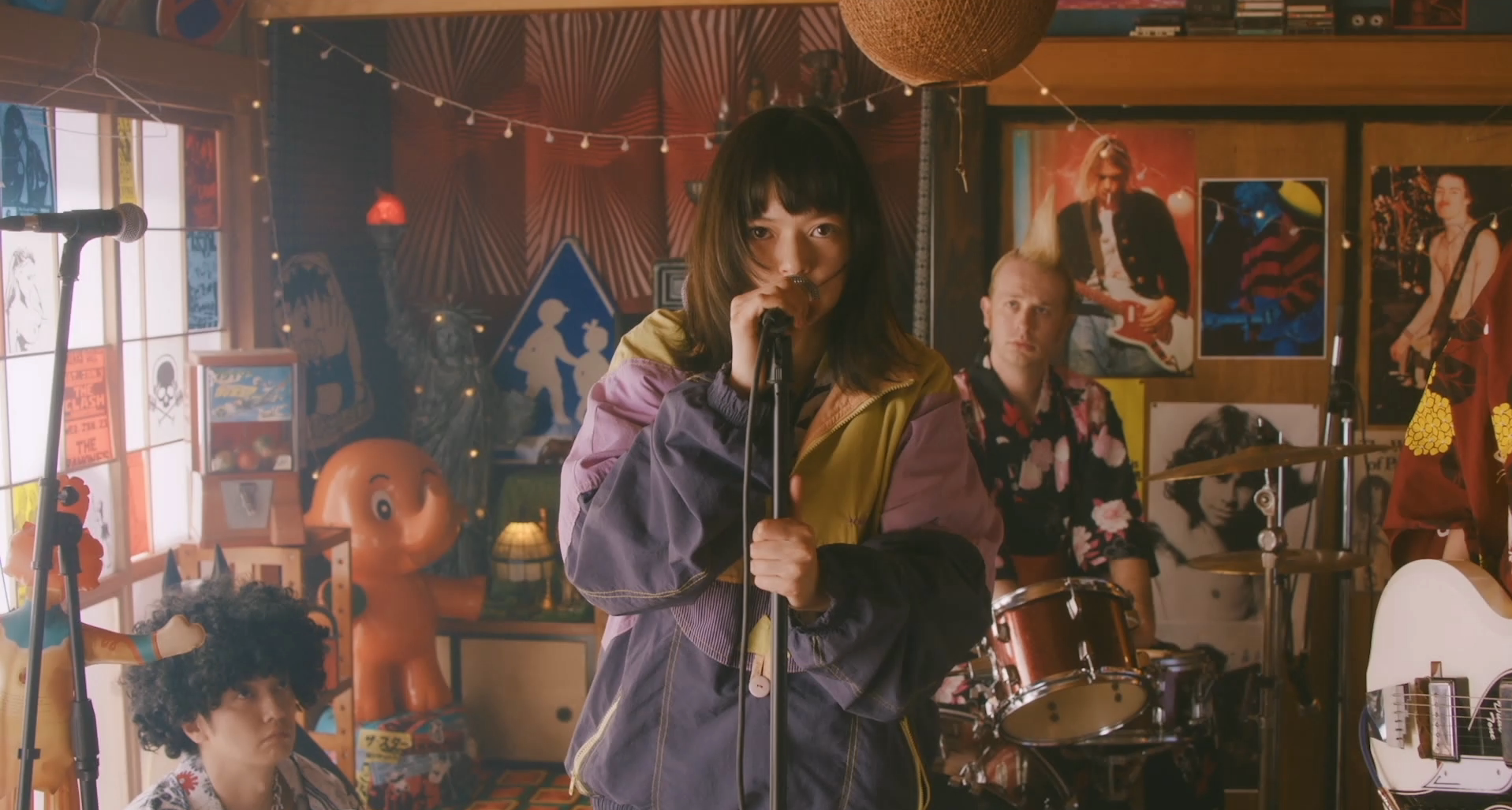
However, there is one little element that reveals that Ugana did put some thought into his composition. The film opens with a compositional contrast between the fleeting documentary sequence – i.e. the girl holding her shaky-wavy hand-held camera while telling the band of her intentions – and the subsequent taming of the shaky frame. The spectator, fleetingly put in the position of filming fan, is subtly invited by Ugana to consider the fiction to be embraced and sustained by reality. The subtle surges of shakiness that often slip into the composition serve as reminders of this presence of this supportive reality.
With this contrast, which amounts to nothing more than a compositional swindle, Ugana seeks to exploit the evoked dimension of reality to amplify the silly quirkiness of the narrative and its many surges of absurd comedy – the many comical and farcical visual contrasts and repetitions (e.g. the farm, without any audience, as a venue of their performance, the theatrical yet inept of the band’s attack on their manager’s car) and slightly absurd conversational moments. While this stylistic trick is effective in the beginning, it cannot counteract the comedy from becoming quite stale.
The Gesuidouz offers the spectator a barrage of quirky twists and light-hearted absurdities. While the concatenation of deadpan comical moments succeeds in charming audiences, Ugana’s narrative falls flat in the last half-hour. The incredibly satisfying song The Gesuidouz perform before the credits cannot wash away the sour taste the director leaves by sabotaging the comical flow by gambling on mere narrative repetition.

 psychocinema