The Japanese film industry is, like elsewhere, marked by film production companies who do not dare to take risks. As a result, these companies often choose to adapt stories already loved by many – stories which became popular in the shape of manga, novels and/or anime.
However, adapting popular stories for the silver screen is not without any risks. Changing the structure of the original story too much will alienate fans and might even abhor them. Certain stories do not work well in a filmic form because of the eccentric and quirky nature of the source material. And others end up feeling like ill-rehearsed costume parties. Luckily, certain stories, despite their somewhat outlandish premise, do translate well on the silver screen. Jun Ishikawa’s Honeko Akabane’s Bodyguards, an adaptation of Masamitsu Nigatsu’s celebrated manga of the same name, falls into the latter category. Luckily!

Honeko Akabane’s Bodyguards revolves around highschooler Honeko Akabane (Natsuki Deguchi). While Honeko seem like an ordinary high-schooler – and she, herself, truly believes she is, there is a $100 million bounty on her head. The bounty is the result of the continuous attack on criminal organisations by Mr Jingu (Kenichi Endo), the director of Japan’s State Security and Honeko’s biological father – the man who gave her up after birth for adoption.
One day, Mr. Jingu asks ‘troublemaker’ Ibuki Arakuni (Raul), Honeko’s childhood-friend, to protect her as bodyguard. Much to his surprise, he discovers that he is not the only bodyguard roaming the halls of Sosoji High School – the whole class are highly trained specialists protecting Honeko around the clock. Before being able to fully work-through this unexpected revelation, he is forced by Somejia (Daiken Okudaira), the commander of the bodyguards, to go on a date with his child-hood friend, the girl he has a crush on.
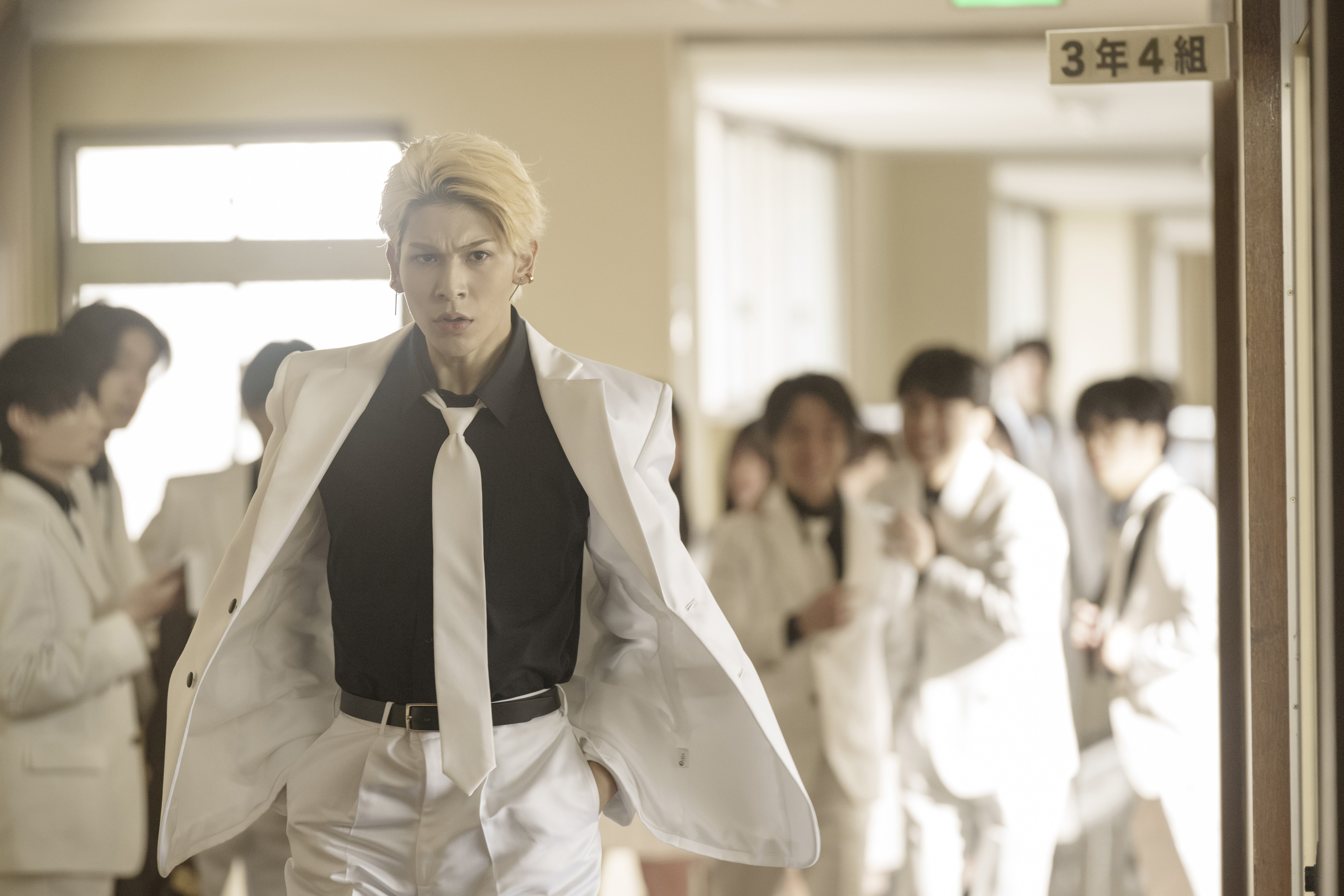
Honeko Akabane’s Bodyguards is a narrative that does not waste any time. Ishikawa’s action-romance-comedy hybrid establishes its general narrative set-up quickly – within twenty minutes, to take the spectator along on an energetic ride full of comical turns, pleasing action-sequences, moments of heartwarming romance, and dramatic twists – there is little time to breathe for the spectator. The idea of having a diverse set of highly-trained specialists (e.g. a diver, torturer, gambler, sprinter, streamer, hacker, judo-fighter, sniper, … etc.) is not only narratively interesting, but introduces visual variety to his action-sequences and helps the director to overturn expectations, deliver sudden puns, and introduce light-hearted twists.
Given the fact that the element of romance plays a big part in Honeko Akabane’s Bodyguards, it is not surprising that the comedy in Ishikawa’s narrative is mainly interactional in nature. The narrative is littered with light-hearted interactions, comical turns that ripple the conversational flow or throw it into disarray, and surprising comical decorations (e.g. breaking the fourth wall).
However, what sorts comical effects is not so much the interactions between Ibuki and Honeko or his fellow bodyguards, but the way Ibuki and the bodyguards try to adhere to Jingu’s demand to keep her unaware of the truth and the assassins who are eyeing her (Comedy-note 1). Ibuki, moreover, is the comical focal-point, the anchor of all comical effects, as he, despite being determined to protect Honeko from the assassins and the truth, struggles to subdue the destabilizing effect of his unverbalized romantic feelings.
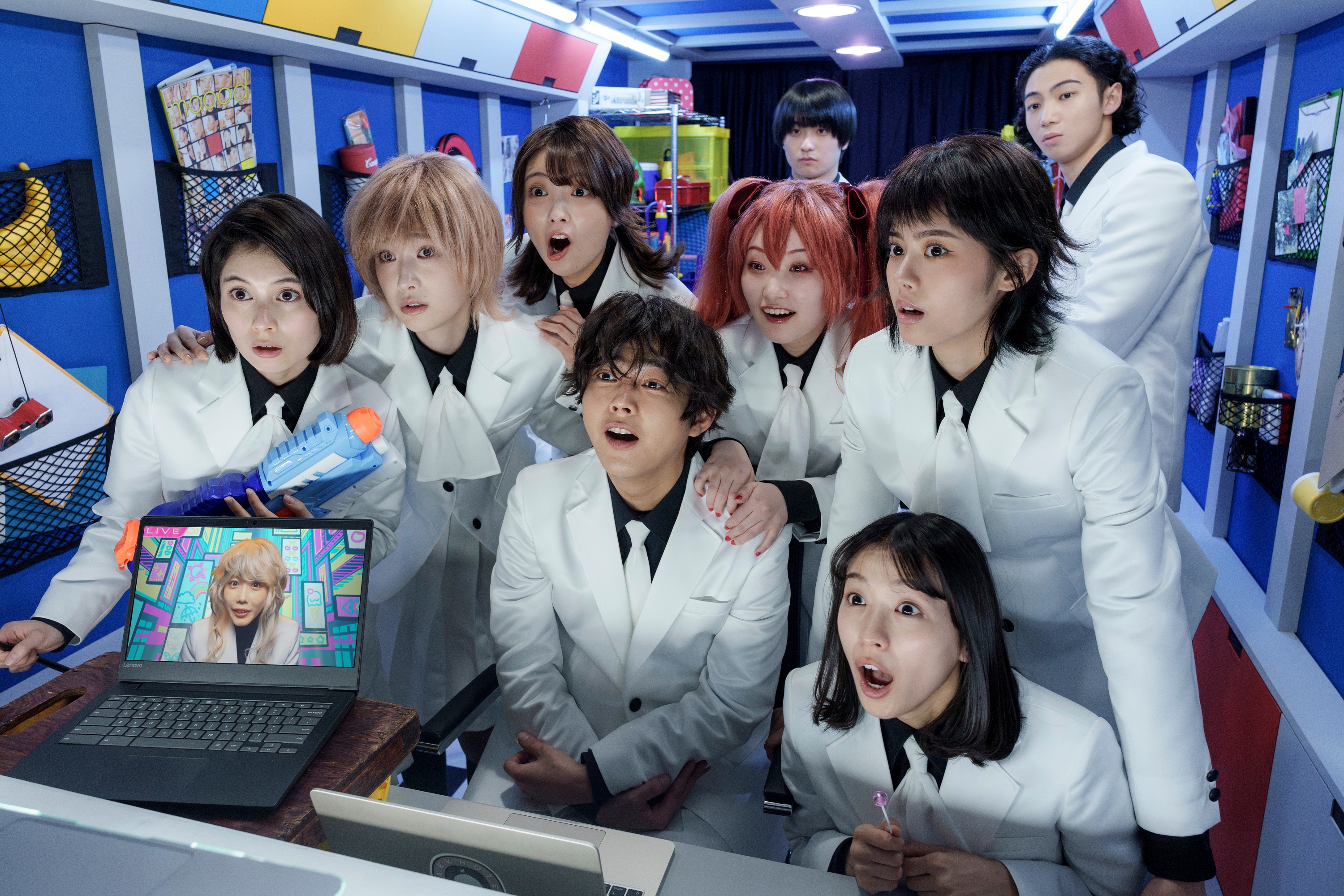
As Ibuki is the anchor of all comical effect, the comedy stands or falls with his performance. Luckily, he rises to the challenge and delivers a highly effective performance. He does not merely convince as the cool bad-boy and castrated subject – Am I desirability for her or not? – but succeeds in letting the one fluidly melt into the other, to great comical effect.
As Honeko Akabane’s Bodyguards is an adaptation of a shonen narrative, it is not surprising that the film neatly follows the shonen thematical structure – “Protecting someone means protecting everything they love”. The h(ero)ysterical position of giving oneself to the other is not surprisingly contrasted with positions which are structured around (secondary) narcissism. One enemy (Tao Tsuchiya) breathes resentment, the effect of the differential treatment by her parental figure, and another dismisses the other subject to embrace his misplaced sense of self-importance. Yet, the biggest treat within the narrative lies in a subject whose has not been able to process an imaginary injury to his inflated pride. Honeko Akabane’s Bodyguards, moreover, re-emphasizes nothing other than the simple idea that structures most if not all shonen-narratives: the importance of the other, as friend or as lover, for the mental well-being of the subject.
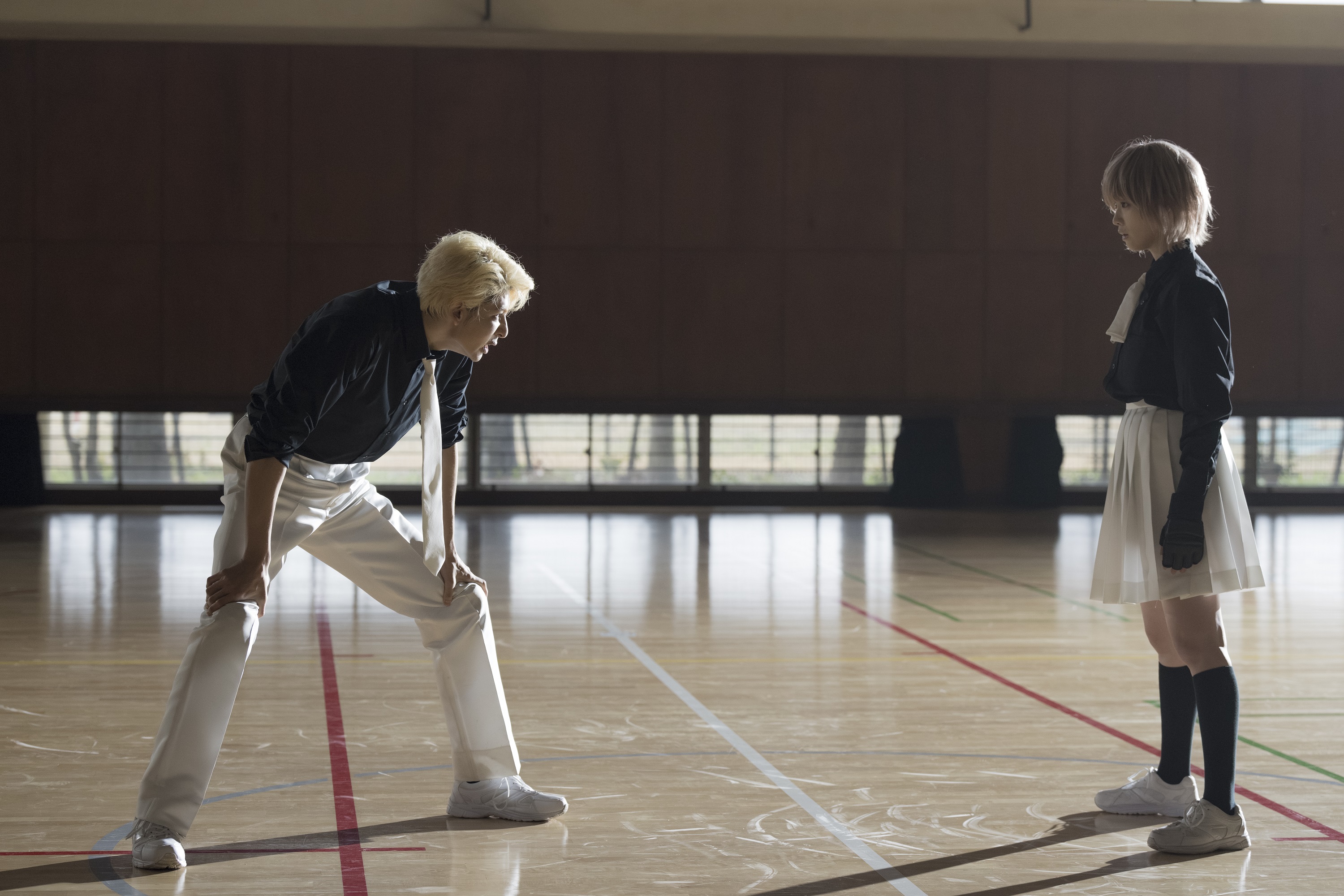
While the outlandish premise of Honeko Akabane’s Bodyguards piques the interest of the spectator, it is the compositional pace of the film that pulls him into the narrative. Ishikawa does not only create a highly dynamic visual fabric, but also richly applies stylistic decorations (e.g. slow-motion, jump-cuts), decorative sounds, and musical accompaniment to further smoothen the visual flow and enhance the comical flair of many interactions and the light-hearted silliness of the many moments of over-acting. Moreover, Ishikawa’s compositional energy and his reliance on visual ornaments helps giving the action-sequences a satisfying viciousness and cool grounded brutality (Music-note 1). One could even argue that Ishikawa, through his composition, seeks to strike a balance between creating anime-like moments, echoing the manga-origins of the narrative, and delivering action-sequences that neither manga nor anime can reproduce.
Honeko Akabane’s Bodyguards offers the spectator an extremely enjoyable experience. While Jun Ishikawa’s film does not break any new ground thematically speaking – the film merely offers a different perspective on the well-established shonen-manga frame, it delivers an engaging narrative with some satisfying twists, many funny moments, and pleasing action-sequences.

Notes:
Comedy-note 1: Most comical effects are linked, in one way or another, to the demand of keeping Honeko pure. However, there are also a few comical moments that exploit Ibuki’s romantic inexperience and some light-hearted moments fuelled by Masachika’s romantic crush on Ibuki.
Music-note 1: The coolness of the action-moments is also determined by the J-pop pieces that accompany these sequences.
 psychocinema