Introduction
Following the success of The Executioner, Toei greedily wanted to cash-in on its new hit and forced the rather unlucky Teruo Ishii to deliver a sequel as soon as possible. Merely four months after the first film hit the theatres, The Executioner II: Karate Inferno was released in cinemas. Such rush and pressure to exploit the success of a feature film can – many would agree – only lead to a rough and sub-par end-product. Is the same true for Ishii’s The Executioner II: Karate Inferno?

Review
Due to a sudden emergency, the former police commissioner Arashiyama (Ryo Ikebe) orders Emi (Yutaka Nakajima) to, once again, gather Ryuichi Koga (Sonny Chiba), Takeshi Hayabusa (Makoto Sato) and Ichiro Sakura (Eiji Go). Since defeating Mario Mizuhara, Koga has joined the Rangers Unit of the Self Defence Forces. Emi succeeds in bringing him on board with the promise of money and the threat of revealing his past if he turns them down. Hayabusa has returned to the underworld as a lone wolf assassin. And Ichiro Sakura has – strange as it may seem given his sexual appetite – settled down with a woman called Hanako Nakajo (Yasuko Matsui).
This time around, Arashiyama orders them to obtain the recently stolen world-famous jewel Star of The Pharaoh, owned by the Kaufman family, and make sure the kidnapped daughter of Sabine Kaufman (-) is safe. If our fighters can complete the mission successfully, the former police commissioner can fulfill his promise to the chairman of the insurance company who wants to avoid, at all costs, to pay for the damages.
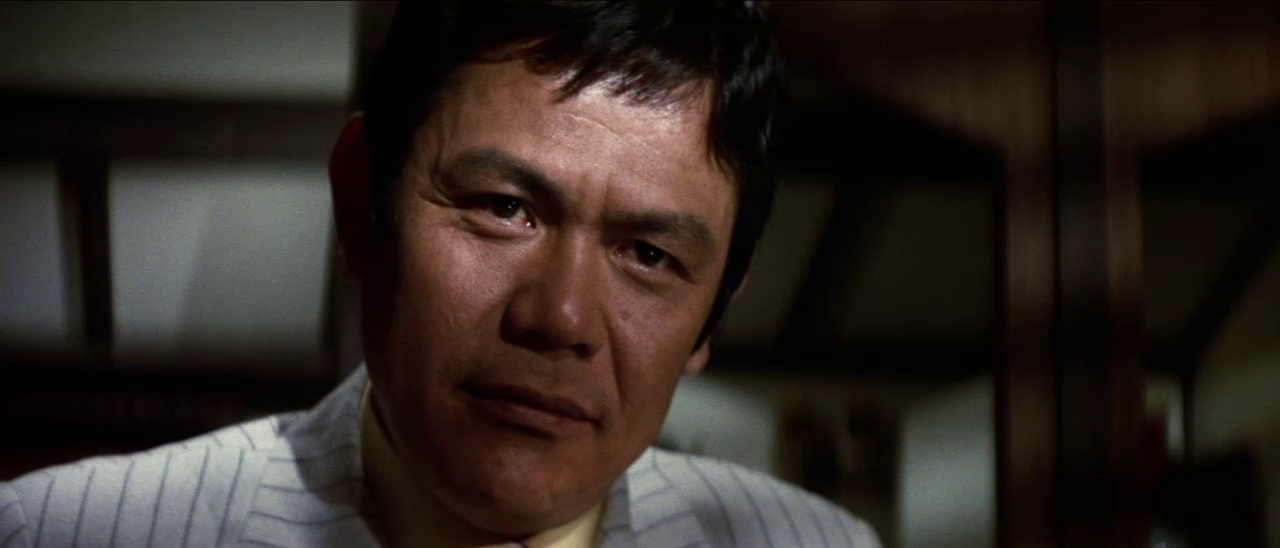
The Executioner II: Karate Inferno is a completely different kind of narrative than The Executioner. While the story is decent, the unnecessary shift from a pure martial arts narrative to a more ‘western’ action narrative with some spy-elements sets the spectator ultimately up for disappointment. The Executioner II: Karate Inferno has no structure to allow a karate inferno to be staged – the narrative is simply not structured around martial arts. Why were our three leads forced into a narrative that does not fit them, that does not evolve their characters and conflicts in meaningful way? Don’t think too long: to financially exploit the unexpected success of the first narrative.
Nevertheless, there are similarities between both narratives. Once again, the clashing of Koga, Hayabusa, and Sakura’s personalities forms the central dynamic by which highheartedness is delivered. Yet, the comical element in The Executioner II: Karate Inferno relies, more than in The Executioner, on a relational and competitive dynamic that certain men install between himself and a rival. This competitive dynamic, which especially structures Ryuichi Koga and Ichiro Sakura’s interactions, is driven by the unsatisfied need to feel desired by the female other. This need does not only instigate a kind of search for a piece of proof that one is more desirable than the other, but also a playful but often vulgar attempt to confront the other with his lack. Other comical moments within Executioner II: Karate Inferno have, in general, the same phallic farcical flavour (e.g. an electricity worker peeing in his pants, …etc.). One time, the comical situation is born from Koga’s lack of knowledge concerning western manners and reliance on traditional Japanese cultural practices.
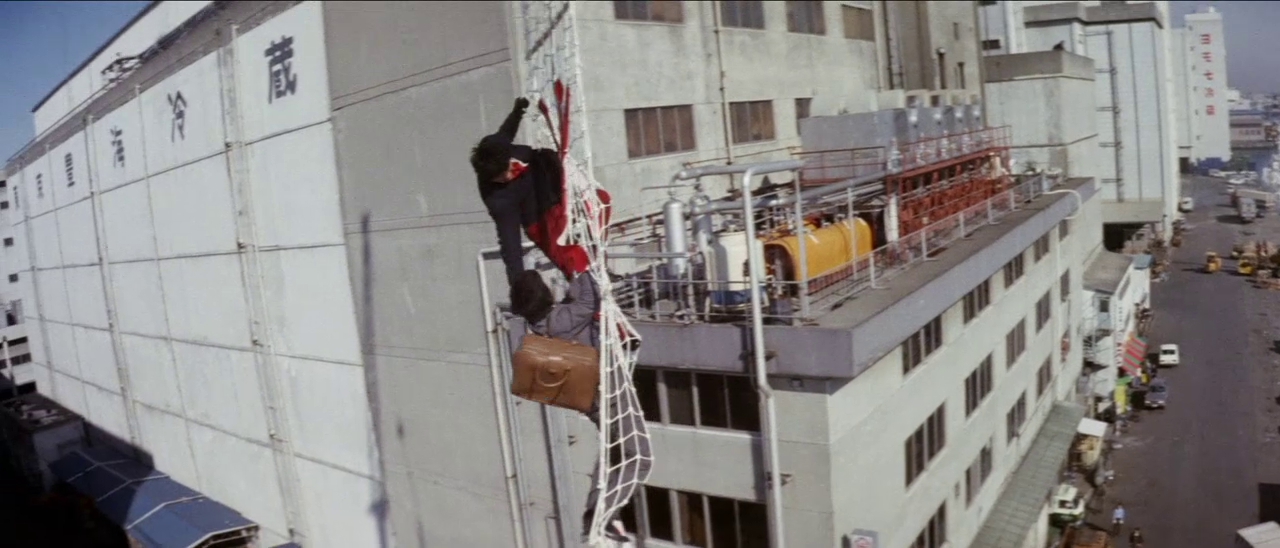
Yet, despite offering similar banter as in the Executioner, the sequel does not further develop the characters. While the first narrative was not heavy on character-development, the second narrative just ignores the subjective conflicts of our characters. Moreover, some of our leads suddenly have convenient new abilities, which further strengthens the feeling that the characters were forced into a narrative that was not meant for them. The theme that structures The Executioner II: Karate Inferno is nevertheless quite similar to the theme of the first narrative: the (right-wing?) fear that foreign criminals will exploit Japanese people and money. This thematic thread becomes apparent when it is revealed that the theft and abduction was staged by the Chicago mafia to commit insurance fraud. Both Lady Sabine and Rico (-), the general manager of Rogers Bank, the bank that stores the precious jewel, appear to be linked to the mafia and are in on the criminal attempt to defraud the Japanese insurance company.
Just like its predecessor, The Executioner II: Karate Inferno has a dynamic composition. Ishii fluidly combines static and dynamic shots and integrates cinematographic tools like zoom-outs and zoom-ins to give his composition an added dynamic touch. The flashback and flashforward imagery that decorates the introduction of the leads might offer a nice stylish touch to Ishii’s composition, the many flashes of nudity and martial-arts action create expectations that the narrative ultimately fails to satisfy.
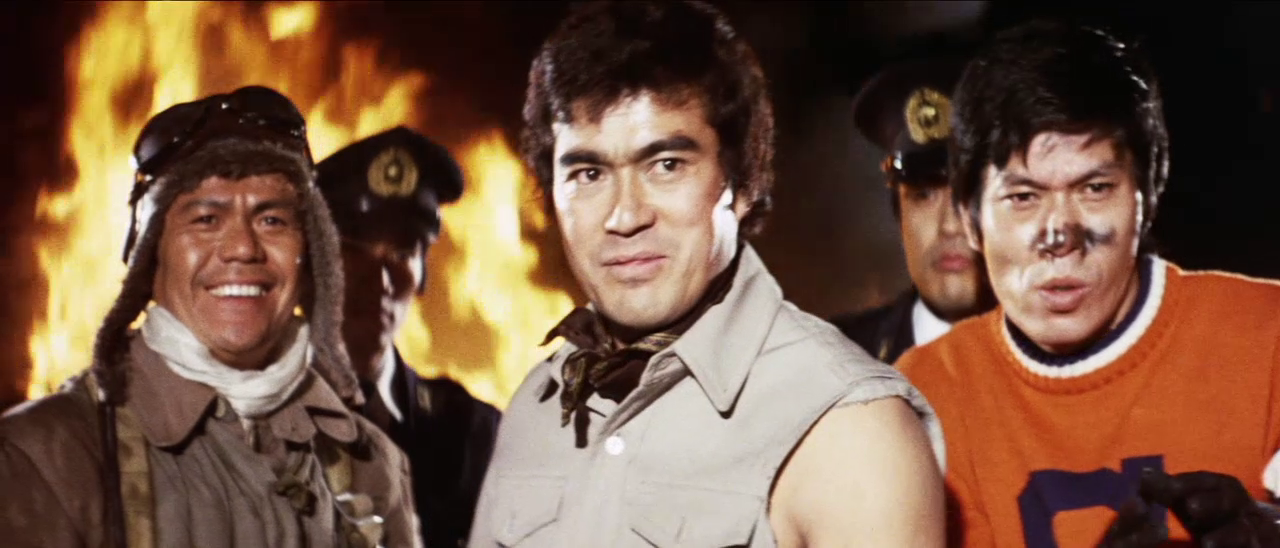
The haste by which this sequel was paste together is most evident in the martial arts sequences or the lack thereof. While the crude and shaky way of filming the few moments of fighting in the narrative breathes some brutality into these exchanges of punches and kicks, this stylistic choice also emphasizes the absence of any elaborate choreographies – moments of action feel sewn together without little care for continuity. Another consequence of this haste is not simply that there are only a few visualizations of the destructive and bloody impact of the punch on the body present within the fighting sequences, but that these decorations are not well-delivered.
In this sense, the compositional emphasis on action-related set-pieces – e.g. flying over Tokyo while hanging on a balloon, and comical sequences merely try to hide the fact that Karate Inferno does not deliver anything close to a karate inferno. While the finale makes some things right – offering Sonny Chiba his stage to show of his skill and deliver some deadly and bloody punches, thefighting choreography lacks power and rhythm to impress and fully satisfy the spectator (cine-note 1). As the fighting-sequences lack a pleasant dramatical rhythm, the soundsthat decorate the many moves (e.g. the sound of jumping, the swishing of arms, … etc.)are unable tostrengthen the tension within such sequences. On the other hand, the musical accompaniment, once again by Hajime Kaburagi, does fulfill its role of heightening the tension within the action-sequences, i.e. the grand set-pieces.
All The Executioner II: Karate Inferno had to do was deliver more martial arts moments and develop the characters and their conflicts a bit more. Yet, instead, Toei delivered a cheap imitation of a western espionage-narrative with a severe lack of martial arts. While the finale delivers the goods, the haste by which it was put together undercuts the most important thing to allow this sequence to fully satisfy the spectator: the compositional emphasis of the rhythmical beauty of fighting.

Notes
Cine-note 1: The roughness and the many visual signs that break the sense of continuity of the action set-pieces emphasize, once more, the time and, in all probability, the budget restraints the production had to deal with.
 psychocinema