Yusaku Matsumoto burst on the international scene with Noise (2017). Since then, he has proved, with each subsequent film – It’s All My Fault (2022), Winny (2023), that the success of his first was not by mere chance.
For his fourth-feature film, he chooses to tackle another true story. While Winny traced the battle of Isamu Kaneko, who invented the revolutionary P2P file-sharing program Winny, against the law and the Other, This Is I develops the coming-into-being of Ai Haruna. However, in essence, Matsumoto delivers the same hope for Japanese society: to allow subjects to live more freely and more equally.
Matsumoto’s narrative begins in eighties, in Osaka. Kenji Onishi (Haruki Mochizuki), who dreams of becoming a female idol, is subjected to bullying for his effeminate presence. Unable to inscribe himself in the oppressive discourse of masculinity, he cannot but feel lost. One evening, his eye catches the beauty of Aki (Ataru Nakamura) as she crosses a bridge near Dotonbori. He follows her and discovers Jordan Pub, a newhalf or transvestite bar (General-note 1, General-note 2). He ends up asking her, the mama of the joint, to give him work – she agrees. Not that much later, Kenji meets Dr. Wada, a man who struggles to find meaning in his work as plastic surgeon.
With This Is I, Yusaku Matsumoto delivers an emotionally rich experience – a neatly interwoven fabric of drama, light-heartedness, joy, sadness. The spectator will have no problem in perceiving that all the emotions on display in the narrative are function of the coupling or decoupling of the subject with the symbolic Other, of the signifier that affirms or rejects the right of the subject to inscribe himself in the societal field.
Matsumoto confronts the spectator with the destabilizing tension between subject and Other right from the get go. Despite all the poppy positivity that marks the opening sequence, he immediately homes in on the dynamic of bullying. By doing so, he does not merely highlight the ideal-image of masculinity within the societal field but also that this ‘phallic’ ideal gets exploited by subjects to subjects to exploiting the Otherness of the other – the otherness of his way of enjoyment – for their own pleasure.

As the youthful positivity dissipates, we encounter a subject who, due to repeated confrontations with his Otherness – the inability to fit within the societal ideal of masculinity, cannot but question himself (Narra-note 1). He is forced to peer into the abyss of his own subjective nothingness because he is unable to fabricate an ego for himself within the societal field. The question concerning his identity – who am I? – cannot be answered; the question culminates in a confrontation with the dark void of his own nothingness.
The first signifier Kenji receives to denote his subjectivity position is the signifier Newhalf; the second one is Ai – “Ai will give you the love you deserve”. The reason why this nomination pacifies Kenji is not simply because it establishes a space-of-belonging, but because it gives him space to subjectify himself and construct his ego. In other words, the nomination rescues him from the symbolic no-mans-land where he was left wandering by introducing a path other than the societally imposed one concerning masculinity that he could not, in any way, subjectively embark on.
It is by embarking on this path – the path littered with transvestites, frilly clothes, and make-up, that Ai becomes able to assume the signifier that he, due to oppressive presence of masculine ideals, could not make his own: the signifier woman. However, Kenji can only truly become Ai if the truth of the signifier woman in physically inscribed on his body – the removal of his balls forms the first step to literally and figuratively feminize the body.
The body, in other words, forms the main support for the Ai’s subjective assumption of the signifier and the feminine image. However, the minimal surgery to support the assumption of the signifier woman does not entirely solve the relationship with the Other. Why does Ai’s mother remain so distant – escaping the need to accept the subjective truth of her son? And what about sexuality in the field of romance: can Takuya (Kaito Yoshimura) overcome the anatomical limitations of Ai’s feminine presence? Or can Ai convince Wada to take the next surgical step to strengthen the bodily support for her assumption of the signifier woman (Narra-note 2)?
As the narrative unfolds, Matsumoto rightly highlights that merely having the body to support one’s gender is not enough. She also needs some form of recognition from the Other – either as woman or as idol. Her subjective health depends, thus, not only on the real intervention of the body but also on the signifier of the Other.
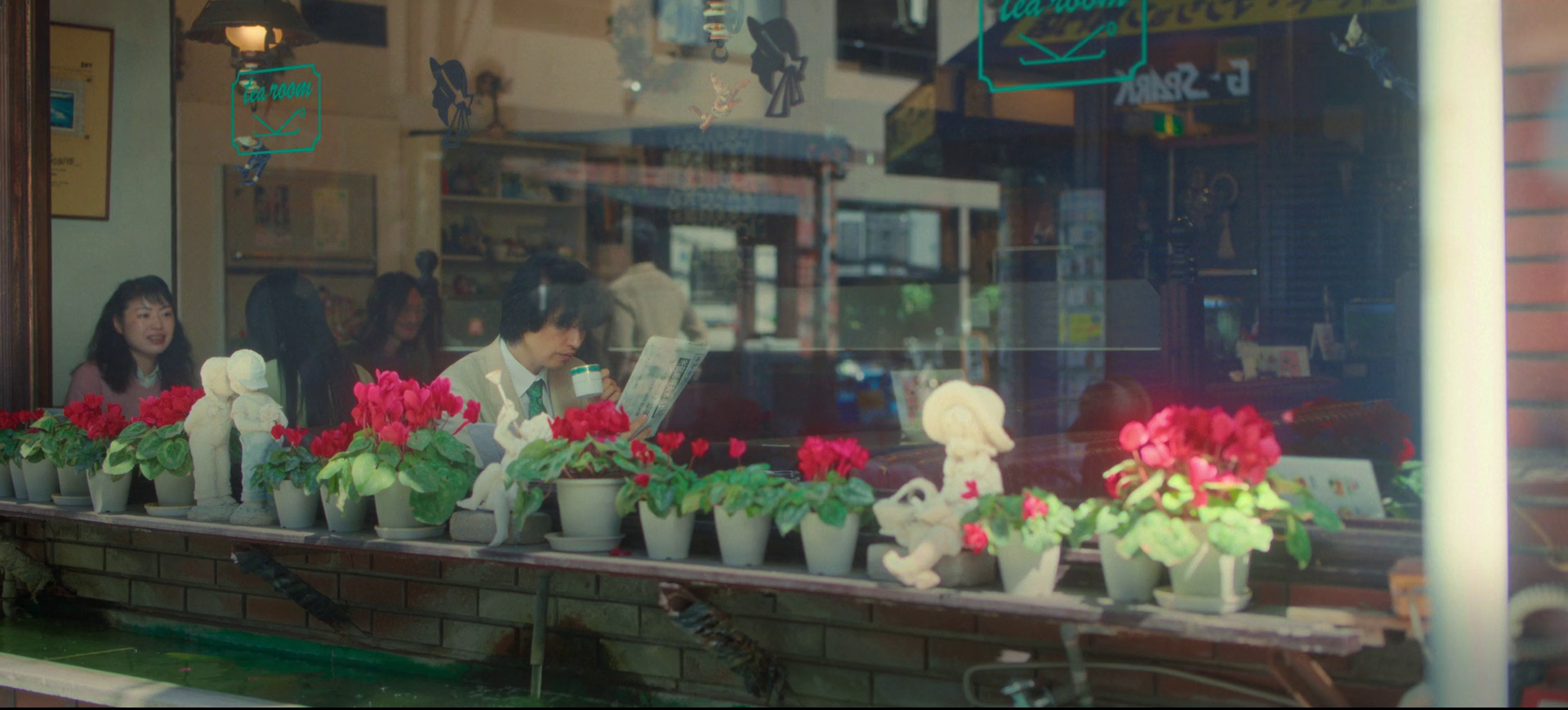
Wada (Takumi Saito) finds himself in a somewhat similar situation. While he has a symbolic position as doctor, he failed to subjectify that position. He did not merely struggle to give meaning to himself as doctor, but could not, due to a traumatic experience, put the ideal that led him to the profession into practice – brutal reality perforated the ideal – the meaning of being a doctor, washed away the foundation upon which to built his ego as doctor (Narra-note 3).

While it is not emphasized that much within the narrative, it is nevertheless evident that Wada, by surgically removing Kenji’s balls – by inscribing in his body the right to assume the signifier woman, takes his first step in repairing his own ego as doctor. He becomes able to go beyond the mere biological signified of saving lives and utilize surgery to help subjects inscribe themselves within the societal field. Yet, he is ultimately faced with Ai’s demand to commit a criminal offence – perform a sex reassignment surgery.
The spectator can easily guess whether Wada will stay true to his ideal or betray it. It is thus not surprising that Matsumoto puts the emphasis within his narrative on the consequences of Wada’s choice. To reformulate it as a question, can he, having followed his own ideal as doctor, fight against and repel the attack of the law, of what symbolically protects the patriarchal and traditional discourses concerning gender?
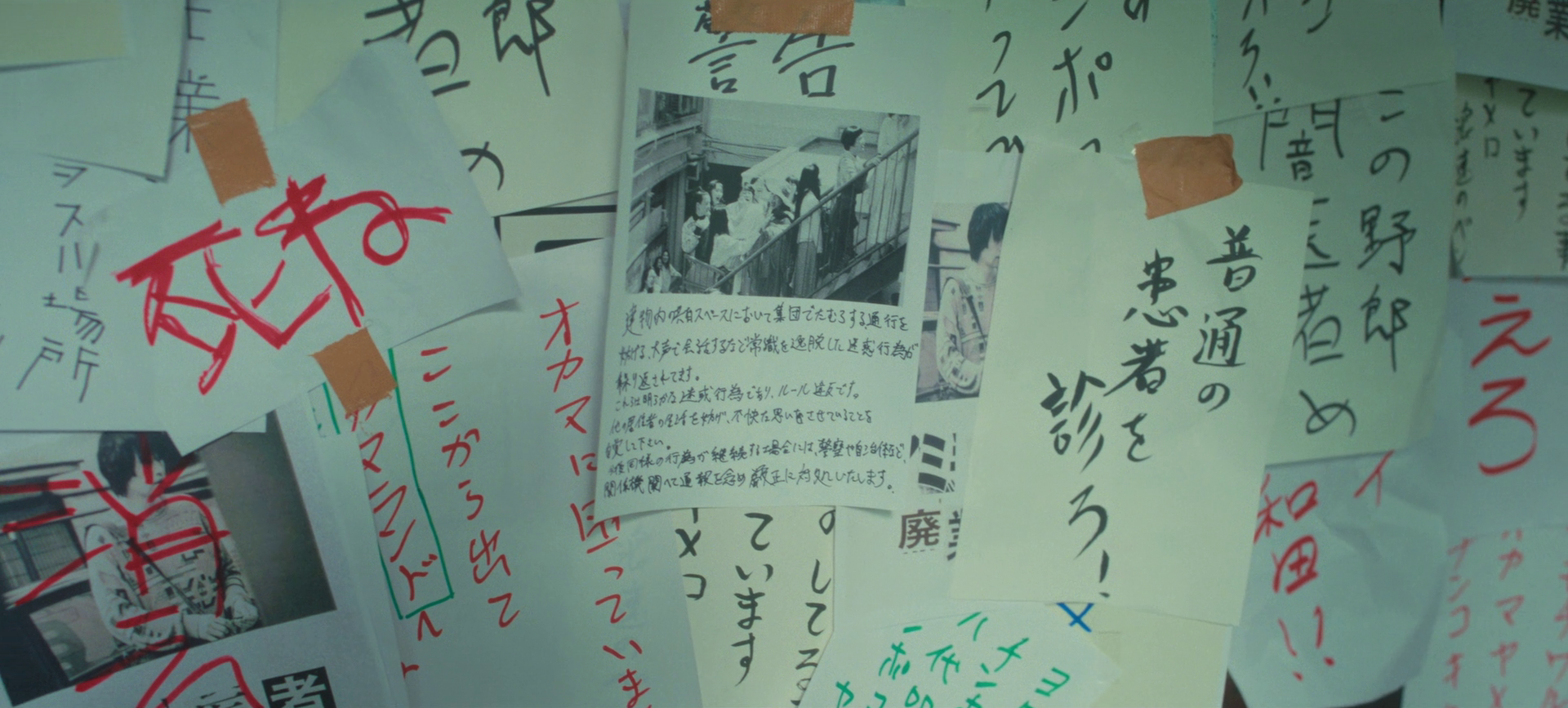
Yet, the dark shadow of ideology – the oppressive societal demand to enjoy all in the same way – soon rears its head. The vile verbal attacks that come to adorn the walls of Wada’s clinic attack the clinic for respectfully dealing with Otherness – an Other way of enjoying – and the visit of the police brutally re-affirms that the transvestite and the transgender are considered an eccentric stain on the peaceful phantasmatic veil of societal harmony.
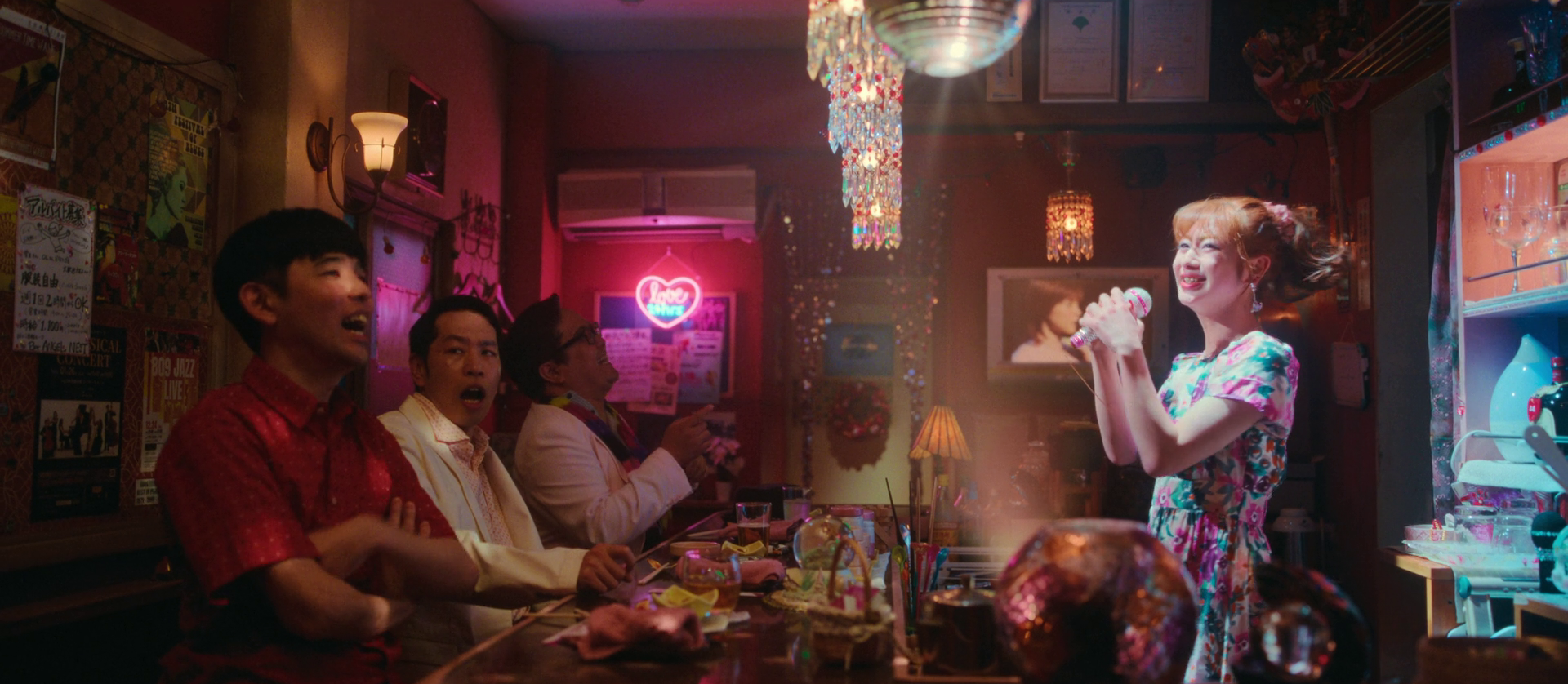
Matsumoto seductively invites the spectator into the narrative of This Is I with poppy musical accompaniment and a fluidly dynamic compositions – full of tracking movement and spatial dynamism. Within his fluid concatenation of camera movement, static moments become important visual accents. Accents are either integrated into the visual flow to aid with the transitioning of scenes or to amplify, with a moment of compositional beauty, the subjective impact of certain signifiers.
Matsumoto decorates his compositions richly with pop-music, letting music dictate the rhythm of his composition, for two reasons, to speak with images, contextualize, without relying too much on signifiers, the lived reality of Kenji/Ai or the interweave musical moments within his composition that affirms the positive subjective effects of becoming a crossdresser, newhalf, and later a transgender woman.
Matsumoto also relies on more intimate musical pieces to breathe life into the dramatic and emotional flow of his narrative. While his reliance on music could have caused This Is I to crash and burn as a forced melo-dramatic piece, the incredible performance by Haruki Mochizuki ensures that the music, rather than forcefully dictating the emotions of the spectator, amplifies the emotional effect of signifiers and the bodily expression on the spectator. In other words, the musical pieces create a temporal space that allows the spectator to reflect on the emotional dimension of Kenji/Ai’s signifiers, his/her enunciations.
Yusaku Matsumoto re-affirms his directorial talent with his fourth feature film This is I. He does not only delivera narrative that will resonate with many – everyone is, in some ways, negatively marked by the societal Other, but also makes a very convincing case for the need for the societal field to become more willing to grant subjects the right to nominate themselves in accordance with their subjective position. Matsumoto delivers, within these times of right-wing reductionist views on identity, a must-see narrative.

Notes
General-note 1: Newhalf is a culturally specific signifier born in the early eighties within the field of entertainment to denote a new kind of transvestite, crossdresser. This term aimed to emphasize or sell the feminine beauty of the transvestite.
It is important to note that the term, in the eighties, did not refer to a transgender subject or someone who had gender-conforming surgery – “…, but you’ll never be a woman”. It just denotes a beautiful feminine transvestite who works within the entertainment business.
We hope that the spectator grasps the difference between Kenji and the transvestite. What the transvestite seeks to stage is the idealized Woman – one exaggerates the female signifiers and exposes femininity as a semblance. The transvestite aims to stage what the male Other desires, but also to affirm and deny ‘castration’ at the same time, to show the difference between penis and phallus.
What Kenji aspires to is to become a performing woman rather than someone who turns femininity into a performance. Yet, while Ai’s presence within the societal field is less determined by exaggerated femininity, the way she present himself in the societal seems nevertheless influenced by his formative period at Jordan Pub – Ai often turns her femininity into a performance for the male Other.
However, the performative dimension of her femininity functions as a defensive response to an Other that refuses to recognize her as a woman and a theatrical attempt to convince this Other to acknowledge her gender.
General-note 2: It is important to underline that many of the entertainers at Club New Jordan utilize medication (i.e. premarin) to force breast-growth. In this sense, the signifier newhalf can only be said to denote a new combination between seductive femininity – the staging of the ideal woman from a masculine perspective – and hidden masculinity – the untouched reproductive organs.
Narra-note 1: The societal dimension of this masculine idealis not only apparent in the way the father talks to his son but also in the speech of his homeroom teacher who tells him that he, to avoid further bullying, should stop being so effeminate and act more like a man.
Narra-note 2: Matsumoto also underlines that, even after second surgery, Ai continues to struggle to fully inhabit the signifier woman. Her manly past – the fact of having had male reproductive organs – is a ghost that continues to haunt her, a man-made woman, from time to time.
Narra-note 3: The verbal attacks that Wada directs at the three other surgeons at the Izakaya gives account of the destabilizing effect of seeing one’s humane ideal overthrown by the dehumanized reality of the surgeon – “Surgeons don’t care about people; All they want is to operate”.
Later in the narrative, when the traumatic event washes over Wada, it becomes evident that the source of his subjective conflict is due to being confronted with the different connotation surgeons and patients give to the signifier life – surgeons merely focus on saving biological lives and not societal lives; biology over society, bodily real over ego and subject.
 psychocinema