Many spectators harbour the secret hope that the Japanese horror can force another golden age. While in recent years, a few new directors have appeared to try and breathe new life into the genre, some old masters continue to churn out horror films here and there.
One such director is master-of-horror Hideo Nakata. However, his recent output cannot compare with the classics (Ring (1998), Ring 2 (1999), Dark Water (2002)) he produced. However, rather than him having lost his touch, Nakata seems, in love for the genre, to happily work within the safe frame established by big companies like Shochiku. After trying (and failing) his hand at a horror-romance blend in 2020 with Stigmatized Properties, he returns to the same formula in Stigmatized Properties: Possession. Yet, is his sequel any better?
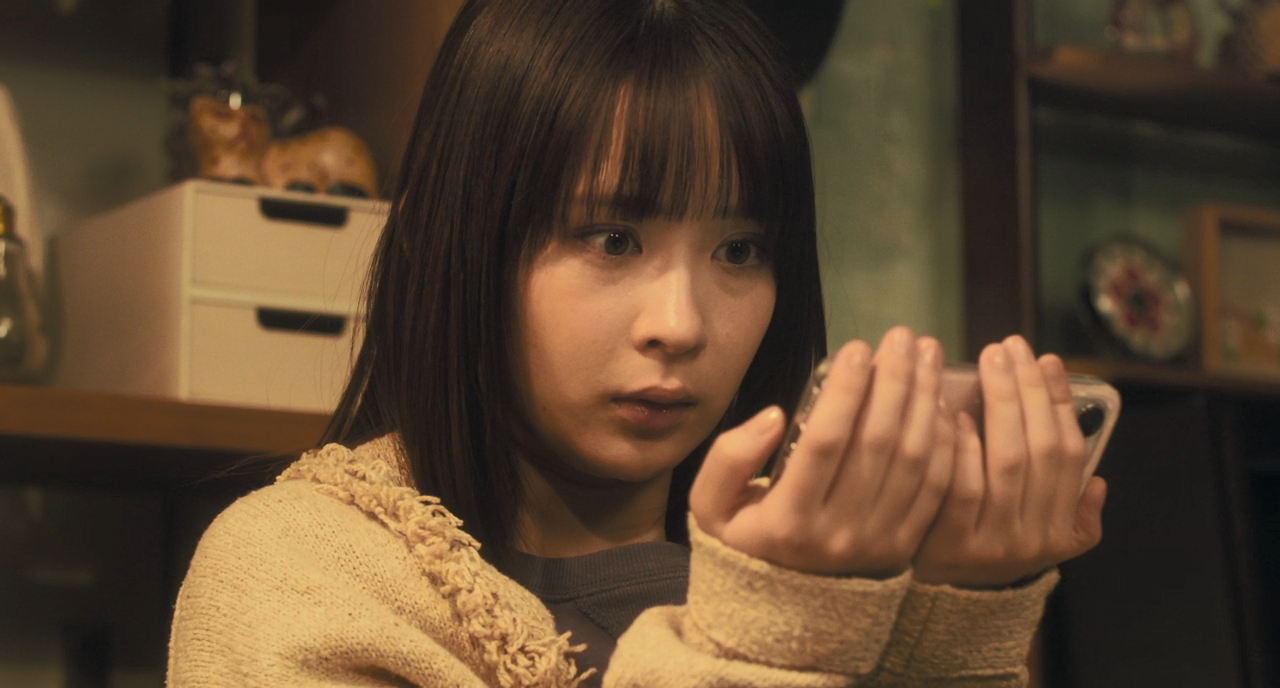
One day, Yahiro Kuwata (Shota Watanabe) is called in the boss’ office and is given the chance to become a product line manager. While he expresses some gratitude for the promotion, he ultimately refuses the safety of the factory – the safety of mundane repetition – to take, what he called, his last chance to realize his child-hood dream of becoming a tv personality (tarento).
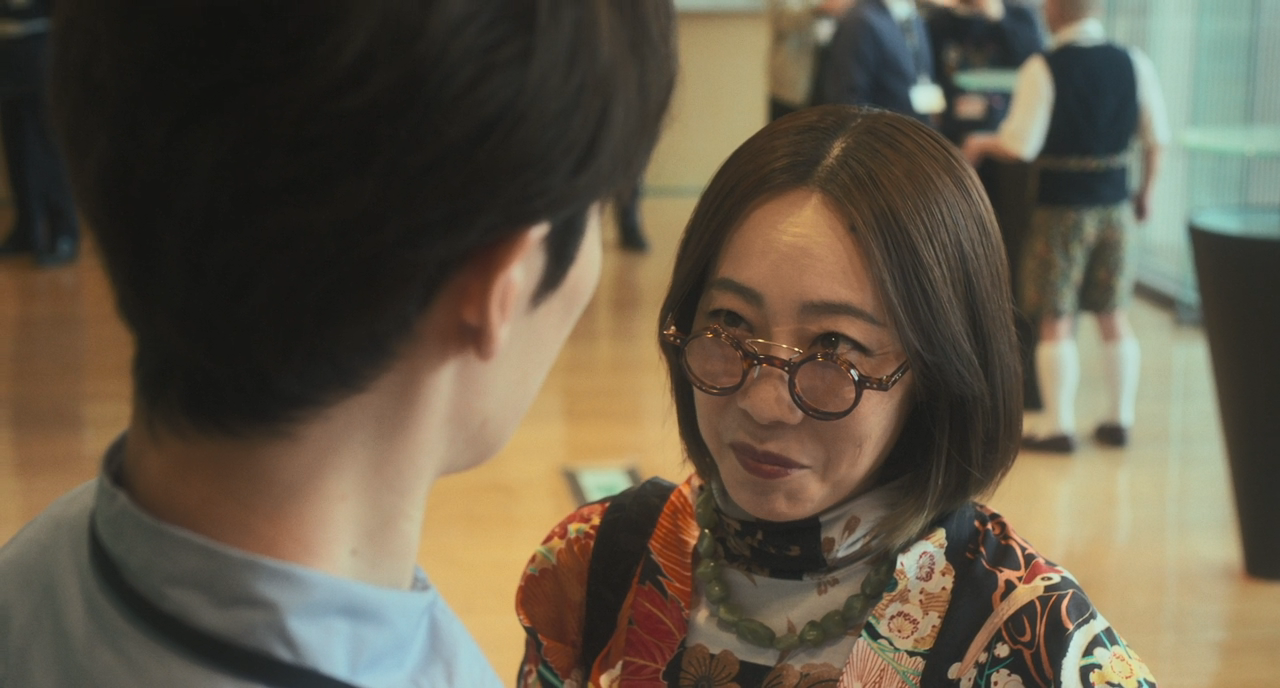
He travels from Fukuoka to Tokyo and visits the Talent Agency his boss (Kenichi Takitoh) at the factory recommended. Much to his surprise, Fujiyoshi (Kotaro Yoshida) is not only willing to take him on but also immediately gives him his first assignment, to help with the series called Living in It! He is tasked to visit Joubutsu Real Estate Company and choose one of the fine stigmatized properties there. Not much later, while doing his first bit-part, he meets Karin Harubara (Mei Hata), a charming young lady.
Stigmatized Properties: Possession is not made for J-horror fans, but for a wider audience who is not afraid to have a few scares, but needs a positive end to wash away the moments of ominous uneasiness. In this sense, it is not so surprising that Hideo Nakata, rather than creating a narrative in service of the staging of horror, utilizes a chapter-like structure – four chapters, four stigmatized properties – to serve moments of horror, but to ultimately attempt to deliver a wholesome romantic denouement.
This duality – horror and romance – in service of introducing new people to the genre is evident in the way Hideo Nakata approaches the theme of stigmatized properties. In short, he refuses to touch upon the societal critical implications of the hauntings. Yet, how to understand the dynamic of these hauntings?
The way Nakata frames the impact of these horrifying materializations of jouissance on Kuwata and others emphasize that he views the transgressive act – the past act of suicide or murder – as something that thins the veil of the mundane societal field, a thinning that allows the hidden imprint of transgressive jouissance to manifest itself once more.
In general, Nakata visualizes the horror (e.g. the hand crawling over Kuwata’s body, the wet kiss in his neck, …) for the spectator, but cuts Kuwata off from seeing, turning him into someone that is being seen, into a mere object for the transgressive jouissance that lurks in the shadows. For Kuwata and others who enter these properties, the transgressive jouissance which signals its presence on the body and echoes in the ears, functions as the Lacanian Gaze and Voice – a sensible presence of opaque desire that threatens the consistency of egos (Narra-note 1).
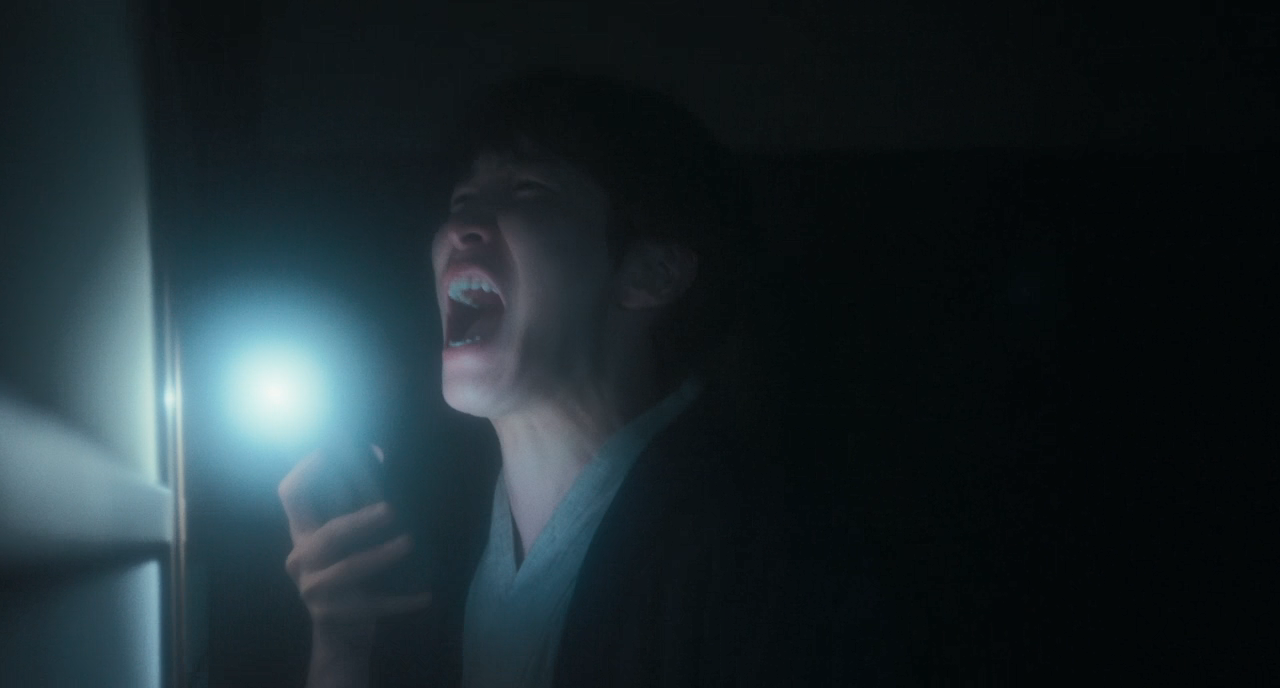
However, this disruptive gaze does not seek the disintegration of the ego of the tenant, but tries to invite him to read the unsettling manifestations of transgressive jouissance as a demand for recognition. The jouissance manifest itself within these spaces, pushing through the thinned veil, because the victim’s trauma has not been turned into truth within the societal field, because it has been left repressed within the Other by the societal Other (Narra-note 2).
The dynamic of fleeting possession – Karin Harubara in the stigmatized apartment, Yahiro Kuwata in the stigmatized onsen – corroborates the idea that the materialisation of the transgressive jouissance in the shape of the voice presents a demand for recognition to the Other – a recognition that can only be proven by a symbolic act.
While many J-horror narratives deal with the difficulty to enact such pacifying symbolic act, Stigmatized Properties: Possession does not thread this familiar path. There is little to no attempt made by the protagonist to give recognition to traumatic jouissance left lingering – mere listening and seeing is not enough – and “societal evil” is allowed to fester within these tainted spaces of containment. The mediatisation of these spaces does not result in the recasting of the real trauma into symbolic truth, but merely produces a concatenation of images whose sole aim is to generate horror-pleasure for the spectator (General-note 1).
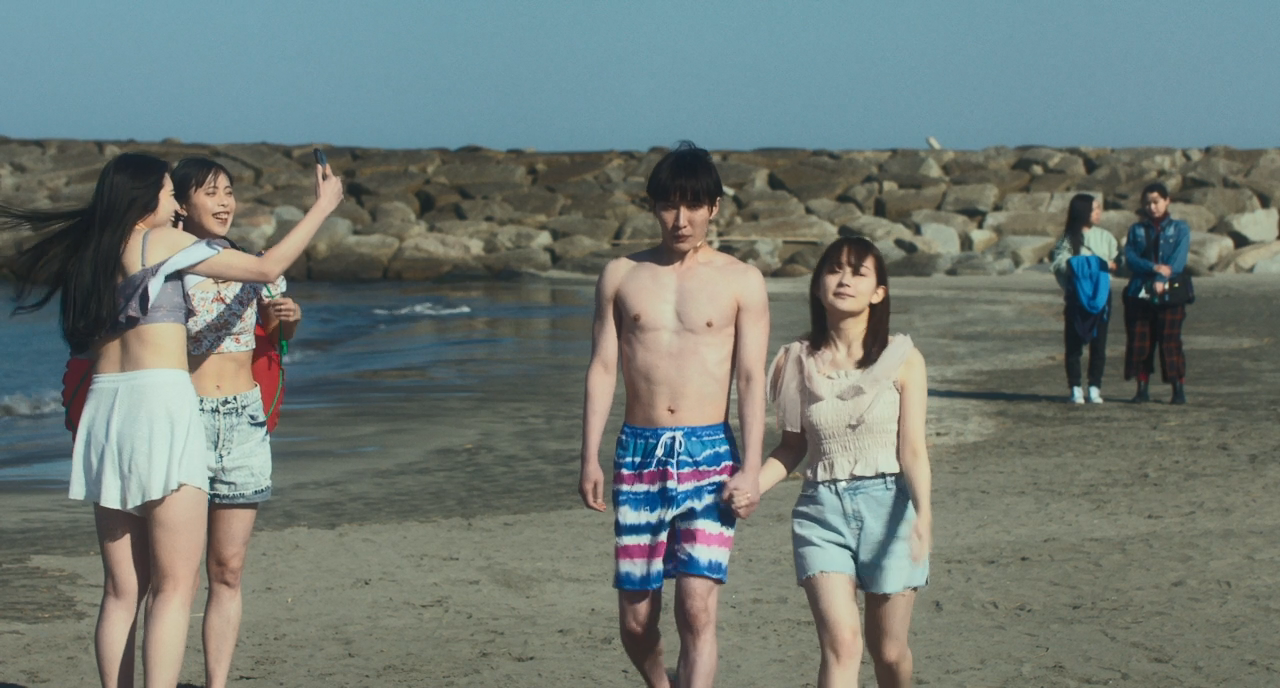
The problem with the structure of chapters is that Hideo Nakata renders himself unable to carefully build-up an atmosphere that, as a frame, supports the delivery of the horror moments. While the re-installation of the horror atmosphere works well in the first two chapters, the lack of an atmospheric frame causes the third chapter to obtain an unintentional comical flavour. The narrative division and the neat separation of plain mundanity and sinister darkness of traumatic jouissance forces Nakata to force the drama – a forcing that, by being unable to feed from a carefully engendered ominous atmosphere, create a discrepancy that deflates the spectator’s sense of tension with un-intended silliness.
While the silliness of the third chapter – the stigmatized share-house – threatens the derail the entire narrative, Hideo Nakata injects some mysterious twists into the narrative to avoid his J-horror from crashing completely. However, his choice to turn his horror into a melodramatic romance for its finale is something that J-horror connoisseurs will have difficulty to appreciate. It is not that such kind of shift is inherently bad, but the sparse build-up to the finale dooms Nakata to, once again, force the emotional pay-off – forced not genuine.
The composition of Stigmatized Properties: Possession offers a nice mix of restrained dynamism, in service of the horror, and static moments to support the delivery of interactional drama. Within these more static sequences, Nakata often interweaves close-up moments to emphasize Yahiro’s subjective response to the Other (e.g. his determination to chase his dream) and focus on the facial expressions of other characters.
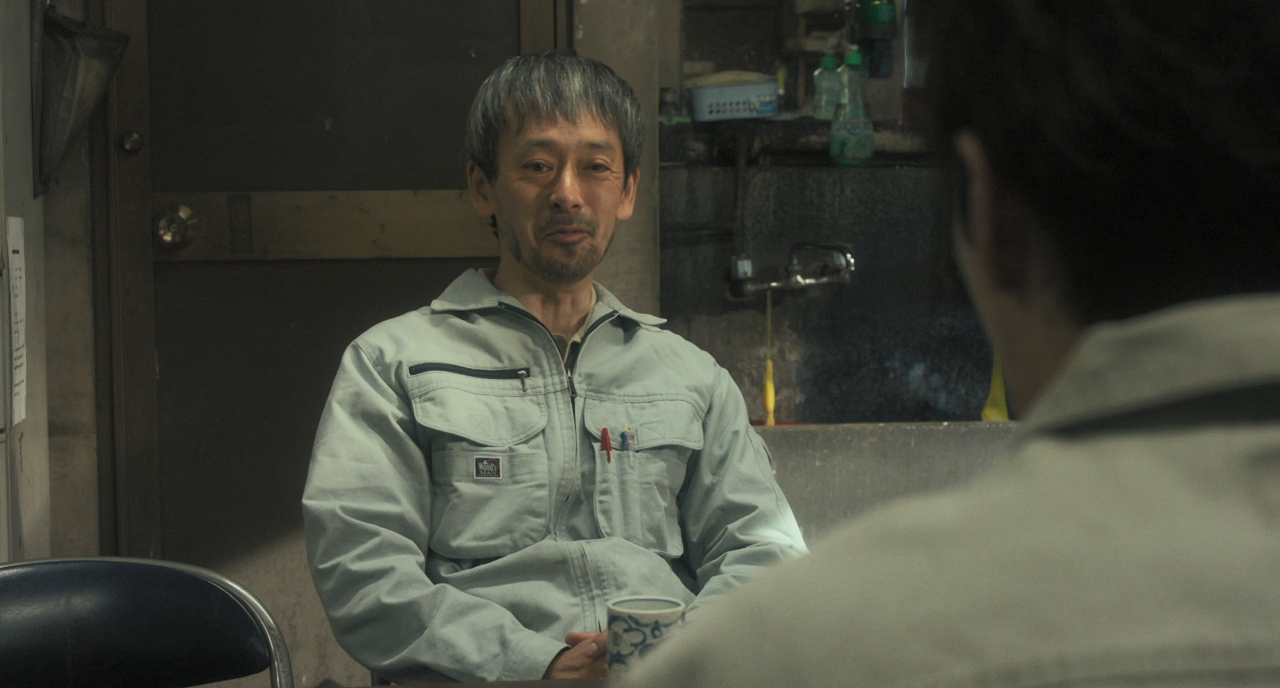
Hideo Nakata utilizes lightning to create a clear difference between the mundane outside and the eerie inside. The spectator will easily notice that darkish shadows only become prominent within the stigmatized properties, within the spaces violated by past acts of transgressive jouissance. The ominous darkness of these still shadows, shadows pregnant with not-yet materialized horror, signals that the ‘plain’ safety of the mundane societal field has stopped at the door.
Hideo Nakata relies on music to give the idea of living in stigmatized properties a subtle eerie quality. Rather than provoke the spectator’s uneasiness by visually signalling the presence of the otherworldly under the veil of societal mundanity, Nakata seeks to imbue the signifier Jiko-bukken with a sense of anticipatory thread. The way he utilizes music, moreover, re-emphasizes the visual separation between the mundane and the occult, neatly restricting the sinister atmosphere and the weird happenings to those isolated places marked by transgressive jouissance (Cine-note 1).
Stigmatized Properties: Possession can best be enjoyed if one views it as an entry-level invitation to the horror-genre. Nakata, happily falling into the trap of delivering easy-digestible entertainment – betrays the societal critical undercurrent that allowed the genre to thrive in the past and, thus, is unable to offer anything truly satisfying for long-time fans of the genre. From scares, unintended farce, to forced romance; another genre-mix that does not entirely click.

Notes:
Cine-note 1: As Nakata infuses the signifier with a foreboding quality – inviting the spectator to dread what it signifies – the overlaying of the framing of the mundane outside-world with subtle foreboding music does not puncture the atmosphere as such but evokes the effect of the signifier on the subject – the character of Yahiro Kuwata – wandering through the societal field of normality.
Moreover, by emphasizing the ominous quality of the signifier through music, Hideo Nakata also creates a fictive resemblance between character – the ego and the fictive alter-ego are both made to feel the effects of being subjected by that signifier.
Narra-note 1: The only way thetransgressive jouissance can break out of the confines of the stigmatized property is by clinging and to and perverting the tenant.
The Other, just like the subject, cannot perceive the presence of this traumatic jouissance directly, but only via a mediating object of a frame – a filming camera, a photograph, a mirror.
However, to create more intimate horror-effects, Hideo Nakata does sometimes break this rule, allowing the transgressive jouissance that clings to the tenant’s body or the stigmatized space materialize itself directly to the Other, either as an appeal for recognition or to repeal those who pose a threat of repression.
Narra-note 2: It is by silently infesting the body of the tenant and being captured via the mediation object of the frame that the lingering jouissance can introduce its demand for recognition to the societal Other.
General-note 1: Hideo Nakata offers a mere redoubling of the consumerist logic with his narrative – he can only focus on horror as entertainment because his narrative as such merely seeks to offer horror-entertainment. Nakata delivers, in this sense, cleaned-up horror, horror undone from its societal critical potential.
 psychocinema