From an outsider’s perspective, Japan might seem like a country where everything functions – everyone a fitting cog in a well-oiled machine, yet such mendacious fantasy is far from the truth. In Japan, like everywhere in the world, the subject struggles with the Other and with his own subjectivity; he struggles with becoming subject within the coordinates determined by the Other who is, by definition, fractured.
Anyone who holds such hopeful phantasy would do well to plunge into the wealth of Japanese drama films to discover the irresolvable tension that exists between subject and Other within the Japanese societal field. The latest film that elegantly perforates such misplaced ideal image is Yoshinori Sato’s Dawn Chorus.

Sato’s narrative offers the spectator an exploration of the subjectivity of Yuki (Mansaku Takada), a young adult who, one day, shows up at the campsite of his aunt Noriko (Mariko Tsutsui). He asks her if she knows his mother’s address, yet she must disappoint him; She does not know. After he has left, she attempts to contact his family, but all her calls end up in voicemail. At night, after closing the reception of the campsite, a strange sound catches her attention and she discovers Yuki behind a tree. She allows him to stay and offers him a part-time job.
While Dawn Chorus unfolds at a peaceful pace, the thematical exploration Sato embarks on with the story is not that ‘peaceful’: the exploration of the question of how to realize oneself as subject within the societal Other and with respect to the other (e.g. the other as peer, parent, or as family). Yuki’s presence on the campsite, surrounded by the pacifying beauty of nature, is marked by subdued relational strife, the outward expression of his subjective struggle. The spectator is elegantly led to question the separation between Yuki and his mother, but also invited to question why he, despite approaching others, pushes them away.
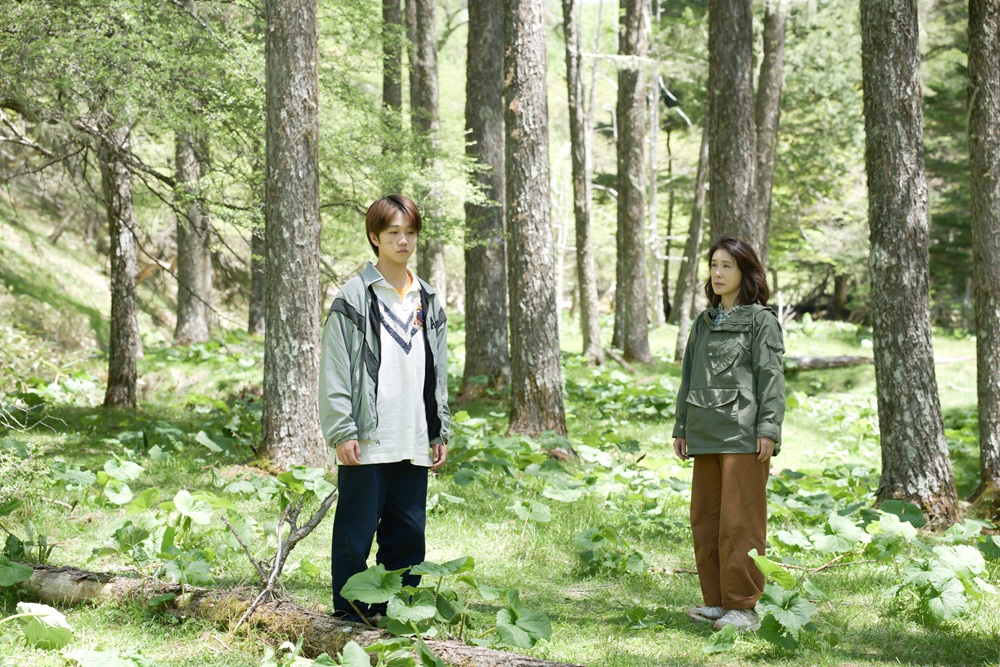
The distance he maintains between himself and the other is most evident in his avoidance to commit to speech-interactions. This reluctance to wield the signifier is not a sign of rebellion against the Other – i.e. the older generation, but a direct consequence of his difficulty to realize himself as subject within the societal field, of determining what his place is within the Other.
The non-committal way he responds to the Other emphasizes the distance he wants to keep, but also underlines the fractured state of his ego – there is no firm face to repress his subjective emptiness nor give his dwindling desire a goal that enflames it. The pushing away of the Other is, in a certain sense, an attempt at silencing his inner turmoil, a turmoil that, nevertheless, screams through his comportment. Dawn Chorus emphasizes, via Noriko’s emotional plea, that the road to ‘ego-re-construction’ lies in putting fragments of one’s subjectivity in signifiers and address them to an Other who is willing to receive them.
Our latest statement underlines that Yuki’s distancing stance is also function of the failure of the Other to discern what his comportment attempts to communicate. Yuki does not merely fail to formulate his inner turmoil via the signifier, but feels forced to turn to the dynamic of acting-out to make the Other see what it, in his experience, fails to hear. As Sato’s narrative unfolds, it becomes increasingly clear that Yuki’s dismissive stance towards the Other is caused by the deceit that structures the Other – i.e. the unvocalized ‘secret’ the father, as representative of the societal field, holds, the radical failure of his father as subject, and the absence of motherly signifiers.
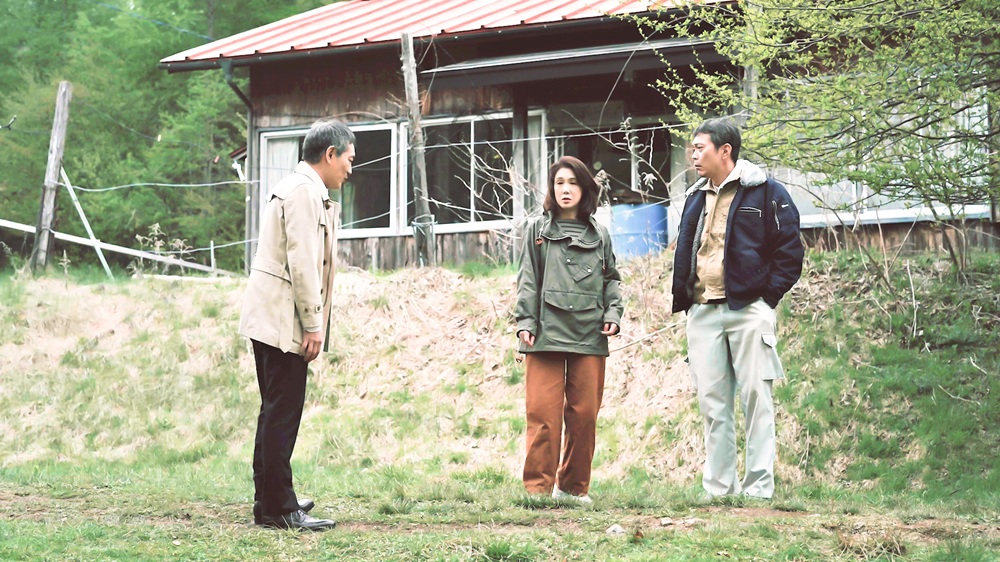
Dawn Chorus also touches upon the negative relational effect of letting preconceptions and superficial information of one’s past (i.e. Yuki spend time in a juvenile reformatory) determine one’s gaze – the Other’s failure lies in the preoccupation of the subject with his own ego. The dynamic is quite simple: from the subject’s interpretative mind arises an image that is forced onto the other subject, effacing his subjectivity, rendering the signified of his signifiers void, and misrecognizing his suffering. The act of pushing an image onto the other does not only efface his Otherness, but allows the subject to enjoy his phantasmatic constructions.
What stands out in the composition of Dawn Chorus is Sato’s reliance on long takes. The use of long takes does not only ensure the gentle pace of the visual rhythm, but also give time and space to the cast to breath life into the more emotional moments within the narrative.
Sato combines a darkish lightning-design where the shadows subtly stand out with a soft colour-palette – a softness further enhanced by Sato’s rich use of depth-of-field. This combination gives the visual fabric a pleasing and appealing quality by elegantly highlighting the beauty of what envelops the character(s) on the screen, i.e. the natural landscapes.
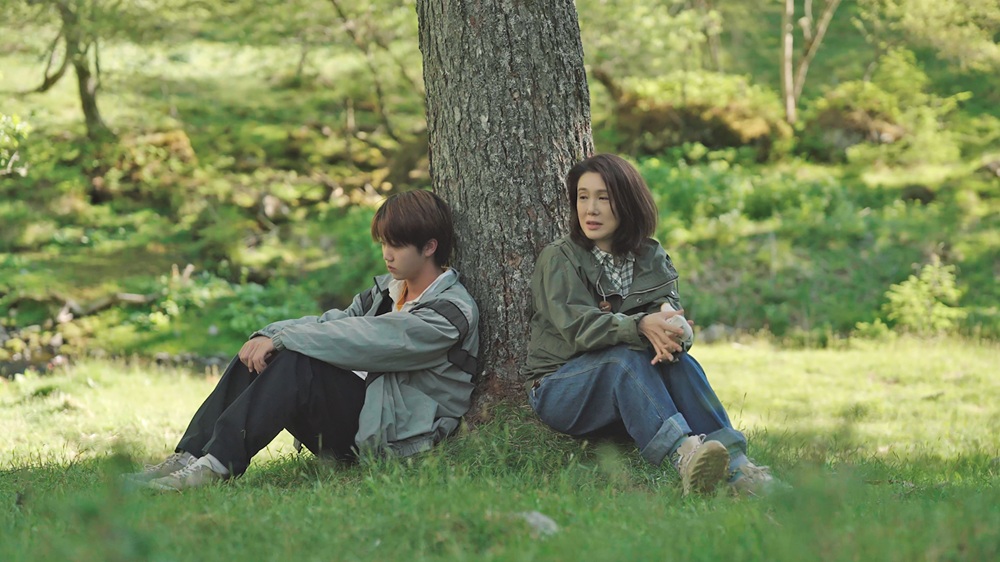
The beauty of the nature on the campsite is further enhanced by Sato’s careful approach to sound. The framed nature comes alive – gains a certain depth – by the many peaceful sounds that enrich one’s presence within a natural environment– e.g. birds singing, the rushing of the wind, … etc. The peaceful natural atmosphere of Dawn Chorus accentuates what can be called the discordance structural to the societal field – the subjective turmoil as what disturbs relational functioning, but also sketches out the kind of space the subject needs to tinker the fragments and splinters into a functional ego.
Dawn Chorus is a beautiful meditative narrative about the struggles of becoming subject. However, Sato’s film should not be mistaken for a narrative that celebrates motherly love. On the contrary, Sato shows, by evoking the destabilizing effect of familial fracture, the need for the subject to have an Other subject to address his signifiers of suffering to and who grants him the space to construct an ego out of the shards he is given by his past (Psycho-note 1).

Psycho-note 1: While the Other as subject can take on a motherly shape, this is not always the case. What the subject needs is a space safeguarded by an Other where the subject’s Otherness can be formulated.
 psychocinema
One Comment Add yours