In the late sixties, the ninkyo genre began losing its appeal for audiences as the political turmoil that swept the world problematized the nostalgic idealization of patriarchal values. Audiences began to see the patriarchal ideals – e.g. giri and inase – staged within these films for what they truly were: nostalgic fantasies that never existed. Luckily, in the weaning days of the ninkyo genre, Toei succeeded in delivering the genre’s carmen cygni with the Red Peony Gambler series.

Be sure to also read our review of Red Peony Gambler: Gambler’s obligation (1969) and Red Peony Gambler: Flower Cards Game (1969).
Each film in this series stages in their own way the triumph of a fictional constellation of patriarchal values over the capitalistic reflex that was secretly perverting the old ways. Yet, the series is not a mere nostalgic and phantasmatic return to a non-existing past, as the first film in the series Red Peony Gambler illustrates how limiting and suffocating the traditional Other for the female subject is and explores, often with a light-hearted touch, the challenges the female subject faces when assuming the logic of the inhibiting instance.
Director Kosaku Yamashita and writer Norifumi Suzuki explore both thematical dimensions through the character of Oryu (Yunko Fuji), a wandering gambler in search of the murderer of her father, the small-time yakuza boss Senzo Yano (Kyonosuke Murai). When the narrative opens, Oryu finds herself in a gambling hall in Iwakuni. The peaceful unfolding evening of gambling is suddenly rippled when Fujimatsu the Immortal (Kyōsuke Machida), a member of Torasaka Kumatora (Tomisaburo Wakayama)’s clan, calls out dealer Ebimasa (Yoichi Numata) for cheating with a trick card. A timely intervention by Oryu, which reveals Fujimatsu’s accusation to be true, saves Fujimatsu from a violent retribution.
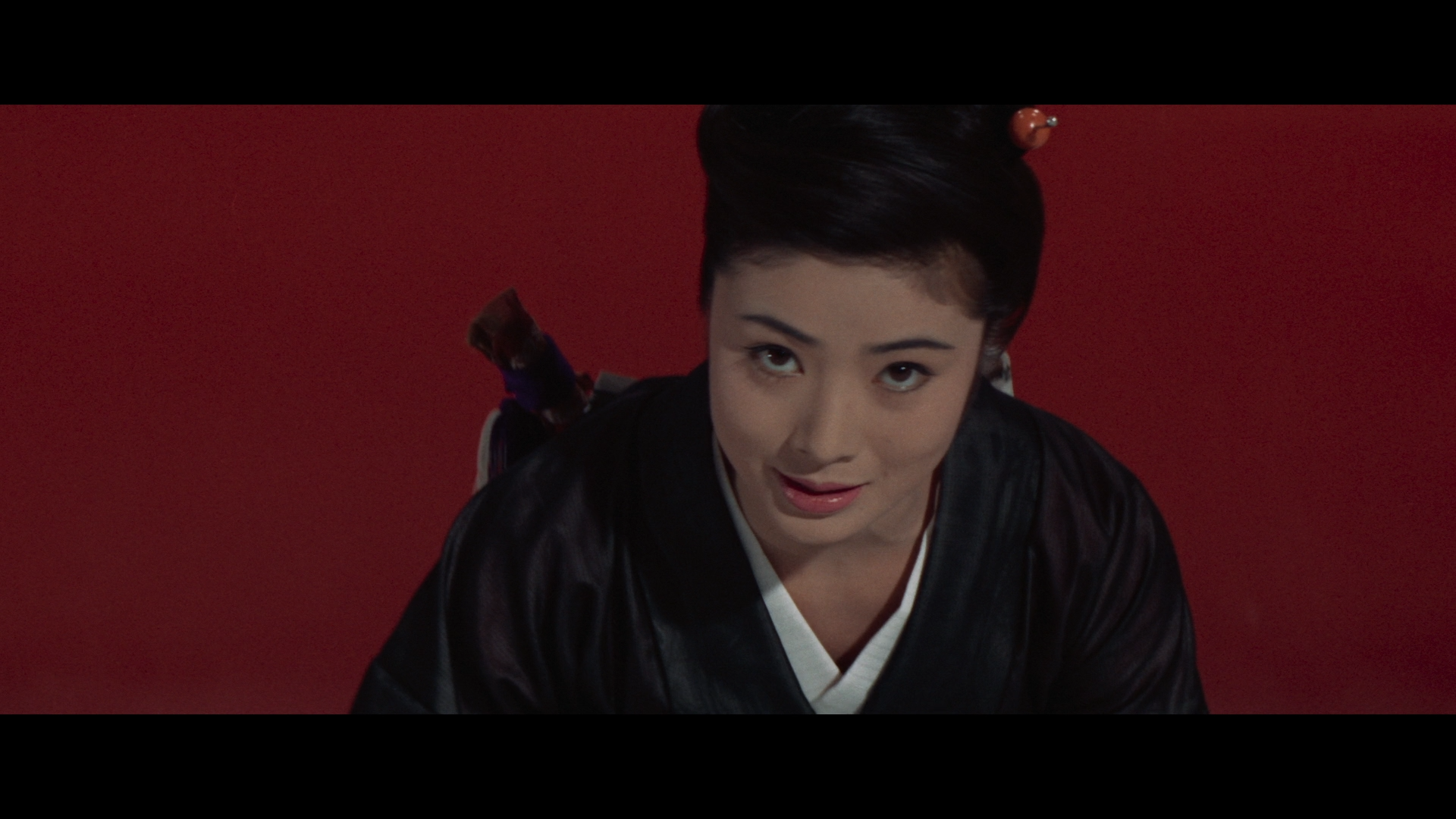
It is important to examine the act of fraud by which the narrative opens because it introduces the contaminating effect of the capitalist discourse on the traditional formal relational structures. This act of deception underlines that the formalized sequential rhythm of playing Tehonbiki, the formalized envelope aimed at de-subjectifying the presence of the dealer, can become the very frame where capitalistic desire can secretly blossom. In other words, the whole image of a-subjective formality, propped up by restrained and repetitive hand movements, is transformed into a support for a desire for objects (e.g. money) to satisfy a subject’s selfish search for pleasure. The capitalistic desire, which gives rise to an obsession with obtaining excremental objects, renounces and refuses desire’s aim: the Other’s love.
Oryu’s swift intervention with her tanto (dagger) does not merely introduce the spectator to the opposition between the strict moral dynamics of the traditional Other and the subtle subversive logic of capitalism and its trojan horse quality, but reveals the radical absence of pleasure in her comportment. Such absence underlines the fact that Oryu does not seek to enact revenge for her own enjoyment, but to faithfully carry out a symbolic demand. She embarks on this path of revenge purely because she must heed the obligation that logically emerges from her inscription in the patriarchal Other (giri, the field of social obligations) and the assumption of her father’s desire as her own (Ninjo, the dimension of compassion and love).
Some spectators will argue that Oryu’s apology to her deceased parents before embarking on her journey invalidates our assertion that she assumes her father’s desire. Yet, Red Peony Gambler underlines that the feminized desire she assumed to be her own and of which the father became its support was none other than the mother’s desire. The brutal murder of her father, which leads to the dissolution of the Yano clan and the end of Ryuko’s engagement with Marukane, causes her to refuse the mother’s desire and radically identify with what the deceased father represented – the image of the honourable yakuza. By establishing such identification – “I’ll be a man from now on”; I’ll act as a yakuza now, she cannot but accept the symbolic demand to take revenge as her own. This identification, which allows her to transform her passive position into an active one, gives her thwarted parental love (ninjo) its meaning-giving finality (giri).
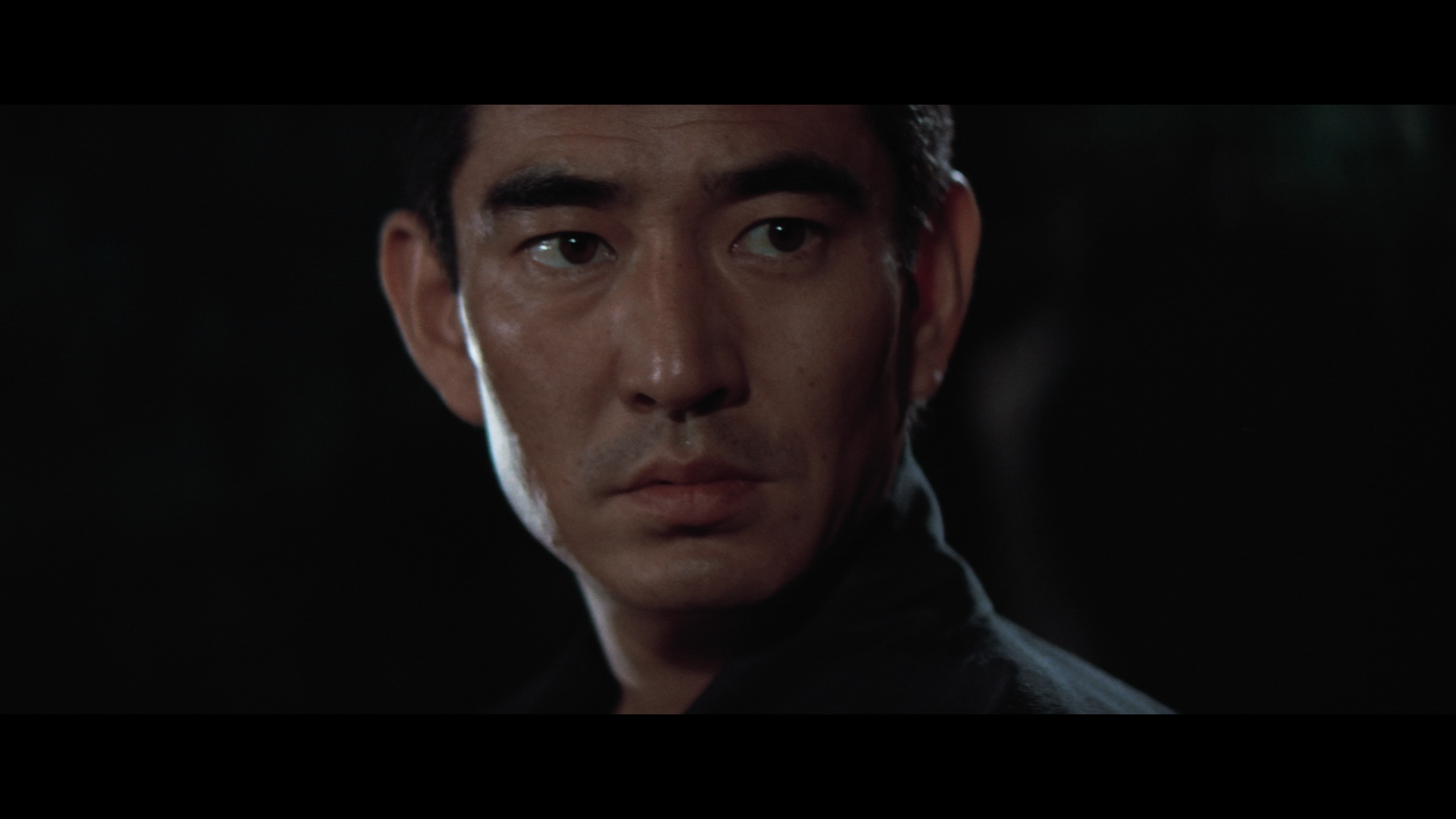
It is not unimportant to underline that the logic of Senzo Yano’s murder remains opaque for a while in The Red Peony Gambler. The Japanese signifier Tsujigiri, utilized by Fugushin (Yamamoto Rinichi) to inform Oryu and the kobun about the murder of their oyabun, can only be translated ascrossroads killing or crossroad killer. The wallet, the sole material clue by which the peony gambler can identify the murderer, does not help in qualifying the murderer’s desire. This wallet is nothing more than a signifier without a signified, yet one that does inaugurate the enunciation of a wandering sentence that will, eventually, culminate in a punctuating act of revenge, an act that will fixate the sentence’s meaning. The first signifier that is diachronically connected with the wallet is the failed attempt of Naoki katagiri (Takakura Ken) at feigning ignorance concerning the wallet’s owner. Naoki Katagiri’s subsequent theft of the wallet, the third signifier in the concatenation, only heightens the mystery that surrounds Oryu’s father untimely death.
However, the inability to qualify the desire that animated the murderous act in the first half of the narrative allows the spectator to grasp that the mere transgression, the crude and violent ravishing of the patriarchally structured fabric, forms the sole condition for the Other’s demand for revenge to blossom within the subject. Yet, this demand can only blossom within Oryu because she inscribed herself in the male field of giri (i.e. the moral dimension he, as yakuza boss, represented), the symbolic framework of ethics of the yakuza to work-through her ninjo (i.e. love for the father). However, despite having assumed the ‘male’ path, she still finds herself fending off patriarchal attempts to force her back into the female ideal (i.e. a passive object to be animated by and function as a support for a male subject) at every turn during her journey (Narra-note 1).
In the second half of the narrative, the selfish capitalistic thirst that led to the murderous act is revealed, converting the sense of mystery in more thriller-like tension and dramatic emotionality. The radical absence of the dimension of honour is quite evident in the murderer’s justifying speech and his vain attempt to find forgiveness for transgressing the ethical code (Jingi) in his search for power. Yamashita further underlines, through the figure of Koso Kakuai (Minoru Oki) that the legitimate face or facade of yakuza modernity is grafted on the perverting impact of the capitalistic discourse on the traditional societal fabric and the logic of subjects. Or, to put it differently, the push to establish a legitimate business is dictated by a capitalistic thirst for money and power.
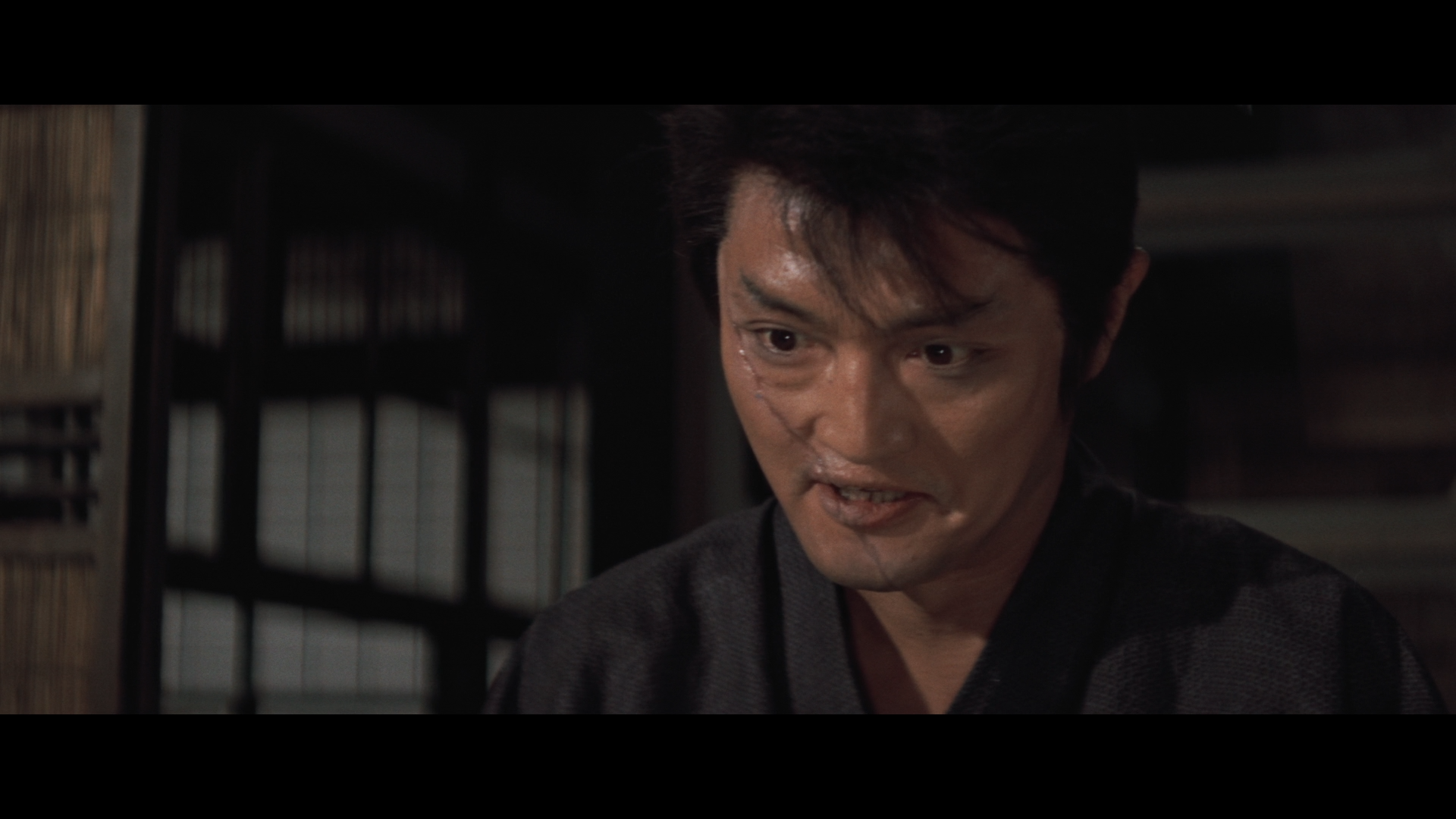
Some spectators might wonder ifRed Peony Gambler features the classical conflict between ninjo andgiri of the Ninkyo genre. While Oryu, the main character of the narrative, is not blemished by such destabilizing struggle, Naoki Katagiri is. Katagiri is revealed in the narrative as being deeply conflicted due to his brother, whose symbolic inscription in the yakuza Other has been perverted by the capitalistic virus. The inner clash between his giri (i.e. the demand to always respect’s one’s brothers) and his ninjo (i.e. his subjective desire to exorcize the capitalistic demon that darkens his soul) inhibits him severely in his actions. Until he resolves this conflict, he can only resort to the signifier, the reference to the law of traditional yakuza Other, to force his brother to change. Yet, can the capitalistic thirst be lessened with mere signifiers?
Yamashita delivers a dynamic composition, yet the fluid visual flow that results from this play with dynamism is not the main source of visual pleasure. Dynamism within Red Peony Gambler mainly functions as a support to heighten the impact, either by emphasis or by contrast, of the static compositional tensions that structure a given frame (Cine-note 1).
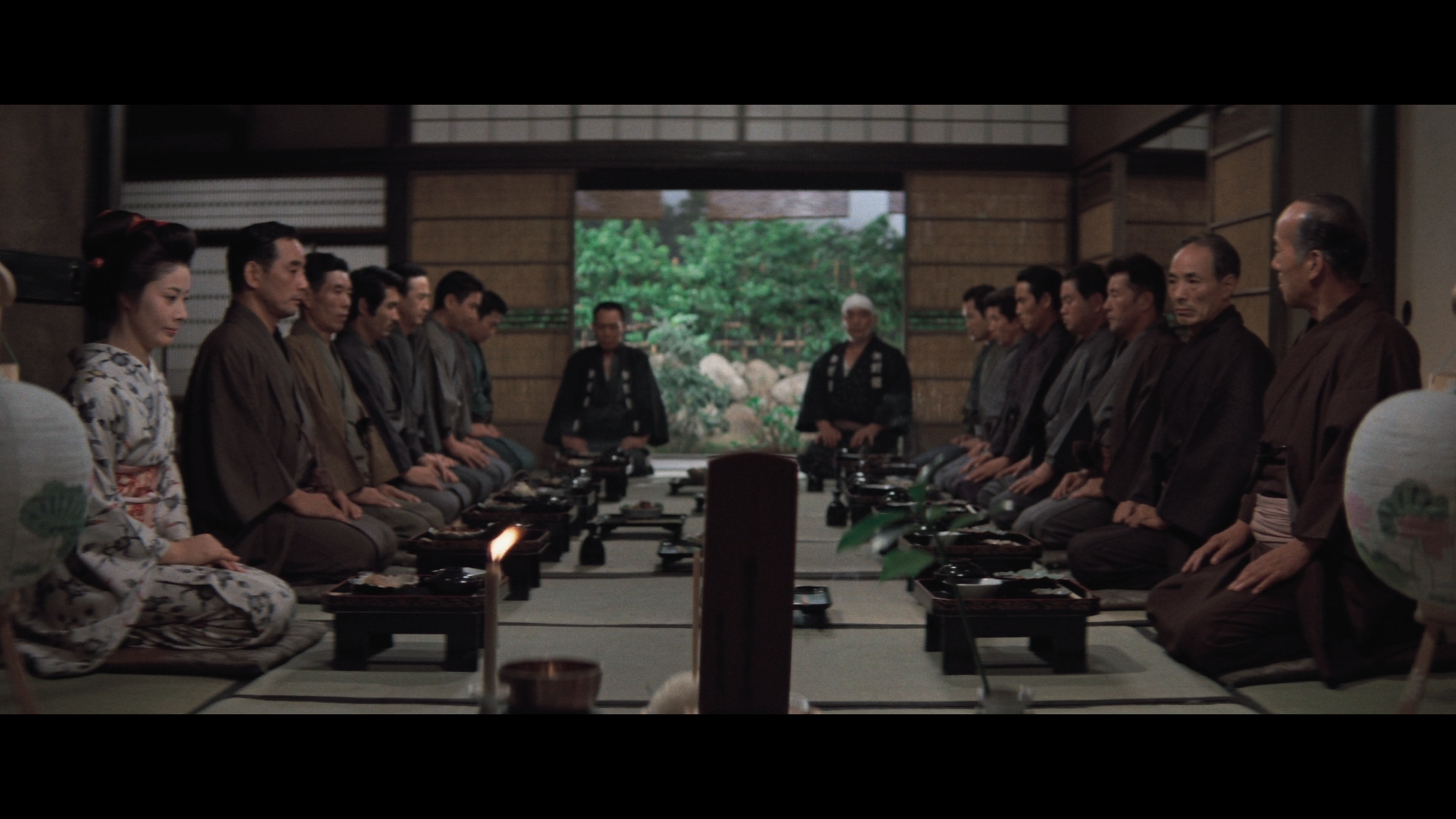
The true source of the composition’s visual pleasure lies in the effective purification of the geometrical dimension by utilizing more abstract colour-schemes and exploiting the simplicity of traditional Japanese interiors. The more subtle colour-contrasts (e.g. the careful placement of Oryu’s cloth and her Hanafuda cards) within the narrative have the same aim: exploiting colour-gradations to amplify the visual impact of the compositional skeleton of a given shot.
Or, to put it somewhat differently, the vivid and the darkish colour-contrasts, by virtue of simplifying the spatial dimension and flattening the physical space in which the characters reside, accentuate the principal compositional lines that structure shots (e.g. the placement of characters within the frame) and continually emphasize the elegance of Oryu’s presence within the narrative frame.
The visual abstraction, beyond simplifying the compositional tensions, also end up reverberate the ‘abstraction’ that structures many of the interactions within Red Peony Gambler. What Yamashita seeks to visually venerate in this narrative is nothing other than the purified and ritualistic nature of Oryu’s interactions, interactions which, by the operation of honorifics (keigo) on speech, are devoid of subjectivity and follow a strict ritualistic symbolic pattern (language-note 1).
Even though all fighting-sequences in Red Peony Gambler are framed in an engaging way, the most impressive moment within the narrative remains Oryu’s first violent burst. By exploiting the decorative function of slow-motion, Yamashita does not merely succeed in turning this violent moment into an elegant dance-like performance, but also delivers imagery that celebrates Junko Fuji’s beauty. In fact, the reason why this film became so successful lies in the continued attempt to create such celebrative imagery. It would not be wrong to say that Yamashita structured his composition around the peculiar beauty of Junko Fuji, leveraging it visually to seductively mesmerize the spectator, male and female alike, with her facial lines.
What makes Kosaku Yamashita’s Red Peony Gambler a classic ninkyo narrative and a must-see for any cinephile is nothing other than Junko Fuji’s performance. Yamashita does not merely leverage Fuji’s beauty through his shot-compositions, but allows Junko Fuji to seductively breathe life into the nostalgic fantasy of chivalry, the non-existing subjective reality of moral purity.

Notes:
Narra-note 1: The misunderstanding between Oryu and Kumatora concerning the meaning of the signifier katame no sakazuki (the exchange of cups)is caused by the fact that both have inscribed themselves in the male logic of the patriarchal yakuza system. Due to Oryu’s identification with her father or with what her father represents, katame no sakazuki can only be about kyoudai-bun (brotherhood). For Kumatora, the enunciation of this signifier to a female subject can only be about marital commitment – seduced by her beauty, he fails to see the traditional male ‘phallic’ logic of ninkyo (chivalry) that animates her.
Cine-note 1: Zoom-in moments are often used to dynamically emphasis the beauty of the still-life composition.
Language-note 1: Keigo evacuates and represses subjectivity from speech interactions. It introduces an a-subjective template that forced the subject in a societal demand for wa (harmony).
While this template aims to eradicate subjectivity and defend against jouissance, it often happens to become the symbolic support for a subject to find enjoyment, leading to all kinds of harassment.
 psychocinema
3 Comments Add yours