Masakazu Kaneko is a director that seeks to create narratives that celebrate the beauty of Japanese nature while exploring the clash between the otherworldly divine of Japanese folkloric and religious thought and the capitalistic thirst that marks the modern societal system. In The Albino’s Trees (2016), a hunter tasked to hunt a rare animal that is, according to local villagers, a godly presence, yet considered by others as proof of a certain contamination. In Ring Wandering (2022), Kaneko underlines the importance of remembering the past to guide our conduct within the societal field that loosens our societal bonds and demands enjoyment.

In River Returns, Masakuza Kaneko blends two states of the past together in a phantasmatic way to explore the disintegrated spiritual bond between natural forces and the human mind and underline the importance of showing consideration to others. The story takes place in 1958, during the post-war reconstruction period, and follows Yucha (Sanetoshi Ariyama) and the choice he must make between his father Haruo (Tomomitsu Adachi), who hopes that cutting down of useless trees and the construction of a proper dam will bring prosperity to the villagers and help him provide adequate treatment for his ailing wife Ayumi (Kinuo Yamada), and his grandmother, who warns him to respect the mountain and the local flood legend.
Even though River Returns tells the subjective story of Yucha – tracing the impact of his actions on his family, Kaneko explores the tale of Oyo (Asuka Hanamura), her younger brother Shiro (Sanetoshi Ariyama), and her rich suitor Kinpei (Yusuke Takahashi) in depth. The spectator, who was up until then watching the unfolding of a familial drama, is suddenly trusted into a further past without knowing how these events will affect Yucha’s subjective trajectory.
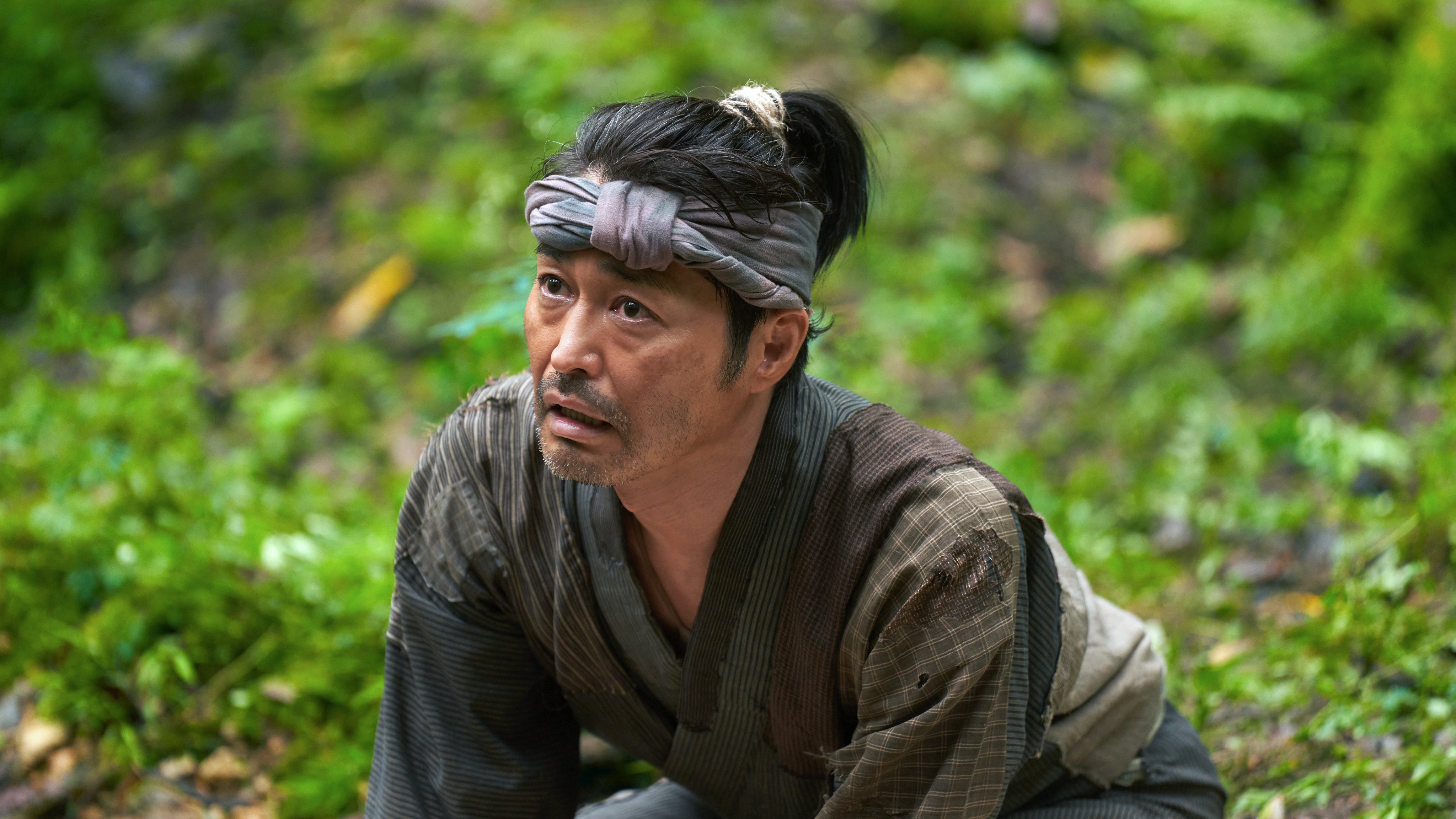
By relying on two states of the past, Kaneko crafts two mysteries, an internal one and an associative one, and successfully hook the spectator into his narrative. The former concerns the fact that the spectator knows Oyo’s tragic fate, yet does not yet know as to how or why she’ll drown in the blue pool deep in the mountains. The latter concerns the temporary inability of the spectator to grasp the relevance of Oyo’s death and the blue pool for Yucha’s familial drama – the clash between the father’s search for money, the grandmother’s demand to respect the mountain and Oyo’s tragic fate, and the sorrowful sight of an ailing mother.
We will refrain from revealing the answers to these riddles as to allow the spectator to fully enjoy the unfolding of River Returns and let himself be touched by the surprising but heartwarming turns in the finale. However, we can explore the thematical dimension of the film somewhat deeper.
With River Returns, Kaneko offers the spectator glance at certain customs (e.g. washing bowls by the river, praying after cutting trees, the art of woodturning, …) and beliefs that corroborates the idea that, in the past, the daily rhythm of the subject was more attuned to the rhythm of nature. Or, to put it differently, Kaneko implies that the existence of ‘nature’ was more interweaved into the social fabric of the past – the structure of signifiers orienting the subject.
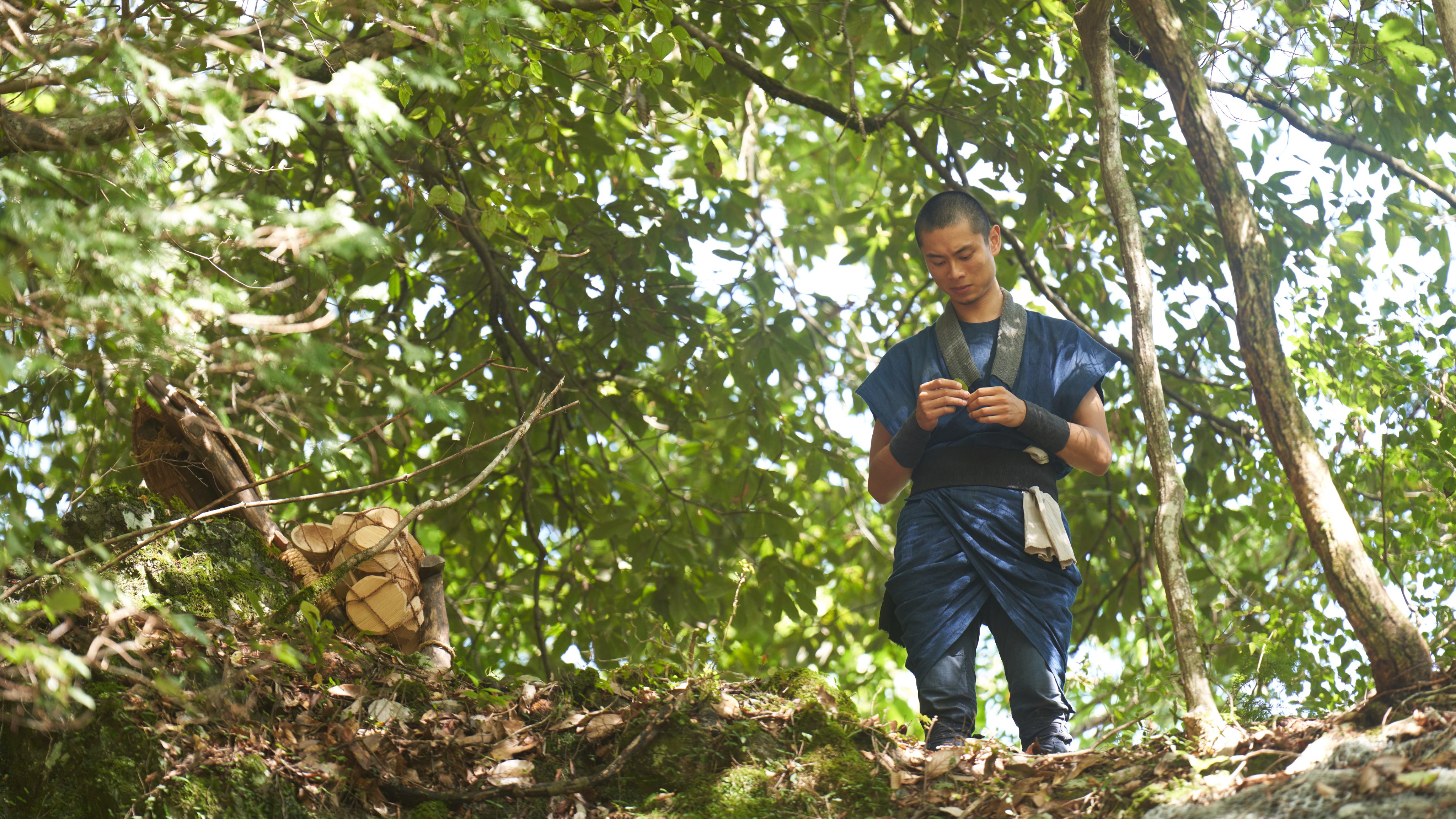
However, Kanekoalso emphasizes that the introduction of cultural structures within the physical world gives rise to frictions between groups of people – i.e. villagers versus mountain folk, elderly versus young. The Other, by subjecting its subjects to a variety of ideals, demands, desires, and so on, creates an arrangement of interpersonal tensions that affects the subject and structures his ego. Kaneko’s narrative can, in this sense, be read as a subjective drama of interpersonal tensions and frictions born from the Other.
It should be evident that the otherworldly atmosphere Kaneko evokes with his narrative finds its source in the Japanese indigenous belief-system called Shinto. River Returns, just like his previous narratives, emphasises, through signifier and image, the ‘spiritual’ vitalism that pervades fauna and flora. It is by evoking the beauty of the spiritual that Kaneko invites the spectator to be more appreciative of nature and of subjective life.
For his composition of River Returns, Kaneko relies heavily on static shots and only sparsely interweaves a tracking shot or a spatial dynamic shot. What makes Kaneko’s composition a visually pleasant affair is not so much due to how Kaneko composes his shots, but the way he utilizes the frame to allow the spectator to breathe in the beauty of nature that surrounds his characters (e.g. the leaves on the ground, the swaying of tree-branches).
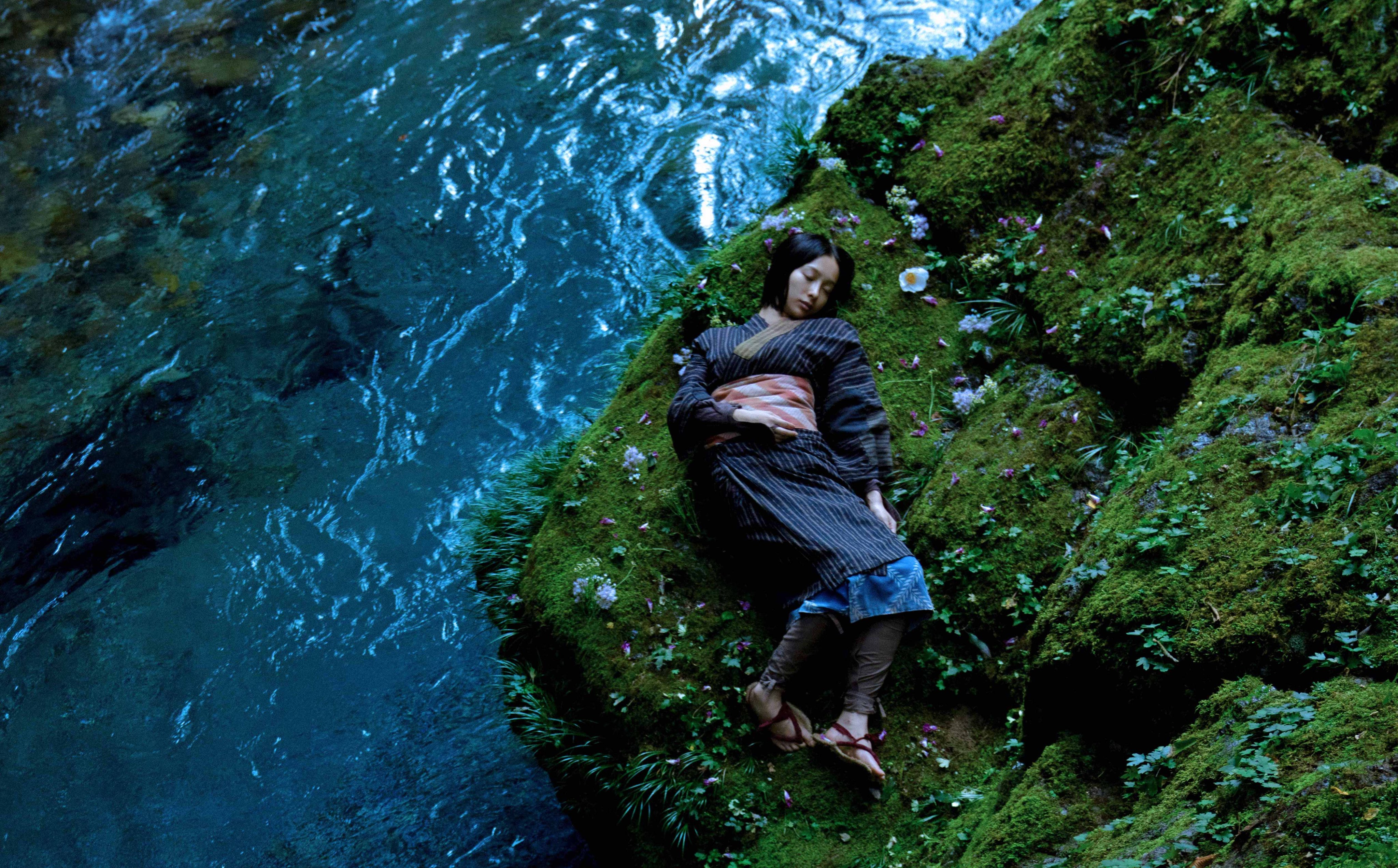
However, the beauty that radiates from the images of nature does not merely lie in the image as such, but also in the sounds that enliven the natural landscapes. The diegetic sounds of nature (e.g. flowing of water, wind, the downpour, chirping of birds, …) elegantly invite the spectator to fully appreciate the framed nature by giving the natural elements (e.g. river, the trees, …) a sensible aural presence (Sound-note 1).
With River Returns, Masakazu Kaneko explores the themes he holds so dear in a fresh and engaging way. The director utilizes the clash between capitalistic modernity and pre-modern spirituality beautifully to convince the spectator to go beyond the consumptive way of interacting with the other and have more eye and ear for the subjectivity of the Other.

Notes
Sound-note 1: In the opening of his film, Kaneko tries to pass off a sudden sound of thunder as a diegetic sound, yet the sound retains a non-diegetic feel.
 psychocinema
One Comment Add yours