The jidai-geki is as old as Japanese cinema itself. While, at the very birth of Japanese cinema, merely short fragments of Kabuki plays were framed, soon Makino Shozo and Matsunosuke Onoe would be making pioneering pre-war period classics. As the years went by, directors like Daisuke Ito, Sadao Yamanaka, Kenji Mizoguchi and Tomu Uchida utilized the period setting not only to explore the figure of the anti-hero, but also politically question to state of the pre-war Japanese societal field.

After the second world war, during the golden age of Japanese cinema, directors like Masaki Kobayashi, Akira Kurosawa, Kenji Mizoguchi, Heinosuke Gosho, Toshiya Fujita, and Hiroshi Inagaki further developed the genre by crafting many refreshing reinterpretations of the common themes of the jidai-geki genre.
Given the long rich history of the jidai-geki genre, a history full of classic narratives waiting to discovered and rediscovered, it would be outright blasphemous to wish for a contemporary Japanese director to breathe new life into the genre. The only thing a Japanese director can hope to accomplish in the genre, whose heyday has long gone, is to deliver a narrative that honours the cinematic past, offers an expression of the director’s creative vision, and explores contemporary thematical sensibilities. Last year, Junji Sakamoto offered the spectator a refreshing exploration of the societal place of shit with Okiku and the World (2023) and Takeshi Kitano delivered a cynical retelling of the events leading up to the Honnoji incident with Kubi (2023). And now, in 2024, Kazuya Shiraishi adds his creative reworking of a classic Rakugo tale to the long list of jidai-geki narratives. In Bushido, Shiraishi harks back to the pre-war heroism and the post-war cinematic realism to deliver a humanistic tale critical of the moral machinery called Bushido.
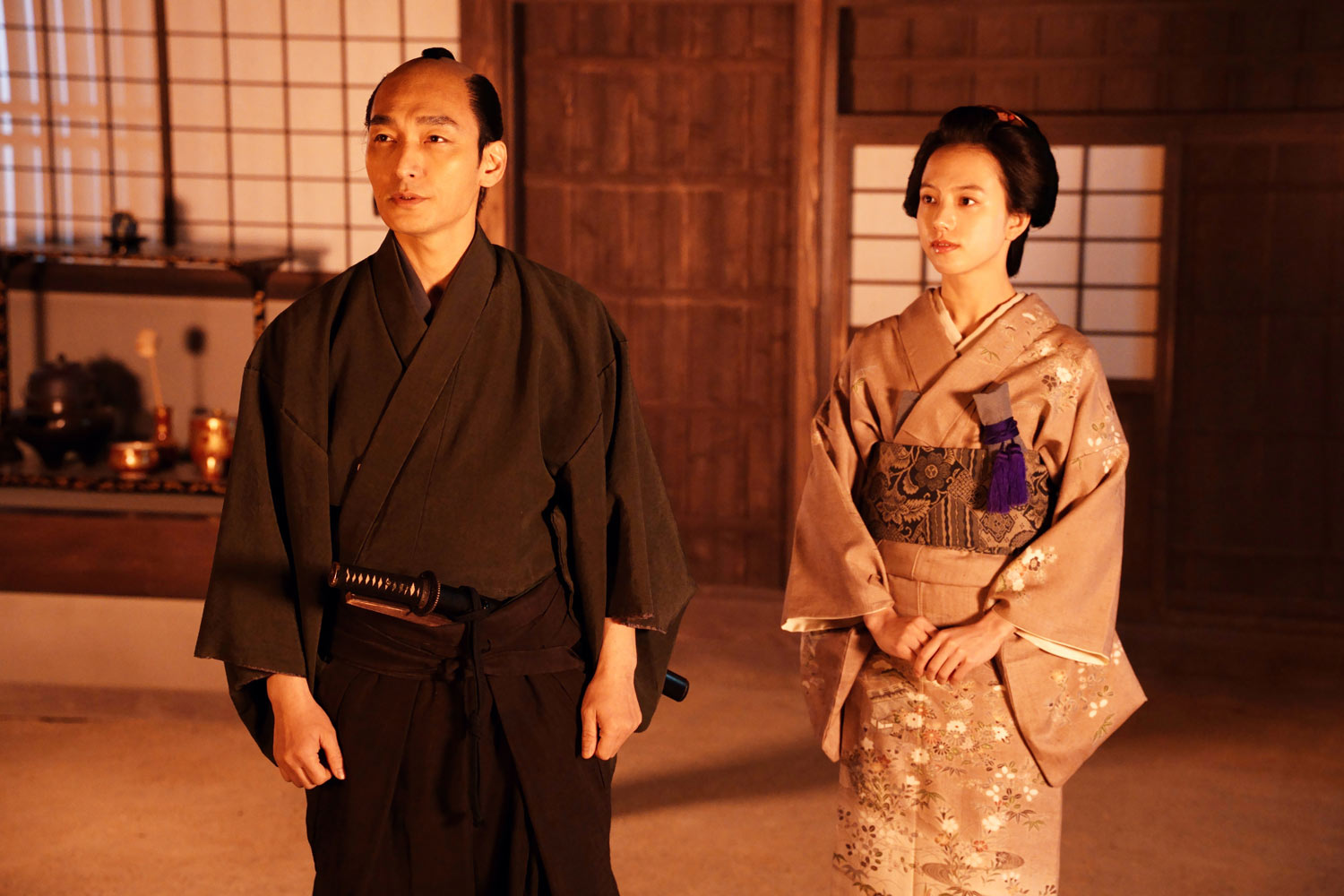
Shiraishi’s narrative starts when the masterless samurai Kakunoshin Yanagida (Tsuyoshi Kusanagi) loses all his hard-earned ryo to pay his overdue rent to landlord Hachibei (-) by forfeiting a game of go against the prosperous pawn broker Genbei Yorozuya (Jun Kunimura). Impressed by Yanagida’s style of playing, Yorozuya seeks to befriend the samurai and bond over their mutual love for the game of go. Yet, their peaceful friendship is radically disturbed when Yanagida learns that the name of the samurai who forced him into ronin-hood and Yakichi (Taishi Nakagawa), Yorozuya’s accountant who is in love with Yanagida’s daughter, Okinu (Kaya Kiyohara), accuses Yanagida of stealing 50 ryo from the merchant. Suddenly, Yanagida finds himself tasked with enacting revenge while hoping he can acquire the coin to save Okinu, who cleared her father from the false accusation by selling herself to the local whorehouse, from becoming prostituted.
To be able to fully appreciate the narrative Shiraishi created, we need to explore Yanagida’s subjective position within the societal field. We meet a subject that has successfully bandaged the destabilizing imaginary injury inflicted to his samurai ego and the bushido fantasy he aspires to embody through the game of go. It is because he can practice bushido by playing the tactical game of black and white stones that he can uphold the strict moral samurai ideal as he moves within the societal field (General-note 1).
This pacifying effect of this bandage is illustrated in the scene where Yanagida defuses a conflict between pawn-broker Yorozuya and a deceitful samurai. With his intervention, Yanagida does not merely assert that a samurai should never resort to cunning acts and fraudulent signifiers, but also highlights, with verbal sharpness, the social repercussions of being caught deceiving (Narra-note 1).
The signifier kamei no haji that Yanagida hurls at the samurai, who dramatically paraded his social position with his swishing katana to deceive the merchant, emphasizes the social weight of the moralistic structure of the Other of the bushido law. This signifier reveals that whatever a samurai-subject does will impact the ‘family name (kamei)’ he serves and the position this ‘name’ occupies within the societal field.
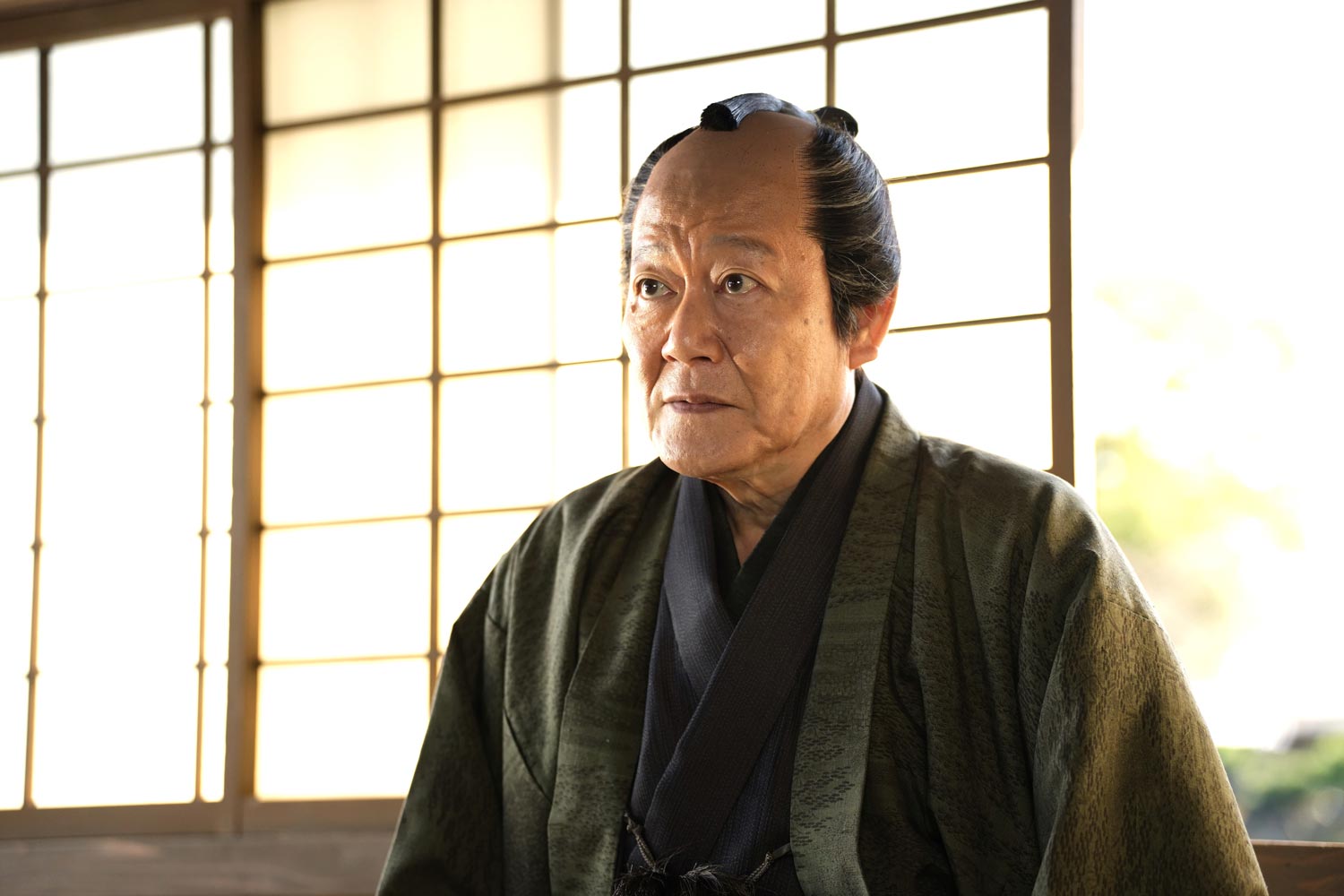
The centrality of the ‘samurai name’ for the subject allows us to argue that what a morally faltering samurai fears is not a sense of embarrassment, but shame (haji). The exposing of a subject’s violation of the moral code of Bushido within the Other does not merely smear the symbolic name he serves and damage its honourable image – i.e. humiliation (haji) of his Other, but radically damages the symbolic bond between the subject and the Other of the name. The Other, to restore the symbolic and imaginary equilibrium, cannot but enforce an ‘excommunication’, forcing the subject to relinquish the name of his master and sentencing him to a life at the fringes of society as a lowly wandering ronin.
This societal dynamic allows the spectator to grasp that Yanagida’s accepts his ‘roninhood’ in service of the Other he serves. While the Other’s punitive signifier of justice is unjust in the case of Yanagida, he accepts this injustice to maintain the equilibrium of the Other of his name. In other words, he willingly inscribes himself in a moralistic system whose first aim is not truth, but the maintaining of its equilibrium. Justice serves the harmony of the societal field, not truth. Yet, Yanagida does harbour a silent trust in the righteousness of the societal system, biding his time till the truth reveals itself and the self-mending reflex of the symbolic societal field kicks off.
It is fruitful to analyse the two events that shake up Yanagida’s peaceful existence deeper to further increase our understanding of his subjective position. The first event is the sudden appearance of Sir Samon (Eita Okuno) to inform Yanagida that the true culprit of the theft has finally been found – the truth has revealed itself. The discovery of the stolen scroll in the possessions of Sir Shibata (Takumi Saitoh) exposed him as thief and as a liar, as he told the lord that Yanagida, his gift-appraiser, was the likely culprit.
The flash-back sequence that follows this revelation shows that Shibata faltered in his adherence to the moral dictates of bushido – he let the emotional mixture of jealousy, disdain, and hate determine his acts and signifiers, because he, as ego, could not bear the subdued beauty of Yanagida’s a-subjective presence, of a subject who eradiates his radically embodiment to bushido.
Yanagida’s expression of anger following this revelation proves, in this respect, that he is a subject after all. This burst of anger does not merely illustrate the fleeting loosening of his radical identification with the moral ideal of bushido, but echoes the fact that the embodiment of such ideal of righteousness is nothing but an imaginary façade. Yet, his wish to take revenge is not merely allowed but necessitated by the symbolic and moral calculations of bushido – i.e. the field of justice.
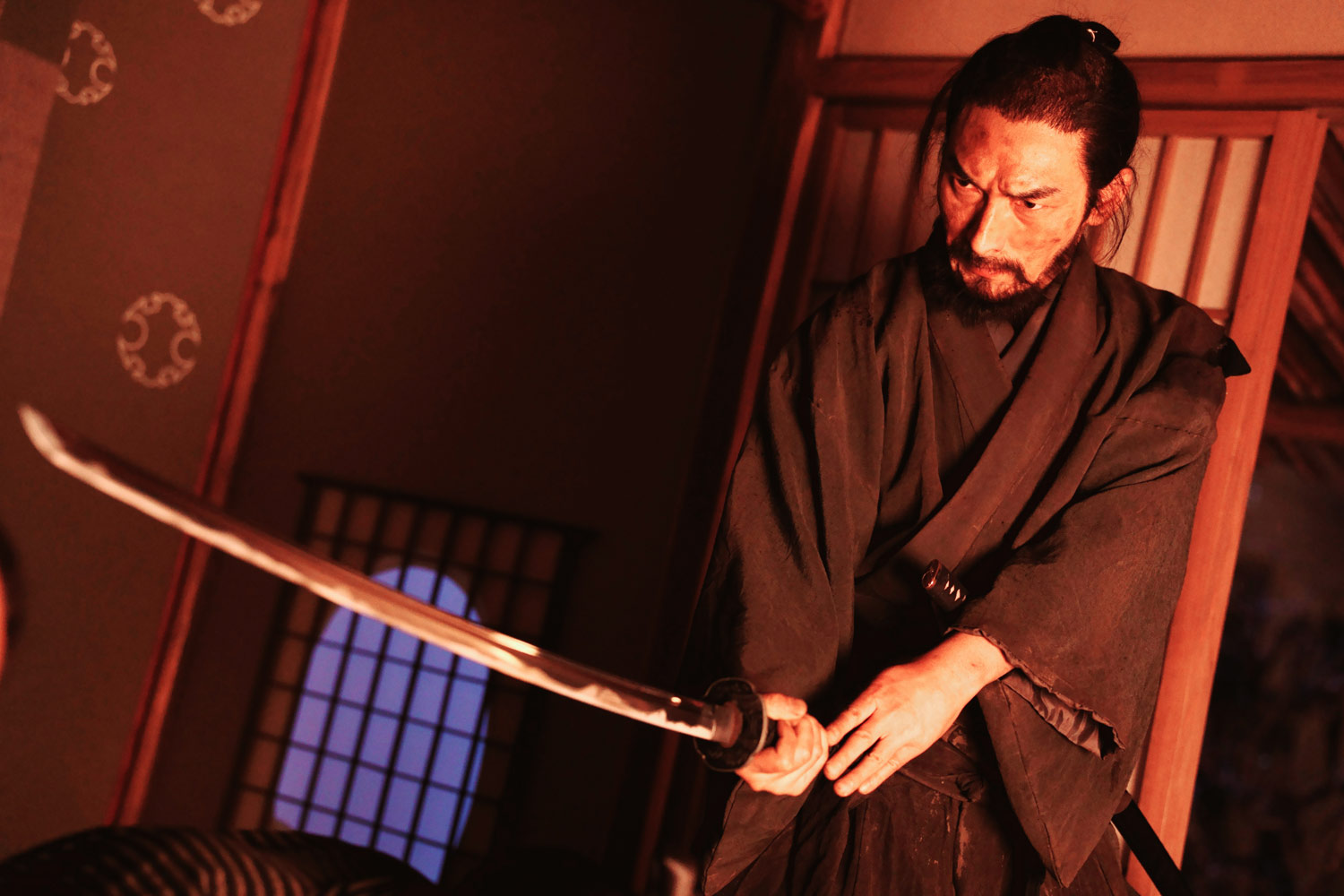
The second event concerns Yakichi’s ridiculous accusation of Yanagida stealing 50 ryo. This disgraceful accusation radically perforates Yanagida’s ego, cracking his cold calculated moral façade, yet rather than provoking a sudden burst of violence within the societal field, the accusation invites Yanagida to perform the sole act that, within the moral dynamics of Bushido, can save his ego, his honour, and prove his innocence: seppuku. Yet, as Okinu rightly implies in her attempt to change her father’s commitment to seppuku, the very same act, when viewed from beyond the laws of bushido, can be seen as a confession and the atonement for one’s own transgression.
All these different narrative elements ultimately meet when Yanagida dares to question the path bushido and the radical de-subjectifying identification the moral system necessitates. In this moment, Yanagida does not simply question whether revenge, as a demand produced by Bushido, is morally right, but questions, finally grasping the ravage his own strict adherence to the law has caused, the righteousness of the bushido system as such. Via Yanagida’s act of questioning the spectator can glance that the radical subjection to such a strict moral symbolic system cancels out the dimension of human desire and that the strict adherence to such a-subjective calculus and the Good it serves cannot but produce subjective tragedies.
For Yanagida, the ultimate question he must find an answer for is as follows: should he enact revenge to appease the moral system of bushido (giri) or to assuage his own subjective suffering (ninjo). The spectator, who carefully read our analysis of Yanagida’s subjective position, will have no trouble deciding whether Yanagida’s acts end up serving the societal giri or are in accordance with his ninjo, his humanity (General-note 1).
While of lesser importance to the plot, Bushido also offers the spectator a glance at the various societal frictions within medieval Japan. Firstly, Shiraishi echoes that the merchant class harbours a certain distrust in the samurai class. They have, as the narrative illustrates, the perfect societal position to perceive the structural bankruptcy of the moral system that organizes the intra-class and inter-class interactions of the samurai subject with the Other.
The common folk, too, think they can glance the a-morality that lingers behind the formal façades of the samurai-subject. Yet, in most cases, their enunciations merely account for a shared desire to enjoy the unveiling of the corruption that lurks within the Other of the higher class. This desire transforms truth into fictions, i.e. verbal constructions sewn together from factual fragments and preconceptions, to be enjoyed by circulating them through speech – i.e. gossip.

The same process is, in fact, illustrated earlier Bushido with respect to the image of the merchant. The commoner, in their interactions with the merchant class, also feels a certain distrust. The signifier (i.e. stingy (Kechi)) they circulate between each other to qualify Genbei and pleasure themselves do not merely echo the fact that he is, indeed, stingy, but also betrays the presence of a discourse within the societal field that frames merchants as subjects who are merely out to profit as much as possible from those around them.
The composition of Bushido stands out due to its restraint dynamism, moody colour-schemes, and its deliberate pacing. Shiraishi utilizes this compositional slowness to emphasize the poetry of the game of go and allow Kusanagi, who portrays Yanagida, to convincingly embody the ideal of bushido with his very presence.
In other words, Shiraishi refuses to rely on stylistic excess to dazzle the spectator’s gaze with visual elegance, but creates a visual flow and frame that allows the poetry of movement – i.e. the putting-down of the stones, the restraint comportment of Yanagida, … etc. – to arise in its beauty and touch the spectator.
Given Shiraishi’s refusal to play stylistic games in his composition, it is surprising that he did utilize some visual decorative elements to sew the flashbacks and time-skips within these flashbacks more fluidly within the compositional flow. Luckily, these little unnecessary decorations do not disturb the visual flow of the composition too much nor are they able to sabotage the spectator’s visual pleasure.
Violence in Bushido is framed in realistic manner. Shiraishi does not aim to visually celebrate the beauty of the sword-fighting, but to stage the down-to-earth brutality of the swishing katana in a no-nonsense way. While action is also sparsely present in the narrative, the few bursts of violence bring enough energy, suspense, and blood-splatter to please fans of the jidaigeki-genre.
With Bushido, Kazuya Shiraishi proves that the frame of the samurai and the Edo society can still be utilized to deliver refreshing narratives. By exploiting the beauty of the strategic game of go and the cruelty of the moral Other, Shiraishi succeeds in delivering a contemplative questioning of bushido as moral system and of how a subject of desire should relate himself to a symbolic set of strict rules and demands.

Notes
General note 1: In the fifth scroll of the Kashoki by Saitō Chikamori (1642), bushido is described as follows: The essence of Bushidō is: do not lie, do not be insincere, do not be obsequious, do not be superficial, do not be greedy, do not be rude, do not be boastful, do not be arrogant, do not slander, do not be unfaithful, be on good terms with comrades, do not be overly concerned with events, show concern for one another, be compassionate, with a strong sense of duty. Being a good samurai takes more than merely a willingness to lay down one’s life.
Narra-note 1: Another illustration of his strict adherence to the moral code of bushido is his refusal of accepting Genbei’s monetary gift for defusing the conflict.
General-note 1: While the signifiers giri and ninjo are mostly associated with the yakuza genre, they are perfect to describe Yanagida’s conflict.
 psychocinema
2 Comments Add yours