The cinematic field is, in most cases, a societal tool to shape desire and structure fantasies. When a spectator enters the darkness of the cinema room, he often does so to find out how to desire and to satisfy, during the running time of the film, the fantasy of seeing it fulfilled.

Yet, cinema does not only offer scopic enjoyment and imaginary onanism, but also often offers the spectator a glance at the desires, frustrations, and struggles that linger within the societal field. This kind of cinema, which relies on the dynamic of imaginary identification, generally aims to show the spectator the sameness of the Other. Sho Miyake’s latest film, an adaptation of Maiko Seo’s novel All The Long Nights, fits this second category. By exploring the social struggles of Misa Fujisawa (Mone Kamishiraishi), who suffers from PMS, and Yamazoe (Hokuto Matsumura), whose panic attacks interfere with his functioning, Miyake underlines the fundamental need for a subject, whether he is suffering mentally or not, to form some kind of social bond.
Beyond structuring his narrative around this universal neurotic need, Miyake’s tale of fleeting friendship also plays with the fact that only the encounter with other subjects can cause little shifts and subtle changes to happen – Miyake’s narrative can, in this respect, be read as a celebration of the effects an encounter can sort. Moreover, the way Misa and Yamazoe interact throughout the narrative reveals the unvocalized hope of suffering subjects that, one day, their petrified symptom might dissolve (General-note 1).

What does Miyake’s narrative reveal about Misa and Yamazoe’s respective struggles? How can we interpret the social difficulties that arise from their problems? Let us analyse Misa’s subjective position. The opening sequence of All The Long Nights reveals, quite directly, the very cause of her relational struggle with the Other. Her signifiers underline that she lacks desire as such – ‘I don’t want anything in particular (from the Other)’. It is, in other words, because she lacks eros – her object-a cause of desire is not transformed into an object-goal – that she struggles to demand something from the Other and finds herself unable to figure out ‘how to act in front of people’. Her inability to verbalize her struggle to the Other and make her outbursts of anxious irritation and her other peculiar behaviours more understandable further complicates her presence within the societal field.
Misa is presented to the spectator as a-hysterical, a subject not trapped and defined by her desire for desire – a desire for love and recognition and the desire to be desired. Her logic is, on the other hand, structured around a real that cyclically seizes her body and mind, her PMS. Yet, rather than arguing that Misa’s PMS is the cause of her struggle with the Other, we feel that the irritation, anxiety, and hostility that flares up during such periods echoes her subdued anxiety concerning the (m)Other. It is the real of the body, the real that enjoys, that forces that anxiety to break through the wall of suppression – not repression – and burst emotionally forth on the societal stage.
By taking a closer look to the signifiers Misa vocalizes during such anxious fit – You have to specifically instruct me to make 35 copies, we can determine what underpins her trouble with the Other: the indeterminate and equivocal dimension of human interaction. While she can dress herself with an image of neurotic social conformity – abiding, for example, to the conversational rules of keigo – in moments of subdued jouissance, this imaginary dress hides a struggle with the dimension of desire that muddles the univocality of the Other’s speech and acts. Yet, when her jouissance bursts forth, she cannot but become a tangled object of anxiety and irritation that escapes the Other’s grasp, a desperate subject that demands the erasure of equivocality, the signs of his desiring status, from the Other’s signifiers and his acts (Narra-note 1).

Many of Misa’s faulty actions are formations of her unconscious (e.g. spilling her drink on her resume). These acts, which ripple the mundane, do not merely contradict her conscious discourse, i.e. the speech that organizes her ego, but echo the subjective truth she struggles to accept.
If we turn our gaze to Yamazoe, one has no difficulty to perceive his peculiar stance with respect to the Other. He does not always heed the unspoken rule of ‘friendliness’ that governs imaginary interactions, those interactions that, by presenting our socially acceptable ego to the other, always remain superficial. In other words, he has no problem in rippling the imaginary and deceptive social equilibrium with his brutely honest signifiers.
On the other hand, Yamazoe struggles with a panic disorder – he consumes the medication prescribed by the doctor at Tsuboi Mental clinic and seeks to control his jouissance by drinking carbonated water and chewing gum. All these substances have but one aim: to ease the tension between him, the Other, and the object of desire, object a. His brutally honest signifiers can, in this sense, be understood as an act to perforate the Other and reveal the deceptive nature of the imaginary – ego-to-ego interactions, refuse the riddle of desire, and defend himself from anyone who seeks a certain closeness.
The presence of anxiety signals that a conflict exists between subject and Other. Or, to put it differently, Yamazoe’s anxiety bursts forth on the place where the question of his and the Other’s desire must be posed. The moments where his panic breaks through and which he thus avoids (i.e. the train station, restaurant, and the barber) are not merely social in nature – places where many people intermingle – but situations where his desire is called upon and he needs to make himself present in the societal field as subject. We should also not ignore the suicidal, poisonous and the murderous dimension of those places which are able to cause a surge of anxiety. In this respect, Yamazoe’s anxiety also points to the presence of an unconscious aggressivity towards the Other and his desire.
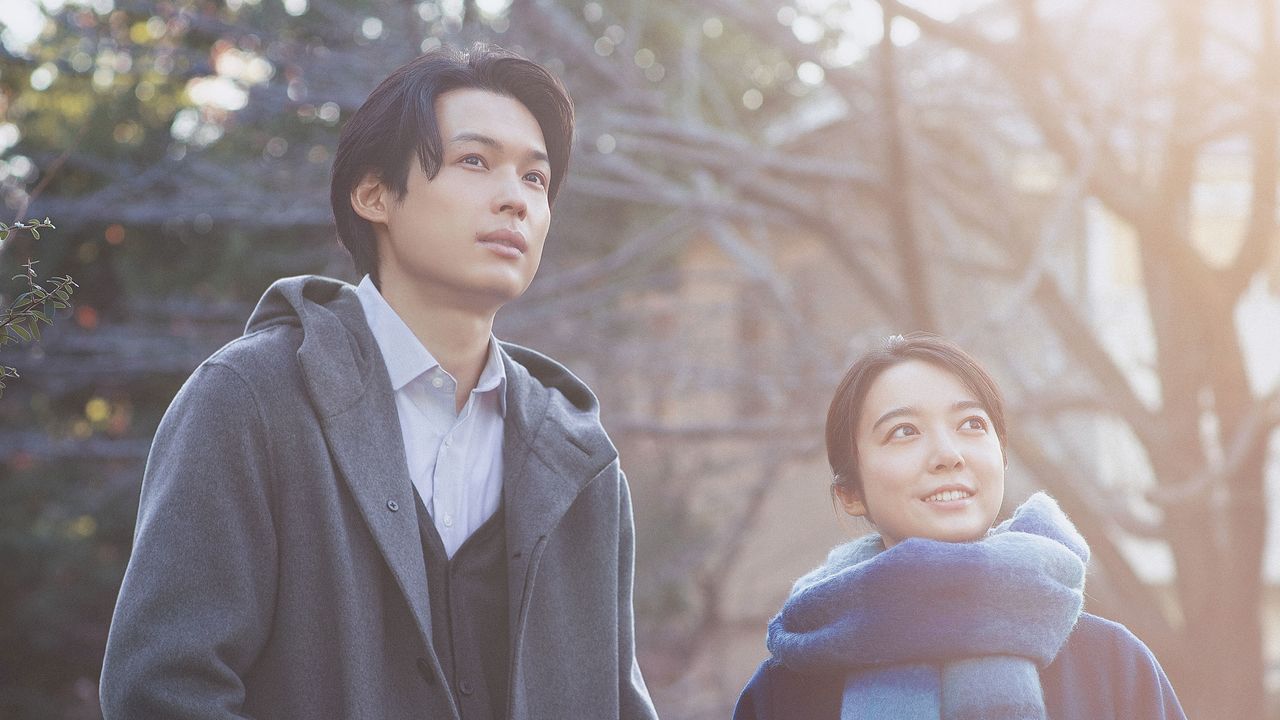
The in-depth analysis of Misa and Yamazoe’s subjective dynamics allows us to understand they succeed in interacting so well with each other because they avoid the dimension of desire – the riddle of the Other’s desire will not rear its head between them. Misa presents herself to Yamazoe by explaining her presence around him with logic: you cannot take a train, I’ll give you a bicycle; you cannot go get a haircut, I’ll do it for you. It is by relying on logic in her speech that she silences the dimension of desire. She does not desire and she does not appear as desiring to the other. She is but a machine of logic that helps Yamazoe with dealing with his anxious jouissance. Yamazoe, on the other hand, succeeds in addressing her with univocal statements, avoiding asking her questions with his subject and offering her demands that avoid bringing the dimension of desire in play – Does this dirty car bother you; Wash it and wait for me.
The composition of All The Long Nights offers a temperate but engaging visual rhythm. Miyake furthermore succeeds, by utilizing the cut thoughtfully and letting the spectator gaze at certain imagery longer than narratively necessary, in stuffing his composition with moments of visual poetry. These visual moments resemble Ozu’s famous pillow shots, as these visual pauses demand the spectator to reflect on Misa or Yamazoe’s enunciations. These transitorily moments of stillness, which single out a cultural object (e.g. a city scape at dusk, a singular train passing through the darkness or near the coast, … etc.) invite the spectator to invest his own subject in enunciated signifiers and breathe life in the emotional fabric of the narrative, Misa and Yamazoe’s struggle to maintain herself in the societal field. Yet, Miyake does not fully exploit the potential of these visual poetic pauses, as he often cuts to fast, cutting the spectator’s time to mull over the perceived acts and the enunciations short. Granting the spectator a bit more time for reflection could have further strengthened his investment in the narrative and, thus, the emotional impact of the film’s denouement, the touching finale structured around a piece of verbal poetry.
Miyake’s use of film-grain within his composition does not only visually echo the realism of his narrative and its emotional flow, but also enhances the visual impact of the naturalistic lightning-design and darkish colour-patterns. The film-grain also plays its part in enhancing the impact of the moments of visual poetry.
What ensures the impact of Miyake’s visual style are the performances by Mone Kamishiraishi and Hokuto Matsumura. Their performances, which stand out due to their naturalism, make it easy for the spectator to imagine oneself in their place, as marked by their subjective, physical and social suffering.
All The Long Nights is a splendid drama that shows how symptoms can disturb a subject’s life and how the social field attains its cruel complexity due to the riddle of desire. While Miyake’s film is an easy recommendation for those who love his previous work, And Your Bird Can Sing (2018) and Small, Slow But Steady (2022), we duly recommend this film to anyone who loves interpersonal drama or who seeks a subtly layered but complex exploration of a subject’s relation to the Other.

Notes
General-note 1: The narrative thread of Yamazoe offers the spectator a glance at the miserable state of mental health in Japanese society. Let us simply note that, for the Japanese psychiatrist, the subject behind and expressed within the symptom is of no importance.
Narra-note 1: When Misa Fujisawa confronts Yamazoe concerning the intrusive nature of him opening his bottles of carbonated water, it is because this act eludes her understanding. For her, this mundane act, the psst of the bottle opening, becomes a riddle of his desire, a sign of a desiring presence, that she must suppress at all costs.
 psychocinema
One Comment Add yours