There have quite a few game-adaptations in recent years. For most of these adaptations, the screenwriters merely must transform the story of the game into a workable narrative for the silver screen. In the case of horror-puzzle game Exit 8, however, Genki Kawamura and Kentaro Hirase had no narrative to transform, merely a concept to play with. They were tasked to find a way to add narrative meat on the conceptual bone while staying true to the core of the game.
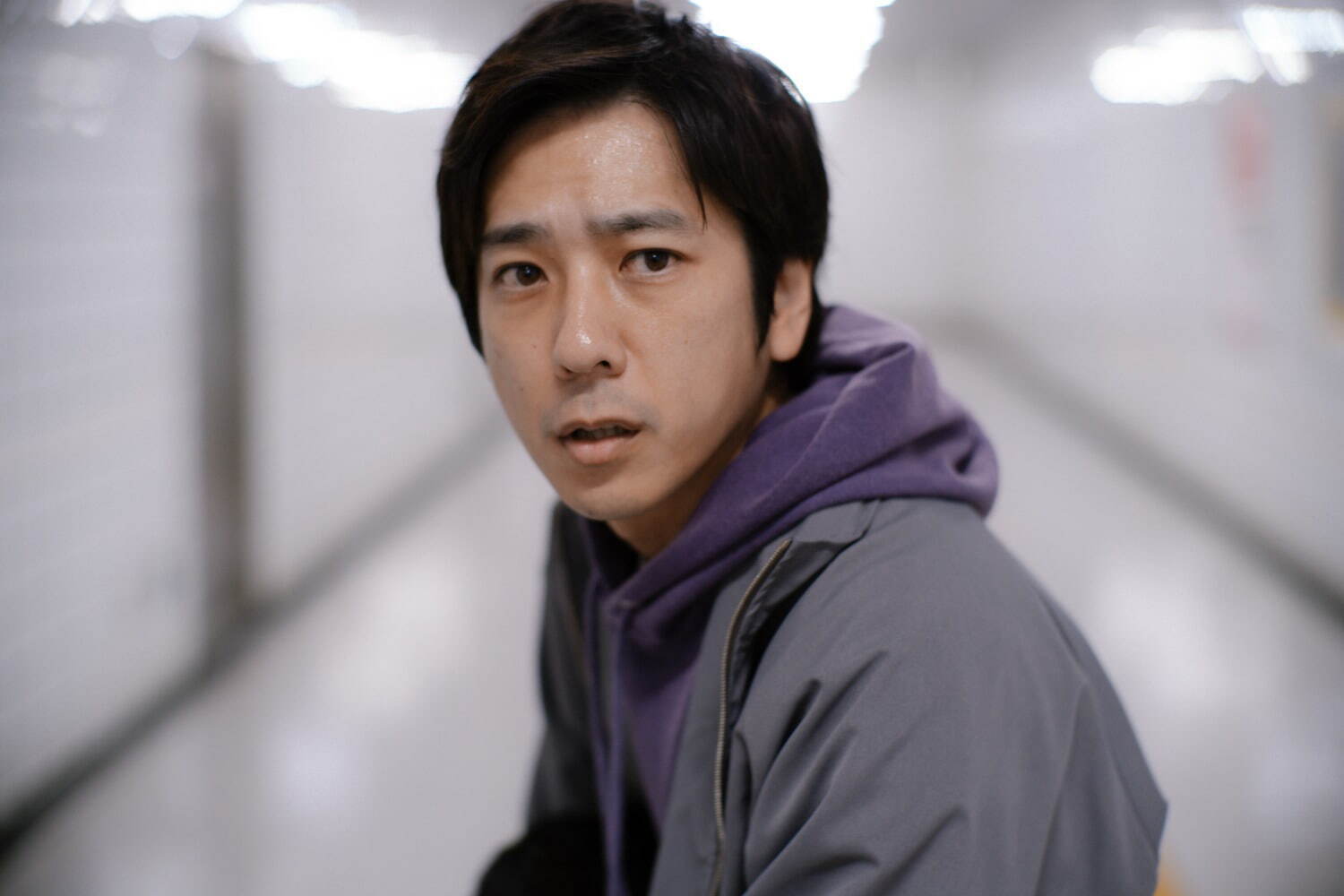
Yet, how can create a narrative around a gameplay concept that relies on visual repetition and tasks the player to find ‘anomalies’ to progress? In short, by fully realizing the potential of the anthropological concept of liminality. While the game merely plays with liminal spaces – spaces neither here not there, spaces that feel unheimlich, Kawamura utilizes the spatial dimension of the game to stage the dramatic ‘middle stage’ of the ‘rite’ of subjectification. To put it differently, Exit 8 utilizes the liminal space to stage the transitional moment where the subject stands at the threshold between the ego he has left behind and the subjective choice he has not yet made.
The narrative of Exit 8 commences when The Lost Man (Kazunari Ninomiya) gets off the subway. While climbing the stairs, his phone starts ringing – his ex-girlfriend (Nana Komatsu) is calling. He picks up the phone and learns, much to his own surprise, that she is pregnant. Despite asking him want he wants to do – a question he cannot readily answer, she confronts him with the fact that she already decided what to do. Yet, just when she is about to elaborate her decision, the connection breaks down and falls away. And the hallway he wanders in starts to repeat itself.
The opening sequence of Exit 8 makes it abundantly clear that we must associate the sudden repetition of spaces with the very indecision that marks the main character concerning fatherhood. He stumbles into this strange repetitive space not merely due to his indecision but – and this is emphasized by all the horrors (e.g. the crying babies in the lockers) and narrative twists (e.g. his ex-girlfriend calling to say that she cannot decide) that follow, to solve his subjective deadlock (Narra-note 1). His imprisonment within this maze is, in a certain sense, equivalent to his inability to realize himself as subject on the societal stage by way of a subjective enunciation or an act.
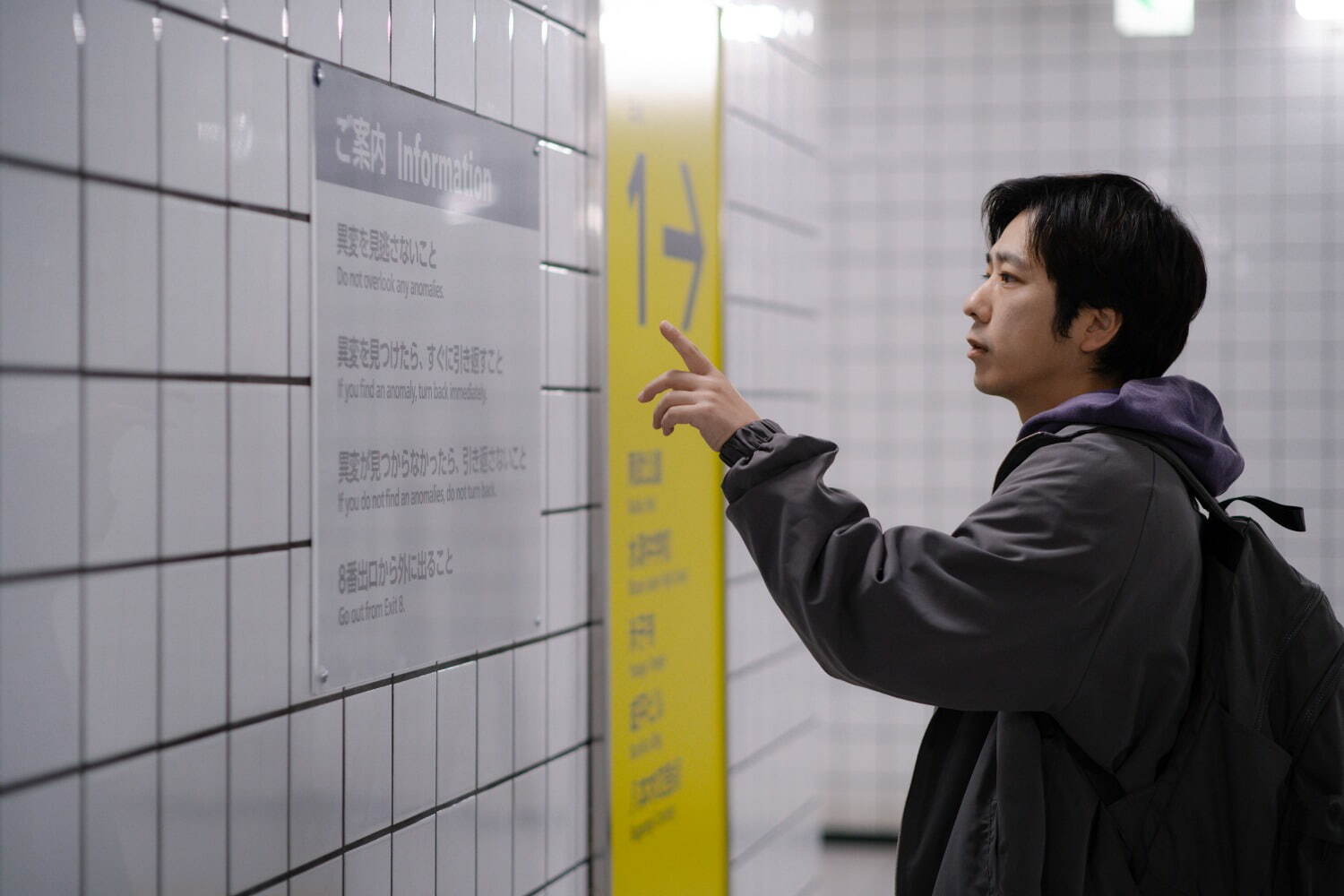
The manifestation of this space is, thus, not merely a radical response to his subjective indecision – his refusal to be present as subject within the Other – but presents him with a series of puzzles that aims to rearrange his subjective stance. It is not about what the Other wants, but about what he wants. To put it differently, whether he finds the key to unlock the exit nor not depends solely on his own desire. His ability to escape this prison of repetition is intrinsically linked with his ability break his own mental prison.
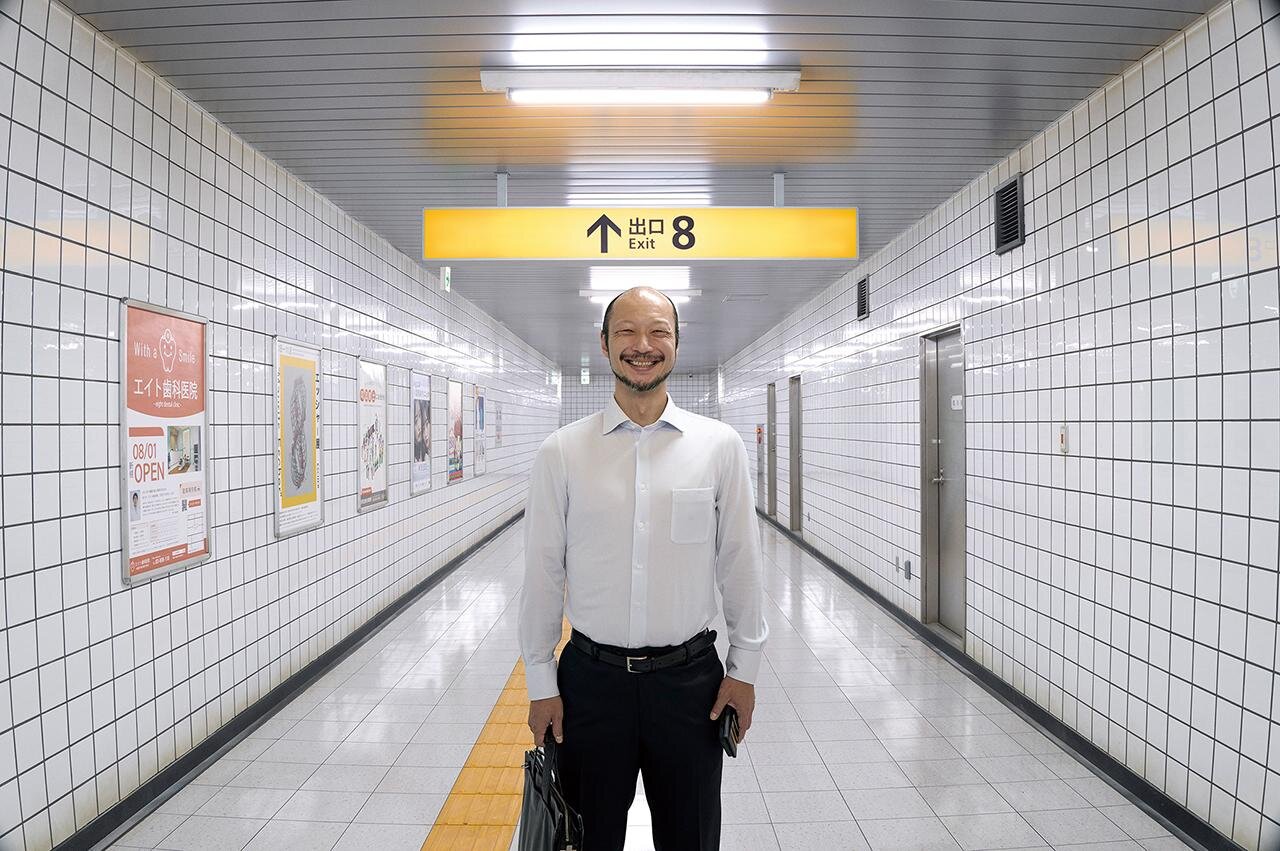
The destabilizing effect The Walking Man (Yamato Kochi) has on The Lost Man is function of his struggle with desire. While The Walking Man is often but a passer-by, there are times that he, with a big smile on his face, follows him. The ‘smiling’ stare – a manifestation of the Lacanian Gaze – brutally confronts The Lost Man with the riddle of the Other’s desire: What do you desire from me? The gaze manifests itself again when, after solving a few ‘anomaly’ puzzles, the eyes of the figures on the posters start staring him down.
These two sequences emphasize that The Walking Man has no phantasmatic defence against the Other’s desire. His own indecision concerning what to do is caused by his inability to decide what the Other desires. He needs the Other’s answer, his demand, to function. He needs his ex-girlfriend’s answer concerning what she’ll do with the baby so that he can inscribe himself, without bringing his own desire in play, into her wish, into her decision. The whole dramatic plot of Exit 8 thus turns around a simple question: can The Lost Man decide by himself whether he wants to be a father or not?

Yet, things take a strange turn in Exit 8 as The Walking Man, which the spectator merely considered as a decorative element, is revealed to be another subject trying his utter best to best the puzzling maze of corridors and overcome a certain subjective inability. This shocking revelation emphasizes the contradictory quality of this unheimlich space by indicating the existence of multiple copies of the same space that might or might not temporarily interweave, spaces that feed on the unconscious of its victims.
Yet, is it via this strange turn that Sawamura transforms Exit 8 into a social critical piece. The Lost Man’s inability to materialize himself as subject within the Other is shown to be a symptom of the societal demands by which the societal Other confines the subject to mere mundane repetition. While merely being caught up in repetition might give the subject’s life some structure, his meek submission to the repetition installed by societal demand also seeks to efface and repress his subjectivity, i.e. the dimension of his desire. Exit 8 shows, quite literally, that we should live the repetition instead of letting the repetition live us (Narra-note 2).
Exit 8 is visually brought to life via a concatenation of dynamic long takes. By relying on long takes, Genki Sawamura can confront the spectator with the continuity of the hell of architectural repetition, However, Sawamura does not seek to equate the spectator’s experience with the experience of The Lost Man. The shift from POV perspective to a third person perspective allows him to introduce the spectator to certain details that escape The Lost Man – we know, before he realizes, that this space of endless repetition is a series of puzzles that must be solved.
Kawamura utilizes musical accompaniment thoughtfully throughout his narrative. He does not seek to force tension and horror upon the spectator by forcefully feeding him threatening music, but merely aims to amplify the emotional distress that Kazunari Ninomiya and Yamato Kochi evokes as their respective characters with their bodily presence and his facial expressions. We feel uneasy not simply because of the music, but because the music renews the spectator’s confrontation with the existential dread that drips out of the presence of The Lost Man, as caused by being subjected to this labyrinthian architectural puzzle.
With Exit 8, Genki Kawamura delivers an engaging and visually arresting psychological horror narrative. Taking the concept of liminality to its anthropological origin, Kawamura transforms the simple concept of liminal ‘spot-the difference’ spaces into a harrowing and unheimlich exploration of the psychological phase where the subject is pushed out of his former ego, yet unable to accede to next stage of his subjectivity. Highly recommended.

Narra-note 1: The opening sequence of Exit 8 does not simply introduce the spectator to an important rule within Japanese society – i.e. be quiet on public transport, but also inaugurates the theme of parenthood by confronting The Lost Man with a man berating a young mother from bringing a crying baby on the subway during rush hour.
Narra-note 2: It is, in a certain sense, only by living the repetition subjectively that we become able notice the ‘anomalies’ that surround us within the societal field.
 psychocinema
One Comment Add yours