Yu Irie is not a director that many would associate with dramatic films. Among audiences, he is more known for Hibi Rock (2014), Joker Game (2015), Confession of Murder (2017), Ai Amok (2020) and Ninja Girl (2021).
However, Yu Irie showed his aptness for the social drama-genre with his Vigilante (2017). Confronted with the tragic story of a woman pseudonymously referred to as ‘Hana’ in The Asahi Shimbun, a confrontation resonating with his own experiences of loss during the pandemic, he decides to bring Hana’s story to life on the silver screen (Schley, 2024).
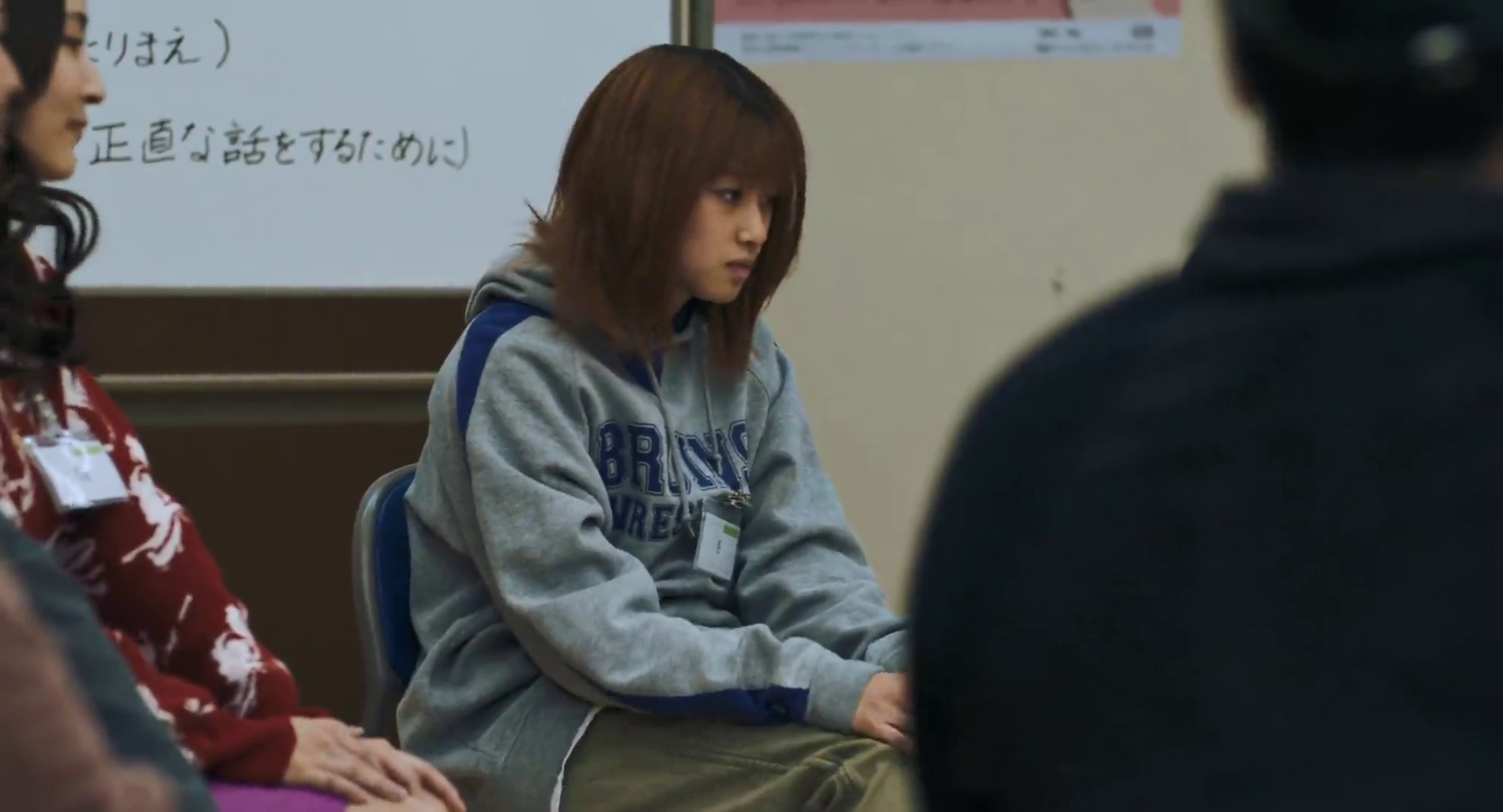
We first meet Ann Kagawa (Yuumi Kawai), a prostituting meth addict, in a darkish room of a love hotel, demanding money from her intoxicated client before engaging in sexual acts. In the struggle than ensues, he suddenly passes out (Acting-note 1). The following day, the police, tipped of by an employee of the hotel, takes both in for questioning. Tatara (Jiro Sato), the police officer who questions her, goes beyond the mere criminalisation of Ann and introduces her to Salvage Akabane, a support organisation, to help break her reliance on meth. Seeing her willingness to turn her life around, he eventually convinces her to leave her abusive mother, Harumi (Aoba Kawai), and her grandmother Emiko (Yuriko Hirooka) behind.
A Girl Named Ann does not merely offer the spectator an Intimate portrait of a subject trying to put her life back on rails but also an unsettling confrontation with the structural unwillingness of the governmental Other to help those in need. As the narrative shows, the refusing silence of this Other subtly forces the subject to rely on a network of helping others and NPO’s – for better or worse.
The true purpose of Irie’s A Girl Named Ann is not to generate pity for Ann but to confront the spectator with the societal context – the specific composition of the Other – to led her to install the object of meth between her and the Other. Irie embarks on his social conscious exploration by revealing the familial space where Ann wanders in as an environment which leaves no space for subjectivity. Within the dirty and unkept spaces of their dilapidated apartment, we encounter a mother who regularly prostitutes herself and seeks to extort her daughter for money.
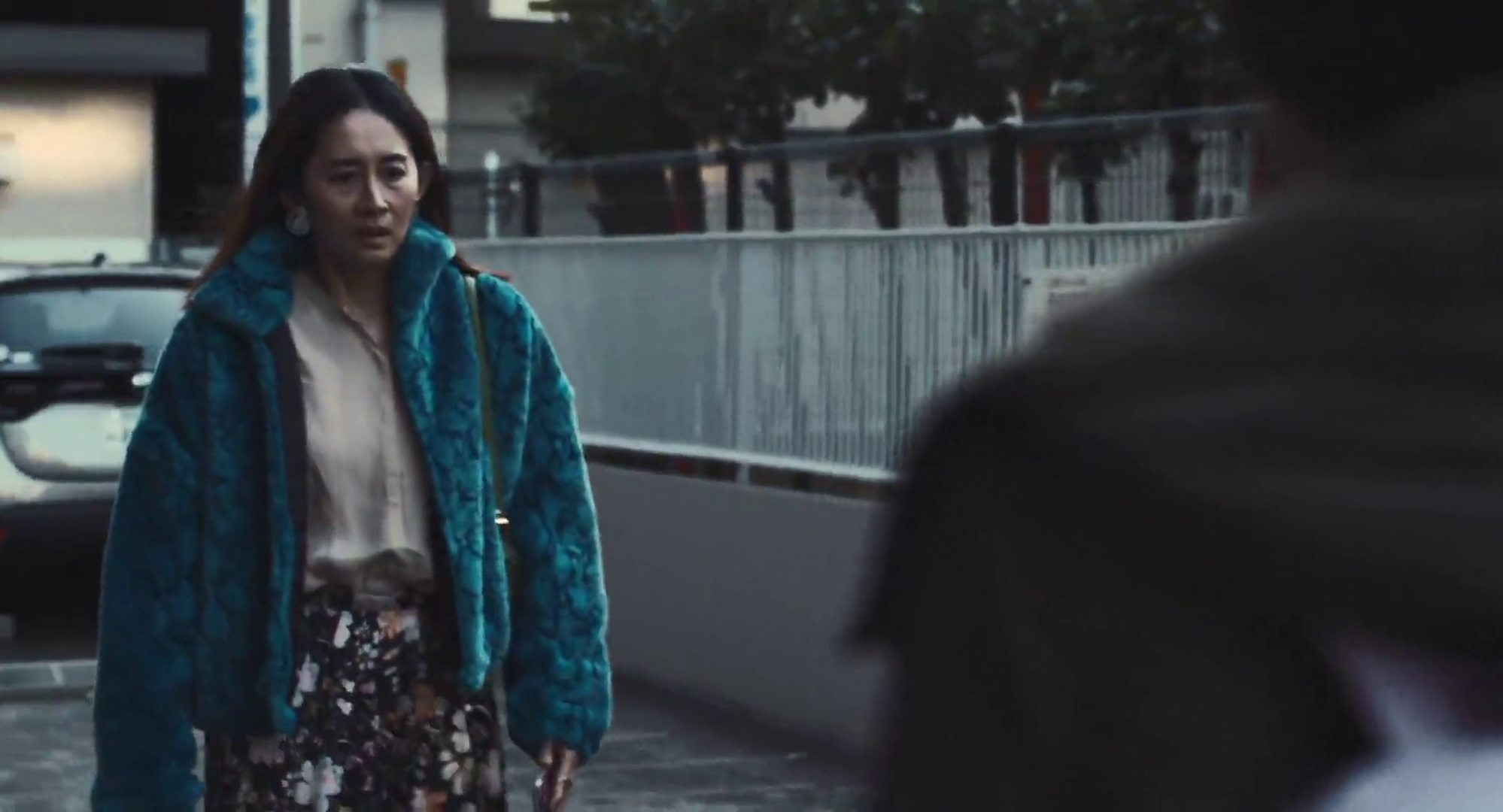
The reality of poverty, the struggle to make ends meet, dilutes interactions between Ann and her mother to mere one-way demands – Go earn more money! Hurry up and sell your body.” – and inaugurates an inter-subjective space where any perceived indication of rebelliousness against the pressing demand of the (m)Other leads to violent repercussions – verbally as well as physically.
What makes the (m)Other’s oppressive demand attain a traumatic quality is not the demand for money as such, but the oppressive echo that Ann is a radical failure. The brutal bursting forth of the motherly signifier goes hand in hand with a radical dismissal of her subjective worth – of the right to feel worthy of life. For the mother, Ann is but an object to provide money and allow her to pursue enjoyment – yet, the thirst for money cannot be lessened, she will never be enough for her mother.
The motherly message that comes to define Ann’s relationship towards her own ego is tragically reinforced by a societal Other that processes subjects via a cold computational logic that cannot take any account of subjective suffering and relational malfunctioning. The civil servant at the city-hall counter-acts any statement made by Tatara, who seeks to secure welfare benefits for Ann, with the signifier responsibility, hereby implying that her failure to act responsible in life is solely her own.
Ann’s reason to turn to meth is only vaguely touched upon, yet, the way Irie frames the relation between Ann and her mother leaves no doubt that the administering of drugs is an attempt to subdue the subjective impact of meekly obeying her (m)Other’s oppressive and manipulative demand. The enjoyment of drugs provides her a temporary escape from the (m)Other from which she cannot separate herself from.

The path of recovery necessitates a different kind of Other – a supportive Other that assists the subject to tolerate the depressive emptiness caused by staying of meth. The importance of such an Other is subtly echoed within Tatara’s statements: “You’ve got to start valuing yourself. Find something you can be passionate about”. To be able to value oneself as ego, one needs an Other that, via signifiers and acts, creates a space where the encounter with a different message concerning one’s existence can take place – I am worthy of life. And to be able to be passionate about something one must have an Other to whom one can offer one’s passion to – products of passion are, in essence, gifts to an Other.
Ann finds such an Other in the recovery meetings and at the workplace Tatara and reporter Kirino (Goro Inagaki) secure for her. The meetings do not merely offer Ann a space where she can encounter alter-ego’s – people whom she can she herself reflected in – and supportive signifiers, but also a space that grants her a place to speak and find her own subjective voice. Her workplace, on the other hand, does not only give her financial means to dream of independency and a productive symbolic position within the Other, but also introduces her to a space of interactions where she can extract some sense of self-worth.
Yet, spectators hoping for a simple feel-good denouement are in for a shock (Structure-note 1). Suddenly, around the half way mark, Yu Irie confronts the spectator with the following question: Is the supportive Other’s desire pure? For the spectator, however, the answer to the former question inaugurates a more pressing riddle: Can Ann, who heavily relies on the Other to rewrite herself constructively into the societal field, avoid the repetition of her traumatic familial situation, i.e. avoid becoming exploited for someone’s else’s masturbatory enjoyment? And how will the spread of Covid-19 and the governmental response, which causes the falling away of her supportive Other, impact Ann’s trajectory?
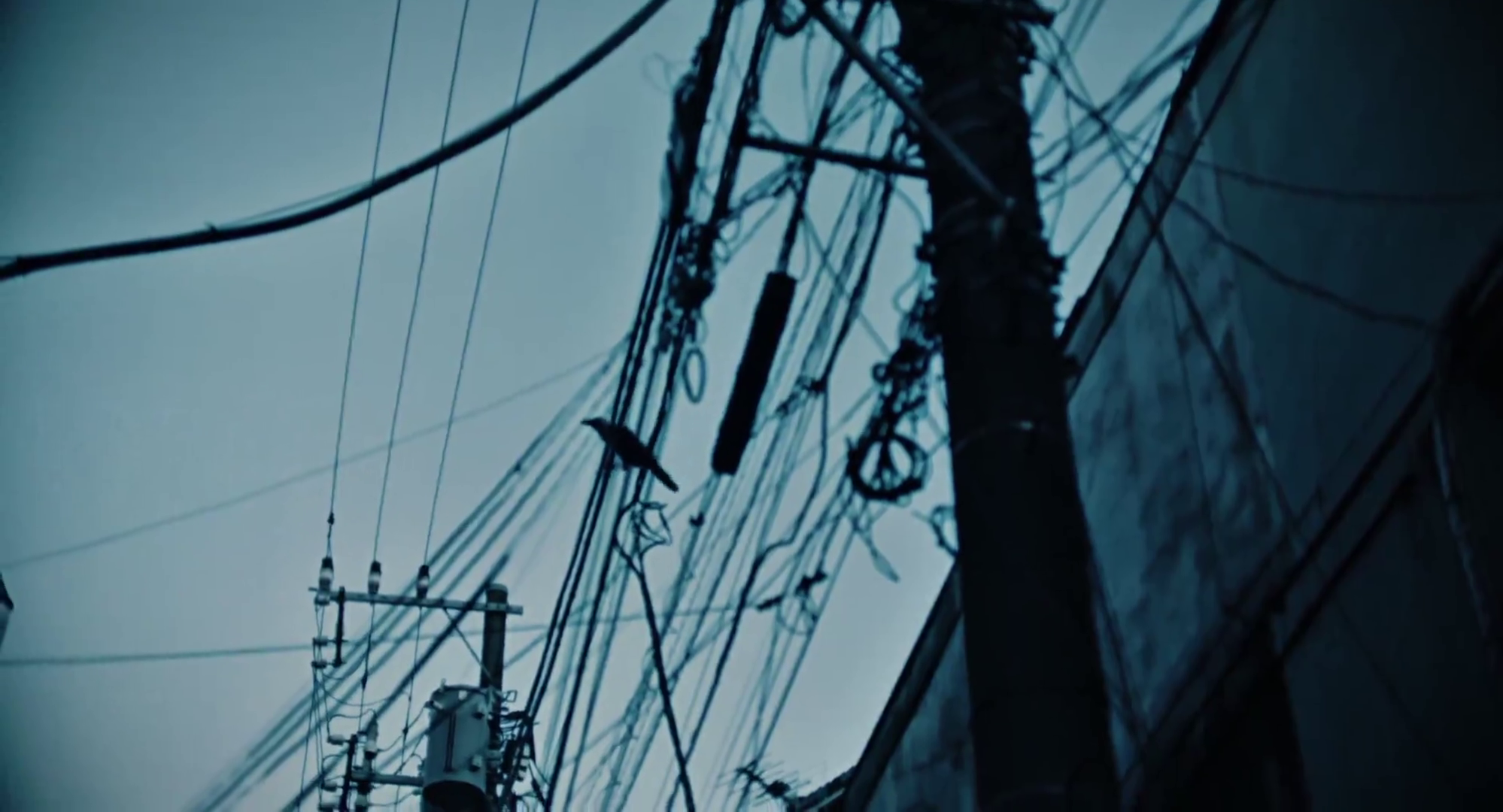
The composition of A Girl Named Ann strikes a great balance between stylistically elevating the dramatic nature of the narrative and emphasizing the factual truth upon which this fictional narrative is based (Cine-note 1). Yu Irie use of fluid dynamism and subtly interweaved visual metaphors is brutally contrasted with compositional moments of shakiness, which signal the factual origin of this fictional narrative as well as reverberate the subjective impact of ‘societal and familial reality’ on Ann.
However, Irie also succeeds in exploiting the shakiness of the frame in a different way. By coupling jerky framing with dynamic medium shots and medium close-ups, Irie turns the spectator’s gaze into an intrusive presence – a position that arouses feelings of uneasiness. The spectator is not allowed to remain a distant observer, but is forced to intimately partake in Ann’s dependency on the enjoyment provided by drugs, her problematic familial situation, and her attempt to break the hold substance has over her subjectivity.
It is due to this compositional intervention that Yu Irie can avoid the melodramatic trap – she is to be pitied – and invite the spectator to sympathize with Ann’s struggle with the Other and accept the structural failure of the governmental Other. It is, in fact, by avoiding the trap of melo-drama that Irie can safeguard the confrontational quality of his narrative. It is by denying the spectator the possibility of an emotional release (abreaktion) that Irie can burden him with the uncomfortable truth concerning the Japanese societal Other.
A Girl Named Ann offers the spectator one of most upsetting confrontations with the way the societal and familial Other can fail the subject. Yu Irie’s narrative does not merely offer the spectator a shocking example of the collateral damage COVID-19 guidelines have caused, but also sketched out how the symbolic machinery of rules and requirements often leaves struggling subjects to their own devices. Highly recommended.

Notes
Acting-note 1: Yuumi Kawai delivers an impressive performance as Ann, bringing her vulnerability (of relying on the Other’s demand to get a sign of her love) with a raw painful genuineness to life.
Structure-note 1: Some spectators might feel thatthe second half of the narrative, which is dedicated to framing how the Other Ann has come to rely on is increasingly dismantled, lacks focus. However, the restraint framing of how Ann’s anchors are, one by one, taken away does help Irie make his finale more impactful.
Cine-note 1: Irie’s composition is littered with unforgettable moments – e.g. Tatara performing Yoga in front of Ann, mother pleading with her daughter to come home, … etc. In some cases, the impact of these moments is heightened by Irie’s thoughtful exploitation of diegetic sound – sounds that, by being manipulated, become evocative of Ann’s mental position.
References:
Schley, M. (2024, October 28). Tokyo director in Focus Yu Irie on what “shocked” him into making ‘a girl named Ann.’ Screen. https://www.screendaily.com/features/tokyo-director-in-focus-yu-irie-on-what-shocked-him-into-making-a-girl-named-ann/5198551.article
 psychocinema
One Comment Add yours