Yugo Sakamoto first made an international splash with Baby Assassins (2021). Audiences enjoyed the effective balance between laughs and action-thrills. However, while Sakamoto, as screenwriter and director, must be applauded for creating such well-structured narrative, Kensuke Sonomura’s well-choreographed action-sequences ensured that neither comedy nor action outshined the other.

Or, to put it differently, Baby Assassins (2021) proved that the collaboration between Sakamoto and Sonomura (Bad City (2022)), which started in 2021 with A Janitor, was highly productive. It is thus not surprising that both kept collaborating which each other. This collaboration brought us two Baby Assassins sequels – Baby Assassins 2 (2023) and Baby Assassins: Nice Days (2024)– and now Ghost Killer – Sonomura taking the director’s seat to bring Sakamoto’s screenplay to life.
Ghost Killer commences when an exhausted Fumika Matsuoka (Akari Takaishi), who has just spent her night with the incredible boring Masaki Katayama (Hidenobu Abera), an event planner and social media influencer, accidently trips on one of the last steps of the staircase and discovers, right before her eyes, an empty bullet shell.
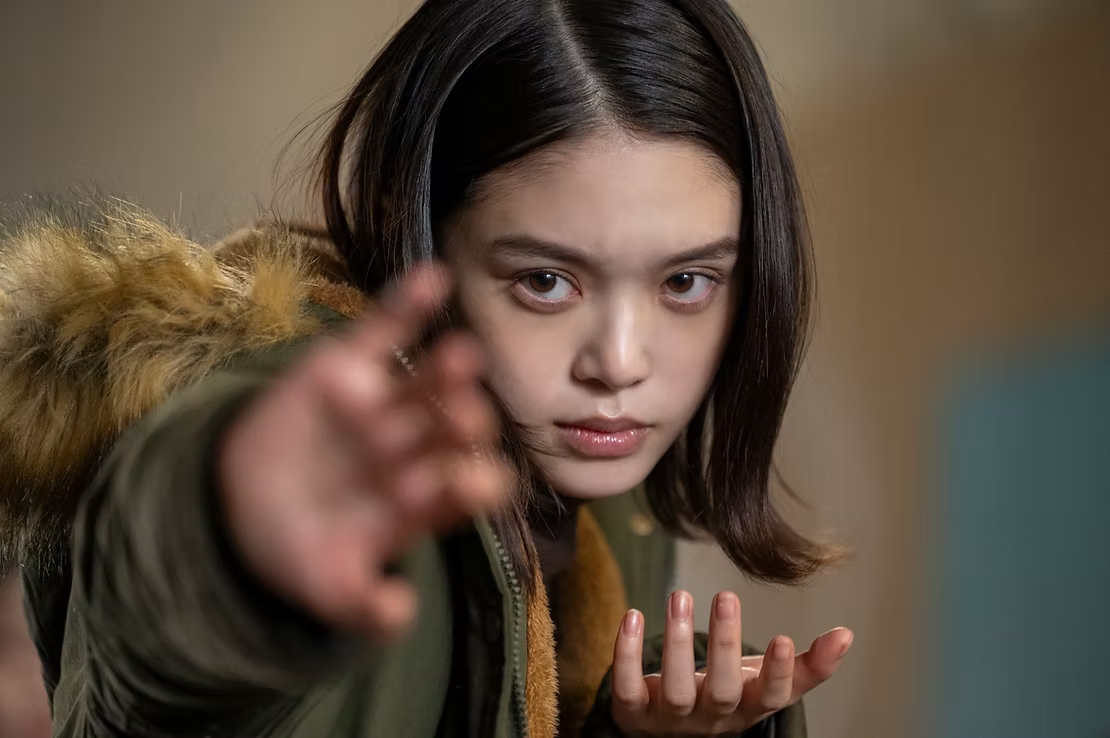
After letting Maho (Ayaka Higashino), who has, once again, been abused by her boyfriend Ryusuke (Ryu Ichinose), into her apartment, Fumika suddenly discovers a dark shadow of a man (Masanori Mimoto) standing in her kitchen. Yet, things take a strange turn when the ghostly appearance melts into her body and mind, granting her a surprising fighting prowess and a task to carry his grudge, take on those responsible for his death (General-note 1).
Ghost Killer is an extremely pleasant comical action-romp, striking the perfect balance between well-delivered puns and well-placed kicks and punches. The quirky premise – i.e. the possession of a university student by a seasoned assassin, gives a fresh flavour to the predictable narrative structure – Sonomura hits all the narrative beats one expects from the action-genre.
Those spectators who fear that the concatenation of light-hearted moments will deflate the impact of the narrative pay-off can rest assured. Screenwriter Yugo Sakamoto proves that he is a master of the comedy-action genre, providing laughs and smiles while also successfully rising the tension within his narrative to ensure that the bursting forth of the violent finale does not miss its impact.
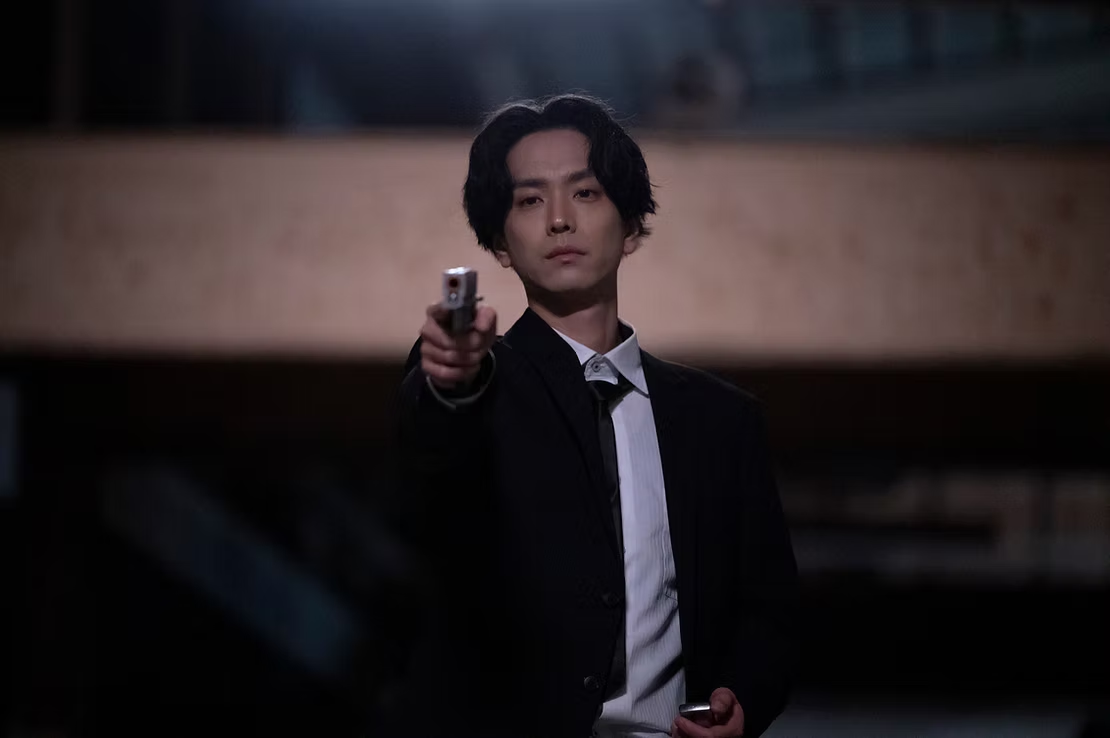
Spectators will have no problem in discerning the misogynistic elements in Sonomura’s narrative. Ryusuke exploits Maho’s love for his own pleasure and beats down any sign of disobedience. Masaki Katayama and Narumi (Naoto Kuratomi), two popular influencers Akari meets, have no trouble putting the troubling view they have of women on display. Katayama, intoxicated by his own sense of desirability, can only approach the female subject as a sexual object and Narumi has no qualms in categorizing women in desirable and not-desirable, hereby presupposing that all women desire him.
However, the true thematical undercurrent of the film is nothing other than the importance of the encounter. While there are encounters that negatively impact you – being with an abusive boyfriend, meeting sexually thirsty influencers, there are also encounters that enable subjective growth – encounters that support the subject in his coming-into-being in a constructive way.
The action-sequences in Ghost Killer are a pleasure to watch. Kensuke Sonomura’s ensures the spectator’s excitement by dynamically blending more distant framing, granting the spectator time to admire the choreographies, and more close framing, confronting him with the dangerous thrill of the frantic brawls and fights. To top it off, he also interweaves some delightful moments of slow-motion.
However, Sonomura does not only please the spectator with his effective staging of the action-sequences, but also with the composition that connects the bursting forth of violence – the moments of narrative development. While these narrative moments rely less on dynamism, they are littered with well-crafted shot-compositions, with many fleeting moments of scopic pleasure.
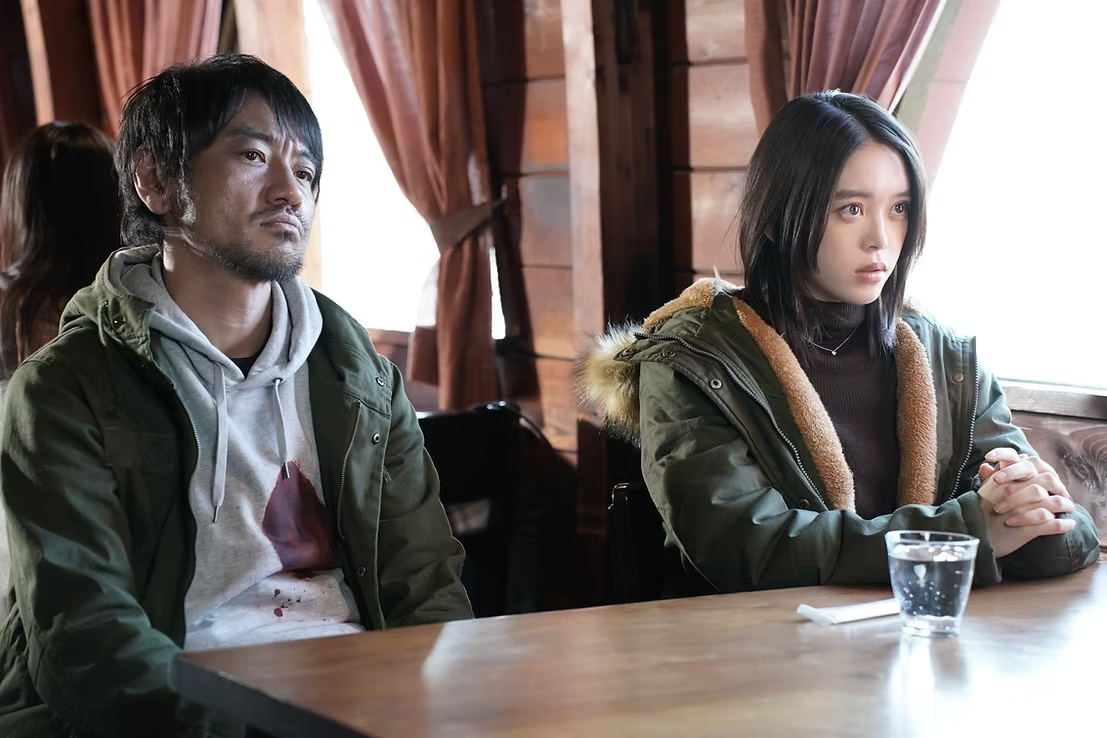
Despite relying less on dynamism, dynamism never leaves the frame. In fact, one can argue that Sonomura utilizes dynamism as a kind of mother-colour, as a lingering indication that violence can burst forth at any moment.
Akari Takaishi delivers an impressive performance as Fumika. It would not be wrong to argue that she carries the whole narrative – the whole light-hearted approach – with her performance. She does not only deliver the goods in her action-choreographies, but also satisfies the spectator with her expressive performance, i.e. from her mundane deadpan seriousness to her hysterical outbursts. She also proves her acting prowess by giving Fumika’s state of possession and the dialogues between her and the ghost a deliciously comical touch.
However, it must be said that Akari Takaishi only shines so bright because she is well-supported by the other members of the cast. The other cast-members, e.g. Masanori Mimoto, Ayaka Higashino, Mario Kuroba who portrays clean-up guy Riku Kagehara, … etc., offer Takaishi an effective frame that amplifies her one-liners and light-hearted remarks, but also rely on her to delivers well-timed puns as well.
Ghost Killer does little to re-invent the genre, but delivers everything one’s desires in such narratives in spades – a crowd-pleaser, indeed. Yugo Sakamoto proves that he is the master of the comedy-action genre and Kensuke Sonomura re-affirms his skill at framing action in an exciting way. We hope that both continue to collaborate in the future, delivering more fantastic concoctions that audiences can savour.

Notes
General note 1: The set-up of the narrative shares some resemblances to the premise of Ghostwire Tokyo (2022)
One Comment Add yours