“It doesn’t matter why I killed him. I don’t need to be understood.”
Masao Adachi, the most well-known left-wing activist director from Japan, does not need any introduction. Most cinephiles will know him from his screenplays for Koji Wakamatsu, his own cinematic art, and his decision to join the Japanese Red Army and go to Lebanon to aid the Popular Front for the Liberation of Palestine.
After serving time for being part of the JRA, he returned to creating cinematic art, underlining that, after all these years, his desire to instigate societal change and raise social awareness through cinema – eiga, kakumei! – is still burning. It thus comes to no surprise that Adachi, learning about the background of Tetsuya Yamagami, the man who shot former Prime Minister Shinzo Abe in 2022, hastily set out to craft a ‘cinematic expression’ of this shocking event. Adachi hoped, by introducing his interpretation, that he could save Japanese subjects from falling victim to influence of the political Other, who would seek to utilize the media to distort the situation and frame him as a mere terrorist (Hirasawa and Spigland, 2023).
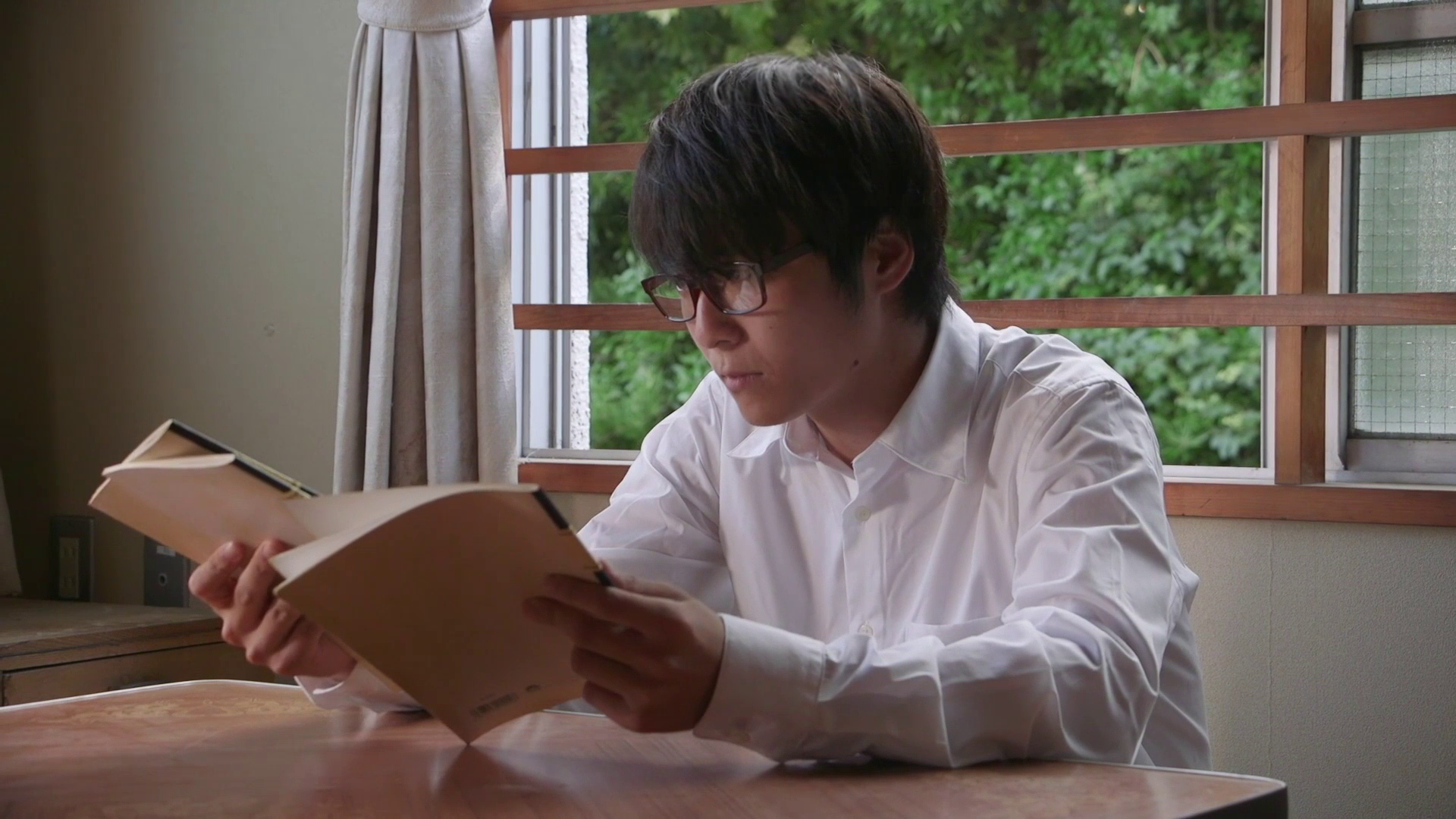
To create his narrative, Masao Adachi mainly relied on information publicised by the media in the aftermath of the assassination. Yamagami’s father committed suicide when he was four. His older brother lost, as a child, an eye due to complications during cancer surgery. To be able to deal with these hardships and seek salvation, his mother Noriko turned to the signifiers of the Unification Church and converted herself. Once in the grasp of these signifiers, she gave all her money away, causing her three children to lead a life of hunger and subjective desperation.
With Revolution +1, Adachi delivers a character study – a sympathetic contextualisation of Yamagami’s transgressive event – loosely shaped in a form of a confession. The confessional element of Adachi’s narrative is evident by his choice to organize the unfolding of his narrative around fragments of explanatory speech, generally via voice-over. The signifiers Kawakami (Soran Tamoto) utters are not only addressed to his older brother (Futa Muraki), who committed suicide when Kawakami was thirty-five years old, but also obliquely to the audience, who remains absent from the frame.
As Kawakami’s speech unfurls, it becomes increasingly evident that his transgressive act was not perverse in nature – i.e. in service of his want to enjoy the Other, but was, due to conscious and unconscious calculations, deemed subjectively necessary. For him, there was no other response to his suffering than to commit a transgressive acting-out, murdering Shinzo Abe in broad day light. It was not “an act of political terrorism”, it was an act committed by someone “who came to his own decision […] rather than being directed by a political organization or social movement. (Hirasawa and Spigland, 2023).

One cannot reduce Kawakami’s act, as some spectators will surely do, to a simple act of revenge, a calculated attempt to destroy those who poisoned his mother (Satoko Iwasaki) and sabotaged his future. Kawakami’s turn to the transgressive act is instigated by the fact that the (m)Other refuses to register his suffering – his resentment towards the Unification Church and the political Other is caused by the erasure of his speech (Psycho-note 1). The loud bang of the home-made gun is not a simple attempt to end Shinzo Abe’s life but aims to confront the mother, awaken the societal and the political Other, and force both instances to deal with the suffering they allow to exist within the societal field. The revolutionary quality of Kawakami’s assassination does not merely lie in the “counter-attacking of [the] absurdity of hardships”, but in brutally confronting the Other with its own perversity by violently penetrating its established walls of oppression/repression (Hirasawa and Spigland, 2023).
Adachi’s Revolution +1 is a political narrative – a doubling of Kawakami’s acting-out in a cinematic shape. He did not craft this dramatization merely to address the subject seated in his comfy seat in the theatre, but also the capitalistic Other that the audiences, consciously and unconsciously, echo via their speech and their acts.
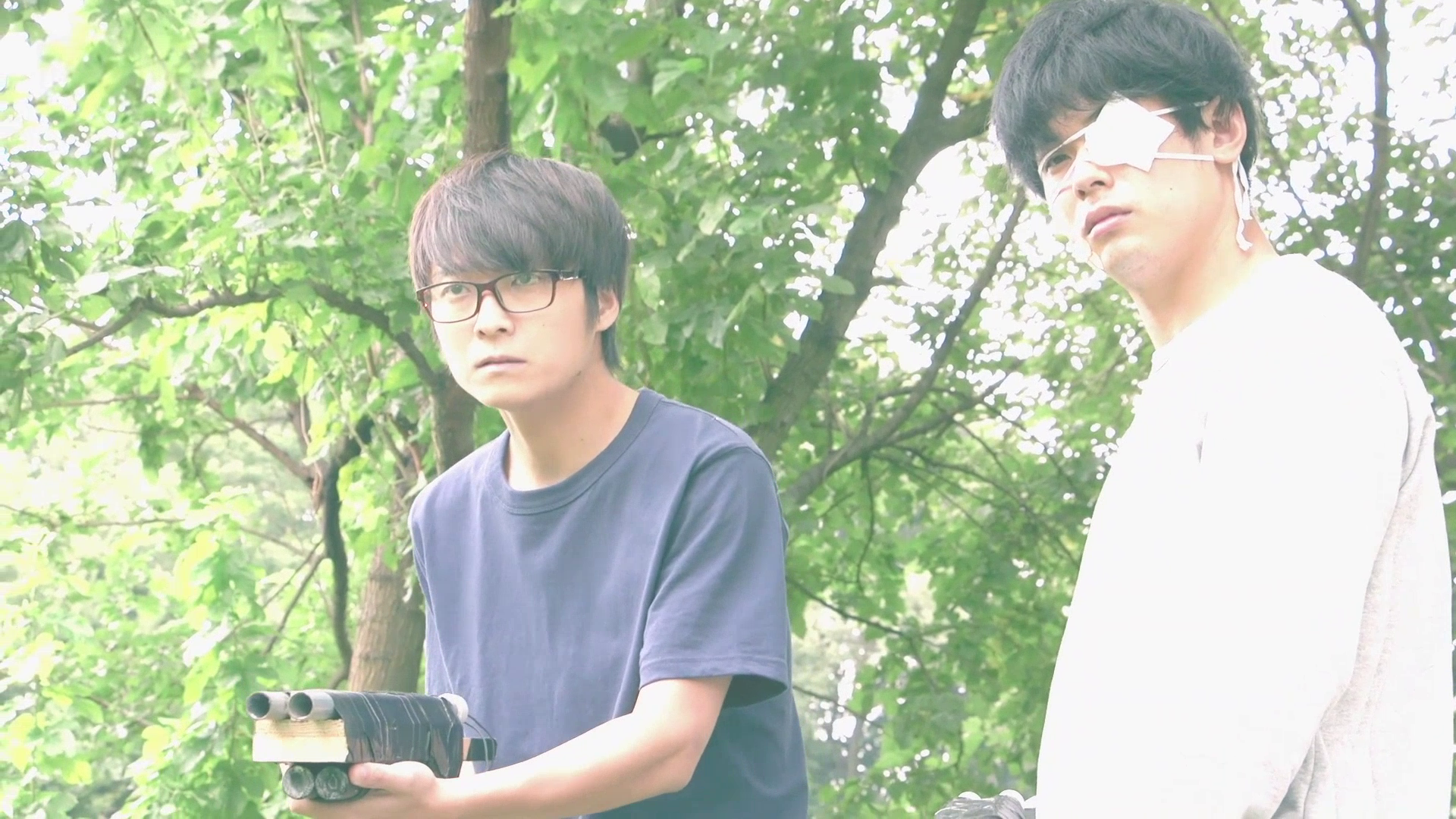
Adachi’s film offers the spectator a beautiful and effective confrontation with the poisonous distortions caused by the capitalistic logic within the Other. He unveils the Unification Church and any other similar religious corporations as leeches who offer suffering subjects deceitful signifiers-of-redemption to slowly suck their converts financially dry. While their signifiers do create a phantasmatic space where the subject can obtain a glint of hope, it also seduces the subject to accept one’s financial suffering, as caused by piously adhering to the church’s demands to donate, as a form of redemptive suffering.
It is by incorporating these seductive signifiers of hope into her subjective logic – signifiers which imprison her in a state of peaceful resignation – that Kawakami’s mother ultimately renders herself unable to hear her children’s suffering. The phantasmatic image of God is nothing other than a one-way mirror that isolates the mother from the appeals made by the suffering subjects around her.
Adachi utilizes Kawakami’s family tragedy to underline that many Japanese subjects meekly accept their societal position and radically refuse to question the Other, whether religious or societal, who has shaped or mutilated their subjectivity. It is due to this meek obedience to the Other that the public – e.g. the right-wing voters who are weary of Korea – has failed to perceive the contradictions that mark the bond between the Unification Church, whose signifiers are organized around a religiously framed Korean Nationalist fantasies, and the right-wing Liberal democratic party, who seeks to reawaken a form of Japanese Nationalism among the Japanese people.
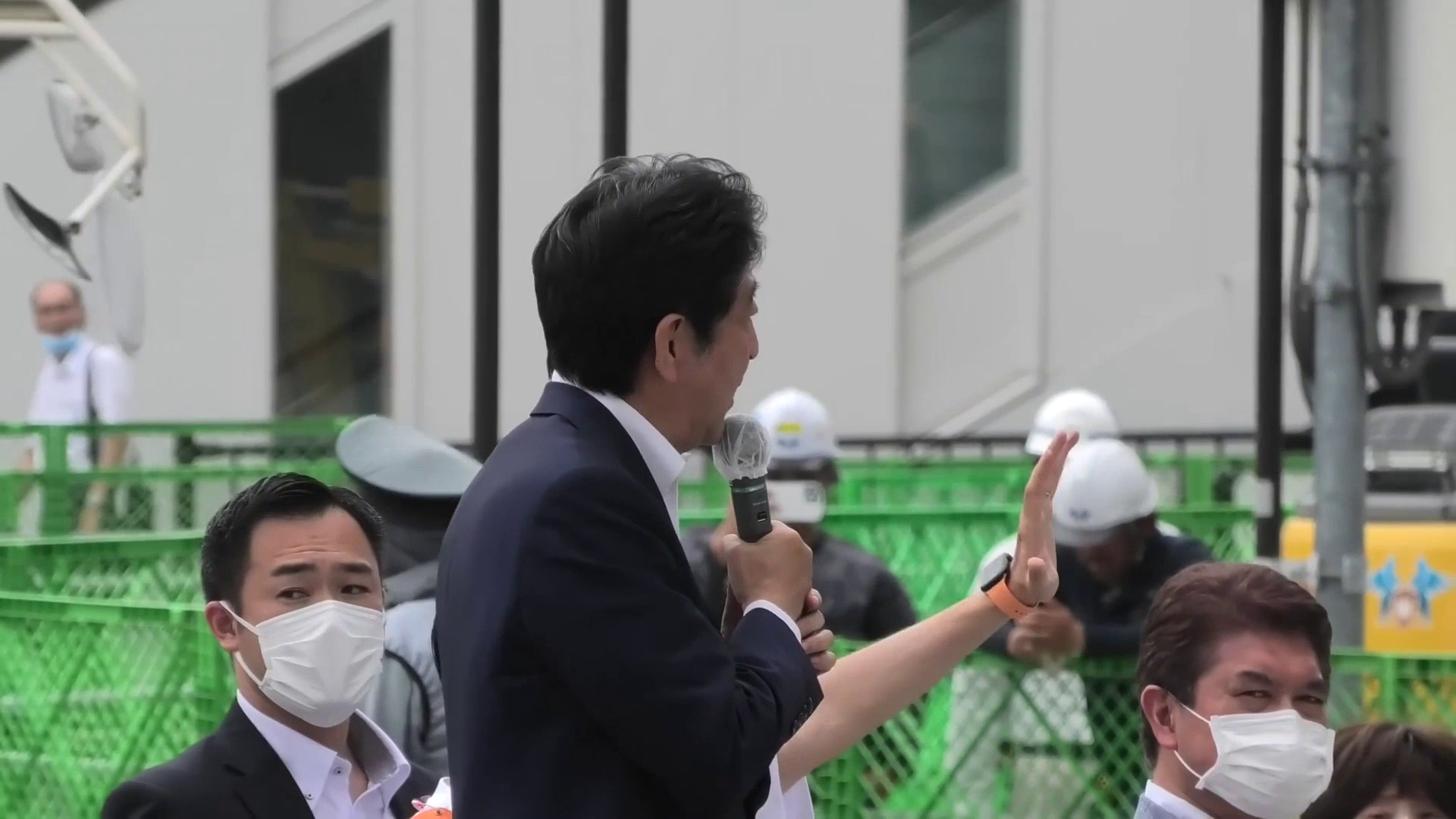
What seems irreconcilable becomes compatible by choosing a common enemy, i.e. the imaginary red threat of communism, and pursuing the same capitalistic aim. Yet, what is more shocking is the fact that the liberal democratic party, which advocates a return to nationalistic thought and refuses to accept the truth of the war-crimes committed during the second world war, praises the Unification Church and allows this religious corporation to still its nationalistic hunger by financially exploiting Japanese subjects. Shinzo Abe is, in Masao Adachi’s Kawakami’s eyes, the epitome of this unperceived contradiction between tatemae and honne, between the flow of patriarchal signifiers and the true thirst that remains hidden behind this political window-dressing.
So, why do subjects ignore this irreconcilable contradiction? In our view, the subject’s blindness lies in the fact that he, to attain a form of subjectivity, must become a slave of the Other – as language and as a set of ideals, rules, values and norms. People, born and bred within the Other, do not want to question what lies beyond its societal surface. People do not want to perceive the darker intentions and thirsts that lie beyond the sweet signifiers (i.e. concerning family and love) and welcoming smiles of those who represent the political or the religious Other.
The composition of Revolution +1 has a nice flow, due to Adachi’s pleasant use of dynamism. What further elevates his composition and adds an evocative flavour to the whole is Adachi’s use of decorative elements like cross fades, white fade-outs, and shifts in colour-schemes. While the low-budget nature of Revolution +1 is felt in certain parts of the film, Masao Adachi proves himself to be a master of making the most of limited budget and the self-imposed time-constraints.
With Revolution +1, Masao Adachi delivers an important political statement that, by offering an evocative sketch of Tetsuya Yamagami’s tragic trajectory, invites the Japanese spectator to question his own passivity towards the political Other. Even if one is not Japanese – not subjected to the Japanese Other, Adachi’s narrative does not loose any of its relevance. Yet, do you dare to question your Other?

Notes
Psycho-note 1: Kawakami’s failed suicidal act must also be understood as an acting-out.This acting-out, which fails to elicit any reaction from its addressee, his mother, corroborates the idea that the Other does not want to register his suffering.
References
Hirasawa, G. and Spigland, E. (2023). “REVOLUTION+1: An Interview with Masao Adachi”. e-flux Journal. Archived from the original on July 7, 2023. Retrieved July 27, 2023: https://www.e-flux.com/journal/135/530856/revolution-1-an-interview-with-masao-adachi
 psychocinema
One Comment Add yours