Many films dealing with sports (soccer, boxing, cycling, … etc.) offer the spectator a slight reworked version of the monomyth, the hero’s journey. The structural similarities between many of these filmic narratives is mainly caused by the fact they are adaptations of manga.
Kazuyoshi Kumakiri (Yoko (2023), Manhole (2023)), however, shows with Mukoku, an adaptation of Shu Fujisawa’s novel of the same name, that one can utilize the structuring element of sport to deliver a narrative that explores more psychological darker themes. In fact, he proves that one does not need to rely on the narrative dynamic of hero to create an engaging and satisfying sports-drama.

Kumakiri’s narrative commences when aspiring rapper Toru (Nijiro Murakami), after kicking someone’s shinai (practice sword) by accident, finds himself forced to fight against the person he offended in a one-on-one kendo bout. After witnessing part of the fight, master Mitsumura (Akira Emoto) offers him, much to his surprise, a job (Narra-note 1). Not long thereafter, Mitsumura sends Toru to deliver a letter to Kengo (Go Ayano), a drunk who was once a promising kendōka (kendo practitioner).
The first half and hour of the narrative is utilized by Kumakiri to introduce the spectator to the strained bond Kengo Yatabe and Toru Haneda have with the Other and sketch out the subjective turmoil that echoes within their signifiers and their acts.
Kengo is shown to be deeply marked by the abuse he suffered at the hand of his father, a renowned sword-fighting master, as a child. The strained and conflicted bond with the fatherly instance culminated in a vengeful attack on his body and consequently birthed a cruel fatherly super-ego that inhibits him severely. The unresolved state of his bond with the father causes Kengo to realize a very contradictory subject-position within the societal field.
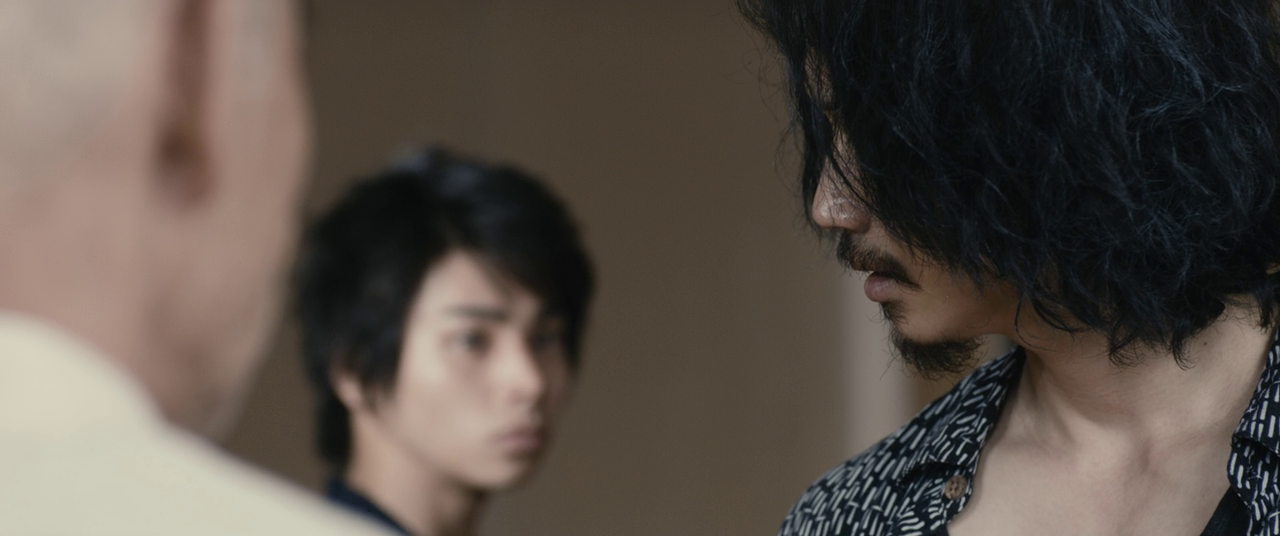
The art of Kendo, which defines Kengo as a subject, yet has been tainted by the father, festers within him like a parasite. Due to this inner conflict, he has not merely become unable to perform the art of sword-fighting, but is ever in danger, whenever a signifier or act associated with kendo appears within the interactional field, to transform into a subject who lashes out verbally and physically to the other in a vain attempt to douse the traumatic shadow of the fatherly Other that taints the other.
Kengo’s turn to alcohol is an attempt to sedate his inner conflict and silence the fatherly Other, yet, in an intoxicated state, the other becomes more easily a vehicle for the traumatic shadow that haunts him. Alcohol is, in this sense, a frail band-aid that fails him as it ultimately forces the pus to violently splash out his traumatic wound (Psycho-note 1).
Toru, on the other hand, constructs a self-medicative rebellion against the societal Other who in some way wronged him. This self-assumed position of rebellion turns all interactions with the other-as-image into an imaginary scuffle, into a violent clashing of egos. Within his psyche, the other as alter-ego, the other as tainted by the shadow of the Other he rebels against, is always out to attack and enjoy him.
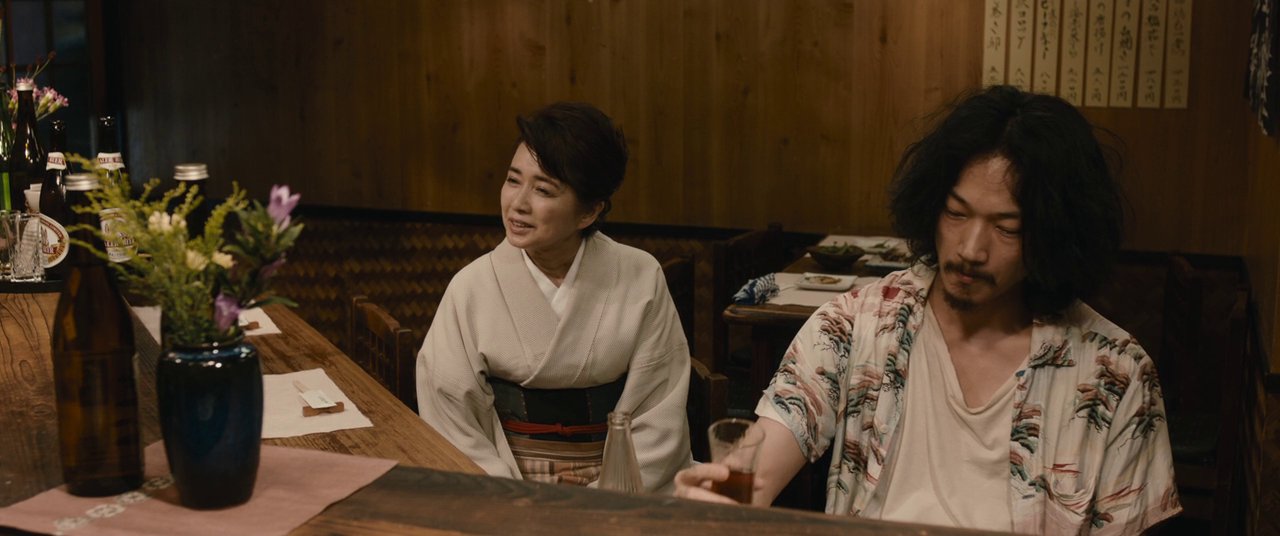
However, as his interactions with master Mitsumura underline, his rebellious attitude is limited to interactions with his peers. When Mitsumura installs himself as a fatherly master, he introduces a third element that rewrites the dual nature of Toru’s interactions with his peers and allows his frustration with the societal Other to simmer down. It is, as a matter of fact, by virtue of entering a triangular structure that Toru can make Kengo into his rival and transform him into the representation of what angers him in the Other. At the same time, Toru, by approaching him, pushes Kengo, whether he wants it or not, in the position of his own father, the master (Narra-note 2).
It should be obvious that Kengo, to be able to perform the art of Kendo earnestly, must work-through his own violent transgression – the attack on the father and the problematic relation to his father. The emotional flash-back sequences that arise after Kengo encounters the reflection of himself in Toru sketch out the fundamental dynamic that determines his subjective suffering: the irresolvable conflict between the love for his father and the hate for him in the shape of kendo-master. Yet, these sequences do not merely oust Kengo as a victim of an unresolved ambivalence towards his father, but also reveal that he is a victim of his own transgressive desire – “I killed him” in accordance with my desire.
Yet, the flashbacks do not merely aim to deepen Kengo as character, but to signal to the spectator that he has embarked on the path to work through his traumatic past and his attempt to reconnect with society and particularly the art of kendo (Narra-note 3, General-note 1).
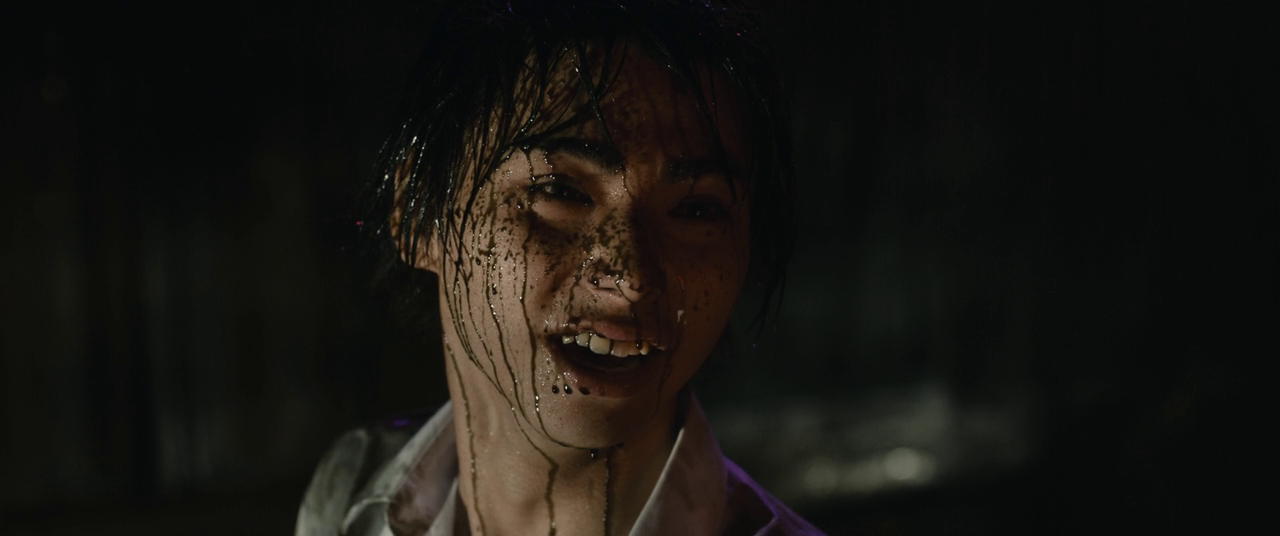
The composition of Mukoku is very dynamic. While Kumakiri utilizes some static moments and fluid dynamic shots, he relies heavily on shaky framing to bring his narrative to life. The tinge that marks the frame throughout the visual composition gives the unfolding of the narrative a fictive impression of reality, but also amplifies the emotions brought to life on the silver screen by the cast – both Nijiro Murakami and Go Ayano deliver convincing performances. This stylistic choice, moreover, helps in giving certain sparring sequences a delicious roughness that makes the refined brutality of the sport tangible for spectators.
The fact that Kumakiri’s Mukoku deals with darker psychological themes finds its visual echo in the darkish lighting-design and the faded quality of the colours. These stylistic choices do not merely infuse a sense of dreariness into the film’s atmosphere, but echoes the irreducible conflict that marks the subject’s relation to the Other, i.e. the societal field that surrounds us and has structured our subjectivity.
With Mukoku, Kumakiri offers a fresh breath in the Japanese sports genre by focusing on trauma, the ill-fitting of the subject within the societal Other, and the importance of forming bonds with the other. By avoiding to deliver a slightly reworked version of a hero’s growth, Kumakiri does not only deliver a less predictable sports-narrative, but also proves that the sport-genre can be a frame to explore a myriad of darker psychological themes.

Notes
Narra-note 1: What master Mitsumura persuades to introduce Toru to the art of Kendo is the fact that he resembles Kengo, that he can offer Kengo a reflection of himself. The fatherly Other – this third point pacifying Toru’s interactions with the Other – has a hidden agenda of his own: to rehabilitate Kengo and allow him to assume a productive position within the societal Other.
Narra-note 2: The psychological effect of the muddy and rainy face-off between Kengo and Toru on Kengo is not simply because Kengo is pushed in the position of the father, but because this duel constitutes a phantasmatic repetition that enables Kengo to relive his act of violence as the father but also the son.
Yet, will the psychological effect of this duel be reparative, offering him, in the shape of his father, a physical possibility to work-through his oedipal desire to kill, or disintegrative, derailing him by being forced back into his position as murderous son?
Narra-note 3: Kengo’s hate is function of a frustrated desire for fatherly love. In this sense, the only antidote to his suffering, the only way he can reconnect with Kendo and the societal field, is by encountering a consoling signifier that proves his father’s love.
Psycho-note 1: Alcohol can only fulfill its sedative aim when it is consumed in moderation. At the same time, alcohol disintegrates the barriers of inhibition, easing the bursting forth of repressed signifiers and the emotions (of frustration, anger) associated with these repressed elements of language.
General-note 1: Mukoku also introduces some Zen-Buddhistic philosophical fragments that are important to, yet not limited to the art of Japanese sword-fighting. Kumakiri underlines the importance of broadening your field of vision, the Zen Buddhistic notion of intuitive awareness, and the four afflictions: surprise, fear, doubt and confusion.
The second element of intuitive awareness is, in our view, of vital importance to the narrative. This notion asks to subject to understand, beyond the deceptive field of signifiers, the subject (Kokoro as spirit) that lies beyond the ego (Kokoro as mind). To enact subjective change, we must not target the ego, but aim directly at the subject.
 psychocinema
Promising movie about the swordmasters art of Kendo! The practioners and the essence of the art! Gre