Sadao Yamanaka is, without a doubt, the unsung talent of pre-war Japanese cinema. His period films were innovative, challenging the formal visual envelope earlier Japanese cinema was known for. What also set him apart from his contemporaries is his reliance on the ‘spirit’ of the people in crafting his period dramas, delivering narrative tapestries full of characters are marked by a subjective lack.

Sadly, Yamanaka did not survive the second world war, passing away at the age of 28. What’s even worse is that of the twenty-six movies he made during his short career only three remain. Luckily, most of Yamanaka’s scripts have survived. One script, whose cinematic realisation is deemed lost, is Nezumikozō Jirokichi (Rat Kid Jorokichi), which tells the story of the robin-hood like folk hero Nakamura Jirokichi. Based on this script, Rintaro and Masao Maruyama dream what this script could have been as film in the hand of unsung pre-war directorial talent Sadao Yamanaka.
To be clear from the start, the appeal of Nezumikozō Jirokichi does not lie in its animation. The animation is serviceable and pragmatic – many still moments are present. The few nicely composed visual moments, which do elevate the whole, do not annul the overall simplicity of the animation.
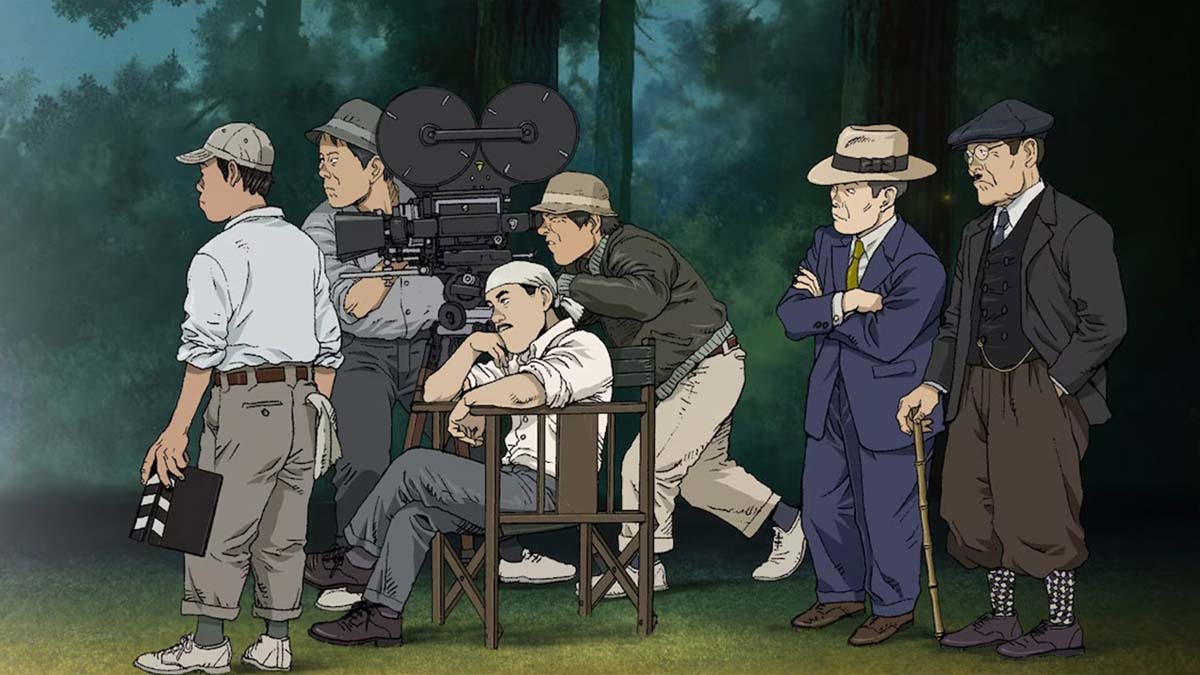
What makes Nezumikozō Jirokichi worth checking out is the fantasy it provides, the phantasmatic glance at what Yamanaka could have made. This fantastical dimension is, first and foremost, apparent in the elements of the silent film (e.g. the use of intertitles), that structure the animation. It is this echo that allows cinema’s past and the time where Yamanaka was active come to life.
Yet, to give the film a broader appeal and make it more easily digestible, Rintaro chose to decorate his fantasy with elements of the talkies – i.e. audible speech and the polychrome colour-design. Some spectators might feel such ‘modernity’ defiles the representation of the way Yamanaka would have realized this story on the silver screen, yet we feel that this mix of elements supports the film’s aim well, that is to entice spectators to seek out the three films that remain from this somewhat forgotten master – The Million Ryo Pot (1935), Kōchiyama Sōshun (1936), and Humanity and Paper Balloons (1937).
 psychocinema