Introduction
After collaborating with screenwriter Shinichi Sekizawa for many Godzilla movies – Sekizawa is responsible for the hollowing-out of the metaphorical dimension of the kajiu, it might come as a surprise that Godzilla: Destroy All Monsters’s narrative is the fruit of a fresh collaboration between Kaoru Mabuchi and Ishiro Honda. Will this collaboration attempt to give Godzilla his metaphorical dimension back or will it continue his transformation into a hero that keeps the deceptive lid of harmony on the gurling societal pot?

Review
Near the Bonin islands, an undersea farm is erected to cultivate a variety of fish for the kaiju inhabiting the newly created kaiju island. The farm as well as the defences to keep the kaiju on the island are automatically regulated and monitored by a control centre deep under the island. Of course, the place is also utilized as a base to conduct scientific research on these monstrous beings. Kyoko Manabe (Yukiko Kobayashi), just arrived at this underground facility, is the newest addition to the team of researchers.
Not long after her arrived, Kyoko receives a call from Katsuo Yamabe (Akira Kubo), who recently joined a team of researchers on the moon base of the United Nations Science Committee (UNSC). Their call is cut off when, suddenly, the electricity fails – all contact is lost. Once the power is restored, a mysterious poisonous gas spreads through the base of operations and envelops the whole of monster island. Dr. Yoshida (Jun Tazaki), who works for the UNSC, immediately launches an investigation, yet before his team can analyse this problematic situation, the world’s biggest cities are attacked by the kaiju that inhabited the island.
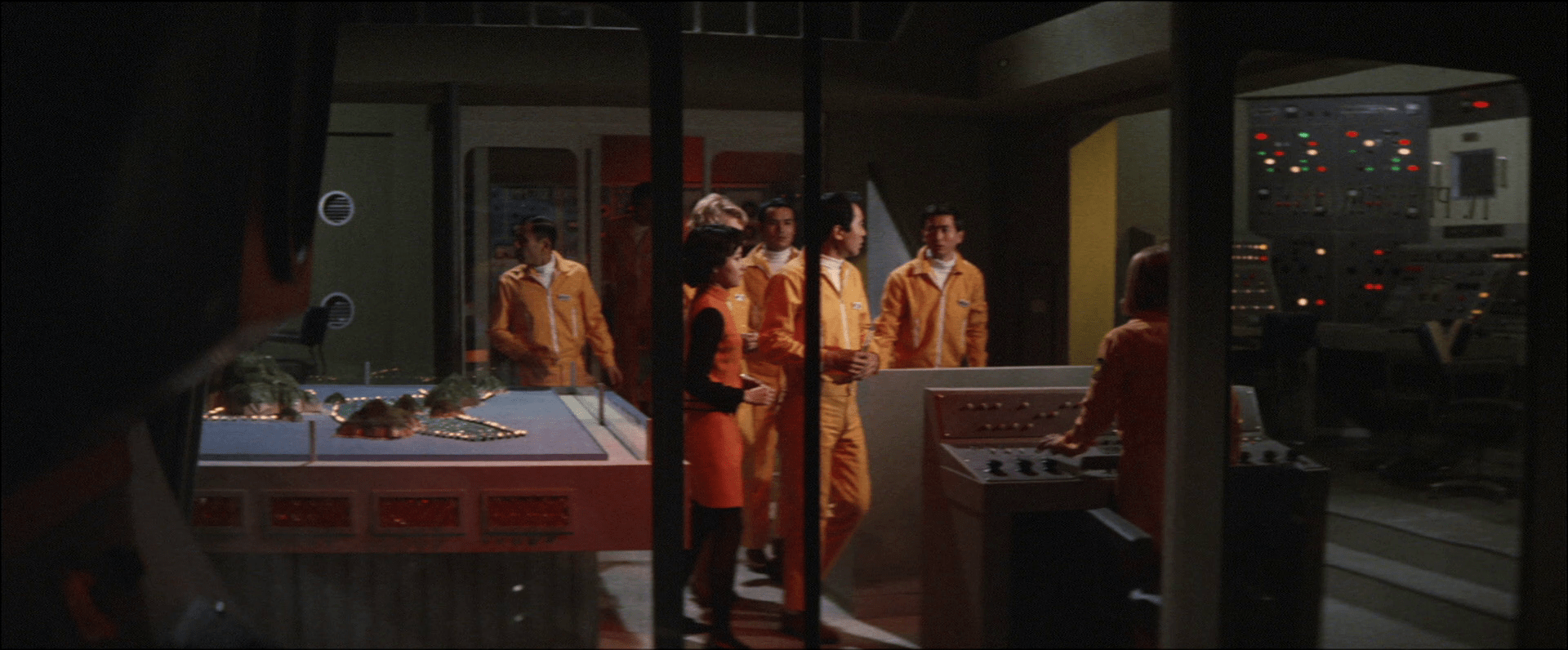
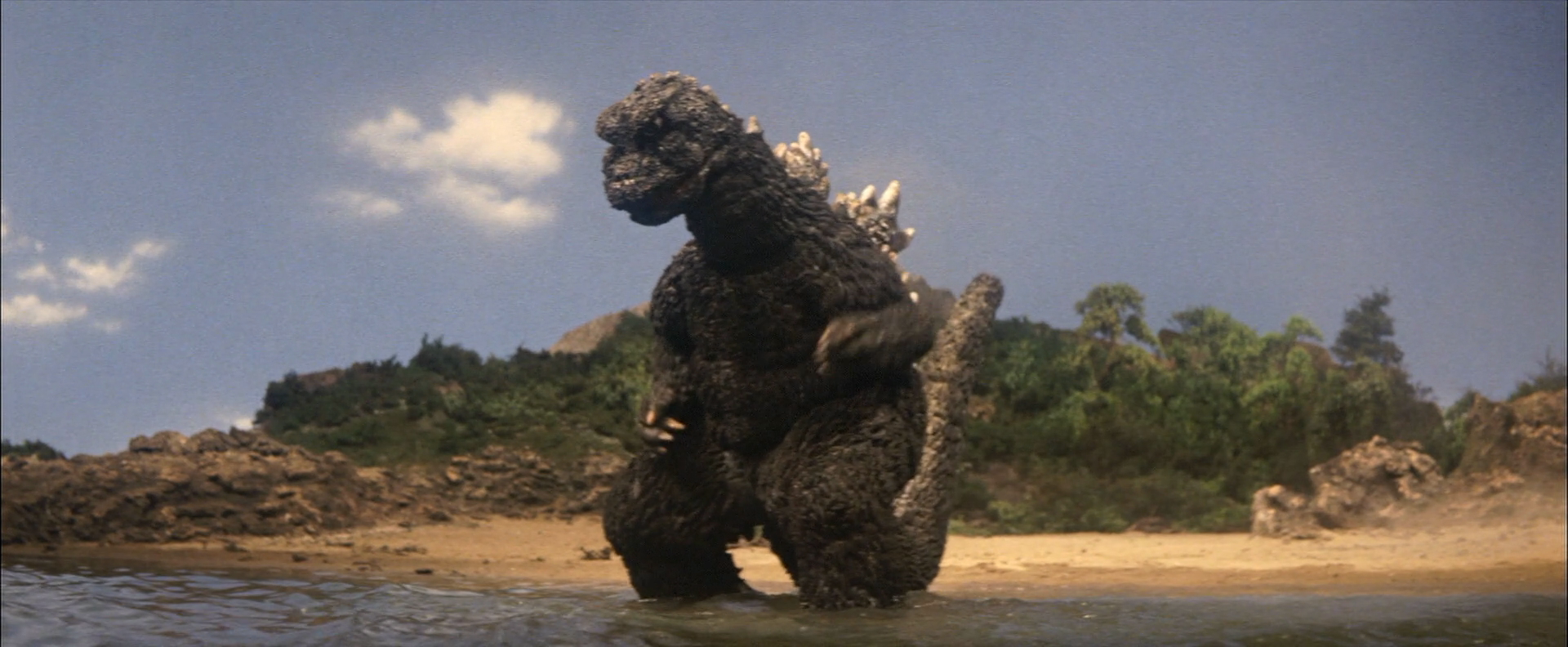
The opening of Godzilla: Destroy All Monsters introduces the spectator to a quite unexpected and frankly unbelievable situation: all the monsters live happily together on an island monitored by Japanese and some foreign employees of the UNSC. The existence of such a scientifically created ‘monster island’ cannot be disconnected from the attainment of peace around the world – Honda’s emphasis on the United Nations in the narrative is a consequence of such peace. The cohabitation of Godzilla (Haruo Nakajima), Rodan (Teruoshi Nigaki), Anguirus (Hiroshi Sekita), Mothra, Manda, Baragon (Katsumi Tezuka), and Gorosaurus (Kenpachiro Satsuma) on one small island reflects nothing other than the very absence of any kind of intra-societal and international conflict and friction in the national and international societal field. While the starting structure of the narrative strongly resounds Honda’s humanistic hope for the future, it is also deeply naive, flawed, and deceptive. Is the societal threat of environmental destruction to fuel the economy (Rodan (1956)) and unrestrained capitalism and consumerism (Mothra (1961), Mothra vs. Godzilla (1964)) truly dealt with?
However, this link also implicitly confirms that for Honda the bursting forth of a monstrous being is a consequence of conflict – the second world war – and the societal raptures and frictions caused directly and indirectly by such kind of human conflict. The face-off between Godzilla and Anguirus (Godzilla Raids Again (1955)) visualized the conflict between a ravaged Japanese societal and power-hungry nationalistic discourse, the human conflict with Rodan staged the dangers of blindly exploiting natural resources, and Godzilla’s clash with Mothra the repression of the post-war truth by the rise of the capitalistic discourse and its emphasis on ephemeral pleasure. Yet, at the same time, the peaceful co-existence of these Kaiju and the fact that they do not need to resurface to symbolize a certain societal fissure affirms the decoupling between these kaiju and the societal field, as riddled with conflictual dynamics and frictions. The fleeting reference to the symbolic past of the kaiju does not undo the ultimate affirmation that Godzilla and the other kajiu have been robbed of their metaphorical power.
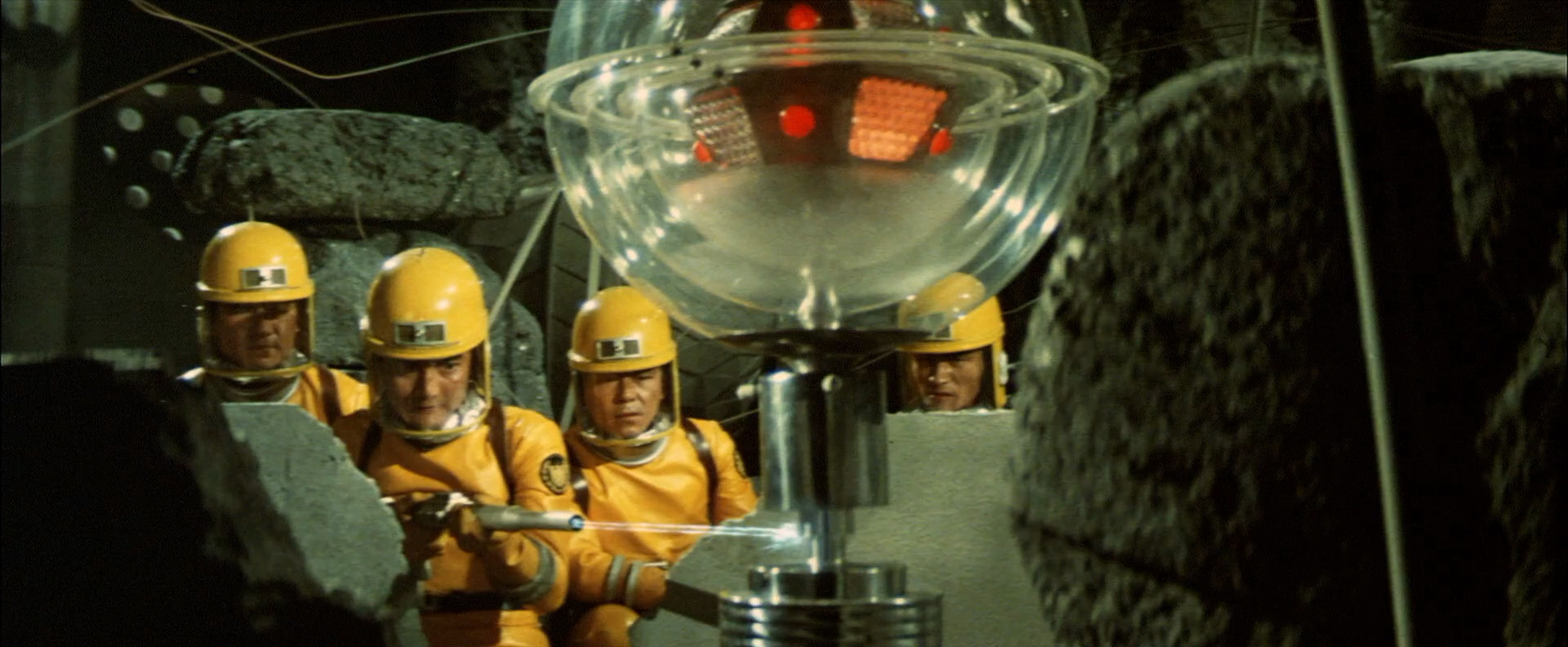
It is therefore not surprising that Godzilla: Destroy All Monsters, once again, stages the fear of an imaginary threat (i.e. the Kilaak led by their queen (Kyoko Ai)) that endangers the consistent peaceful societal fabric – the societal unity – and aims to implant a similar kind of sameness (General-note 1). While this Other that is nevertheless unconsciously modelled on Japan’s past – The Chinese Other (The Tang Dynasty) that threatened the Yamato court during the sixth century as well as the American Other that caused turmoil with its black ships in 1853, the emphasis on brainwashing and mind-control – the kaiju only wreak havoc because they are controlled with the Kilaak Monster Remote control system – underlines that the visualized societal threat is intellectual.
In fact, these narrative elements allow us to define the Other that threatens the Japanese societal field (and beyond) more precisely. With Godzilla: Destroy All Monsters, Honda underlines that what truly endangers the societal fabric is nothing other than difference as such. An Other that silently nests in the societal field (i.e. the base under the Izu peninsula) and forces subjects, against their own will, to think differently is the main threat to societal peace and (inter)national security. Whether Honda eyed the growth of communism in Japan during the sixties or not cannot be corroborated with the signifiers or the structure of the narrative.
The special effects in Godzilla: Destroy All Monsters are somewhat of a mixed bag. It is pretty evident that, due to the time and budget constraints, most effort went into the bigger set pieces. The fleeting glances of destruction – the destruction of city scapes, like Moscow and New York, and the crumbling of monuments, like the Arc of Triomphe in Paris – that decorate the opening of the narrative might be visually pleasant, but the less intricate and detailed set-designs (e.g. the too apparent use of painted backgrounds) and the less elaborate effects of destruction makes these moments less able to emphasize the dangerous threat these kaiju pose to the world and satisfy the imagination of the audiences. Yet, with the number of different effects Sadamasa Arikawa had to produce for Godzilla: Destroy All Monsters, it is, in fact, no wonder that the quality in these fleeting glances of monster action suffers.
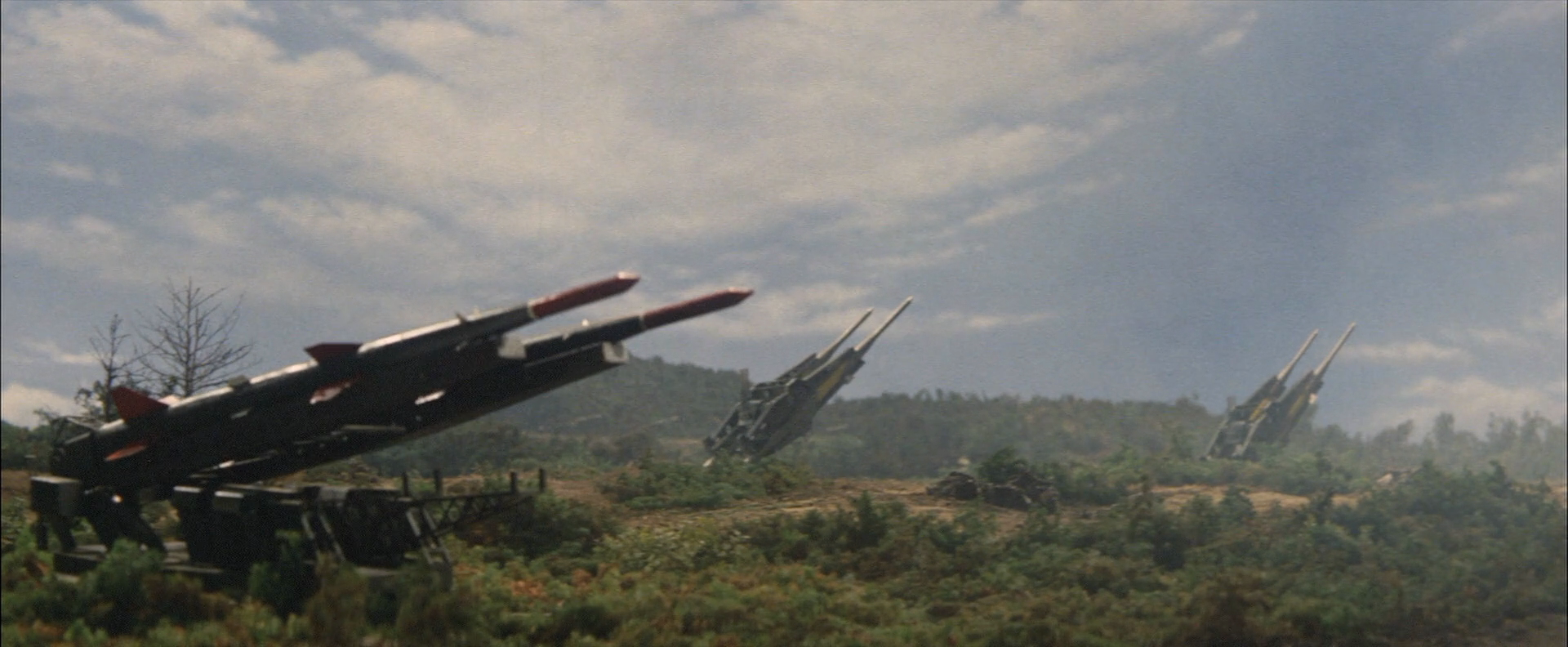
Luckily, the bigger set pieces do not disappoint (Cine-note 1). The Tokyo rampage scene featuring Rodan, Manda and Godzilla, the joint attack of Godzilla and Anguirus on the army, and the final battle near Fujii mountain are all impressive and succeed in fuelling the spectator’s imagination (Narra-note 1). Honda and Sadamasa Arikawa, at least at a visual level, deliver what Kaiju fans desire: kaiju destroying city scapes and kaiju battling each other.
The composite shots – i.e. people fleeing from the surface into the metro – that inaugurates this sequence links the elaborately crafted and seemingly big miniature set where our kaiju cause destruction with the bodily reality of the human being, hereby facilitating the ability of the spectator to suspend his disbelief and invest into this world of destruction (Cine-note 1). Yet, despite a few well-crafted and effective composite shots, the fact there are only a few of them in the composition highlights that this kind of shots are the first to be cut due to time and budget constraints.
Despite alluding to the metaphorical past of kaiju, Honda’s Godzilla: Destroy All Monsters offers another narrative in which Otherness is feared and a deceptive imaginary sense of societal harmony is subtly celebrated. If one, as spectator, can agree with this ideological position or ignore it all together, an experience that fulfills all the desires of the kaiju fan awaits.

Notes
General-note 1: The narrative opposition between ego (the heroes) and the Other (the villains) might not offer any critical notes about the societal field, but it makes it easier for the spectator to enjoy and engage with the narrative – he experiences the narrative safely by assuming the position of the hero.
Narra-note 1: While anthropomorphism flares up as the final battle concludes, Honda succeeded in keep it to a bare minimum throughout the narrative. While some spectators might enjoy such quirkiness, the lack of it in Godzilla: Destroy All Monsters makes the experience much better and more satisfying.
Cine-note 1: There are many other pleasant effects within the composition, likethe departure of the rocket from Iwo Jima’s space port, the landing of the space-rocket in the crater on Monster Island, the deployment of the army to combat the kaiju and its traversal to the Izu peninsula, and Godzilla disturbing the search for something otherworldly in the forests near mount Fuji.
Cine-note 2: The importance of the composite shot for the kaiju film cannot be understated. In our view, these shots ground the fantastical narrative in a physical reality that facilitates the investment of the spectator into the story.
 psychocinema