Introduction
Another director that has earned himself quite an international reputation for himself is none other than Rikiya Imaizumi. Most of his narratives – Just Only Love (2019), Little Nights, Little Love (2019), His (2020), Over The Town (2021), Skeleton Flowers (2021), Love Nonetheless (2022), Straying (2022) – explore themes of love and desire. Call Me Chihiro (2023) is not different. While Imaizumi’s latest is not a romance narrative, he does explore the societal problem of loneliness through the lens of love and desire.
Review
After tasting a delicious bento at a seaside-town, sex-worker Chihiro (Kasumi Arimura) promptly decides to move to the town and start working at Noko Noko Bento. Much to the owner’s surprise, Chihiro does not hide her past. In fact, she utilizes it to form bonds with the male costumers.
Kuniko Seo (Hana Toyoshima), a high schooler, has been secretly taken pictures of Chihiro. One day, she learns from one of her fellow students that she works at a local bento shop. Of course, she musters up her courage and visits the place. Yet, when Chihiro jokingly reveals that she knows about being photographed by her, she promptly escapes.
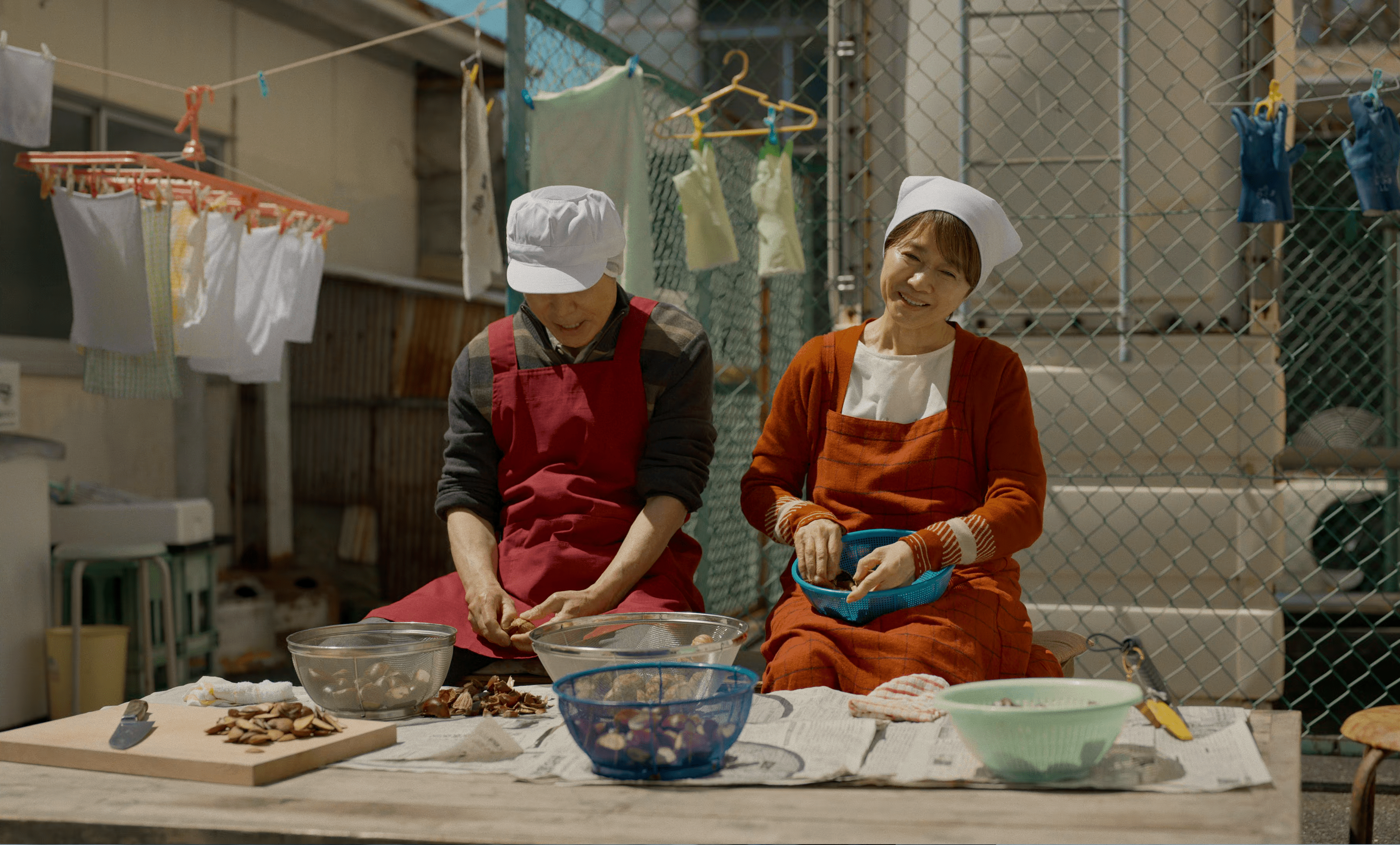
Call Me Chihiro offers, despite its light-hearted accents, a dramatic psychological exploration of the difficulty to escape, within the contemporary societal field, the nibling presence of solitude. Imaizumi shows how the whole present of a subject functions as a solution of one’s traumatic past, an answer to the pains and injuries inflicted in one’s childhood.
The whole dynamic of loneliness is explored through the way Chihiro moves around within her societal field. The first element that stands out in Chihiro’s logic is her openness towards others. While she obviously aims to form connections with others by being so open about her past, the resulting bonds of ‘naughty’ conversational pleasure remain fundamentally superficial. When she offers the male other herself as image, a seductive image of a sexualized being, she blocks her own subject from appearing within the relational fabric. One could even say that said image functions as a lid that closes off the pot where her subjectivity resides.
Besides her openness, Chihiro is also marked by kindness towards others. With these acts of kindness, she subtle invites the other to establish a bond with her. Yet, these acts are not merely signs of her own desire for intersubjective connection, but radical recurring demands to the Other to love her.
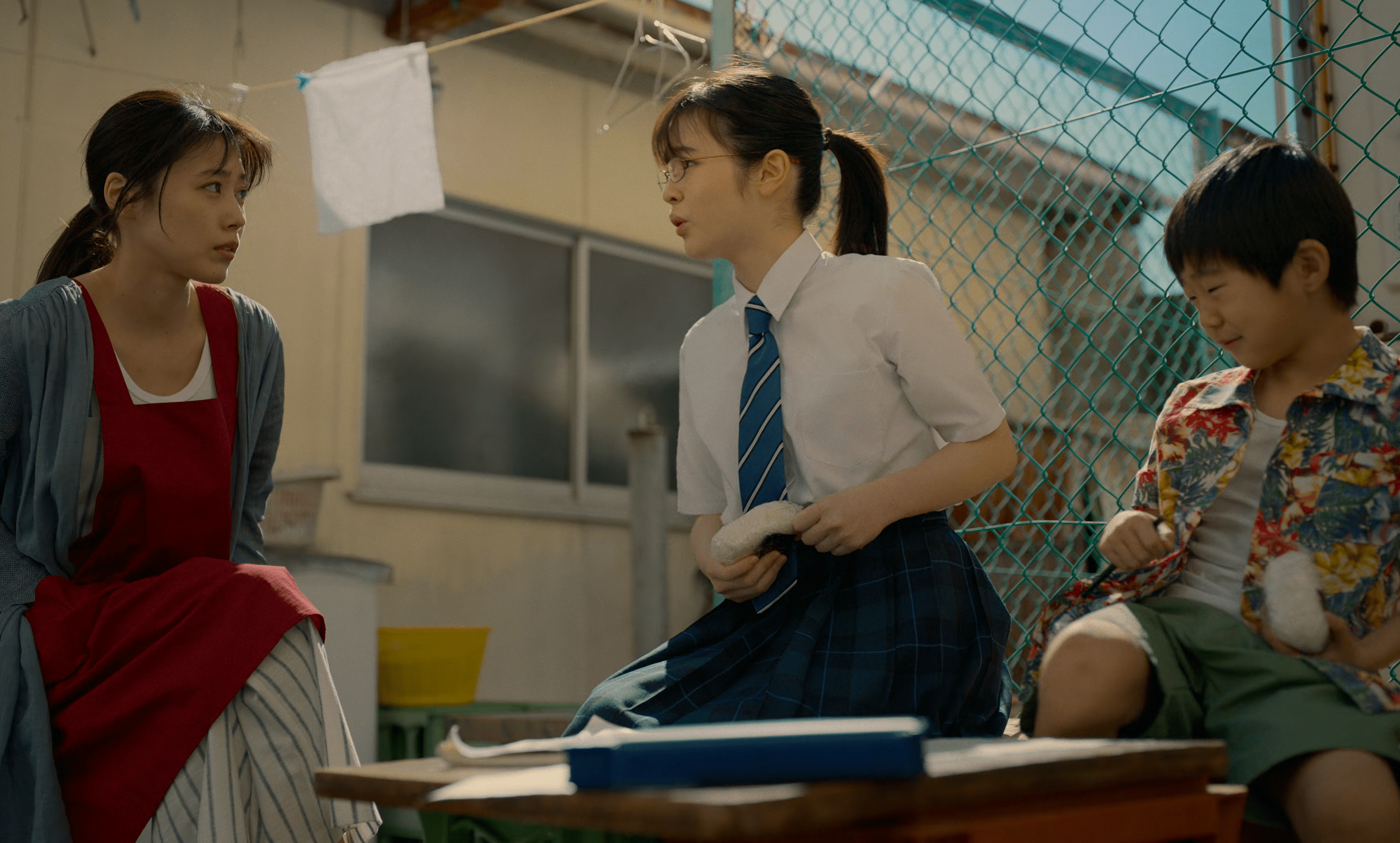
While Chihiro’s openness and kindness seem to fulfill different purposes, it is not difficult to see that her whole logic is determined by the desire to be loved/desired. Her ‘sexual’ openness, the playful reflection of a seductive female fantasy to the male Other, aims at entrapping, even if it is but for a fleeting moment, the other’s desire. It is under this desiring gaze that she can escape the subjective emptiness that palpitates within her.
Chihiro’s outlook on love is even more surprising given what animates is the desire to be loved her. Yet, it should be evident that her conscious discourse can coexists with the very desire that directs her acts and signifiers. The reason why both can harmoniously co-exist is due to the fact that her unconscious desire circles around the position of the (m)Other and the Father (Narra-note 1).
Chihiro does, eventually, succeed to organize some subjects, like Kuniko, Makoto (-) and Betchin (Itsuki Nagasawa), around her. What binds these subjects to her is food as edible presence and as signifier. While food does not necessarily initiate her interactions with them, it nevertheless becomes an object and signifier around which most of the subsequent interactions turn. Yet, are these interactions, which mainly skirt around her subjectivity, enough to combat the emptiness that marks her? Can she outrun her loneliness by forming bonds?
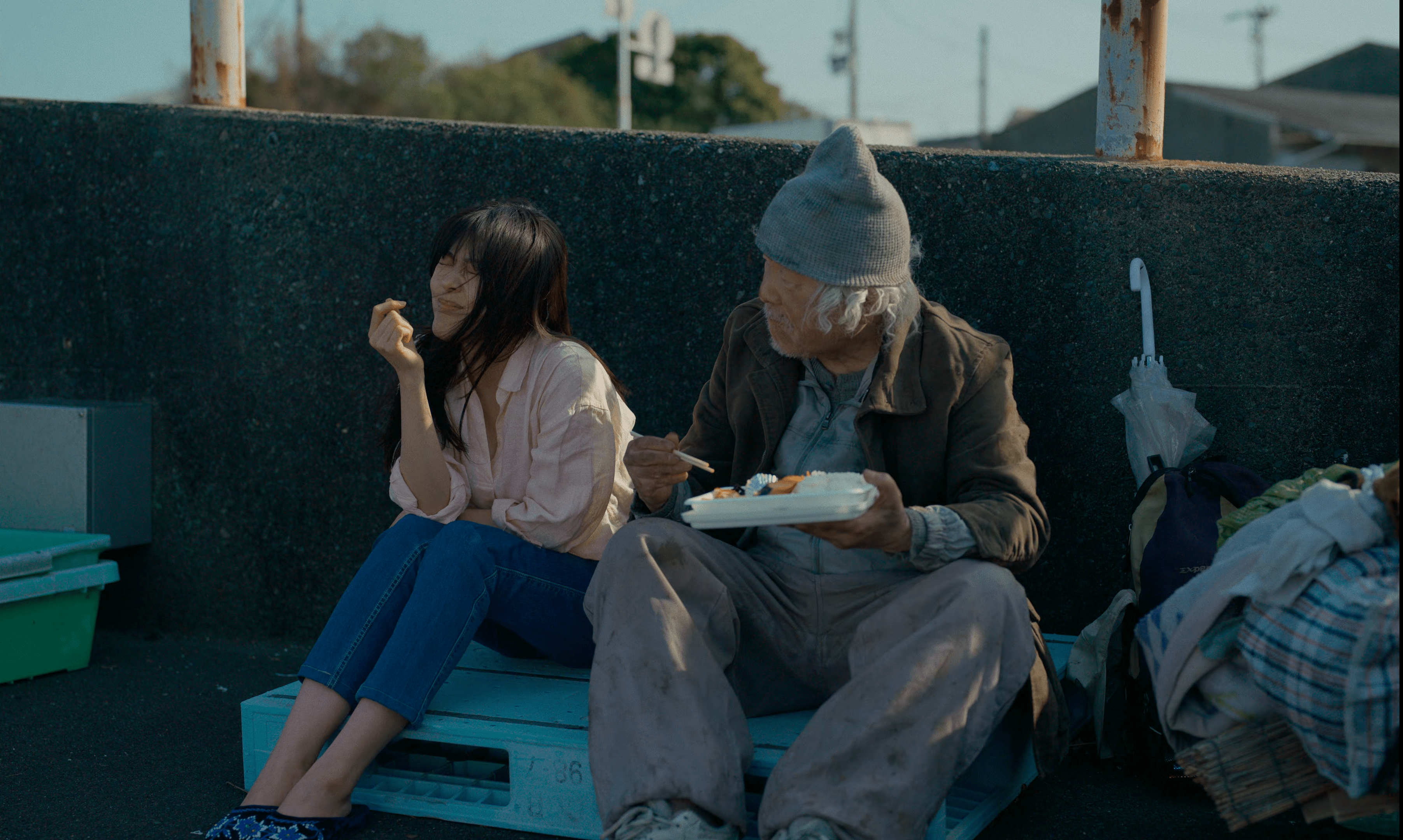
The subjects she organizes around her are marked by their own struggles. Kuniko, for instance, struggles with the dynamics within her family. While the relational fabric of her family seems, at first, ideal, its peace is enforced by her tyrannical father – if one follows what he says, the familial peace is maintained. Her attraction toward Chihiro, however, is not romantic in nature, rather, for her, Chihiro embodies a kind of freedom. Kuniko’s desire to escape the familial structure finds its object/goal in the carefree presence of Chihiro around the town.
The superficiality that marks relationships is also explored in Kuniko’s interactions with her friends. As their friendship is determined by their shared love for an anime and its characters, their interactions are structured by a demand to unconditionally love it – the imaginary harmony of the amical bond is determined by this demand. So, what will happen when Kuniko goes against this demand and voices her honest opinion? Can her friends accept this Otherness or will they ‘excommunicate’ her?
Makoto, on the other hand, is neglected by his mother. His mother is absent; she is never around when he is awake. This neglect is function of her being a single mother and the occupation she chose to bring food on the table. Yet, when she learns that Makoto has been around Chihiro, she immediately goes to the bento shop to demand Chihiro stops associating with her son. She fears that the Other will notice the truth she aims to repress: the impossibility to be both mother and a working member within society. Rather than noticing Makoto’s demand in his interactions with Chihiro, she demands that Chihiro supports the fiction of familial harmony she wants to reflect to the societal Other.
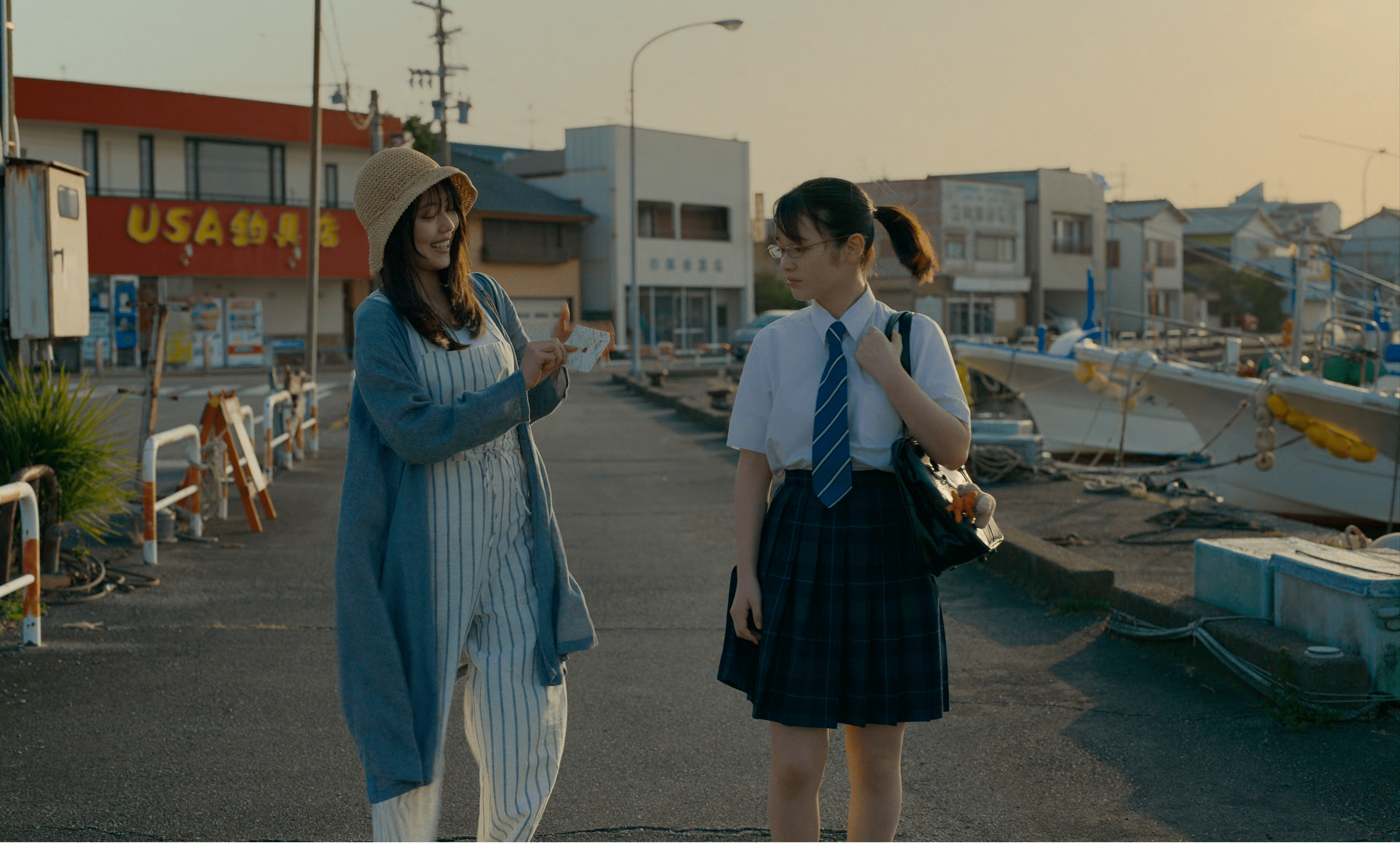
While there is dynamism present within Imaizumi’s composition, the prime source of scopic pleasure is due to the way he composes his static shots. Imaizumi proves, once again, with his composition that he knows how to exploit geometry to elegantly heighten the beauty of the city-scapes and create a visual fabric that keeps the spectator engaged with the narrative.
While Call Me Chihiro can not be counted among Imaizumi’s best, he still delivers an engaging exploration of the subjective struggle to escape loneliness. What makes Imaizumi’s narrative a pleasant and such an emotional watch is the fine balance he found between waves of light-heartedness and the forlorn aftertaste that remains after bonds unravel.

Notes
Narra-note 1: Of course, this desire that propels her forward can be misunderstood and mistaken for a simple quest for romantic love.
 psychocinema