Introduction
After meeting at the Tokyo University Of The Arts directors Masahiko Sato, Yutarō Seki and Kentarō Hirase decided to work together. While they start working together in 2012, they only formed a directors’ collective gogatsu in 2020. Roleless is their first attempt at crafting a feature film.

Review
Miyamatsu (Teriyuki Kagawa) works both as a cable car attendant and as an extra – often to die repeatedly, be it as a samurai or as a low-level gangster. During a conversation with one of his co-workers he tells him that, while he likes the floating feeling of the cable cars, the primary purpose of doing this work is to make sure he can make a living.
Twelve years ago, however, Miyamatsu worked as a taxi driver for Ichikoshi Motor Transport. Yet, one event of violence forced his subjective trajectory to bend in a different direction. Now, many years later, Tani (Toshinori Omi), a former co-worker, seeks him out at the studios he works at, but addresses him as Yamashita.
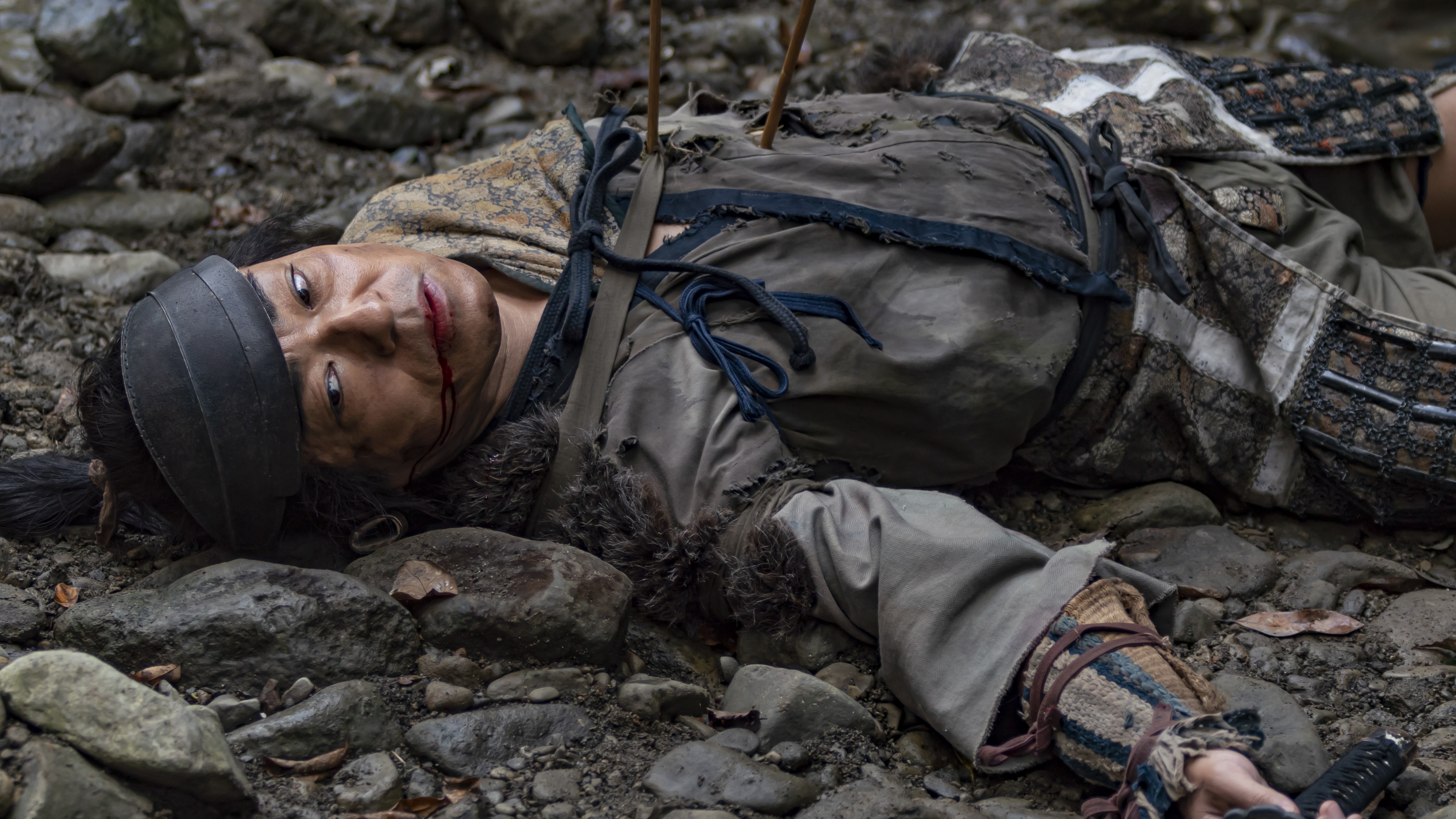
Roleless is a narrative that turns around the Freudian notion of repression. While what happens in the narrative seems quite unrealistic and is dramatized to a certain extent, Sato, Seki and Hirase do explore the real but rare symptom of dissociative fugue. In fact, their narrative allows the layman to grasp how the underlying dynamic of this symptom functions.
The event of repression is emphasized in the beginning of the narrative by contrasting the present with an event that took place in the past. By doing so, the directors invite the spectator to read Miyamatsu’s current situation – i.e. the signifiers that he has organised around him and the work that gives his life some structure and meaning – as a subjective response to a traumatic event. This contrast, furthermore, allows the spectator to see that what we glance of the traumatic event in the beginning of the film, echoes within his work as extra. There is, how strange it may seem, something that returns of the repressed within the work that he does.
The act of repression Roleless stages for the spectator concerns the whole ego together with its roots, i.e. the signifiers that bring forth memories. Everything has been pushed out of the field of consciousness. It is a radical erasure that leaves ‘nothing’; it evacuates the imaginary lid of the ego and leaves nothing other than a gap of subjective emptiness and a lack of desire. Yet, as mentioned above, the presence of this ego in another place is reverberated by the echoes of the past trauma in his current work.

As the narrative unfolds – and he starts interacting with his sister (Noriko Nakagoshi) and her husband (Kanji Tsuda), it becomes apparent that what has been inscribed in the body with little to no mediation of the signifiers (e.g. good at baseball, folding potstickers, …) has not been erased. These remainders also function as signs that the act of repression has taken place. Yet, it is quite possible that the confrontation with a body that remembers breaks the lock on Miyamatsu’s past, releasing his repressed memories. Or to put it more correctly, the remembering body might grant him the signifier that, by being associated with the traumatic event, releases his dismissed ego.
The structure of the first half of the narrative does not only succeed in engaging the spectator by light-heartedly playing with the dimension of repetition – e.g. Miyamatsu’s repeated deaths, but also by surprising the spectator by fluidly manipulating the interwoven dimensions of truth and fiction, of Miyamatsu’s real life and his acted life. At some instances in the narrative, what seems to present itself as Miyamatsu’s real life suddenly reveals itself as an acted facade, as an element in a well-crafted deception for the purpose of creating visual art and entertainment. The directors play, and quite effectively so, with the fact that the act of framing something is an act of fictionalizing.
The composition of Roleless, while featuring moments of dynamism (e.g. temperate tracking shots), stands out due to its static shots. Rather than merely delivering a visual composition that is merely pragmatic, the directors take the opportunity to elevate the scopic dimension of their narrative by carefully exploiting geometry in their shot-compositions and littering their visual fabric with refined moments of aesthetic pleasure.
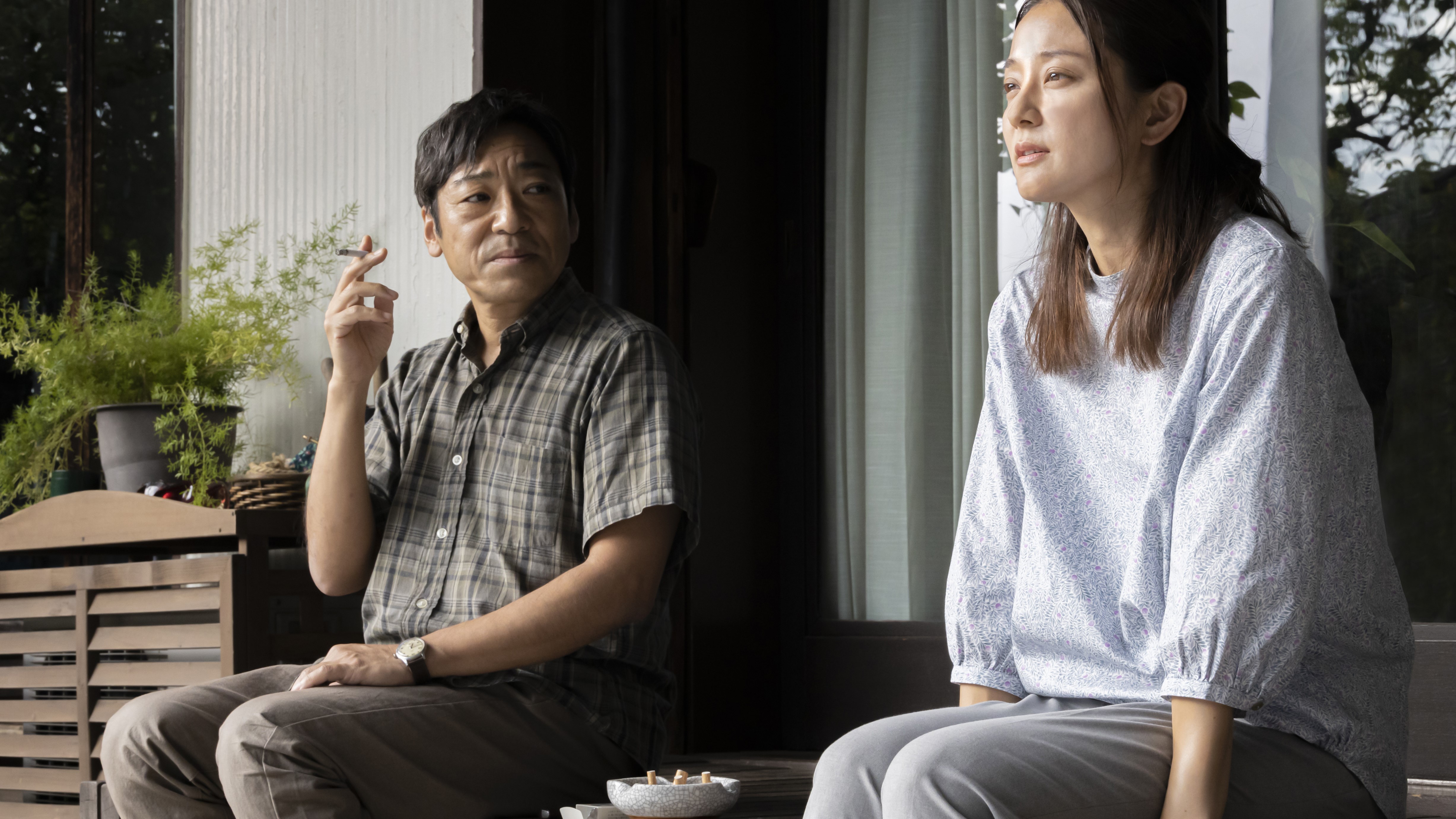
The directors also their time to emphasis emptiness, stillness, and silence within the composition. These visual moments of stillness, as the spectator soon comes to realize, echo the subjective emptiness that marks Miyamatsu – his subjective absence reverberates within the atmosphere of the visual fabric.
The mystery that is, due to the fragmented and partial way of framing, surrounds the traumatic event is kept lingering throughout the narrative by well-placed musical pieces. These pieces, by echoing a sense of dread and mystery, elegantly emphasize that the truth surrounding Miyamatsu’s traumatic event is on track to be revealed.
Roleless offers the spectator a revealing glance at the dynamic that underpins the dissociative fugue. That the narrative succeeds in engaging the spectator is not merely due to the effective narrative structure, but also by the performance of Teriyuki Kagawa, who brings the symptom and its unravelling with mastery to life.

 psychocinema