Kabuki might seem like an otherworldly art for many – an anachronistic archaic performative art inaccessible for the un-initiated. Yet, the endurance of this art within the Japanese cultural field since its birth four centuries ago is not, as some might argue, due to the rigid patriarchal structure, but also it always had the ability to affect its audiences – to touch their subjectivity.
However, Lee Sang-Il, helming the adaptation of Shuichi Yoshida’s novel of the same name, does not only seek to stage this truth for audiences familiar and not-familiar with kabuki, but also to emphasize the radical subjective dimension of performing – the body of the performer a vessel not merely of beauty but of subjective truth (General-note 1).
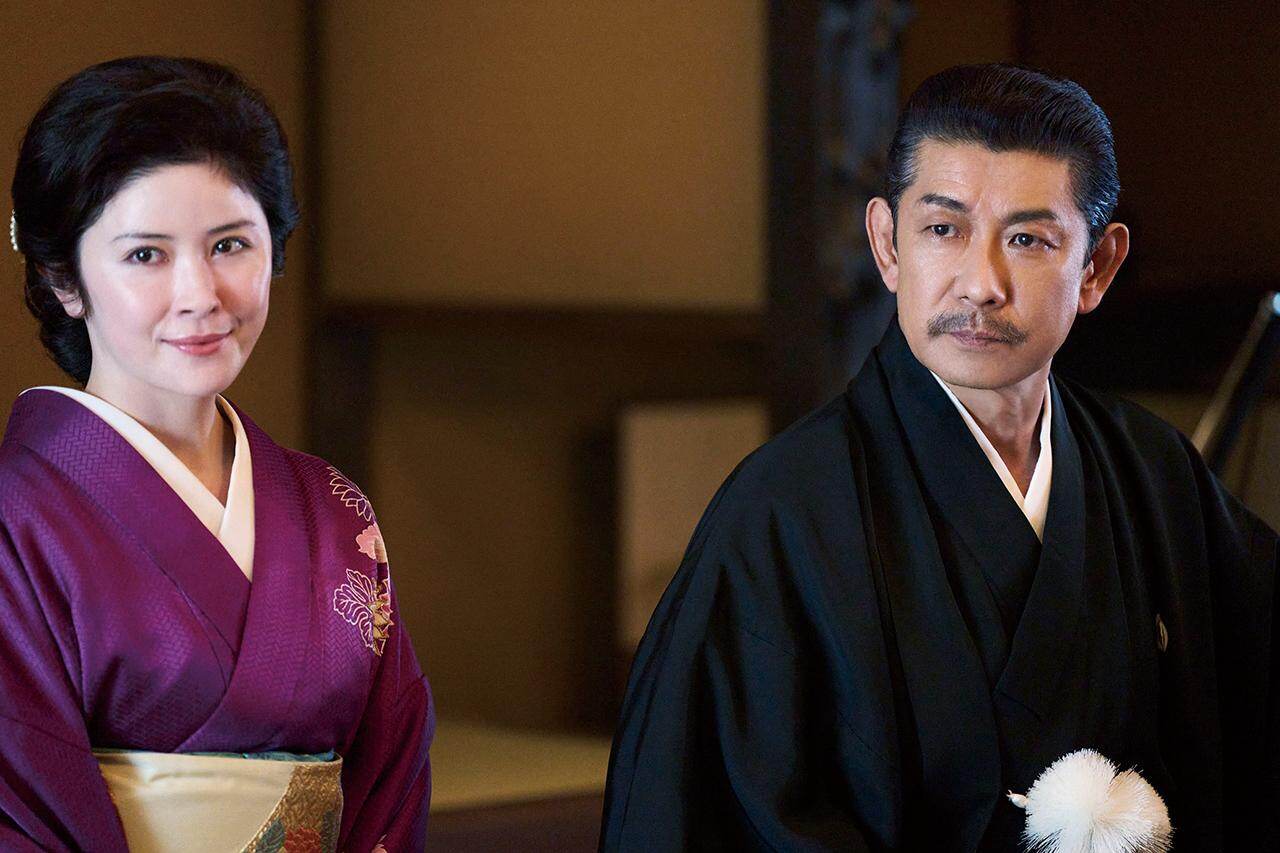
The narrative of Lee Sang-Il commences in the year 1964, in Nagasaki. The Tachibani-gumi are holding a New-Year’s celebration and welcome the visit of Hanjiro Hanai (Ken Watanabe), a star Kabuki actor of Osaka. The performance of Kikuo (Soya Kurokawa), the son of oyabun Tachibana (Matsutoshi Nagase) and his wife Matsu (Emma Miyazawa), as courtesan Sumizome impresses him and he promptly requests a meeting with the child. Yet before they can meet a rival yakuza launches an attack on the venue where the Tachibana-gumi are celebrating – Kikuo witnesses his father’s murder.
One year later, Hanjiro takes the fifteen-year-old Kikuo on as an apprentice, dismissing the misgivings of his wife Sachiko (Shinobu Terajima) concerning his yakuza background and his outsider status. Kikuo, who is given the stage name Toichiro, commences his training alongside Hanya Shunsuke (Keitatsu Koshiyama), Hanjiro’s son and heir to the Tanba-ya house of Kabuki. Many years later, after witnessing the performances Shunsuke (Ryusei Yokohama) and Kikuo (Ryo Yoshizawa), Umeki (Kyusaku Shimada), the boss of Mitsutomo cooperation, invites them to make their grand debut at the Osaka Shochikuza theatre.
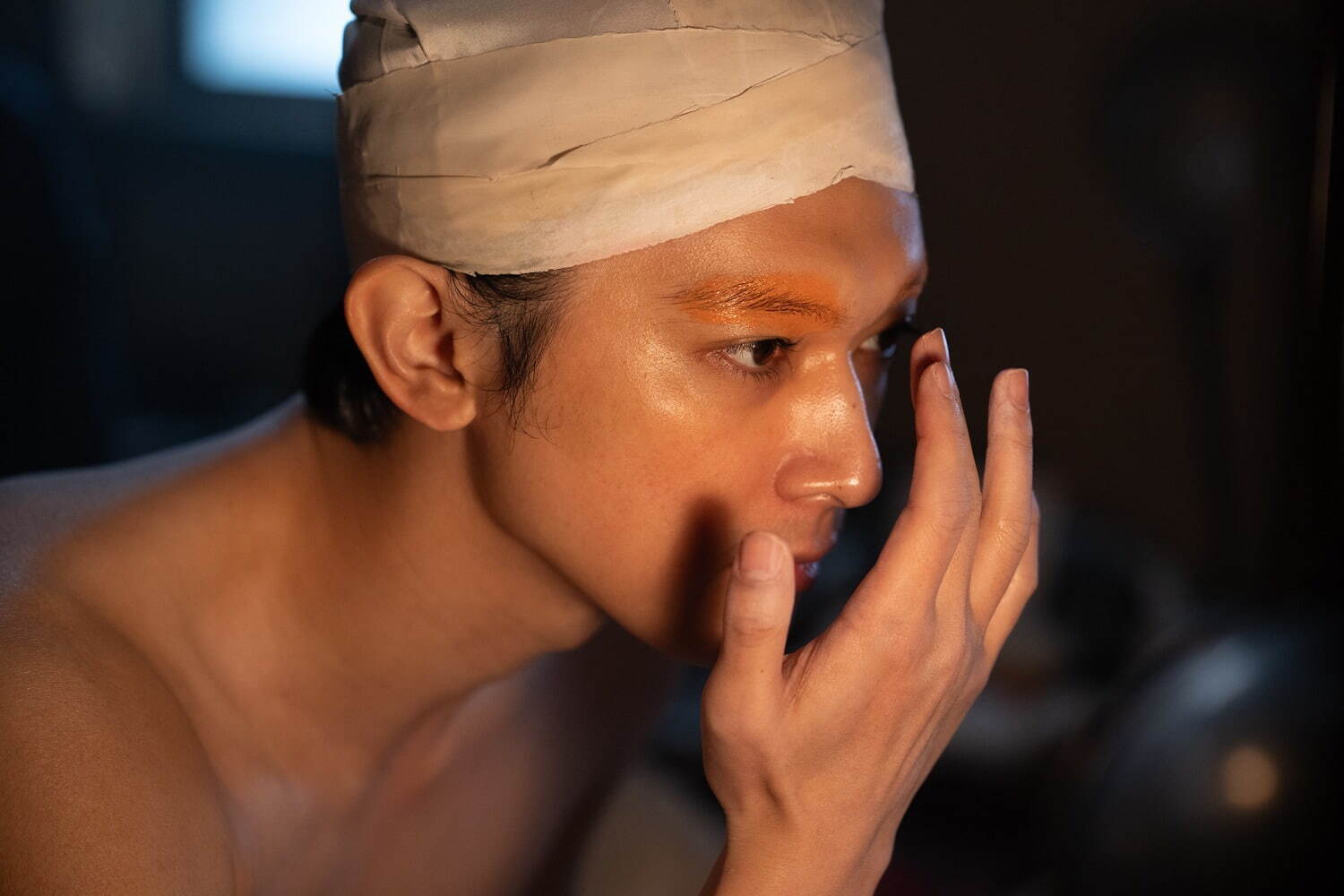
Kokuho functions, of course, as a celebration of the art of kabuki. Lee Sang-Il does not only seek to arouse the spectator’s respect for the result – i.e. the stylized performance on the stage, but also deepen his appreciation for this theatrical art by offering him a glance at the process – i.e. the strict training one must suffer to attain control over one’s body and voice to perform the stylized art-form and the ‘sacrificial’ dedication necessary to further hone the theatrical craft.
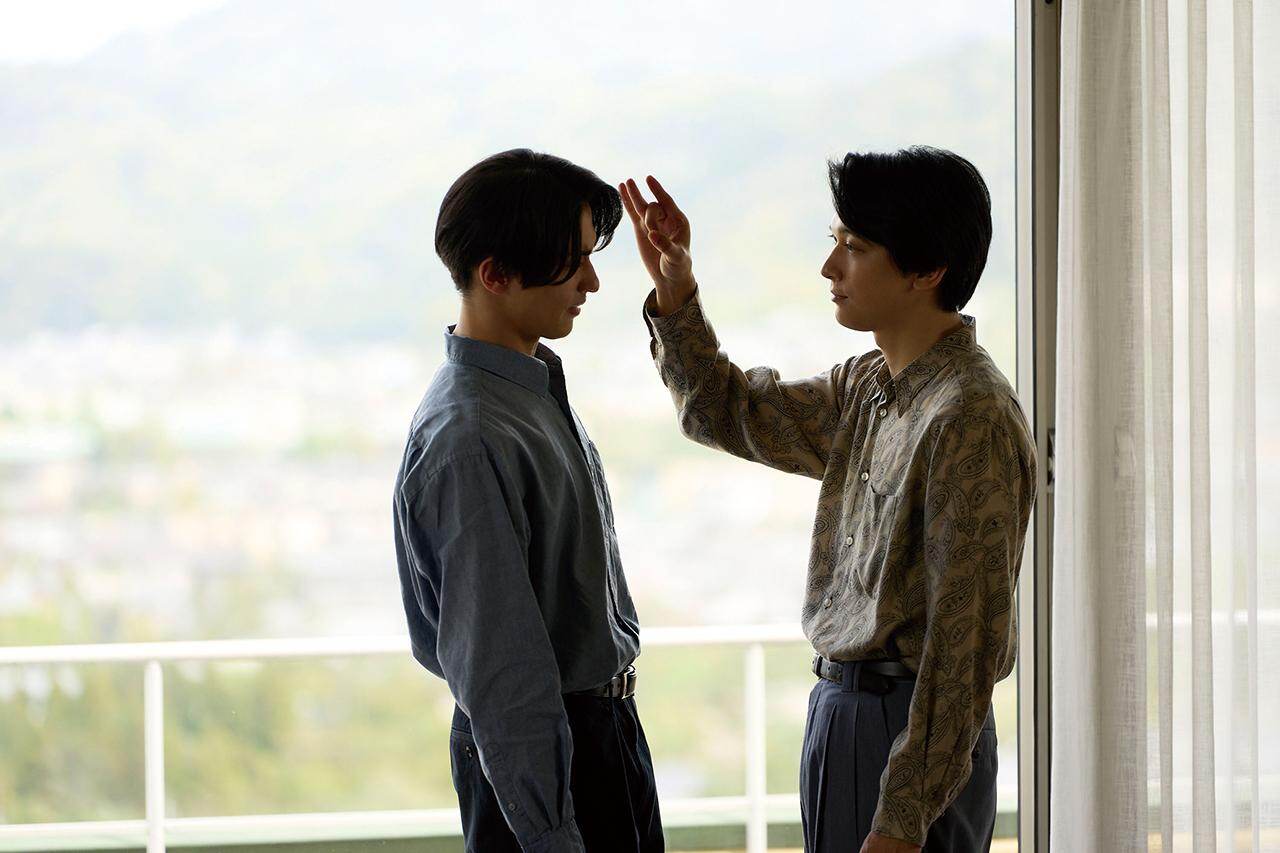
The visual celebration attains a deeply moving emotional flow due to restrained explorations of two contrasting conflicted subjectivities and by exploring, with refined subtly, how their subjective stances impact those around them and inform their performances on the stage. The spectator senses, very early on, that a tension determines Kikuo’s subjective position. This tension is function of the fact that, despite fully knowing that kabuki concerns a system of hereditary acting clans, he feels compelled to repress the truth of his outsider status. The passion he dedicates to his craft as onnagata is, in this sense, a direct consequence of the internal pressure he feels to erase the feeling of being but a mere intruder. The frail state of this repression is highlighted by Kikuo’s violent lashing-out at Takeno (Takahiro Miura), a Mitsutomo employee, after he states that, as he is an outsider, his downfall will eventually come: He kicks him to return the ‘truth’ to its original state: repressed and silent.
Kikuo’s subjective need to repress underpins the subtle friction that lingers between him, who only has his craft, and Shunsuke, who can rely on the protection his blood gives him (Narra-note 1). The effect of having the biological link to Hanjiro or not does not only determine the way they present themselves in the societal field – Kikuo’s strict focus on the art of Kabuki versus Shunsuke’s playful emphasis on entertaining on and off the stage, but also creates a relational situation where the echo signalling Kikuo’s truth never dies out.
Yet, spectators who believe that having the right blood has a pacifying effect on Shunsuke are sorely mistaken. The speech that surrounds him does not only imbue this blood with a suffocating weight, turning it into a symbolic chain dangling around his neck, but signals the oppressive presence of an ideal that can never truly be fulfilled. Shunsuke’s laid-back presence is, in this sense, not simply a result of being the biological son, but also defensive response to defuse the weight of prestige that clings to the name Hanjiro – the myoseki, the hereditary stage name that is meant to be his. The destabilizing effect of having to succeed to is father’s stage name is not only signalled in his emotional statement: “I want to be a real actor, not a pretend one,” but also in his subsequent disappearance, the flight from Hanjiro, his father’s stage name.
The sketching out of the subjective conflicts does not only breathe intense emotion into the celebration of Kabuki, but also allows Lee Sang-Il to add some subtle critical remarks concerning the cultural atmosphere of Kabuki. He does not only trace out far-reaching consequences of a system that solely depends on patrons and sponsors, but also delves into the mental strain that accompanies performing, the pressure born from threading the paths of those celebrated predecessors – the weight of historical prestige of the stage names – and bring the rigid classics to live on the stage (Narra-note 1).
The spectator will have no problem in seeing that Kokuho is, in essence, a drama of the name, of the hereditary stage-name. The whole narrative can be read as a deeply emotional exploration of the destructive effects of the social image born from the clash between the over-investment in the symbolized real, i.e. blood that grants rights, and symbolic nature of succession, e.g. the decision of the ‘father’ to grant his name. On the other hand, Kokuho also shows that, by virtue of the gap that remains between the ‘real’ of blood and the symbolic nature of the stage-name, the rigid patriarchal system remains bendable – As long as ‘fathers of the art’ are present, the exceptional skills of the son will be symbolically acknowledged. The answer to the brutal rigidity of a patriarchal system, organized around sponsors and patrons, lies, in a certain sense, in the patriarch’s signifier, the signifier of his love for the art of kabuki – “Dance for me”.
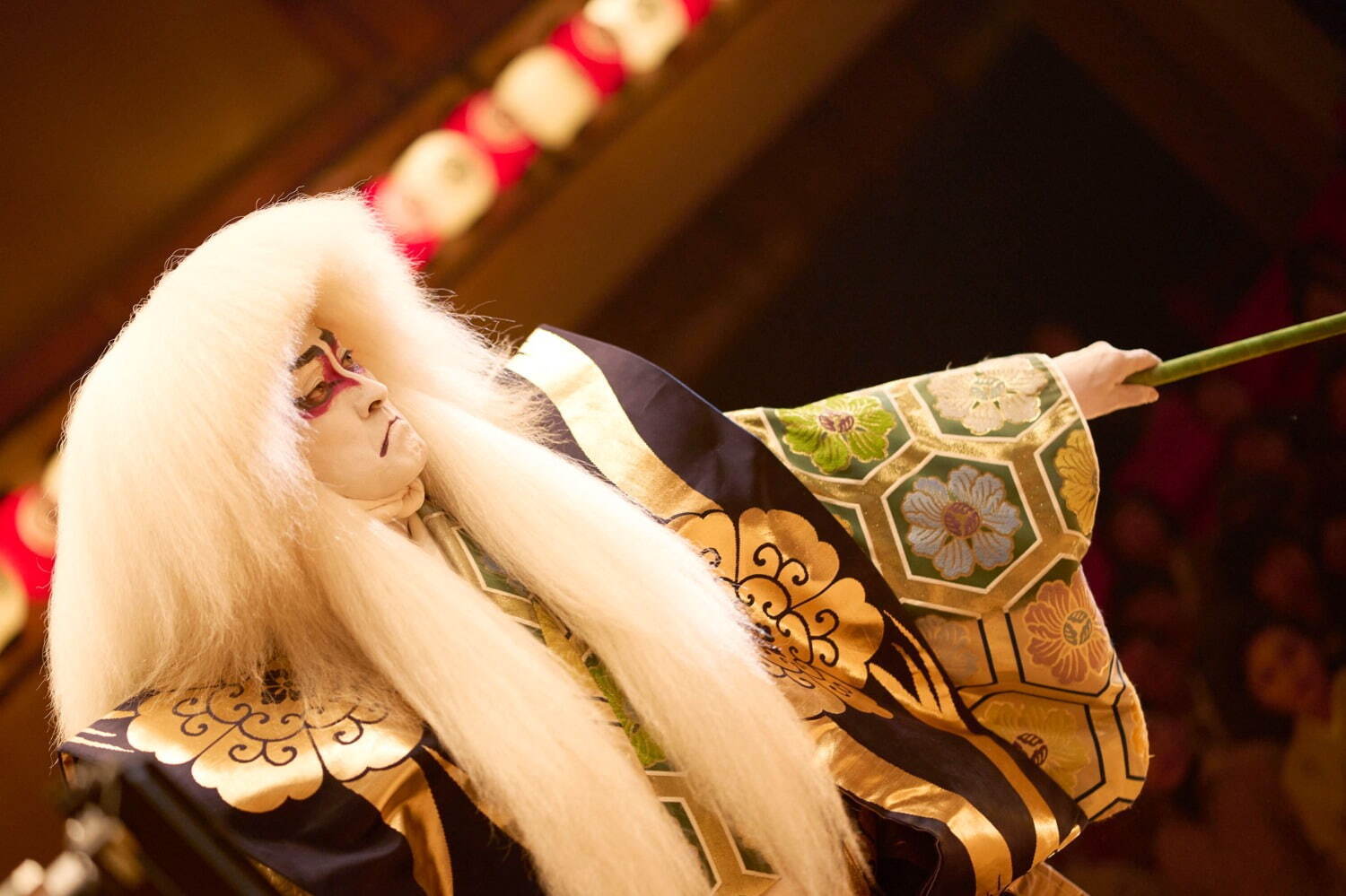
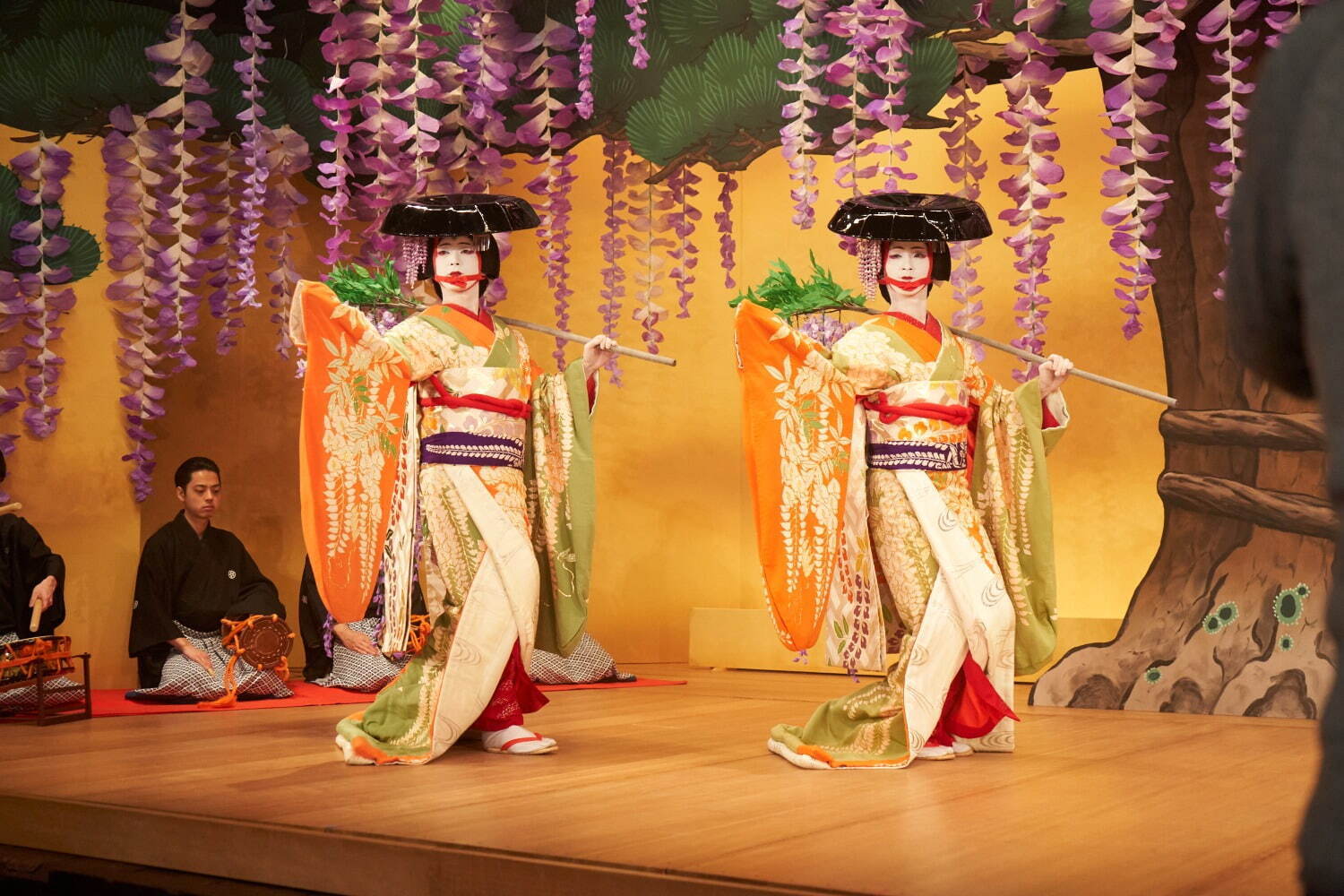
The subjectivity of Shunsuke and Kikuo is not only explored off stage – in their interactions behind the curtain, but also intimately evoked on stage, in the classical kabuki pieces they perform. The introduction of the certain classics in Kabuki with on-screen text does not only aim to make the Kabuki-narratives more accessible but also invites the spectator to fully savour how the stylized performances reflect their subjective state and their interpersonal reality (General-note 1). The performative art of kabuki, as brought to life within Kokuho, touches the spectator deeply because performances are, in essence, highly stylized vehicles to be propped up with the actor’s subjectivity. It is, in other words, only by breathing life into the rigid roles and dances with one’s own subject can one succeed in stirring the spectator’s subjectivity with the display of feelings of love, grief, hate, jealousy.
The fact that Ryusei Yokohama and Ryo Yoshizawa bring the re-doubled exploration of their character’s subjectivity – through speech and through performance – to life with such genuineness and emotional precision ensures that Lee Sang-Il’s Kokuho turns into a mesmerizing and unforgettable experience. Both deliver an acting tour-de force that the spectator will not easily forget.
To bring the trajectory of Kikuo and Shunsuke visually alive in an engaging way, Lee Sang-il relies heavily on camera-movement. He does not only seek to create an enticing visual flow by thoughtfully concatenating restrained dynamic shots and interweaving thoughtfully composed imagery, but to establish a frame that can fluidly shift from more documentary-styled moments to more stylized dynamism. This frame does not merely enable Lee Sang-il to invite the spectator into the historical atmosphere and help him breathe a sense of genuineness into the emotional dimension of Kikuo and Shunsuke’s trajectory, but also to emphasize the stylized elegance of Kabuki-movements and elevate the performances from within the performative space – the spectator is fleetingly trusted into the intimate space of the stage.
The overabundance of dynamic moments, of course, singles out and emphasizes the more static moments within Lee Sang-il fluidly flowing composition. Static moments are not only utilized to introduce characters, emphasize subjective effects by focusing on the facial presence of characters (e.g. the impact of Shunsuke’s performance as the lion-cub on Kikuo), and frame interactional dynamics, but also to interweave compositional moments of beauty and pay respect the kabuki-stage by allowing the performances of the kabuki actors come to their full right (General-note 2).
Lee Sang-Il utilizes music in an unobtrusive yet highly effective way. He does not only let music introduce the visual flow to emphasize moments that are formative for the subject but also to further accentuate the dramatic beauty of the stylized dance-movements and certain effects (e.g. change of dress) on stage. Music seeks, in a certain sense, to signal to the spectator that subject and performance have blended – that the stylized envelope give expression to the performer’s unvocalized subjectivity.
Kokuho is a deeply moving experience – a highly affective drama of the stage-name – that does not only offer the spectator a mesmerizing and deeply intimate celebration of the performative art of kabuki – the stylized dances, movements, and highly dramatic way of delivering speech, but also unearths the radical subjective dimension of embodying and performing a role. Lee Sang-Il brings the poetic and dramatic truth of Kabuki to life with his deeply respectful framing and Ryusei Yokohama and Ryo Yoshizawa, both delivering career-defining performances, corroborate that the stylized performance of kabuki can create a space for transformative experiences for the performer as well as for the spectator – the art of Kabuki can hit the unconscious. Let us hope that Lee Sang-Il is given the chance to release his original four and a half hours cut in the future – We are ready.

Notes
Narra-note 1: The spectator must understand that, for Kikuo, no Other than Kabuki exists – it is in the performance that he seeks to encounter the landscape of his own subjective truth and not in another subject. This is what makes him a ‘monster of solitude’ – a subject that sacrifices the female Other.
General-note 1: It is important to offer a somewhat expanded introduction to the history of Kabuki. The brief introduction of Kabuki that Kokuho offers the spectator neatly leaves the misogyny that gave birth of the tradition of the Onnagata out. Kabuki, a performative art popularized by Izumo no Okuni and her all-female troupe in early 17th century Kyoto, was met with enthusiasm by the people. The onna-kabuki became popular in no time – from Kyoto to Osaka and all the way to Edo. These performances, however, often led to rowdy conflicts as patrons vied for the attention of the female performers and sought, as many of the performers were prostitutes, secure sexual services. For the Tokugawa shogunate, whose political priority was maintaining Fuzoku (public morals) and social hierarchy, the in-mixing of different social classes and the social unrest caused by the sexualisation of the performers and performances, formed an immediate threat to social stability. To combat moral decline and halt the spread of public disorder, the shogunate promptly banned women from performing, thus paving the path for the Onnagata.
Narra-note 2: In the finale of Kokuho, Lee Sang-Il offers his vision of what constitutes aliving national treasure. This position is defined by solitude – a position of attaining a sort of unteachable performative nirvana (enlightenment).
General-note 3: Tsumoru Koi Yuki no Sekinoto (The snowbound barrier), for instance, concerns the revenge by a princess, who disguised as a courtesan, on a villain, disguised as a barrier keeper. Other pieces featured in the narrative are Renjishi (Two Lions), where a stern father expresses his love by kicking his son of a cliff, Sagi Musume (Heron Maiden), a tale of doomed passion, Futari Fuji Musume (Two Wisteria Maiden), Ninin Dojoji (Temple Maiden), the tragedy of two jealous maidens in love, and Sonezaki Shinjū (The Love Suicide at Sonezaki).
General-note 2: Some spectators might feelthat our reading of the way Lee Sang-Il brings the kabuki pieces to life is contradictory. However, the way Lee Sang-Ilblends dynamic moments and static momentsto visualize the kabuki performances always aim to celebrate the performance as such – dynamic moments seek to emphasize the stylized movements, static moments celebrate the tension between the performing bodies and the stylized manner of exchanging signifiers.
 psychocinema