Tetsuya Mariko impressed audiences with his Destruction Babies (2016) as well as with From Miyamoto to You (2019). What makes his narratives stand out is the fact that violence is never gratuitous. Mariko does not investigate violence, but zooms in on violence to explore the volatile tension between the subject, the signifier, and the Other that animates it. Mariko’s latest film, Dear Stranger, approaches his thematical preoccupations from a fresh perspective.
Dear Stranger had its International Premiere at A Window on Asian Cinema section at the Busan International Film Festival 2025
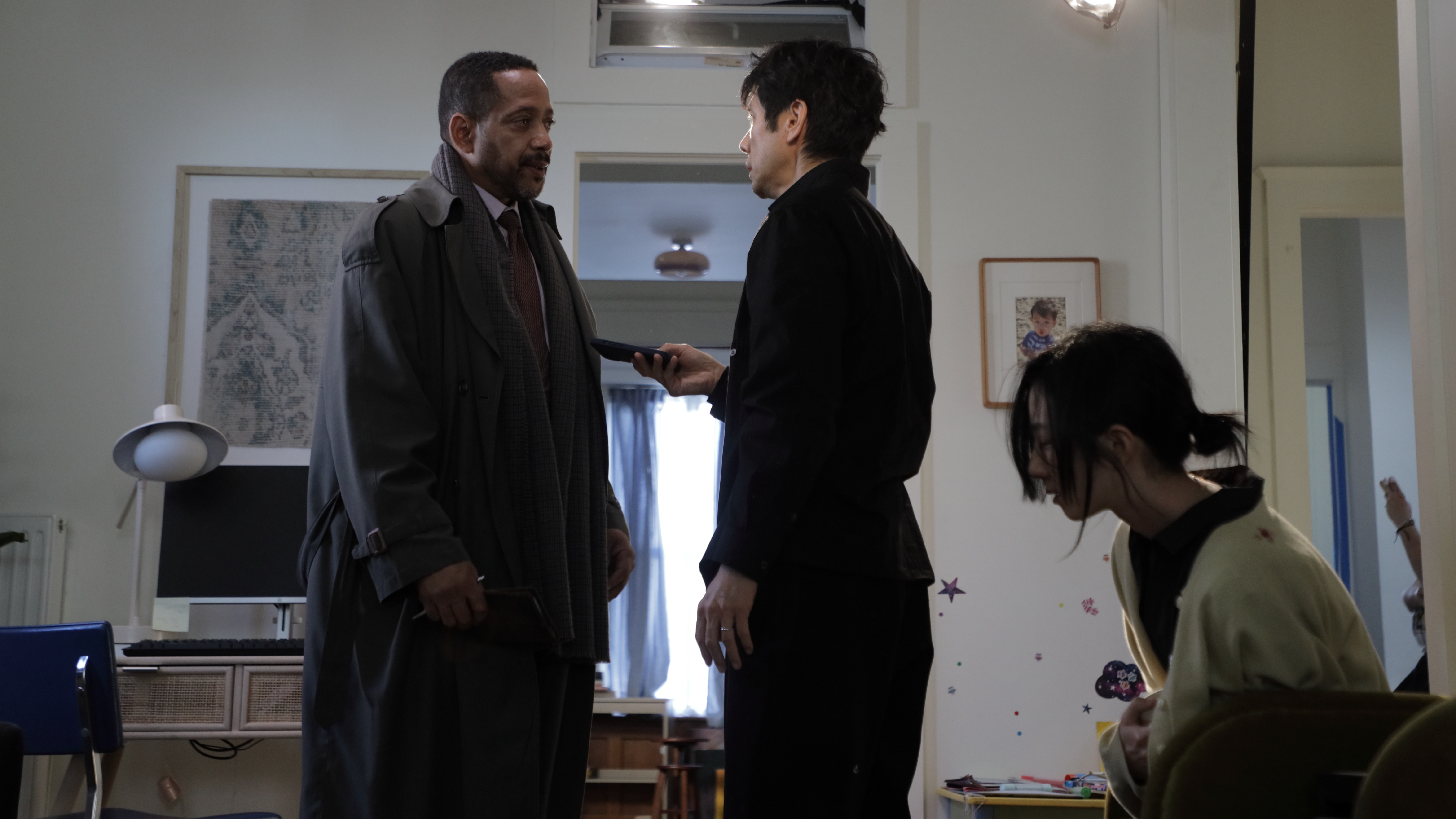
Dear Stranger focuses the relationship between Kenji Saiga (Hidetoshi Nakajima) and Jane (Gwei Lun-Mei), his Taiwanese-American wife. While both seem, at first, a happy couple, Kenji is preoccupied with securing tenure at the university he works at andJane tries to balance motherhood with her career as puppeteer-choreographer. One day, tragedy befalls them as their son Kai (Everest Talde) disappears. Maybe, the guy (Julian Wang) freeloading at Miquel’s garage, has something to do with it.
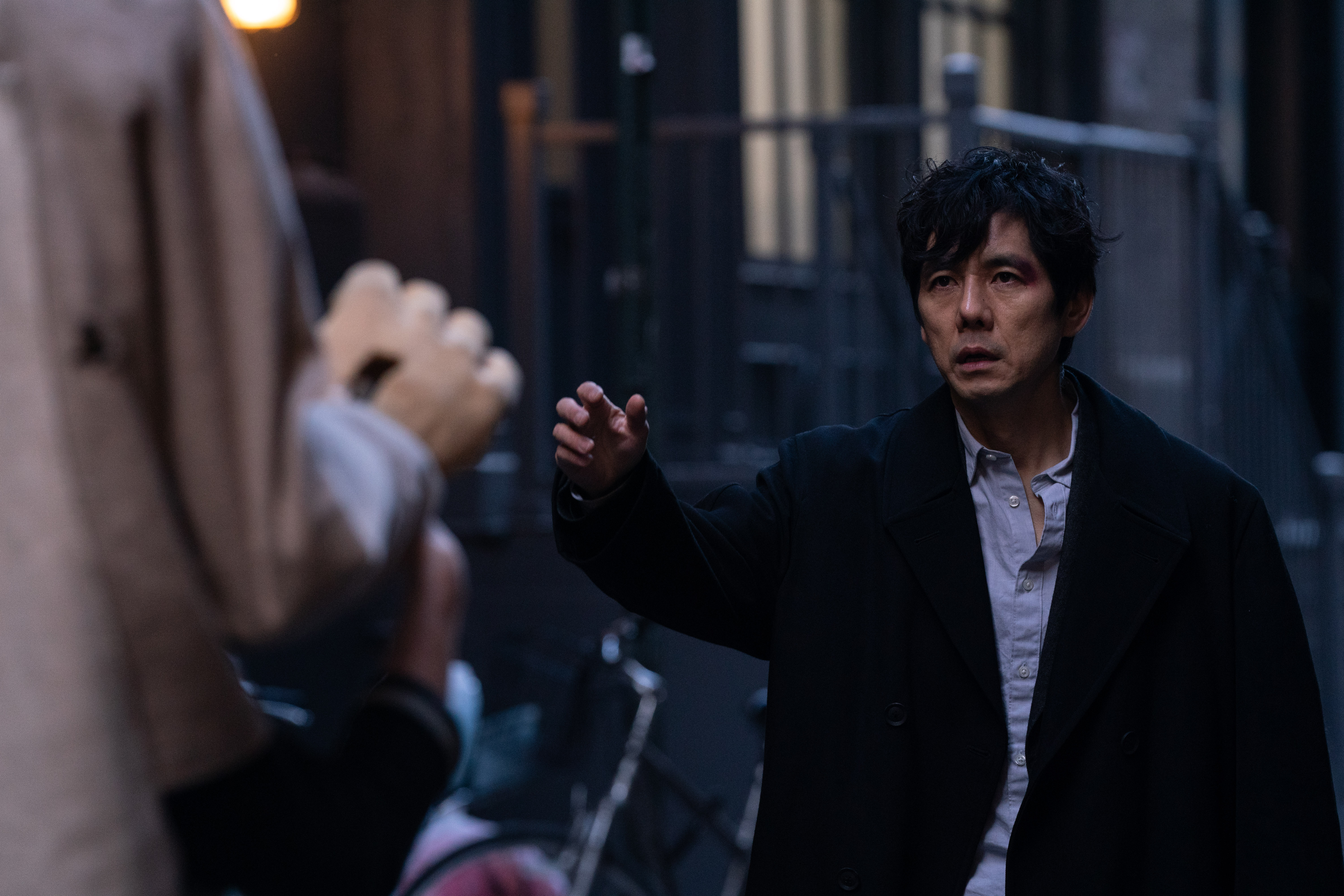
Dear Stranger offers the spectator a beautiful exploration of a relational ruin or, to put it more aptly, of the subjective ruins that form the unstable foundations of a relational fiction of marital happiness. Tetsuya Mariko, in fact, utilizes his narrative to question the viability of a relational narrative built on the conjunction of two subjective foundational ruins, as determined by their respective traumatic past and the secrets they keep.
By utilizing the title of the narrative, one can offer a somewhat different perspective on what lies beyond the relational fiction of marital happiness. What lies beyond this fiction are not simple our subjective ruins, but what remains Other to ourselves. We turn to fiction not simply to cover our subjective ruins up but also to keep the stranger in ourselves as well as in the Other at bay – dear stranger, dear Otherness. With Dear Stranger, Tetsuya Mariko delivers an emotionally powerful illustration of the difficulty of accepting the Other’s Otherness – one can only approach the Other’s Otherness by first confronting the monstrous stranger residing within the ruins of our subjectivity (Psycho-note 1).
Tetsuya Mariko slowly investigates the conflictual triad of fiction, Otherness, and subjective ruins by focusing on the way the signifier is utilized between Kenji and Jane. The signifier is revealed in Dear Stranger as the primary site of intra and inter-subjective violence (Narra-note 1).
The first form of interactional violence concerns the reliance of both on empty speech, that kind of speech that smoothens the flow of daily interactions by keeping each other’s subjectivity at bay. While Kenji and Jane talk to each other, the centring of their conversations around their son Kai and the daily chores allows them to avoid each other as subject – they wander in the field of demands to not encounter the other’s desire.
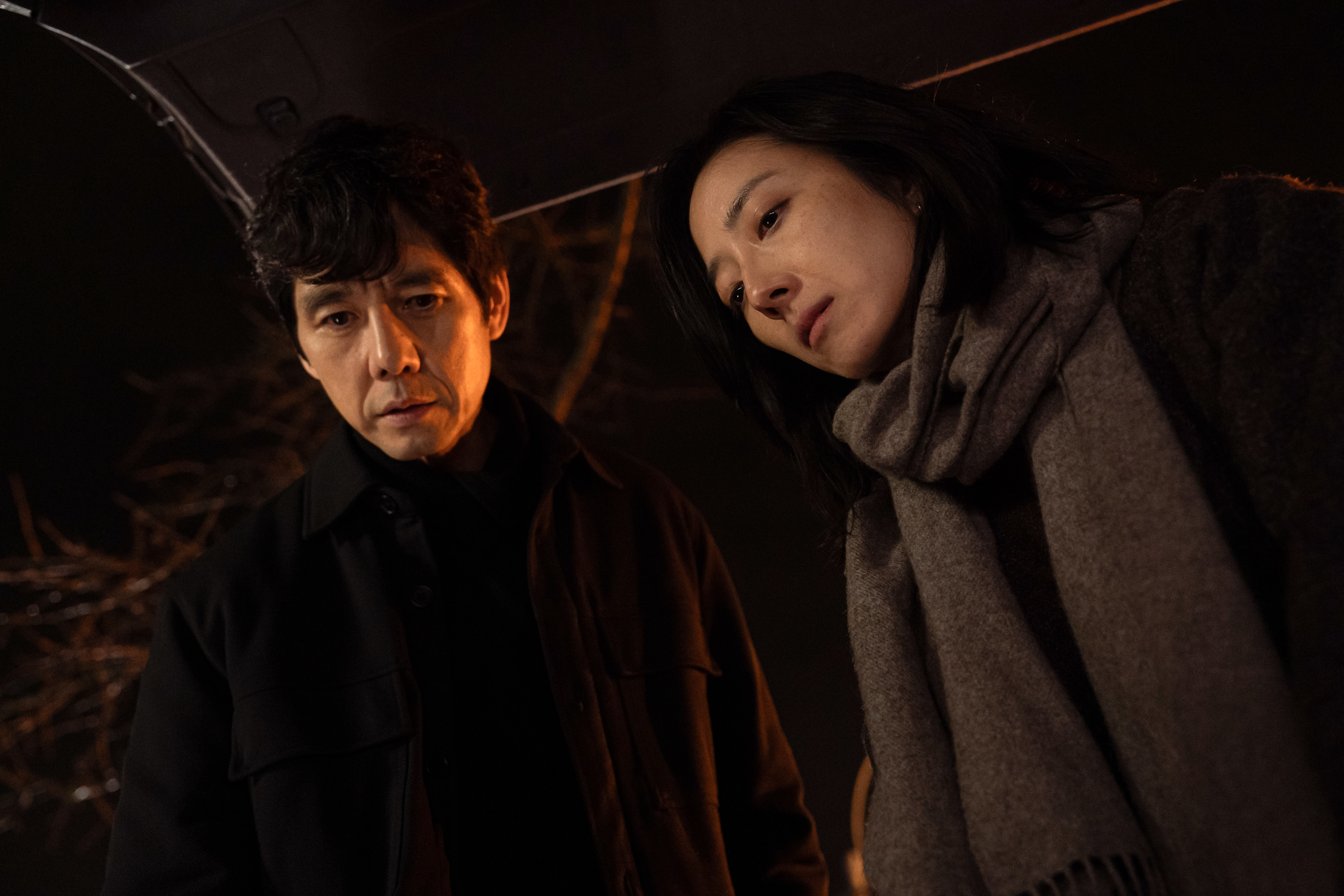
However, the spectator easily discerns that the field of empty speech is troubled by what cannot be vocalized through the signifier. The image of marital peace is constantly under attack by the elision of the signifier – i.e. hidden injuries inflicted by the subjective unsaid and the inability of addressing one’s subject to the other through the signifier. Tetsuya Mariko shows that the subject’s retreat into silence can be a sign of unvocalized inner struggle – subjective silence becomes a pressing weight within the narrative space’s atmosphere.
This ‘passive’ violence of the forced elision of the subjective signifier is contrasted within the narrative to the violence integral to the exchange of signifiers. At the level of the imaginary, speech is not merely a tool to produce pleasure for the subject, but his main weapon to impose his ideals onto the other. The volatile nature of the signifier often stems from the simple demand to the other to construct himself in the his/her image – to assume the other’s ideals, values, desires as one’s own – and the refusal of the otherness that is communicated by the other’s signifiers. This dynamic is not only illustrated by the verbal conflict between Jane and her mother, but also by the explosive discussion between Jane and Kenji concerning the balance between work and household.
There is, however, a third form of relational violence present within Dear Stranger – the violence of the subjective enunciation. It is a kind of speech where the vocalized signifier acts as a carrier of a fragment of one’s troubled subjectivity. Tetsuya Mariko perfectly understands that such subjective speech can only arise when the Other is reduced to a mute listening presence. It is, for instance, only when Kenji retreats into silence that Jane succeeds in expressing her doubts about their relationship.
Dear Stranger, moreover, shows that subjective speech is generally inaugurated by an event, by a sliver of real that penetrates the subject’s ego and disturbs his imaginary defence. Verbal violence often bursts forth as a reaction to the destabilizing of the subject’s ego and as a demand to the Other to grant him a ‘truthful’ signifier that might allow him to patch his ego up or destabilize him further (Psycho-note 2). Yet, it should be clear, the subject does not want to hear the unvocalized truth; he viscously resorts to empty speech to force a distance between himself and the signifiers of the Other which allude to the unverbalized ‘truth’ he wants to keep at bay (General-note 1).
The evocative sequences concerning puppetry emphasize the potential of performative art to grant the subject the ability for emotional abreaction and subjective sublimation. However, art can also be utilized as mere a needle to temporarily sew the gaping gash of subjective together. In a highly intimate and evocative sequence where Jane practices her puppetry, the overflowing of raw and violent emotion offers the spectator the first indication that the way she acts around her husband and son covers up her own subjective struggle. While the spectator is unable to determine what this sudden burst of emotion signifies, he nevertheless feels that she puts something of her subjective truth on display – for the spectator and no one else.
The composition of Dear Stranger stands out for its use of long takes and its restrained tracking movement. The slow pace of the visual fabric puts the emphasis on the enunciated signifier, the words exchanged between subjects, as well as the silences that separates enunciations.
Tetsuya Mariko also exploits shaky framing in a meaningful and impactful way; to signal and amplify the emotional disturbance the character in focus feels – e.g. when Jane realizes she lost her son in the supermarket. While it is a simple stylistic intervention, it is one that, by instrumentalizing the shift between static and dynamic moments, is highly effective in emphasize the emotions that pour out of the character’s comportment.
Tetsuya Mariko’s choice to decorate his drama with moody jazz-pieces might surprise some, yet given the themes of the narrative one could argue that these moody pieces coincide with the fact that, within this narrative, many emotional waves do not reach the shore of pronunciation. In certain sequences, Tetsuya Mariko seeks to create a contrast that elevates the emotional fabric of Dear Stranger. The peaceful rhythm of the music creates a framework that elegantly emphasizes and amplifies the disturbances of the character’s emotional rhythm – the inner turmoil, the cacophony of emotions, stands out against the retrained moody flow of the music.

The spectator cannot miss the fact that Tetsuya Mariko’s narrative world is draped in dull colours and that darkness is ominously present. The atmosphere echoes, in a certain sense, the duality of the subject: the ego lightened up by the social light, yet haunted by the darkness of our subjectivity, of what we keep hidden from the Other, the Other we are to ourselves and the Otherness of the other.
The performances of Gwei Lun-Mei and Hidetoshi Nakajima are impressive. Gwei Lun-Mei ensures that the emotional backbone of Tetsuya Mariko’s narrative shakes the spectator to his core, while Nakajima gives the passion for ignorance its painfully dramatic quality. Both Lun-Mei and Nakajima complement each other and pass the thematical task set by Tetsuya Mariko with flying colours.
With Dear Stranger, Tetsuya Mariko re-affirms himself as a master of raw emotion. He impresses by offering audiences a narrative that slowly gets under their skin and compels them to put, even but for a fleeting moment, the subjective foundations of their relational fabric into question – from ego to subject and from ego to ego. Tetsuya Mariko’s drama of the passion for ignorance could very well be the best Japanese film of the year.

Notes
Narra-note 1: Dear Stranger is also full of non-verbal violence – e.g. the robbery of Jane’s father’s grocery shop, the graffiti’s attack on Kenji and Jane’s car, … etc.
Psycho-note 1: It is important to note that the truth the subject wants to avoid is both his truth as well as the Other’s truth. While we can think of it as a relational truth, it is better to consider this kind of truth being external (as part of the Other) and internal (as part of the subject) at the same time.
Psycho-note 2: Spectators will notice that the explosion of subjective speech is preceded by a brooding-like silence – the silence before the storm, before the volcano bursts.
General-note 1: Given our emphasis on the subtle refusal to truly engage with the Otherness of the other, it came as quite a suprise that Tetsuya Mariko stated that “they are earnest in their desire to understand and care for each other“. It is up to the spectator to watch the film and decide wich perspective makes more sense.
 psychocinema