“(…) I want to make anime that (…) [can] give people strength.”
Anime is big business – its revenue far outstrips that of Japan’s domestic movie industry. One reason for the increasing global appeal of these animated fantasies – and the manga they are often based on – is the fact that they avoid, more elegantly than movies do, getting stuck in cultural ‘Japaneseness’. To put it differently, the appeal of these fantasies does not merely lie in their dynamic drawing style, but also in the a-cultural delivery of the themes that structure the unfolding of these narratives.
Some fans of anime and manga might be interested in what happens behind the curtains. With Kohei Yoshino’s Anime Supremacy – an adaptation of Mizuki Tsujimura’s novel, those spectators are finally offered a peak at these spectators a glance at the human machinery that breathes life into their beloved animated characters.
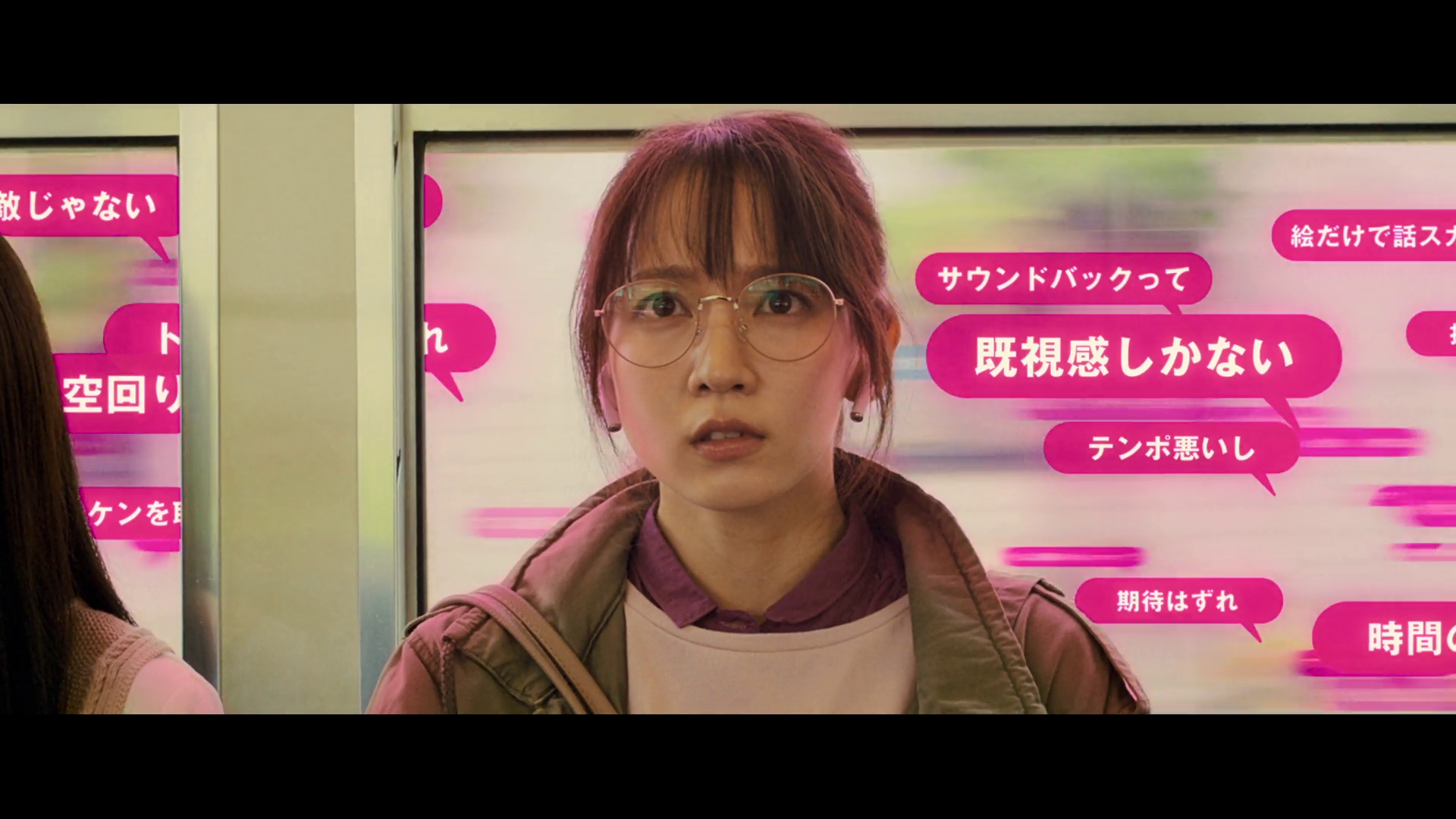
Kohei Yoshino’s narrative follows the trajectory of three women over the course of producing one anime season. The spectator is first introduced to novice-director Hitomi Saito (Riho Yoshioka), who is driven to create a work that surpasses the work of Chiharu Oji (Tomoya Nakamura). Seven years after changing her life’s path, she finally gets the chance to direct her first anime series for production company Tokei Animation. The trajectory of Hitomi Saito is, moreover, utilized to explore the relationship between director and chief producer, from the viewpoint of the director. Saito, who is under the wing of Chief producer Yukishiro (Tasuku Emoto), struggles with the fact that she must join all kinds of ‘unrelated’ promotional events to ensure the success of her sophomore series.
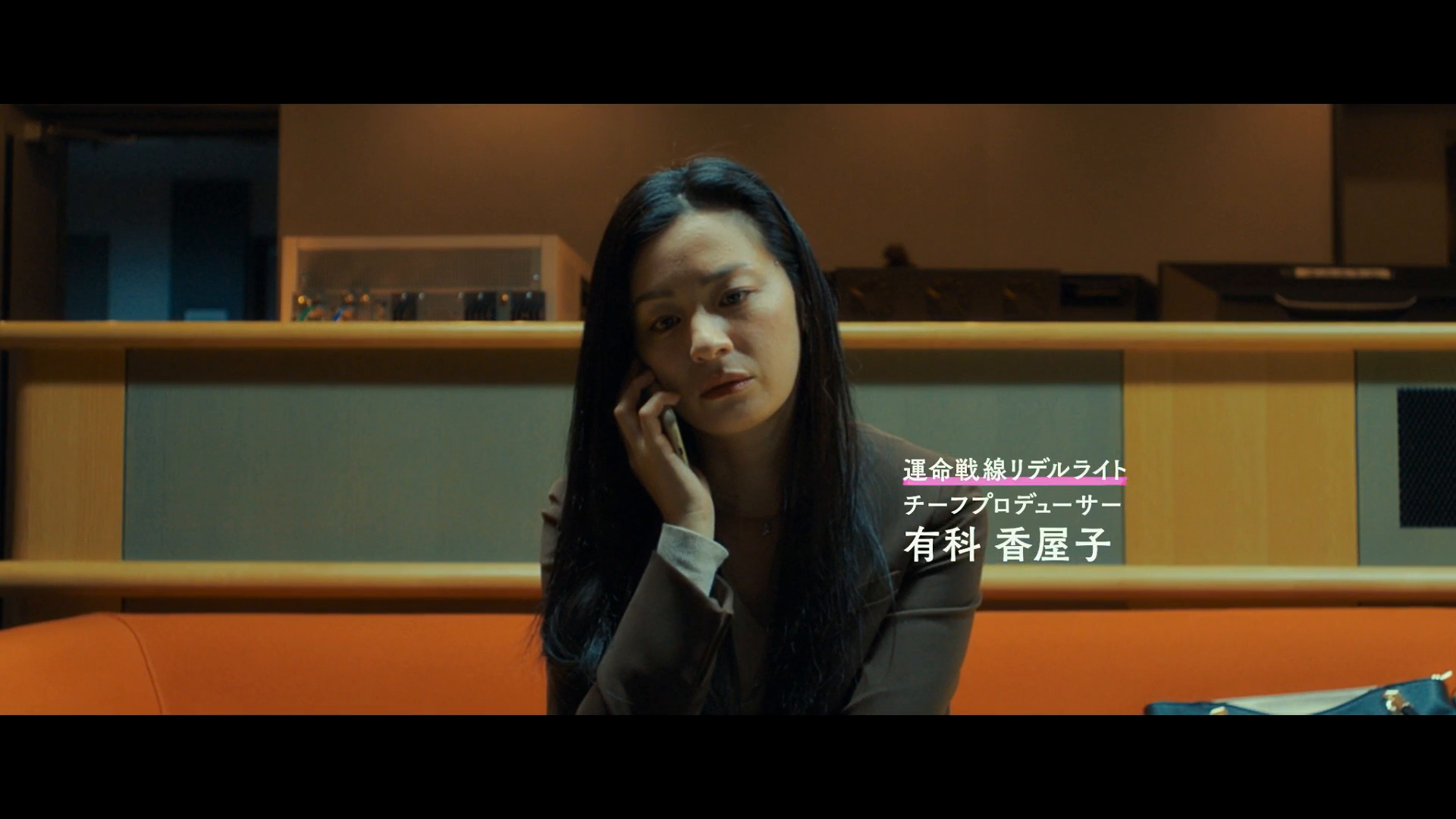
The second character we, as spectators, are introduced to is Kayako Arashina (Machiko Ono), the chief producer of Four Seasons Television’s Fate Front Liddel Light, the new anime series of the well-respected Chiharu Oji. Through this character, we are given an insight in the relation between chief producer and director, from the perspective of the chief producer. Kayako’s trust in Oji Chiharu is put to the test when she realizes he has fled away. The production chief of the series, Hoshi Yoji (-), summons her to emphasize the gravity of the situation – a lot of money rides on the production – and urge her to decide on a replacement.
The third character the narrative focuses on is Kazuna Namisawa (Karin Ono), an animator from Fine Garden. She struggles with work-life balance as she is bombarded with unexpected demands from various production companies.

The beginning of Anime Supremacy can be quite confusing for some spectators. While a vague structure is established by introducing characters inside and outside the production company the pace by which the characters are introduced makes it, at least in the beginning, difficult for the spectator to firmly grasp the way everything fits together in the process of creating, advertising, and airing an anime series.
As the narrative unfolds, the spectator is introduced to the various steps in creating an anime – e.g. story-board shootings, animation preparatory meetings, creating of line shots, art – CG Preparatory meeting, drawing art (e.g. backgrounds) and adding the finishing touches, composition photography, script meeting, recording at a recording studio, first broadcast viewing, public invitational screening, … etc. – and all the people necessary to turn an idea into an animated masterpiece – e.g. animation director, assistant animation director, work assistants, CG director, CG Assistant, setting worker, art director, production desk staffer, director of photography, colour setter, … etc.
However, the spectator is not merely given a fragmentary glance at the inner-working of producing and creating anime, but also at the tensions and conflicts that arise while crafting an animated series. The main conflict that must be dealt with in anime-production – and this should not surprise anyone – is between the realization of one’s creative vision and dealing with financial and time-constraints.
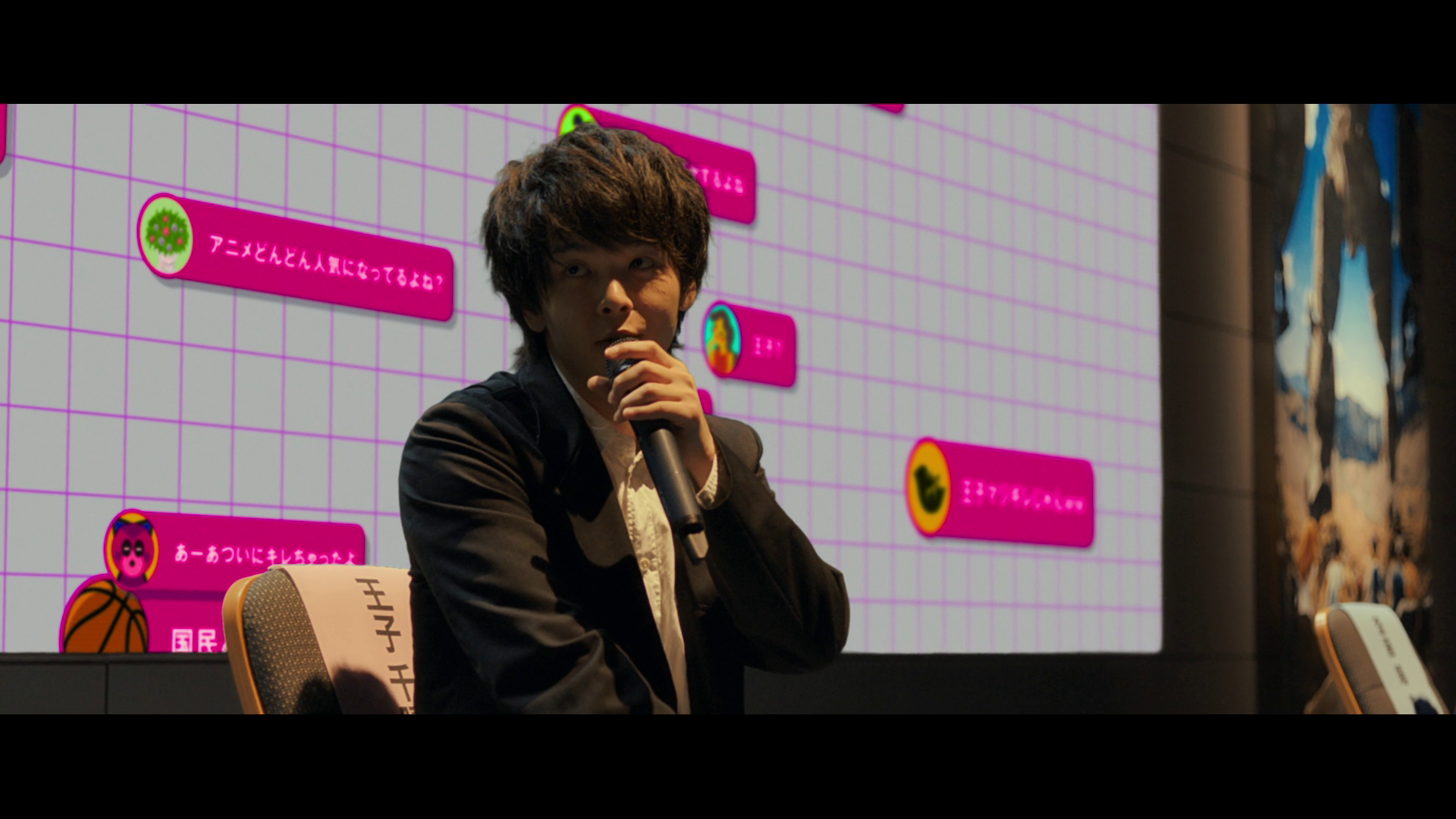
Yet, this is not the only conflict. The second conflict that organizes anime-production, one which remains a bit more hidden, is between the wish to fully realize one’s creative vision and the demand to make one’s creation marketable and profitable. Hitomi Saito, for example, must accept a popular idol voicing a character, even though she does not believe she is up to the task. Saito, moreover, must attend many events (e.g. Anime-fest), do photoshoots, and give interviews.
Anime Supremacy, moreover, shows that, despite the hierarchal structure, the production of an anime is littered with tensions (e.g. the tension between the producer, advertising manager, and the director), unvocalized conflicts, and detached and half-hearted discussions (e.g. concerning advertising). While we utilized the signifier despite, the spectator must feel that most if not all the subjective struggles and interpersonal tensions arise because of the radical hierarchy, of the simple fact that, within a hierarchy, certain enunciated signifiers have more weight than others. The success of an anime feature does thus not merely depend on having great ideas for animated fantasies, but also on one’s ability to circumvent conflicts, manage the web of hierarchal relationships, and harmonize every cog of the machine in function of the realization of one’s creative vision.
After the dust of the opening has settled – the spectator having gained a decent grasp on the relational structure of the anime industry, Anime Supremacy promptly turns into a swift-paced thriller, a high-stakes boxing game with anime-episodes as punches and upper-cuts. Everything within the narrative turns around a simple question: Can the underdog beat the legend?
The spectator would be mistaken if they were to think that Anime Supremacy is but a mere celebration of anime production – an advertisement to lure people into the industry. Kohei Yoshino’s narrative also touches upon the mental strain of creating, of having to produce results and circumventing all the obstacles that hinder one’s singular creative vision. The film also highlights the stress that comes along with giving one’s creation to audiences, without knowing how it will be received and having to continue its creation, episode after episode, right up until realizing the final episode, burdened by the knowledge of how it is being received.
The composition of Anime Supremacy is highly dynamic, the camera lingers through the narrative spaces, circling around characters, zooming in and zooming out. There are, however, some moments in the composition without any form of dynamism. These concatenations of static shots frame interactions that are devoid of any tension or conflict, i.e. the peaceful conversations about which steps to take that happen when the screens are off, when the weighty reality of producing an anime is somewhat less acute. Static shots which are contrasted with dynamic shots, on the other hand, aims to highlight Hitomi Saito’s (unvocalized) mental strain and pressure of creating her first anime series.
Anime Supremacy offers the spectator a light-hearted glance at the inner-workings of the anime-machine. Despite the film offering a heartwarming underdog narrative, Kohei Yoshino’s film also touches upon the darker sides of the industry – the emotional strain of creating, treading the maze of hierarchal structures, … etc. The film celebrates the transformative power of anime as art, but also underlines that producing art comes at a great cost. So, of you want to enter the anime industry, you are warned.

 psychocinema