“When you try to set a trap, you end up in someone else’s.”
The world of cinema thrives on exploring the dimension of love – love is the crazy little thing that keeps on giving. Even in genres that are seemingly separated from the field of romance, love always succeeds in rearing its head one way or another.
The reason why love, as a dimension, keeps finding its way into filmic narratives is because the existence of love keeps raising questions. The continuous concatenation of cinematic elaborations on love prove that the riddle of love is beyond solving. Akira Yamamoto is one of the latest directors who tries to say something useful about what love amounts to.
Yamamoto’s film commences six years after Sanae Sonoda (Ai Hashimoto) stabbed her lover Hayato Mochizuki (-). Sanae’s mother has forced her to meet a prospective marriage candidate, a banker called Mr. Suzuki. Despite doing little effort to entertain him, he invites her to visit the woods. Once, in the car, he reveals himself to be Kenta Koizumi (Taiga Nakano), a woodcutter working for the White Birch Foresty Association. While neither has any desire to marry and their first encounter is fraught with subtle interpersonal frustration, they do decide to marry.
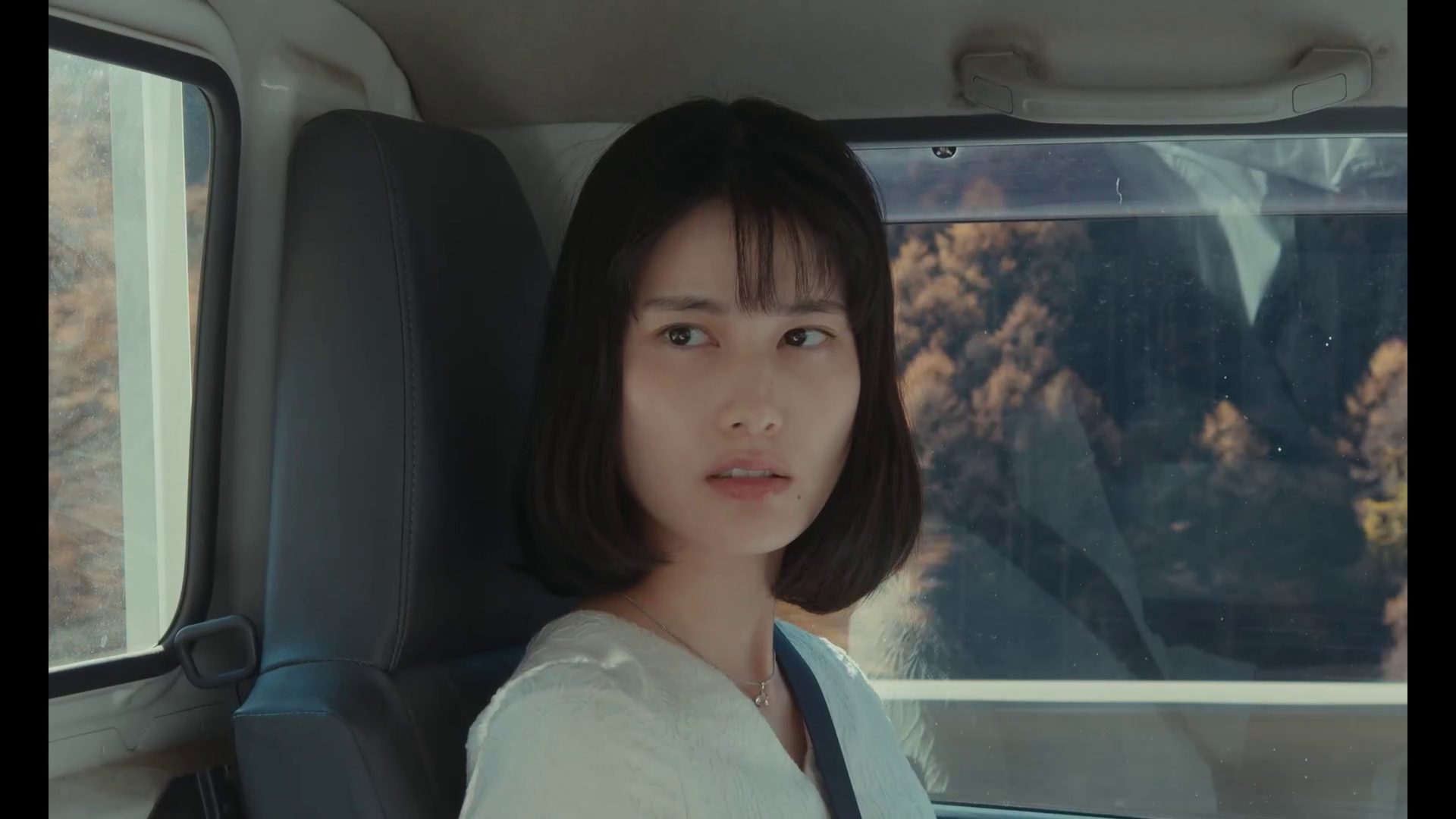
Yet, Sanae has not given up on her blonde-haired lover who disappeared without a trace – she still hungers for the kind of feverish love that bursts with life. Kento, on the other hand, happens to meet Yoshiko Adachi (Mai Kiryu) a woman whose interests are more aligned with his and happens to know about Sanae’s violent past.
After The Fever is a bleak romantic drama, whose subdued flow is upheaved by unexpected narrative twists and some truly potent emotional moments. Yet, Yamamoto’s second feature film will not be anyone’s cup of tea. It is a heavy-handed film that asks the spectator to fertilize the silences that separate the various enunciations by continuously interpreting the evocative statements enunciated by the characters. The director’s demand will leave many if not all spectators exhausted, yet those who succeed in pushing through will grasp a thing of two about love and fantasy.
The tumultuous ending, on the other hand, only thinly avoids becoming farcical. The main reason why the ending veers on the ridiculous is because Yamamoto’s resolution, while keeping a restrained visual pace, suddenly forces too many twists upon the spectator, thus disturbing the carefully controlled emotional flow. However, what this ending tries to stage – and effectively stages – are the subjective repercussions of Kenta’s struggle to turn Sanae into his symptom.
Kenta’s failure to turn Sanae into his symptom has everything to do with Sanae’s subjective position, as determined by her romantic past with Hayato. After The Fever offers, to be able to stage whether romantic relations can be formed after the destructive fever of love has subsided, an exploration of the logic of Sanae, the logic of the subject who has survived such fever. The spectator embarks on this rather exhausting exploration, first and foremost, by tracing out how Sanae responds to Kenta’s acts and signifiers and following Sanae’s fragmented monologues directed to her psychiatrist (Hana Kino).
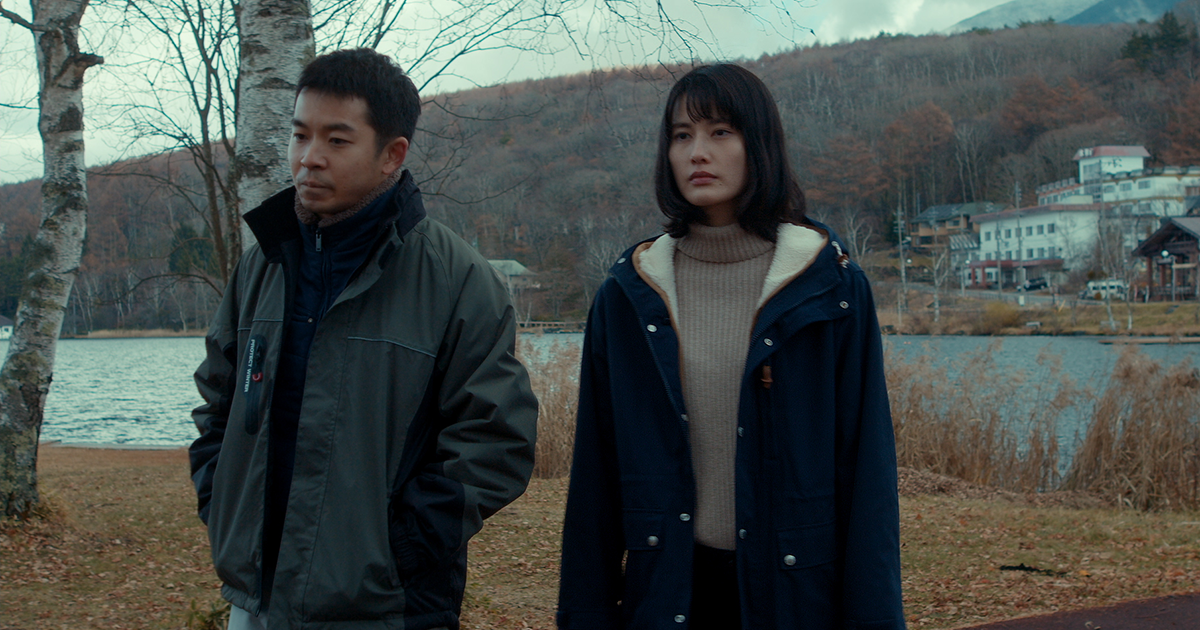
Via the first encounter between Sanae and Kenta, Yamamoto introduces the fact that speaking to the other as well as our understanding of the other is based on a radical misunderstanding, a misrecognition caused by the fact that we, as subject, must interpret his presence, his signifiers, and his acts via our own ego. However, we do not merely construct an image of the other as subject, but construct an image based on the ego-image the subject fabricates of himself.
Within his composition, Yamamoto contrasts moments where Sanae puts up a social face – an ego that fits the societal flow – to support the sense of harmony (e.g. smile for the wedding picture, … etc.) with moments of stillness that emphasize that ‘subjective’ things remain unvocalized (e.g. Sanae being awake at night, smoking, staring outside on the train, …). By playing with such contrast, Yamamoto signals Sanae’s hesitation to address the Other with her subject – she might even hold on to believe that the Other does not want to hear what she, as subject, has to say.
Early in the narrative, Sanae tells her psychiatrist that a fracture exists between the past and the present, that there is a difference between her present ego, shrivelled and dead, and her past ego that is alive – overflowing with jouissance. It is because this seemingly unbridgeable gap exists between these two states that Sanae’s love for Kenta is superficial and ‘safe’ (to be communicated to her psychiatrist).
The way Sanae describes these two states echoes a bipolar dynamic – from mania to depression. At the one side, we have the excess of jouissance in the body and the blossoming of the death drive which poses a threat to the subject and the other – “Love is everlasting only when you give everything you have; I’ll die with him to preserve the shape of our love, to turn it into something true.” – and, on the other side, we have the radical absence of jouissance, the subject reduced to nothing more than a cracked ego-shell from which the gaping abyss of subjectivity oozes out.
The duality of Sanae’s subjective experience determines much of her enunciations – she addresses herself to the Other whether this Other wants to listen or not. For example, when Sanae tells Yoshiko that “happiness is reality, but it always ends up never being real”, she sorts the feeling of being happy under the register of the imaginary – happiness only has meaning in the superficial realm of the ego – and emphasizes the radical separation between happiness and jouissance. Happiness that is real is nothing other than (transgressive) enjoyment.
Despite addresses herself, as subject, to the Other (i.e. Kenta and Yoshiko), Sanae, who holds onto her experience of bursting love and the philosophies she spins around this experience, is unable to let this Other question her phantasmatic construction around Hayato. This construction, as After The Fever dramatically implies, is the foundation upon which her frail shell-like ego, drained from enjoyment, rests. Attacking this phantasmatic foundation with signifiers threatens to disintegrate her ego-shell and seduces her to radically join the emptiness that she as subject is. So, if the signifiers of the Other are impotent, what can change her subjective position?
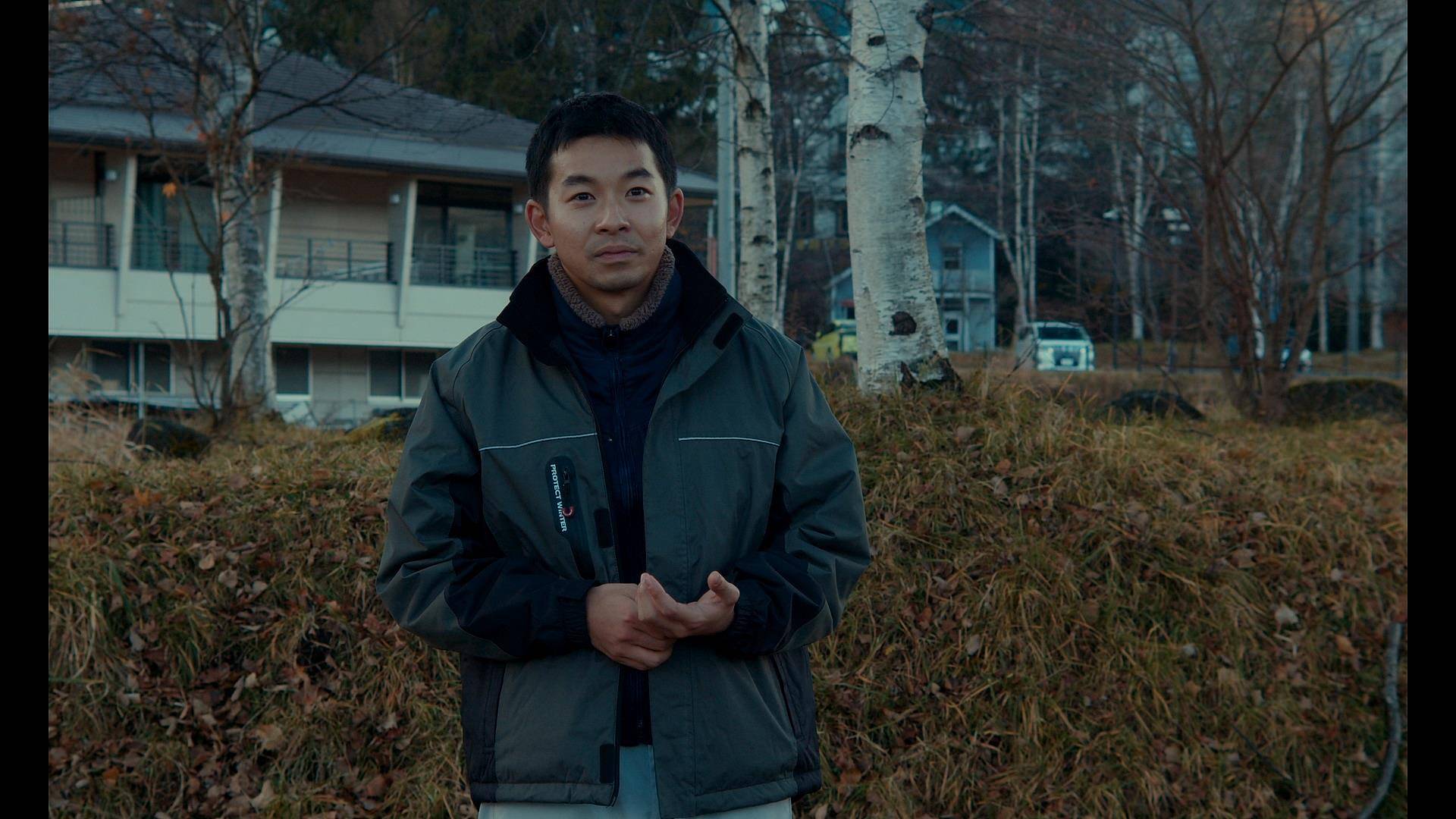
Via Kenta, whose job consists in cutting trees, Yamamoto reaffirms the fact that the romantic harmony between subjects many dream about is but an unrealizable fantasy. However, the subject as well as the societal field necessitate a semblance of romantic harmony. The societal field wants to repress the drama and the trauma of romantic struggles and the subject adheres to this fantasy to be able to function as an ego within the societal field.
After The Fever highlights in a very dramatic sequence the addictive and destructive effects of the commodification of this fantasy in the shape of hosts and host-clubs. What the host sells to every woman that seeks his services is nothing other than the fantasy of a sexual relationship that can be written – an unrealizable fantasy that, in some cases, ends up plunging women into debt and, even, pushing them into prostitution as to be able to support the harmonious sexual relationship, a love, that is so near, yet always out of reach.
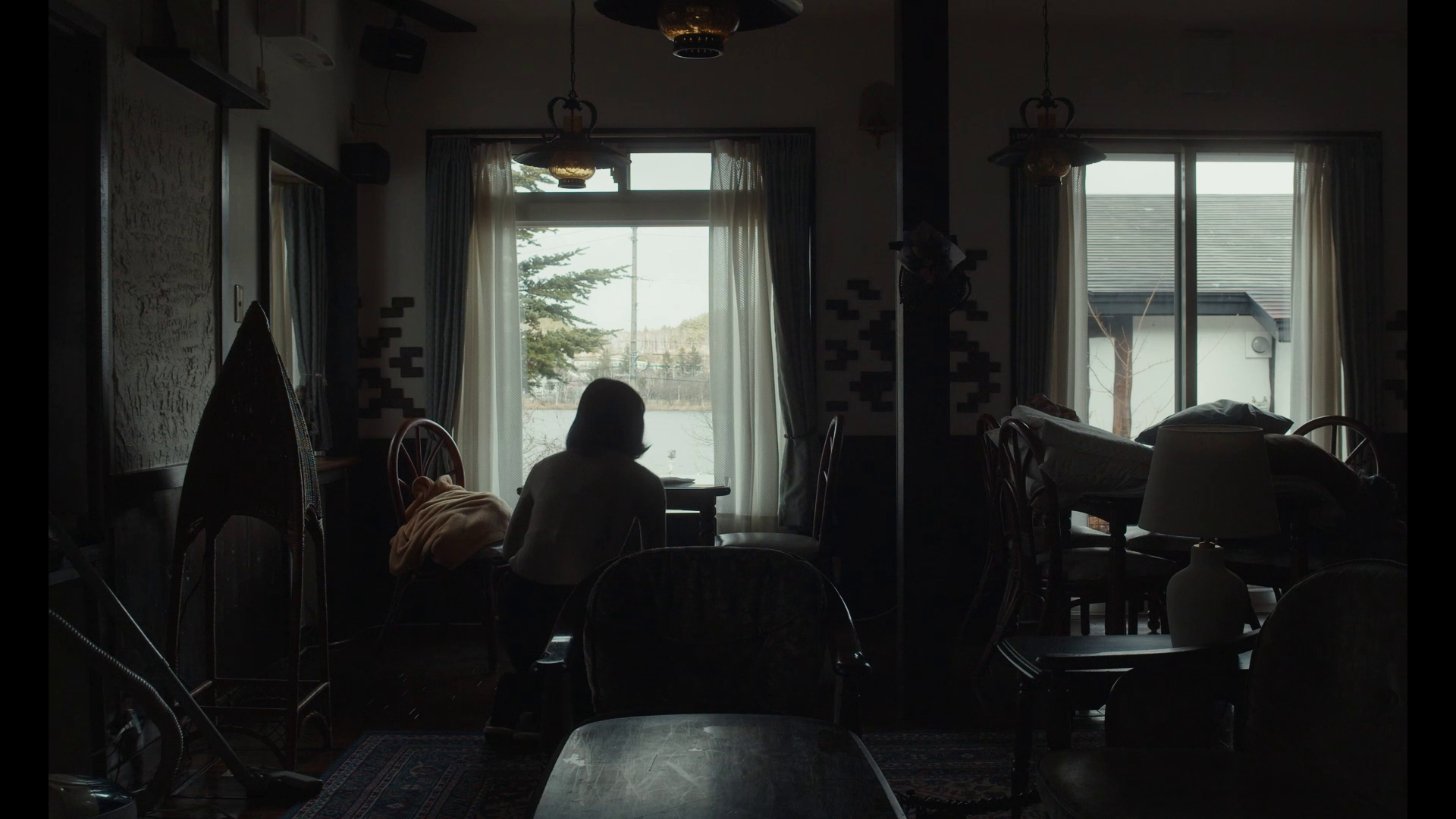
The composition of After The Fever delivers a restrained visual flow by combining slow dynamism, some shaky dynamism to elevate certain dramatic moments, and many static long takes. Yamamoto’s visual fabric, despite being straightforward and mundane, succeeds in delivering subtle moments of visual poetry and elegantly amplifies the echoing effect of signifiers by keeping the flow of the visuals measured and by creating space for silence.
Within the composition, longer takes are utilized to emphasize certain acts (e.g. smoking, touching her loose ring, …) or facial expressions. However, in the narrative’s opening sequence, the long take is employed to confront the spectator with the destructive result of Sanae’s fever and arouse the spectator’s interest in Sanae’s ‘crazy’ subjectivity as she stands near Hayato’s bloody body (Acting-note 1).
The colours within Yamamoto’s composition are quite dull and the visual frame is frequently invaded by intrusive dark shadows. The combination of the muted colours and the lingering presence of darkness evokes a narrative space from which the subjective possibility to attain happiness is seemingly erased. Or to put it differently, the atmosphere implies that this space is not necessarily without love, but beyond (obsessive) love, beyond destructive passion. It is the space where lack exists, yet not necessarily accepted.
Yamamoto’s After The Fever will divide audiences because it dares to demand the continuous cooperation of the spectator – he must fertilize the silences between enunciations and continuously interpreted the evocative statements formulated by the characters. It is an exhausting experience, yet an experience that, if one succeeds to make it to the end, convincingly shows that the idea of romantic harmony is but an unrealizable fantasy but also that subjects necessitate a semblance of romantic harmony – An intersubjective construction of peace.

Notes
Acting-note 1: Ai Hashimoto’s performance is quite impressive. She brings the subjective emptiness that marks Sanae – the depressed truth of the subject after the feverish fantasy has subsided – convincingly to the fore and emphasizes the poetic, yet destructive naivety of her character’s enunciations in an effective way. However, it is the effectivity by which she brings Sanae to life that will frustrate many spectators – Sanae is not that relatable.
 psychocinema