Those who have read our reviews of the three first Kingdom narratives – Kingdom (2019), Kingdom 2: Far and Away (2022), Kingdom 3: The Flame of Destiny (2024) – will recall that we could not appreciate the ‘shonen’ over-emphasis on Shin’s passionate dream of becoming the greatest general of all in the first two narratives. The boyish enthusiasm was deeply at odds with the deadly seriousness of the war. Luckily, in the third narrative, this naive childishness faded away, thus offering a better balance between Shin’s emotional flow and the high stakes-nature of the epic battles. The fourth film, being a continuation of the third, offers the same balance.
However, Kingdom 4: Return Of The Great General, just like the previous narratives, cannot escape the tension caused by the simplistic opposition between hero and villain, an opposition that structure most shonen narratives. By emphasizing themes like ‘friendship’, ‘getting stronger, and ‘perseverance’ within a war-setting, Sato is forced to stage an overly simplistic good versus bad fictionalization of the warring states period. This simplification, furthermore, introduces a moral imbalance that can feel uneasy for some.

Spectators, who can easily align their perspective with Shin and his phallic desire, will have no problem to overlook that, within a war, the vague faces of the enemies may also be animated by ‘heroic’ desires and promises and that the faceless opponents are also embedded in a network of comrades and friends, yet others might not be able to easily overlook this friction and have some discomfort while watching Kingdom: Return Of The Great General (General-note 1).
Yasuhisa Hara, the creator of the manga, probably thought it was fair to romanticize and ‘heroify’ the Qin because of their ultimate victory over the others, thus ushering China’s imperial era. Hara exploited for narrative purposes the overly simplistic idea that history is written by the victor and, thus, that the desire of those who triumph is justified and righteous. Spectators who aptly perceive this internal friction might want to go along with the so-called righteousness of the Qin’s conquest of China to be able to fully enjoy Shin’s passionate pursuit of his dream and immerse oneself completely in the grand set-pieces.
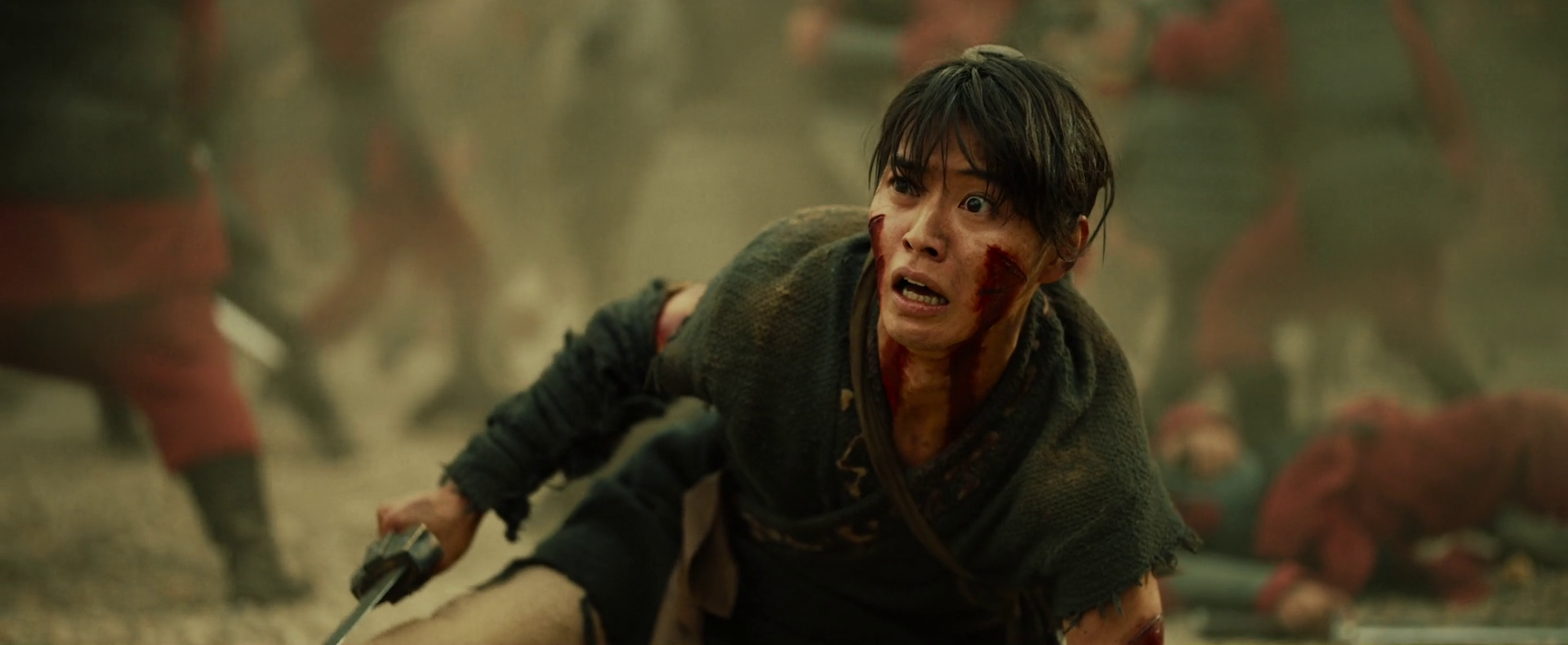
This simplified framing of the warring-states period, furthermore, underlines the simple fact that, within a shonen structure, only the hero’s desire is considered righteous and only his friends are deemed worth protecting. What makes his desire ‘good’ is the factthat it, ultimately, serves no-one else than the other/Other. The heroisterical character is always ready give everything – even his life – for this Other, yet due to his phallic prowess and the bonds he has formed with others he always succeeds in surmounting the obstacles that litter his path (General-note 2). The enemy, on the other hand, is demonized, because at the end of the day his desire is deeply selfish, even masturbatory. Kingdom 4: Return Of The Great General is littered with subtle visual indications and verbal allusions that underline that the search for enjoyment dictates the Qin’s adversaries.
The difference between the hero and the villain is exemplified by the different quality taking vengeance attains. While Shin’s wish to enact vengeance is a way to respect his fallen friends, the enemy, Hoken (Koji Kikkawa), merely aims to efface an imaginary injury – the pain inflicted on the soul – and re-affirm his superiority.
Spectators who have seen the first three Kingdom films know that the films are not too heavy on narrative; they offer a minimal structure to dazzle the spectator with dramatic set-pieces and heroic spectacles. The minimal nature of the narrative skeleton of Kingdom 4: Return Of The Great General is exposed by Sato’s introductory sequence. He does not only reduce the three previous films to a six-minute recap, but also show that, to enjoy the fourth entry, one only needs to grasp a structure of five interlinked narrative buoys. The first buoy, the main catalyst of the narrative, is Shin’s phallic dream to become a great general and possibly the greatest. The second is Eisei’s promise to unify all of China. The third Buoy, the main conflict of the narrative, is Zhao army’s attack on Qin, led by the mysterious commander-in-chief Hoken. The fourth is General Ohki’s acceptance to become Qin’s commander-in-chief and Shin’s mentor and the fifth is the reveal of the existence of Bushin (war gods, those who are the host of godly forces) by Kyokai (Nana Seino), a descendent of the Shiyu assassin tribe.
These five structuring points do not only result in Shin having his first success under general Ohki (Takao Osawa), taking general Fuki’s head with the Hishin unit in but leads him to encounter Hoken, the Zhao commander-in-chief and a bushin at the end of Kingdom 3: The Flame of Destiny (2024). The fourth entry, which function as direct continuation of the previous film, starts where the previous film left the spectator hanging: Shin (Kento Yamazaki) and Kyokai facing the imposing figure of this formidable otherworldly foe. The narrative of the fourth entry is not only engaging because of the many grand fighting sequences, but also because Hara’s narrative boasts some pleasing twists and offers some surprising revelations, thus rising the stakes and tremendously heightening the emotional impact of the finale.
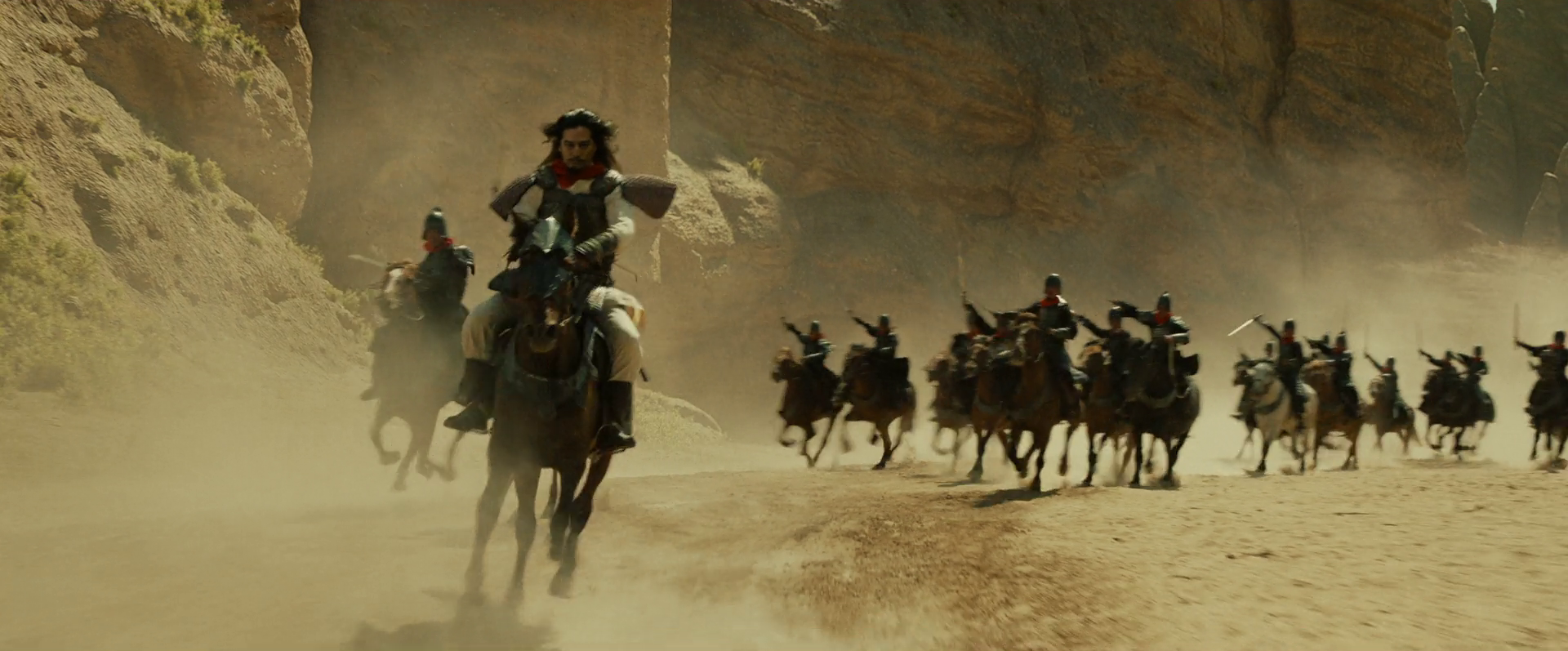
The set-pieces within Kingdom 4: Return of the Great General are framed in a thrilling and highly satisfying way. Shinsuke Sato weaves a visual fabric – combining dynamism, static moments and visual decorations (e.g. slow-motion) – that does not merely let the spectator follow the choreography with ease, but also enhances the visual beauty of the otherworldly moves and the deadly brutality of the fights and clashes.
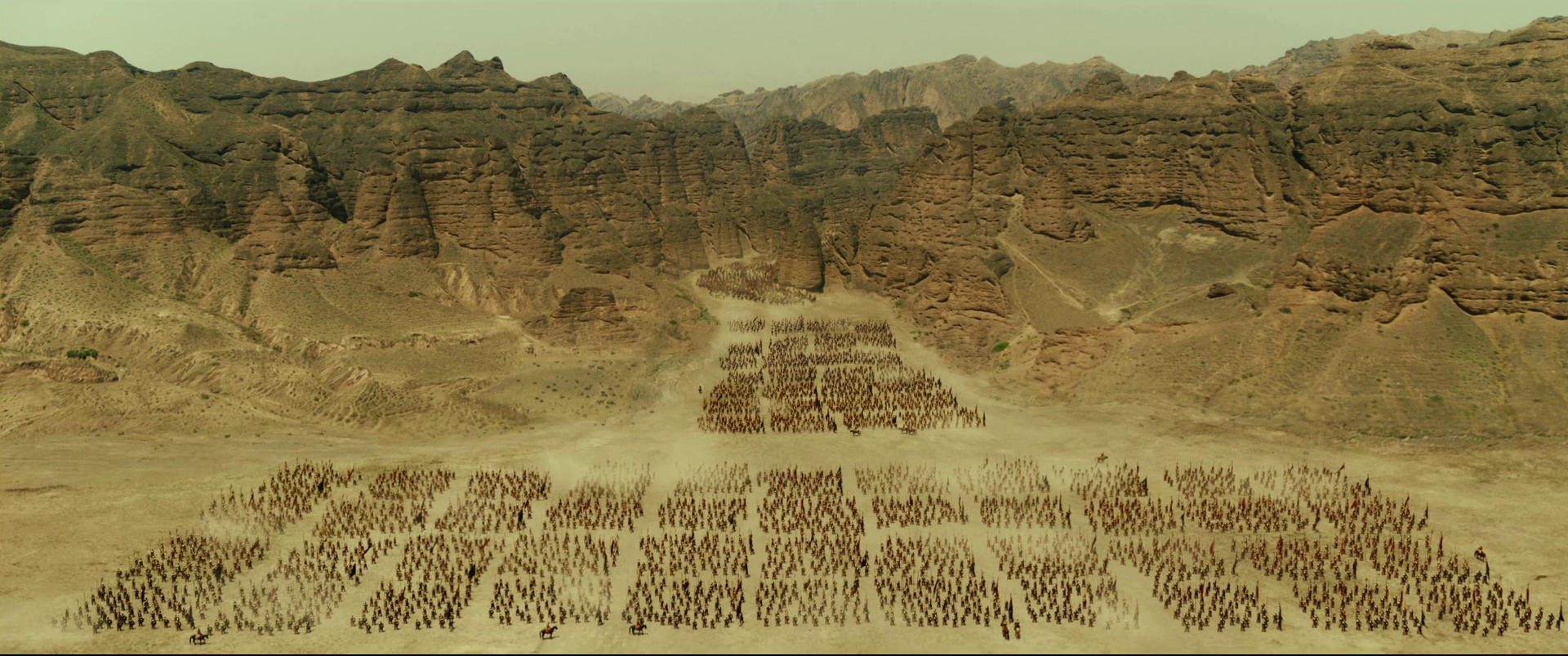
The first clash in the film, the impressive show-down between Kyokai against Hoken, does not merely whet the spectator’s appetite, but also sets the bar for all further fights. Luckily, by Shinsuke Sato’s talented hand, all the subsequent fights and battles succeed in matching or surpassing the impact of the first. Kingdom 4: Return of the Great General is littered with impressive shots, be it epic sights of fighting armies or more intimate shots of clashing weapons.
Kingdom 4: Return of the Great General heavily relies on musical accompaniment to guide and enhance the emotional flow of the narrative. The music ensures that the various fights and battles ooze with bombastic drama and that more emotional moments do not fail to impact the spectator. In fact, it would not be incorrect to state that the main element that pulls the spectator emotionally into the narrative is the epic music.
Shinsuke Sato’s Kingdom 4: Return of the Great General, by remaining faithful to the narrative and the spirit of the manga, does not escape the complications of the hero-ification and demonization of the warring states period, yet with all the spectacle and emotional drama that hardly matters. Shinsuke Sato knows what makes people come back to the series and delivers it in spades.

Notes
General-note 1: The sequences depicting worried wives praying for their husbands’ safety does not only add a flavour of emotionality into the narrative, but also echoes the need to humanize those who congregate around the hero and efface the humanity of the enemy.
General-note 2: Shin, despite losing his naive childish enthusiasm, still functions in accordance with a simple psychological logic – one must avenge the murderer and friends must be protected at all costs.
 psychocinema
The movies all are intertaining and give lots of massbattles! One gets the feeling to be on the battlefield!