Even though the golden age of Tokusatsu has long faded, many iconic characters – e.g. Ultraman, Kamen Rider and Super Sentai – invented during that period still have an important presence in the Japanese societal field and in the social consciousness of many. One reason why these characters still speak to the minds of many – children and adults alike – is because these heroes offer the subject a (manly) ideal to aspire to and their villains a gateway to sublimate (and enjoy) our more selfish desires.

It is thus not surprising that even as the golden age has faded, tokusatsu superhero narratives are still being produced. One director, who has supported the genre since the nineties, is Keita Amemiya. His support, however, is not merely confined to directing tokusatsu films features well-established characters like Kamen Rider – Kamen Rider ZO (1993) and Kamen Rider J (1994) – and Android Kikaider – Mechanical Violator Hakaider (1995) – but also by creating Zeiram and his own successful Tokusatsu series Garo. With his latest film, Garo: Taiga, a prequel to the original series, Amemiya celebrates the series’ 20th year anniversary, yet not merely to please his fans, but to introduce newcomers to this highly imaginative series.
Garo: Taiga tells the story of Taiga (Shoichiro Kitada), a Makai night who, armed with his mado ring Zaruba (Hironobu Kageyama), tracks down horrors of malevolence to vanquish them. Not long after decimating a flame beast called Candolier on Odaiba island, Zaruba gives him another mission: to recover the stolen compass carrying the souls of the Sacred Beasts Seiryu, Suzaku, Genbu and Byakko (Kazuki Namioka), the godly protectors of humanity, and to stop Jado (Toshiki Seto) from abusing the elemental powers of these godly creatures for malevolent reasons.

Garo: Taiga utilizes a simple but satisfying good versus evil narrative opposition to push the narrative forward, following the common narrative beats of a super-hero narrative – meeting a mentor, making allies along the way, having successes and set-backs, forcing the ultimate triumph. Yet, Amemiya elevates this simple narrative dynamic by including a surprisingly touching narrative thread concerning Byakko and his adventures in human form. This all culminates into a fleeting exploration of the feelings of children who must grow up without certain parental figures and the feelings of subjects who, for some reason, cannot fulfill their parental role.
What sets Garo: Taiga apart from similar tokusatsu superhero is Amemiya’s choice to blend the sci-fi elements with Japanese mythological (e.g. dragons) and Shinto (e.g. notion of enshrining, kotodama, … etc.) elements to give his gothic horror-flavoured superhero narrative a distinct Japanese flair. These mythological elements and religious winks are moulded into a narrative structure determined by the ‘modern’ opposition between repression – i.e. the hero – and the return of the repressed – i.e. the horrors. The horrors who roam the societal field only target the pleasure of others because the purple flames of malevolence – i.e. the hazardous cocktail of hatred, anger, sadness and resentment – are not doused by repression. While these monstrous beings show audiences the coiling horrors within our psyche, the NetherRealm the boiling abyss we do not want to see, many spectators will avoid this confrontation by hiding behind the heroic emblem of repression, Taiga.
Those who are fond of tokusatsu films will feel right at home visually speaking. Amemiya’s composition is littered with decorative elements (shot-perspectives, zoom-ins, colour-shifts, slow-motion, …) that heighten the dramatic theatricality of the movements on-screen and the way the narrative unfolds.
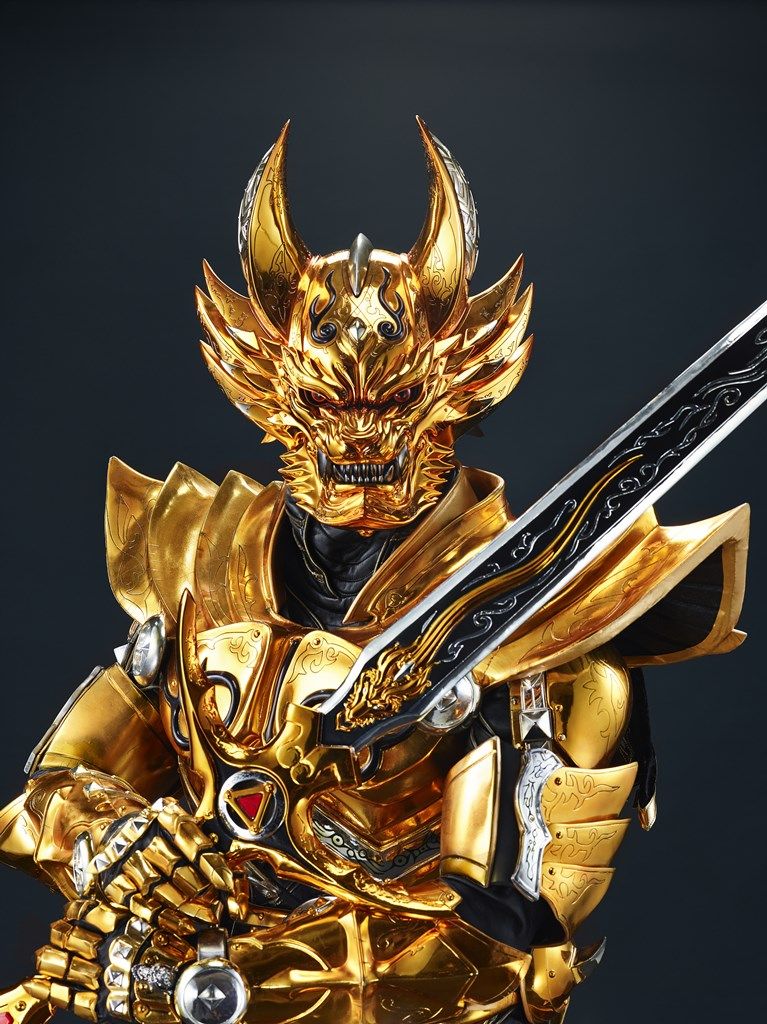
Keita Amemiya utilizes this dramatic dynamism to great effect to stage his action-sequences and elevate the choreographies. Tilted camera-perspectives enhance the dynamism of the fights and sudden static moments add a dramatic flair to the stances of the hero or his enemies as they prepare to clash again.
However, the dynamic framing is not only reason why action-sequences are so enjoyable. While Amemiya’s dynamism determines the basic taste of the action-sequences, the garnish added by the visual effects and the musical accompaniment enhances the overall visual tastiness of the fights for the spectator. The finale impresses not only due to a pleasant excess of visual effects, but also by the surprising extravagant blend between calligraphic animation and live-action.
Garo: Taiga is full of highly serviceable visual effects, ranging from minor visual decorations to highlight the swiftness of certain movements and amplify the impact of clashing body-parts and weapons, flames echoing the elemental forces to emphasize the threat that emanates from the weapons of the hero and his enemies, the horrors, wield, to more eye-popping effects to frame the transformations, the elemental powers, and annihilations (Costume-note 1).
Of course, the stylistic dramatics cannot function without matching dramatic acting performances. With his powerful stare and cold yet determined voice, Shoichiro Kitada delivers the indispensable cool seriousness the narrative needs. Toshiki Seto, who plays Jado, breathes life into the silenced voice of the unconscious with his deliciously theatrical manner of speaking. While the performance of Rika Kashima as Fuki, the servant of the Sacred Beasts, is a bit uneven, she does succeed to shine when the narrative, the director, and the spectator needs her the most.
With Garo: Taiga, Keita Amemiya does not only please fans and newcomers alike, but proves the continued appeal of the tokusatsu superhero genre. While Garo: Taiga obviously cannot compete with the visual machinery of the American superhero blockbuster, it matches many of these films in dramatic style and surpasses most with its heart. Highly recommended.

Notes:
Costume-note 1: The monstrous designs are not only beautiful, but also highly creative. The design of the monsters is undeniably one of the selling points of the Garo series and the Tokusatsu genre in general.
 psychocinema