For her fifth feature film, Mai Sakai revisits the theme of romance and explores in a very light-hearted manner its fundamental unpredictability. In Cha-Cha, Sakai shows that the incalculable nature of love is due to a person’s inability to read the other as subject and the impact of one’s own subjectivity on interpreting the motivations of others.

While illustrator Cha-cha (Mariko Ito), as the title of the film so clearly underlines, is the central figure in this romantic drama, Sakai often shifts perspectives within his narrative to bring the theme of misunderstanding and misrecognition within the field of romance to life. The concatenation of these shifts to different characters (e.g. Raku (Taishi Nakagawa), Cha-cha’s jealous co-worker Rin (Sawaku Fujima), Peo (Stefanie Arianne), an English teacher working at the Eikawa above the design studio, Mamoru (Akihisa Shiono), Peo’s unemployed loafing boyfriend, a post-box, …) results in an engaging and slightly unpredictable narrative structure.
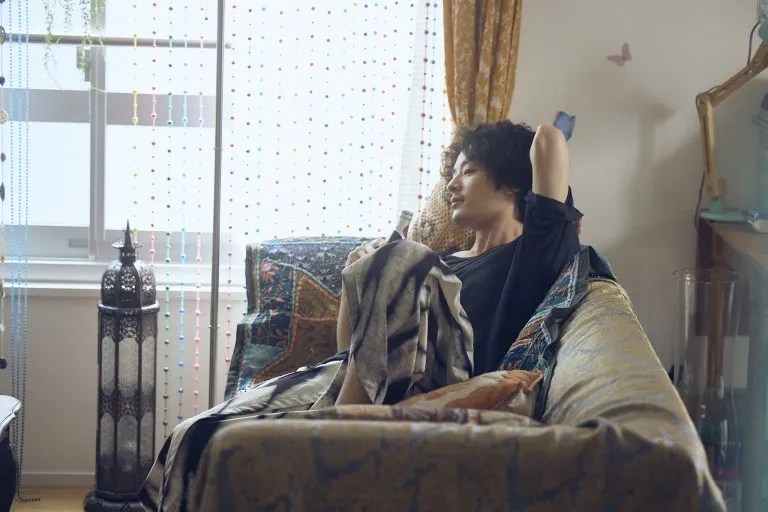
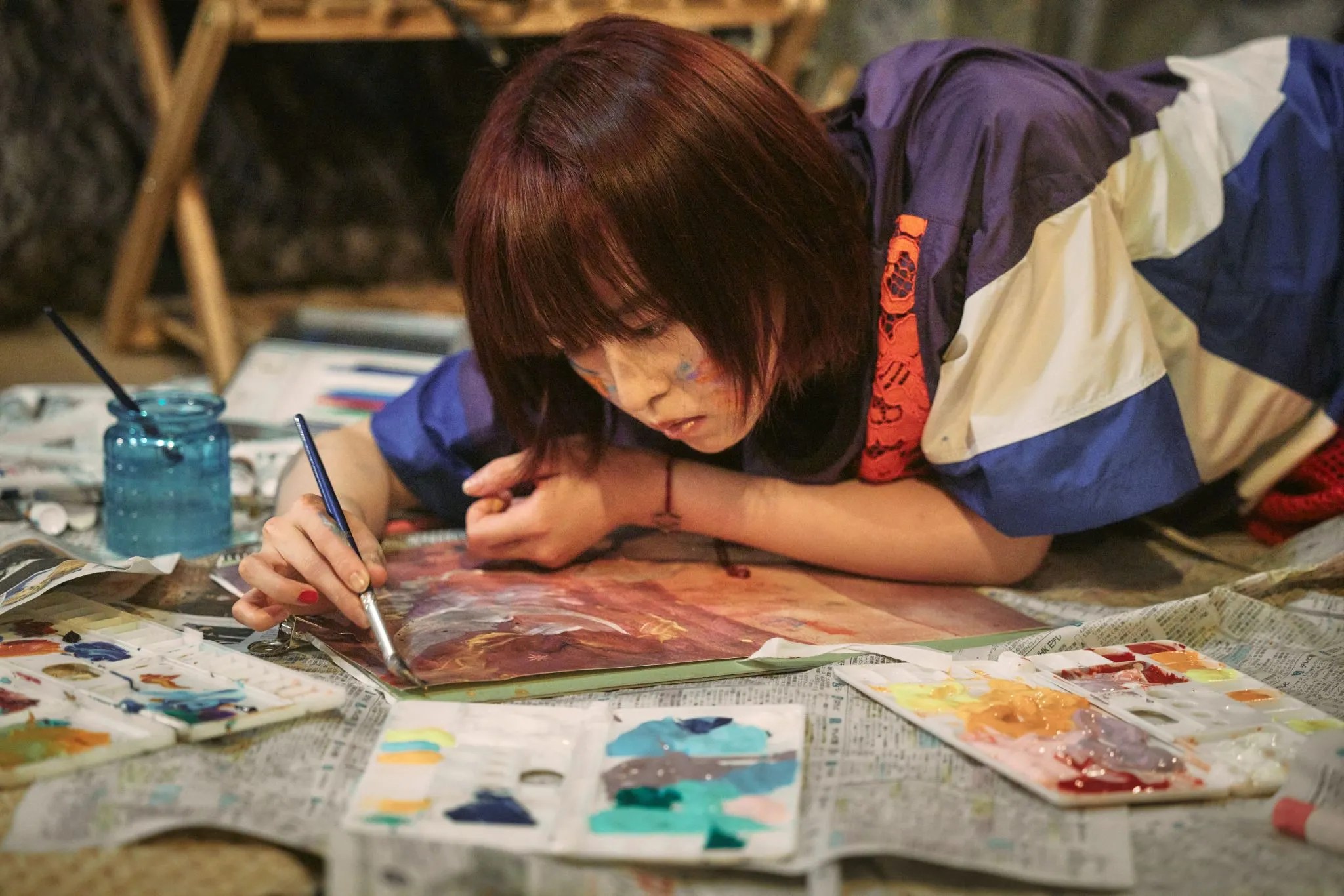
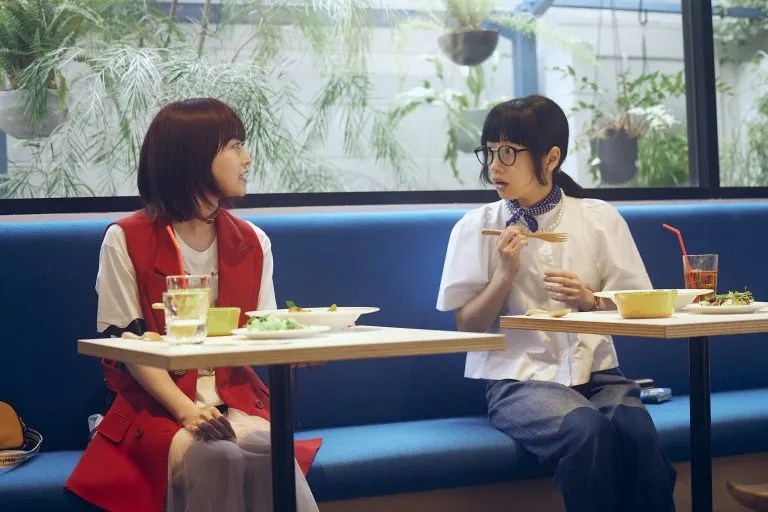
The main character of the film, Cha-cha, is introduced to the spectator as free-spirited, as someone who refuses to let herself be imprisoned by the demands of the societal field – show respect to superiors, do not talk impulsively – and who frivolously distances herself from the Other – she does not (want to) read between the lines. For her female colleagues, she is a target for gossip and silent disdain. Rin, for instance, suspects her from having an affair with the boss, her own love-interest.
The disdain she is subjected to is, at least partially, caused by the fact that Cha-cha, our stray-cat, exemplifies the signified that male subjects give to the signifier kawaii. Men feel attracted to her due to the childishness she radiates and the naiveness and clumsiness she displays. To put it in more psychoanalytic terms, she emanates the kind of lack that seduces men to ‘realize’ their phallic fantasy – the feeling of having what she lacks – to complement her – men want to care for stray kitten. Cha-cha is correct in saying that men do not love her, but merely seek to conquer her. Men do not need her as subject, but merely as a continuous lack that can be exploited to support their sense of phallic desirability and inflate their ego.
Yet, things transpire a little bit differently between Cha-cha and Raku, the clumsy stray dog working at the restaurant on the ground floor. Raku does not fall prey to her cuteness – he avoids falling in the phallic trap of her lack, but he questions her free-spirited comportment in public. He honours her requests (e.g. give me a bottle of apple cider, take me out to dinner) to silence her desire and avoid becoming desirable for her (Narra-note 1).
How come he succeeds in resisting her, in withstanding the gravitational pull of Cha-cha’s cuteness? Why does he allow her to move in with him, yet avoids any kind of intimacy that goes further than hugs? Mai Sakai confronts the spectator with these two questions before shifting the film’s perspective to Raku to sketch out the subjective effect of Cha-cha on Raku and explore what and who has escaped Cha-cha’s gaze, what she, emprisoned by her own ego, could not clearly perceive.
For her visual fabric, Mai Sakai sews well-composed static shots together with moments of inviting dynamism. She creates a fluidly flowing concatenation of images, but also a pleasing barrage of visually pleasing moments. In some cases, she relies on music to further enhance the sense of compositional fluidity. Moreover, Mai Sakai keeps things lively in his composition by fluidly integrating visual decorations – e.g. slow-motion shots, jump-cuts, animated sequence – and playful visual effects.
With Cha-Cha, Mai Sakai succeeds in giving a quirky and slightly dark twist to the well-trodden paths of the romance genre. She light-heartedly perforates the fantasy of writability of The sexual relation and cheekily confronts the spectator with the radical misrecognition that structures the field of romance.

Narra-note 1: Raku is interested in Cha-cha because she is not weighed down by the gaze and the voice of the Other like he is. Yet, what fascinates him in her also frustrates him.
 psychocinema