Two years ago, the lid on the sexual exploitation and harassment that structures the Japanese film industry was finally lifted. It was revealed that directors Hideo Sakaki and Sion Sono had abused their position as director to force sexual ‘favours’.

While this lid has slowly closed – the attention of the public in the suffering of the victims faded, Urara Matsubayashi takes it upon herself to remind audiences of the largely unchanged power dynamics within the field of Japanese cinema and their own role in silencing the victims that dare to speak up.
Matsubayashi’s narrative centres around aspiring actress Noeru Saito (Mayu Yamaguchi), who learns about Blue imagine, an organisation that offers support to those who suffered sexual abuse and harassment, the same night her friend Yurina Nishi (Asuka Kawatoko) confesses about being verbally and physically assaulted by her sugar daddy. During the first meeting with Blue Imagine’s Michiyo Sugamo (-), Yurina’s signifiers of suffering suddenly causes Noeru to break down as fragments of Harada’s sexual assault burst forth in her consciousness.
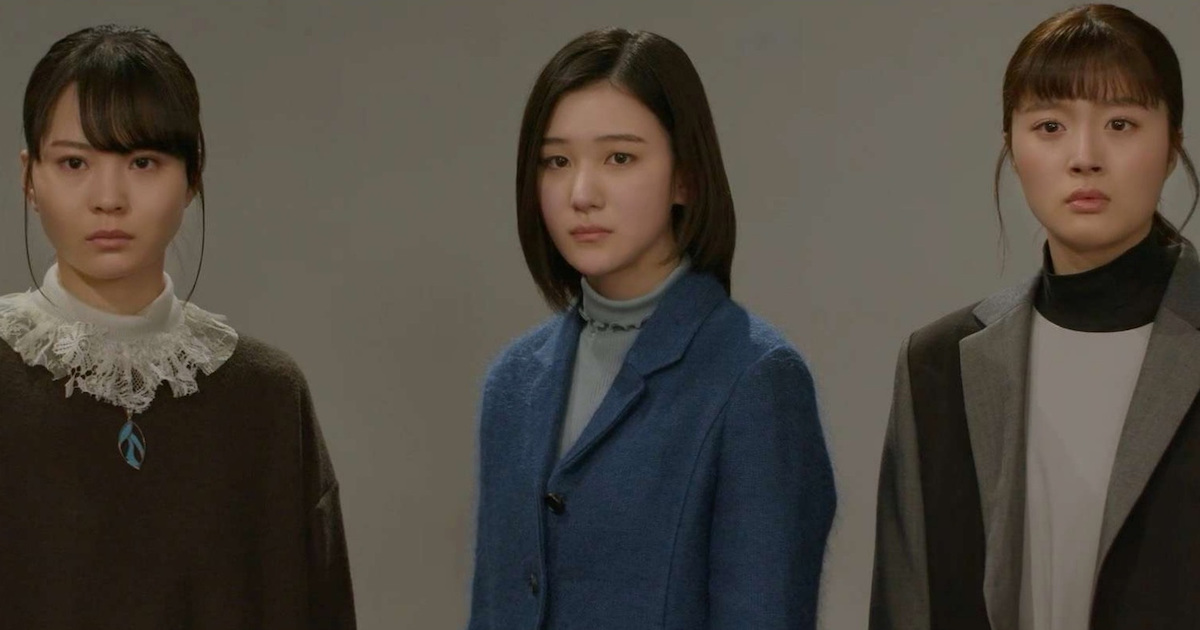
Blue Imagine offers the spectator a clear look at the societal frame in which sexual transgressive acts take place. Matsubayashi evokes how male subjects misuse their position of power as director to sexually exploit the female subject and support their own mistaken sense of desirability. While a female subject merely strives to realize her dream, the misplaced phallic thirst of the director carefully manipulates it to force the woman into a position where she must caress the man’s ego and satisfy his phallic fantasy.
The close-knit entertainment industry succeeds in maintaining its ‘equilibrium’ via a repressive dynamic that indirectly and directly silences the exploited subject, the victim. The person who grants the subject a chance to chase her dream is not only silently protected by the position of respect, admiration, and power he has within the field, but also because of his ability to promptly destroy the subject’s dream. For the victim, the very fear of having her dream taken away from her as well as the shame of having been tainted by someone’s phallic thirst forces her to remain silent (Narra-note 1).
Besides sketching out the problematic ‘truth’ of the entertainment industry, Matsubayashi highlights the importance for the victim to find an address to embark on the process of narrativizing their suffering. The reason why many of the victims struggle to give these intrusive events a place within their subjective narrative is because they do not grasp that the inability to repress the sexual intrusion is a demand to work-through the event via the tool of the signifier.
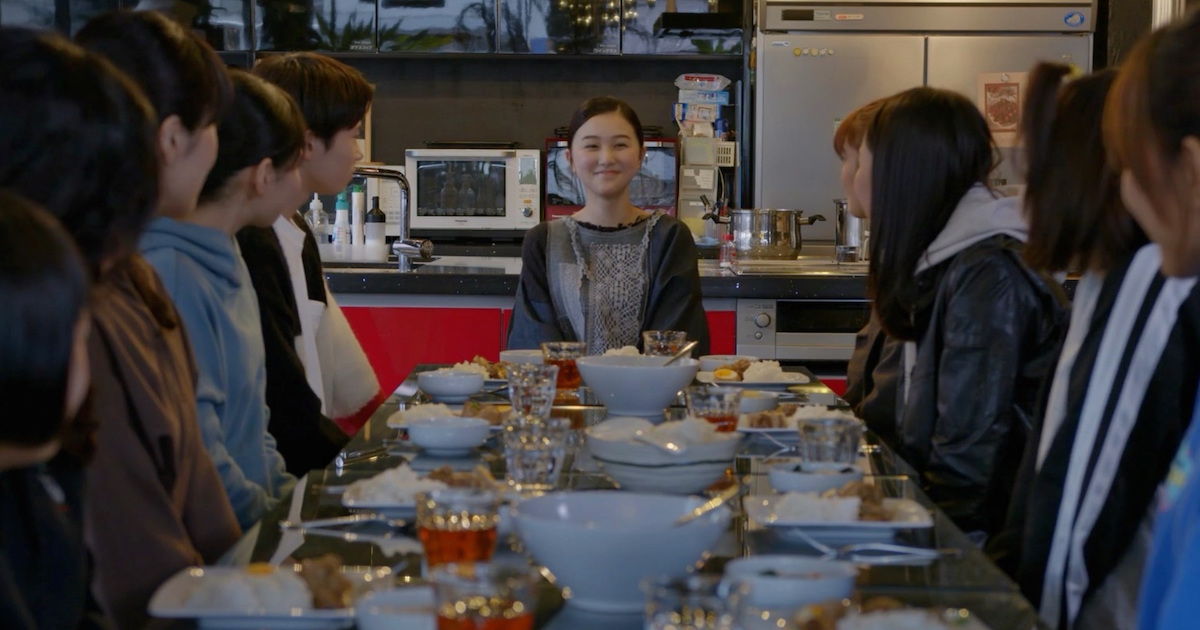
Yet, while finding such an address – a community of women united by a similar kind of suffering, is important to pacify the intrusive impact of the sexual traumata on the subject, it is often not enough. Rather than a few others to share one’s suffering with, it is the Other, the perpetrator as well as the societal field that silences the occurrences of these sexual transgressions and silently protects the perpetrators, that needs to be addressed to be able to finish the process of narrativization. Or, to put it differently, some subjects need an answer from the Other in the form of some kind of act (Narra-note 2).
Yet, what elevates the narrative of Blue Imagine is that also touches upon the greyer zones concerning consent, the murky field where subtle seductive acts invitingly intrude into the personal space of the other subject. Moreover, Matsubayashi also dares to evoke that, in some cases, the victim is partially responsible for creating the situation that led to the violent sexual act (Narra-note 3).
While Matsuyabashi utilizes many subtle dynamic moments within her composition, the power of the narrative lies in her use of static shots and long takes. By relying on static shots and minimal cuts, Matsubayashi creates a visual frame that allow the signifiers of suffering and confrontation reverberate more strongly with the spectator.
Matsubayashi’s Blue Imagine is a powerful reminder of the sexual transgressions that structurally plague the Japanese film industry, the problematic enjoyment of victim-blaming, and the need for the victim to narrativize one’s trauma via the signifier and the act. This is, in short, a narrative that one should not be missed. Highly recommended.

Notes
Narra-note 1: In the case ofYurino and her sugar daddy, the element of guilt plays an important role. As this sequence shows, guilt functions as a subjective tool to make sense of what happened to the female subject and try to master the suffering.
Sadly, the assumption of a quantum of guilt inhibits the subject’s desire to speak out about one’s suffering.
Narra-note 2: The narrative of Blue Imagine illustrates that the initial answer from the Other can be very contradictory – the many supportive messages are drowned by the joyous signifiers of vicious hate. Matsubayashi also underlines that societal change is slow, but that the courageous choice to put one’s signifier of suffering into the societal field can inspire others to do the same.
It is this powerful echo of suffering that can, eventually, cause societal change.
Narra-note 3: While the perpetrator is fully responsible for the sexual violence, the victim is, in some cases, responsible for creating the situation where she can be subject of such violence.
Yet, as the movie beautifully illustrates, such responsibility is wrongly exploited by the Other to silence the victim and, indirectly, protect the perpetrator. One cannot equate the victim’s role in creating the situation of abuse with giving the male subject, who merely follows his phallic thirst, the right to exploit one’s body.
 psychocinema