The struggles and difficulties that an aging society create are not only societal in nature. Behind the question of how to stabilize the country’s financial flow hides a whole field of subjective dramas. This urgency of this societal, political, and subjective reality is felt in the growing expression of these problems within the creative field of cinema – Plan 75 (2022), Do Unto Others (2023), Wash Away (2024), … etc.
Yet, directors do not merely utilize this reality to deliver societal critique, but also as a frame to question the way the subject deals with the struggles of an aging society. Kota Yoshida, for that matter, does not merely aim to give the spectator an insight in the whole process of applying for welfare (the screening, the different assessments, the forms that need to be filled out, …), but how the sympathetic stance of the social welfare worker can radically miss the Other’s subjectivity.
With Snowdrop, Yoshida does not deliver a social critical piece, but creates a dramatic portrait of one subject’s complex conscious and unconscious logic. The subject in focus in Snowdrop is Naoko Hanami (Aki Nishihara), who has been caring for her mother (-) for many years. This situation changes radically when Eiji (-), Naoko’s father, turns up after ignoring his family for twenty years. While Kayako (-), Naoko’s sister, does not him to move in, Naoko cannot go against her mother’s wish.
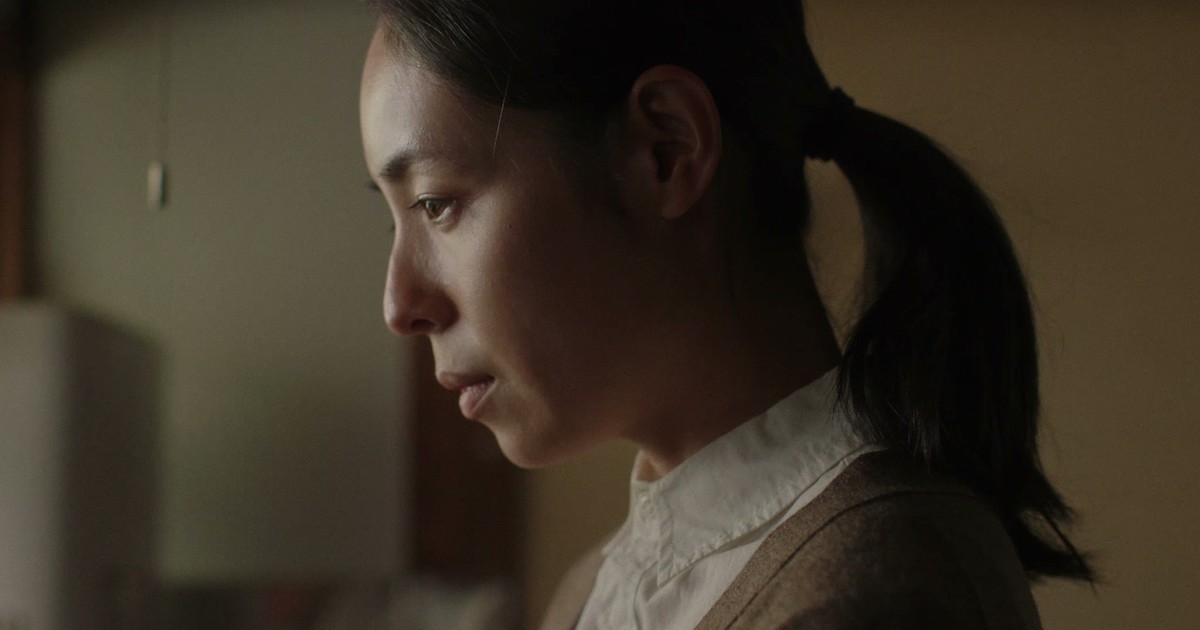
In our view, one can only grasp the turns and twists of the narrative by viewing Naoko as a ‘silent’ hysterical subject. She pushes her own desires and opinions away to serve the parental Other and ensure herself of the Other’s love. Yet, with her mother suffering from dementia, this selfless reflex to receive her mother’s love is left without the response she desires – i.e. Naoko’s mother cannot grant her the signs of love.
Naoko’s turn to welfare is driven by the same dynamic (Psycho-note 1). She does not visit the city hall because of her own desire but because of her father’s Eiji’s statements: ‘The manager advised me to apply for welfare’; ‘Welfare will cover the surgery fee’. Once again, she silently serves the parental Other, without caring if the desired sign of love will be granted.
That Naoko avoids bringing her own subject and desire into play is also evident in Naoko’s first meeting with caseworker Munemura (Haruhi Ito). Not only does she try to keep her speech devoid of all emotion, but she deflects all ‘emphatic’ questions and statements gauging her supposed suffering. Yet, Munemura’s questions does make her suffering subtly seep out; it makes itself heard in her sudden silences and reverberates in the trembling of her voice and the subtle shifts in her facial expressions.
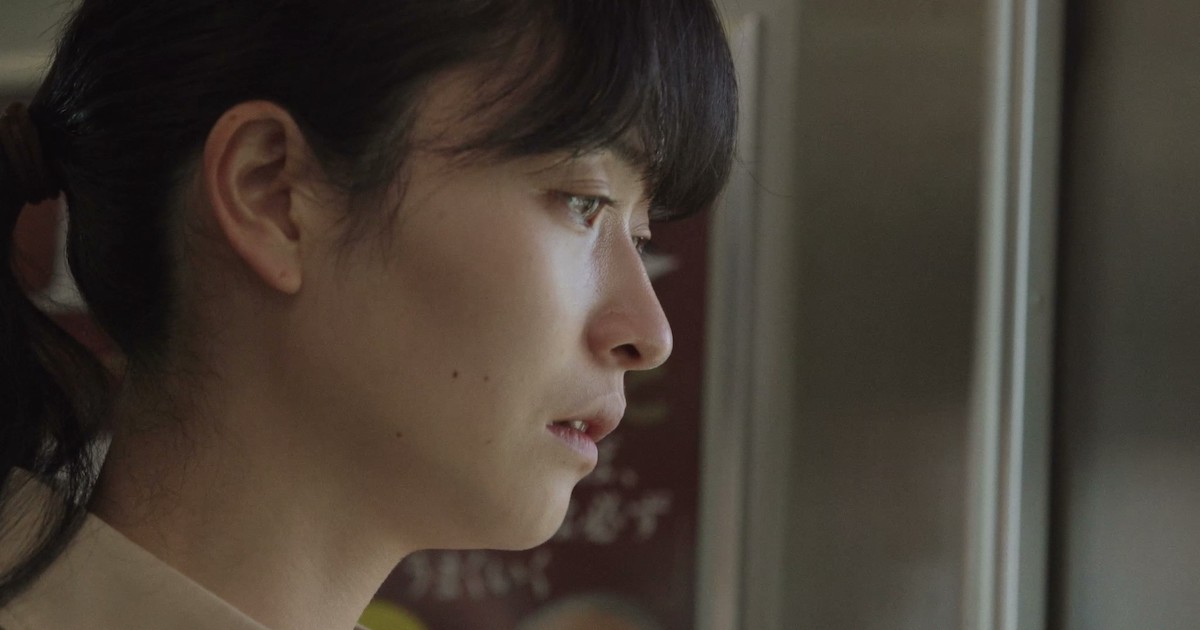
Naoko offers Munemura a clear glance at her suffering when the case worker proposes to apply for nursing support. While she has meekly subjected herself to the societal expectation to take the care for her mother upon herself, Naoko’s enunciation – is it possible? – seemingly echoes her wish to break out this hopeless prison that cannot give her what she unconsciously desires (Psycho-note 2). It is, in fact, Munemura’s sympathetic stance and her desire to help Naoko out that forces her to give expression to her silent suffering (Narra-note 1). Yet, even though the spectator, just like Mumemura, feels he grasps the suffering Naoko hides behind her stoic face, can he really be sure he understands her subjective logic from the concatenation of fragmented glances (Narra-note 2)?
The composition of Snowdrop is full of subtle dynamism. Yoshida’s use of such dynamism and the resulting long takes do not merely give his composition a pleasant flow, but allows him to retain the echoing effect his static shots can have. Yoshida, by visually emphasizing the spatial and the aural dimensions (i.e. the silence that lingers in the background) of his narrative spaces, creates a harrowing frame that reinforces the enunciation of certain signifiers and the emotions that fuel them as well as highlights the silent suffering that structures certain situations.
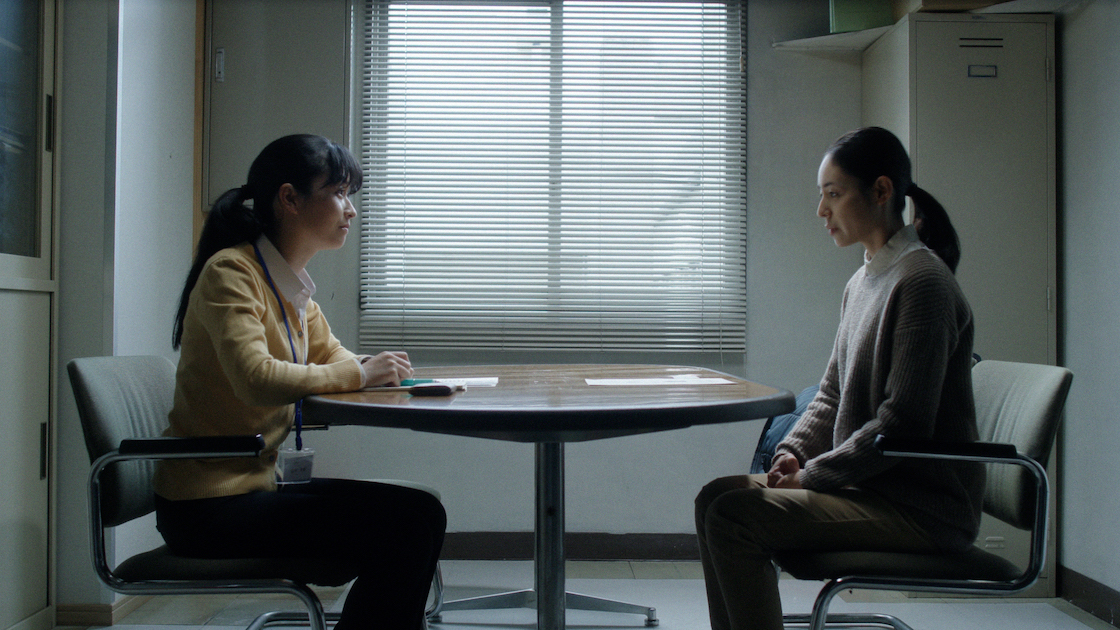
The atmosphere of the narrative is determined by the darkish lighting design and a subtly faded colour-design. This atmosphere does not only underline the crude and cold reality of Naoko’s interactions with her mother – the lack of emotion, but also emphasizes the forlorn quality of her interactions, subtly echoing that she will never receive what she unconsciously desires from her mother.
Yet, the reason why the various visual and aural elements of Yoshida’s composition do not miss their effect on the spectator is because Aki Nishirara succeeds in harmonizing these elements with her incredible performance. She does not merely play her character, but embodies with her mind and body her subjective logic.
Snowdrop offers a complex character portrait that touchingly illustrates that not all suffering subjects want societal support and shows how easy it is for a subject who desires to help to misrecognize the logic of the subject-in-need. Highly recommended.

Notes
Psycho-note 1: As Naoko, in our reading, follows a hysterical logic, it is also true that her passive willingness to go along with Munemura’s emphatic help to lessen her supposed suffering is partially driven by her desire for the Other’s love. In her current situation, only Munemura can give her the motherly sign of love.
Naoka’s decision to go along with Eiji’s shocking proposal is not simply driven by her suffering, but a result of her hysterical position. Without taking this logic into account, her choice to commit suicide with her mother and father just when there is light at the end of her subjective tunnel of suffering is nothing but puzzling and contradictory.
Psycho-note 2: The familial tragedy that ultimately transpires underlines that Naoko did not only desire to obtain the fleeting sign of the Other’s love but also unconsciously desire to murder her suffering away. She does not hesitate to assume the truth of her desire and the responsibility of her surprising act.
Narra-note 1: Later in the narrative, it becomes evident that the whole process of applying for welfare support functioned, for Naoko, as a confrontation with how the Other views her situation – the miserableness and the suffering caused by the need to care for her mother.
Narra-note 2: Other elements that animate Naoko’s subjective position within the narrative are the fear of failing in the eye of the Other, her fixation on the role of caregiver to stabilize her frail ego, and the meaning of the kanji of her first name.
Yet, the true determinant of her subjective logic is the familial trauma of seperation that is visualiuzed in the beginning of the narrative. It is this trauma that shapes her subsequent hysterical trajectory path.
 psychocinema