Introduction
Some directors make a living by taking on live-action adaptation after life-action adaptation, fully embracing the production Committee system that curtails the director’s creative expression. Tsutomu Hanabusa (Kakegurui The Movie (2019), Kakegurui 2: Ultimate Russian Roulette (2021), Tokyo Revengers (2021)) is a director that, in our view, fits this label. While this kind of director is, of course, not doomed to craft bad filmic experiences, he is fated to merely deliver easily digestible and serviceable films for Japanese audiences first and foremost. Can Hanabusa, with his second Tokyo Revengers movie, once again, deliver a pleasant serviceable film that can please fans and non-fans alike?
Review
While Takemichi (Takumi Kitamura) finds out that he really did save Hinata (Mio Imada) from being murdered by the Tokyo Manjikai by leaping through time and save Draken (Yuki Yamada) from his untimely death, he feels that this revenge has left him unchanged – he is still a subject plagued by inhibitions and lacking the subjective strength to hold the reins of his own romantic life.
One night, after a rather awkward date with Hinata, Takemichi, once again, witnesses his love being murdered by the Tokyo Manjikai or Toman. The person who committed suicide by crashing his car into Hinata’s parked vehicle was none other than Sendo Atsushi or Akkun (Hayato Isomura). Of course, Takemichi wants to travel back in time to rewrite the past and save his beloved Hinata from her tragic fate, but will Naoto (Yosuke Sugino), Hinata’s younger brother, be able to offer him his hand?

Tokyo Revengers 2 starts off by highlighting a rather surprising, yet not uncommon subjective dynamic: the one of the belated subjective change. In the narrative, Takemichi only succeeds in occupying an active position when faced with the Real of death and its traumatic reverberations. It is this unfathomable traumatic real – of seeing his love melting away in the burning car, that, instantly, allows him to break through the chains of inhibition. The murder does not merely lift his inhibitions in speech and act – he can express his enduring love for her before she goes up in flames – but also unchains the imprisoned desire to protect and rescue her.
While this subjective change – a fleeting transformation to ward off the traumatic impact of the real – would come too late in any kind of non-time-jumping narrative, Takemichi’s awakened desire is sustained by the prospect of leaping through time and undo, once more, Hinata’s tragic fate. While Takemichi is eager to leap through time and change the present by becoming the head of the Toman gang in the past, Naoto stops Takemichi by refusing him his hand, the key that opens the door to the past. Before granting him his desire to safe his sister, he wants him to learn about Draken’s current situation and the present state of the Toman clan (Narra-note 1).
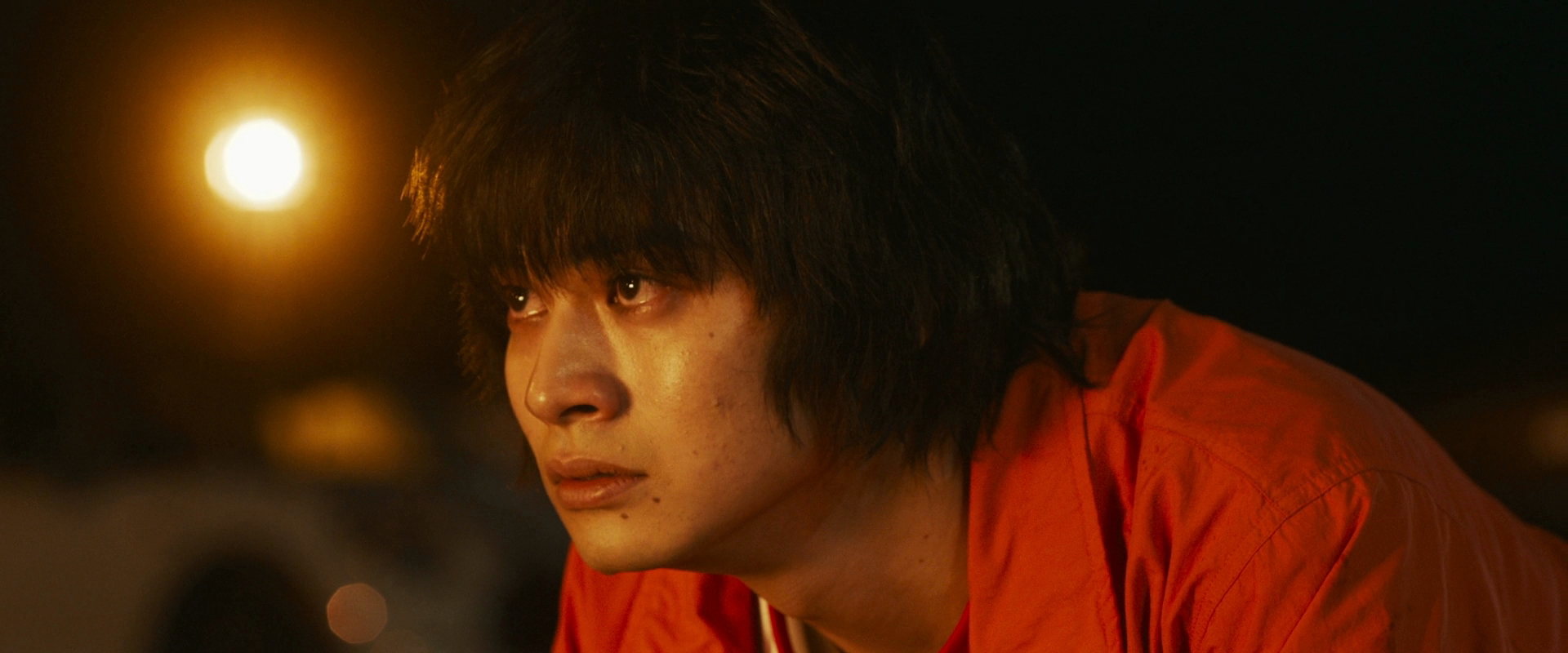
Not long after Takemichi slips into the past, he is asked by Mikey to bring back Toman’s first division leader Keisuke Baji (Kento Nagayama), who swiftly promptly decides to join the Valhalla gang upon hearing that Tetta Kisaki (Shotaro Mamiya) got promoted to the third division leader. Yet, as Takemichi demands the ousting of Kisaki, the source of the Toman gang’s later corruption and the criminal behind Hinata’s murder, upon fulfilling his request, Mikey grants himself the right to kill him were he to fail.
Not long after striking a deal with Mikey, Takemichi learns that the current conflict between Toman and Valhalla has its origins in a tragic incident that befell the Toman’s founding members (i.e. Mikey, Kazutora (Nijiro Murakami), Ken Ryuguji, Takashi Mitsuya (Gordon Maeda), Keisuke Baji, and Haruki Hayashida (Kazuki Horike)). Yet, knowledge of this incident is only half the key to be able to successfully intervene in the past. To change the present and avoid Hinata’s death, Takemichi needs to know who’s behind the sudden rise of the bloodthirsty Valhalla gang.
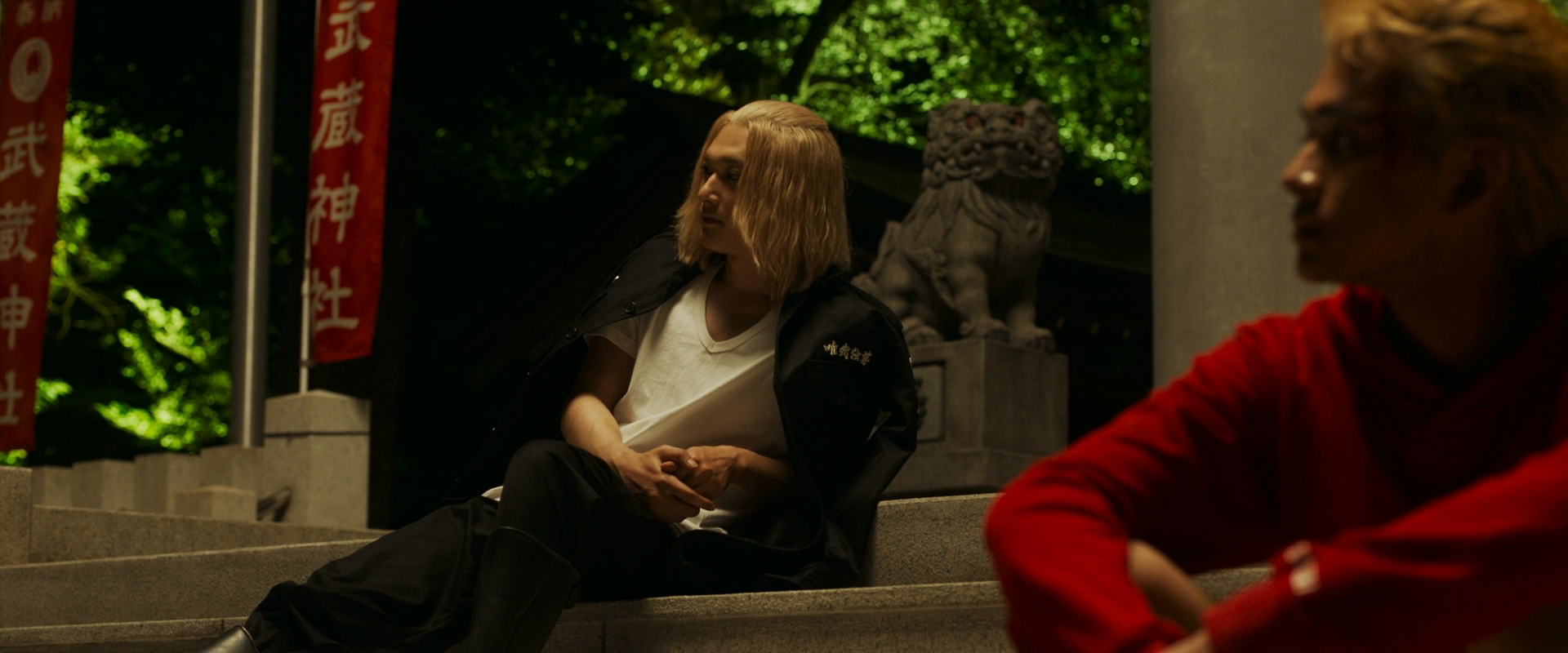
Some spectators might wonder why we explore the over-arching structure of the narrative so deeply in our review. There are two simple two reasons and both are linked to Tsutomu Hanabusa’s failure to craft something that can also satisfy spectators who are not already familiar with the source-material.
Despite offering a re-cap of the first film to refresh the spectator’s memory, such spectator will have difficulties in placing many of the characters and will have to work-through some moments of confusion. Yet, the fleeting moments of confusion do not form the main obstacle for the spectator unfamiliar with the manga and anime to enjoy this narrative.
With the a-dramatic way the narrative is structured, it is evident that Izumi Takahashi, the screenwriter, aimed to leverage the spectator’s pre-existent emotional attachment to make revelatory moments more emotional. In other words, for spectators with little to no attachment to these characters, these moments of drama fall flat – the already dubious emotional rhythm of the narrative ends up completely deflated.
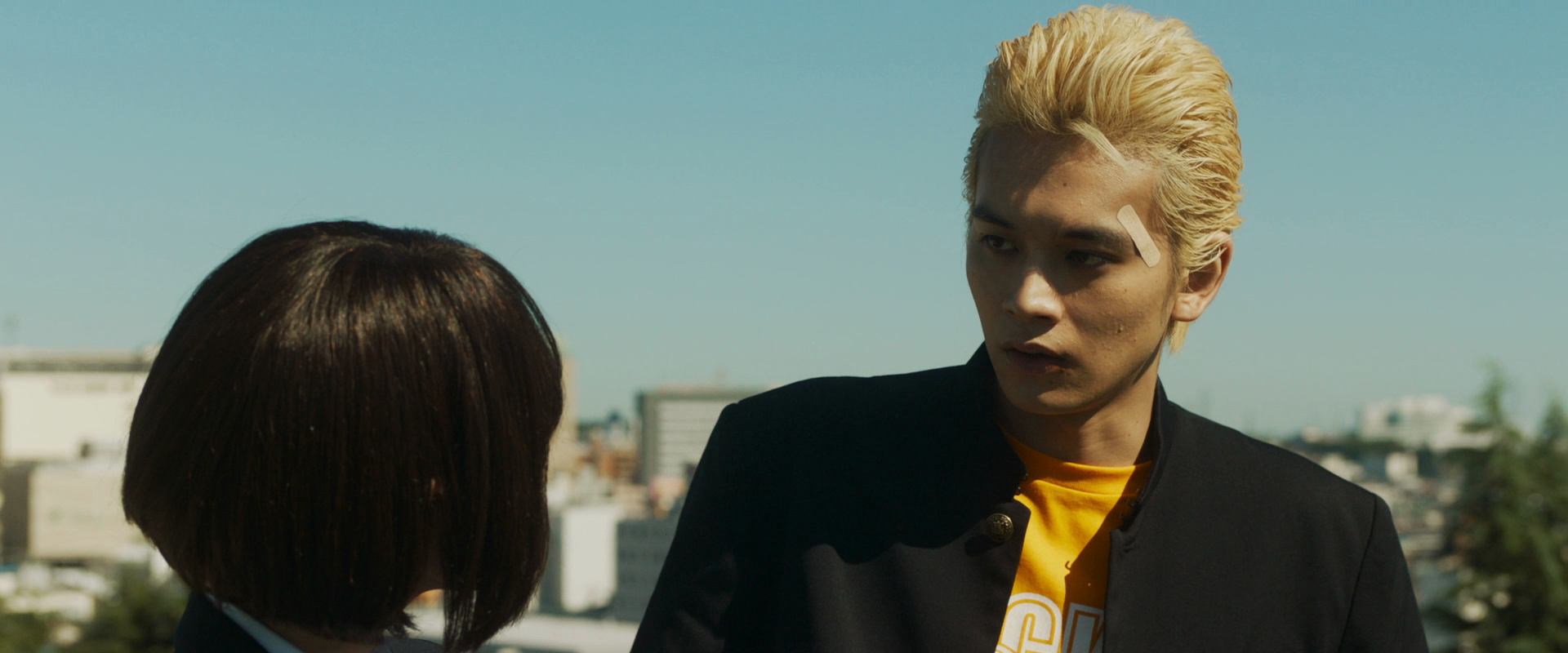
The second reason is that Tokyo Revengers 2 Bloody Halloween Destiny is all about narrative build-up with little to no pay off – the first part of the duology is extremely light on violent brawls. This ultimately means that the spectator unfamiliar with the source material ends up watching a film without being able to latch onto something (e.g. a character, …) to engage him into the story.
The composition of Tokyo Revengers 2 Bloody Halloween Destiny is a straightforward affair. Static shots are used to frame conversations, fluid dynamic shots bring the more action-oriented moments (i.e. the brawling) within the narrative alive, and fleeting shaky framing visually reverberates a sense of tension and/or a surge in emotionality.
A sense of drama is infused into the narrative through three straightforward ways: the sudden shift from a dynamic to a static moment within more action-driven sequences to emphasize either a speech-act or the physical and emotional impact of violence, the use of slow-motion to add a dramatic flavour to certain moments, and the use of dramatic accompaniment (Cine-note 1). Yet, in line with what we wrote before, the impact of the subtle emotional pieces and the cast’s attempt to fuel the narrative drama with their performances on the spectator highly depends on one’s pre-existing attachment to the characters.
Tokyo Revengers 2 Bloody Halloween Destiny is a prime example of a cinematic narrative that is solely made for the fans of the manga and the anime. It is only by having a pre-existing emotional attachment to the main characters that populate Ken Wakui’s world that the narrative’s emotional rhythm comes alive. Sadly, for those who know little to nothing about Tokyo Revengers, no dramatic music nor performance can emotionally reanimate this strangely ineffectively structured film.

Notes
Narra-note 1: Takemichi soon learns that Draken in on death row and that Toman became an anti-social organisation out of the police’s control due to Draken’s inability to see through Tetta Kisaki’s smartly designed schemes to replace him as the leader.
Draken tells him that he should escape Tokyo as Kisaki’s plan is to take everything important to Mikey or Manjiro Sano (Ryo Yoshizawa).
Cine-note 1: While music, composition, and decoration of slow-motion are used separately to add drama, they are also often combined to heighten the dra
 psychocinema
One Comment Add yours