Introduction
No all directors are prolific, but when they do release one of their artistic products – works of creative passion, they succeed in touching many audiences. One could consider Hiroyuki Miyagawa one of those kind of directors. His first feature film, Terrolun and Lunlun (2018), screened all over the world, collecting many awards and nominations. And now, five years later, he tries to touch the spectators again with Trapped Balloon. Does he succeed?
Review
Some years after floods inflict devastating damage in Hiroshima prefecture, Rinko Kojima (Toko Miura), who remains unmarried, decides to visit her widowed father Shigezo Kojima (Kaoru Kobayashi) on an island in the Seto Inland Sea. Not long after arriving at her father’s house, she encounters fisherman Kenji Murata (Masahiro Higashide), who brings Shigezo some fish. Yet, without saying a word, he disappears into the night. Rinko’s return does not go unnoticed by the other fishermen. Yutaro (Hideyuki Kasahara), one of Kenji’s co-workers, immediately tries to seduce her.
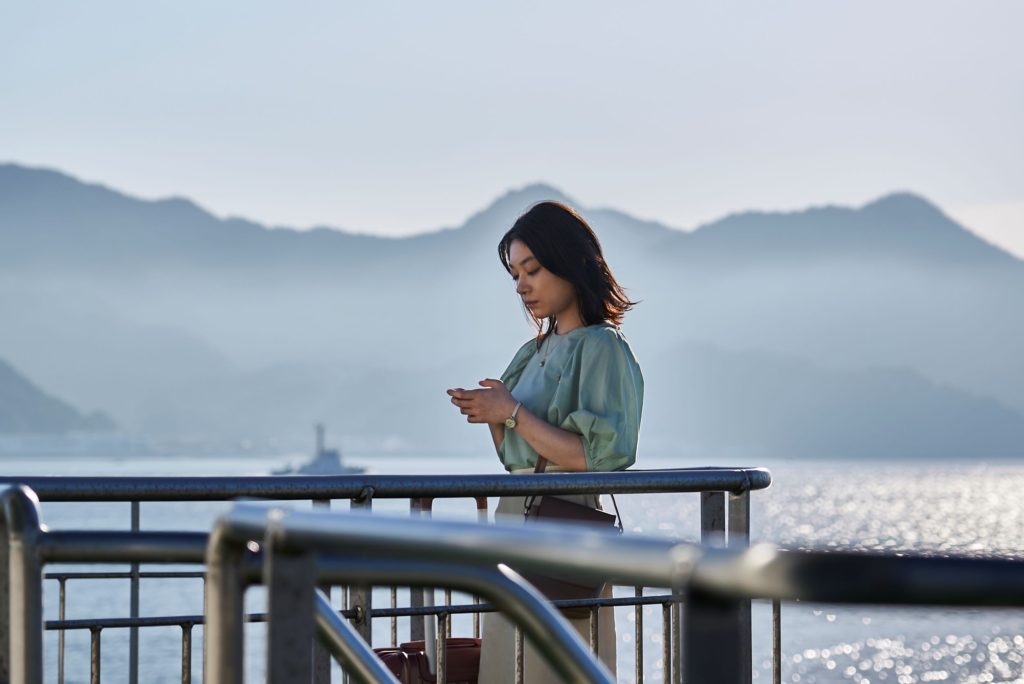
It is evident, in Trapped Balloon, to equate the image of a trapped balloon with the presence of trapped speech, speech that, as it cannot escape the mouth of the subject, has an imprisoning and inhibiting effect on the subject. While the element of trapped speech reverberates in the many silences that lingers within the narrative space and thus persist between characters – especially between Kenji and the others, it is also present within the fabric of speech as such. Many speech-interactions within Trapped Balloon avoid the other subject’s inner turmoil – speech stays at the level of the deceptive but ‘peaceful’ imaginary, at the level of small talk or the field of playful romantic seduction.
Besides merely avoiding the other’s subjective struggle by keeping speech at the level of phantasmatic harmony, there are also moments within the many interactions where the subject’s struggle is plainly refused. When Rinko, for example, tells her father about having doubts about returning to work as a teacher, her father’s immediate response – i.e. becoming suddenly ill – radically silences Rinko’s subjective speech. Yet, Rinko wants to speak; she hopes to find an address for her own lingering doubt so that she can decide her future (Narra-note 1). That is, de facto, the reason why she, after all these years, returns to her father and to this place where, as she tells someone on the phone, there is nothing.
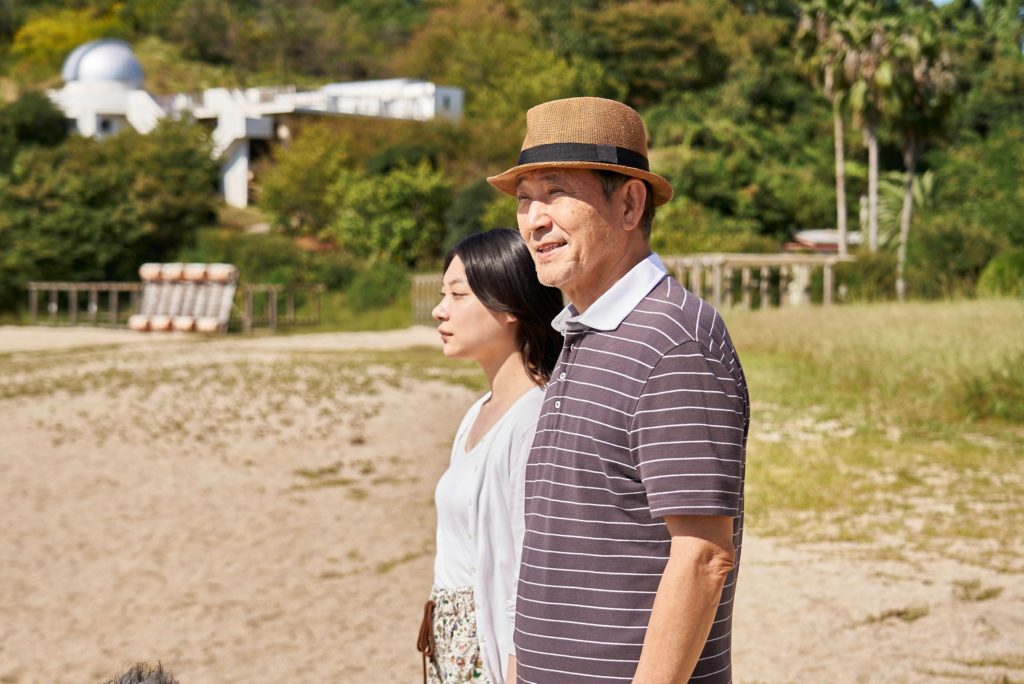
Yet, at first, her father resists Rinko’s attempts to turn him into an address for her subjective struggle and to invite him to answer her with his own subject. He either avoids Rinko’s subjective voice or deflects her references to his deceased wife or to Kenji’s balloons with protective silence. Of course, as Rinko keeps knocking on his protective door, he will have to leave his haven of silence and give her the signifiers she so desires from him (Psycho-note 1).
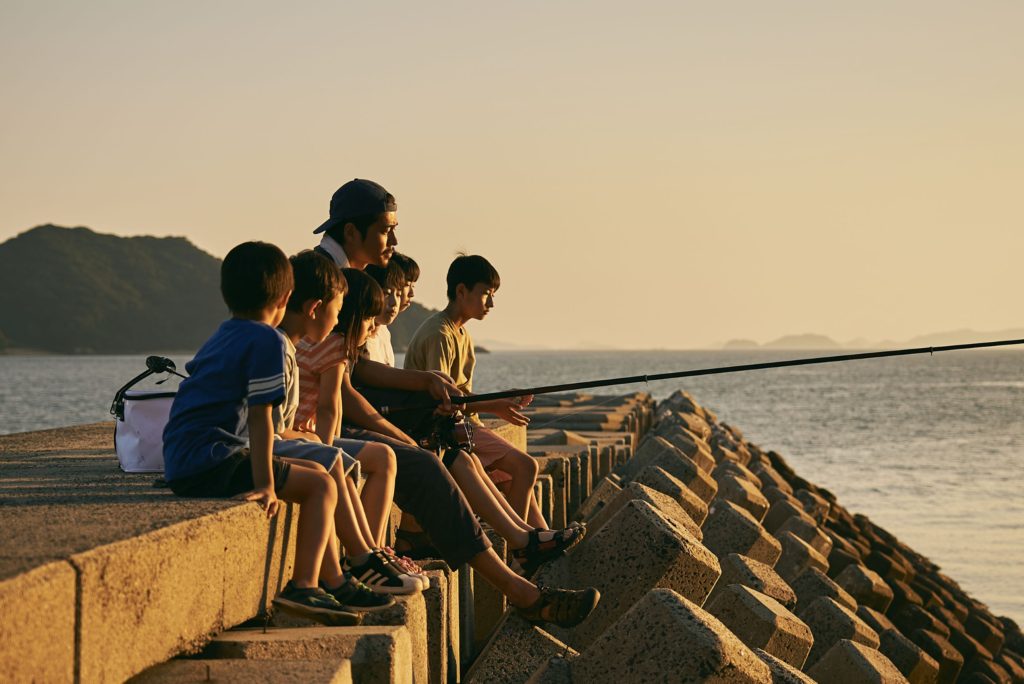
Kenji’s recourse to silence is a more radical attempt at keeping his own subjective turmoil at bay. By avoiding the Other as much as possible, he vainly hopes to avoid signifiers that might brutally awaken his unresolved trauma caused by the devastating floods and the associated guilt (Narra-note 2). The yellow balloon that hangs outside his house is, despite its touching poetic dimension, a sign of Kenji’s inability to let go and move on – the swaying balloon echoes his subjective entrapment in the prison of vain hope and crushing guilt. This lingering guilt underpins many of his acts and especially those which in which a life is at stake. Given his silent state of repentance – the weight of responsibility on his shoulders, it is not surprising that Rinko’s father tells her about the traumatic loss he suffered from.
One night, however, Yutaro asks Kenji to invite Rinko to spend some time to the beach. Yet, before he can truly commit to inviting her for his romantically interested friend, a surprise encounter leads Kenji to start talking to Rinko – of course, much to Yutaro’s dislike. Can this encounter help him loosen his grip on his trauma and chose the path of the signifier to distance himself from his traumatic loss?
While the importance of finding an address for one’s trapped speech is the main theme of the narrative, Trapped Balloon also touches upon the societal and economical challenges rural areas are faced with in Japan. Local businesses, like small fishing companies, struggle as people, like Teppei (-), quit to find for more stable job opportunities in the mainland and environmental changes negatively impact the profitability.
The composition of Trapped Balloon, by thoughtfully combining temperate dynamism and static fixity, has a pleasant visual flow. Besides creating a pleasant and inviting rhythm, Miyagawa also took time to fill his composition with lots of beautiful imagery. This visual beauty is not only due to Miyagawa’s elegant play with geometry to create many visually pleasing tensions, but also by utilizes his compositions to emphasize the mesmerizing natural beauty of the Seto Inland Sea. In some rare cases, Miyagawa resorts to shaky framing. These shifts are either utilized to emphasize the sudden spilling over of emotion in the body of the character-in-focus and the tension lingering between subjects.

Both Toko Miura and Masahiro Higashide deliver strong performances that bring the emotional struggle of their characters sensible to the fore. Yet, the overreliance on musical accompaniment in emotional scenes often washes away some of the power of the performances. The music, by dictating too overtly the emotional quality, suffocates the acting-performance and drowns the expressed emotion, rather than enhance it and make it more impactful for the spectator.
Trapped Balloon offers a touching and visually pleasing narrative about the importance of finding an address for one’s signifiers of suffering, yet Miyagawa undercuts the emotional impact of his narrative by relying to much on musical accompaniment to evoke an emotional response in the spectator.

Notes
Narra-note 1: The most evident sign that she wants to speak and hopes to find an address for her uncertainty is when she, after telling her father she’ll go for a walk, leaves her notebook and classroom manual invitingly behind on the tatami mats.
Narra-note 2: The nightmares that pester Kenji, while minimal attempts to narrativize the trauma, merely revitalize his sense of guilt. While he is granted what he so desires in his dreams, these fantasies ultimately confront him what he lacks.
Psycho-note 1: The film also illustrates that subjective speech can be forced when the subject is confronted with a near fatal event. Such event puts pressure and haste on the subject to vocalize what he/she struggled to say.
 psychocinema