In 2023, Kohei Igarashi set out to create a short film at a seaside hotel in Izu Peninsula, a sort of try-out with two characters Sano and Miyata for his future feature film Super Happy Forever (2024). While the characters and the setting are the same, Igarashi took certain narrative threads of his short and develop them in a different way.
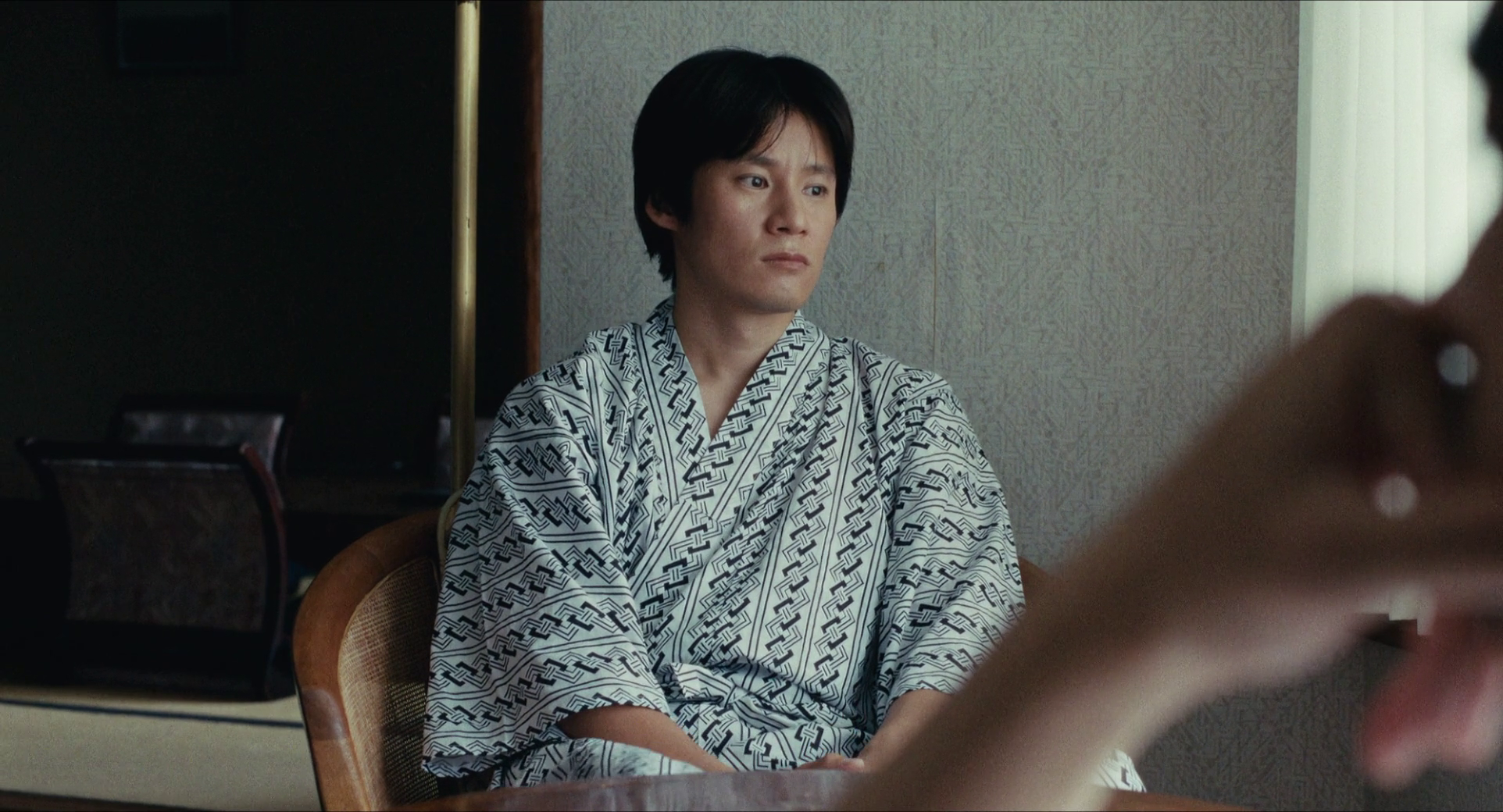
Eventually, Kohei Igarashi created another film that turns around a lost-object. In Hold Your Breath Like Lover (2014), the main characters start looking for a dog; In The Night I Swam (2017), the object to be found is the father’s workplace; and now, in his latest feature film, the object is a simple red hat.
One day, while wandering on the beach, Sano (Hiroki Sano) receives a call by publisher Iwai. He finds himself in a bind as Sano’s wife, Nagi (Nari Yamamoto), has not sent the photos, photos featuring Sano, for an article on Hakata and she cannot be reached. He tries to kindly ask him to ask her about the photos, yet Sano, remaining silent, throws his mobile phone in the sea. Phoneless, he returns to the hotel, He inquires at the front desk about a red cap he lost five years ago, yet to no avail: nothing has been found.
The most important element that Igarashi introduces in the opening thirty minutes of Super Happy Forever is the missing red cap, the lost object Sano is trying to find. This cap, which might appear as an inconspicuous object within the narrative at first glance, forms the main narrative peg that allows the spectator to grasp Sano’s subjective position and allows the director to critically explore the idea of happiness within relationships.
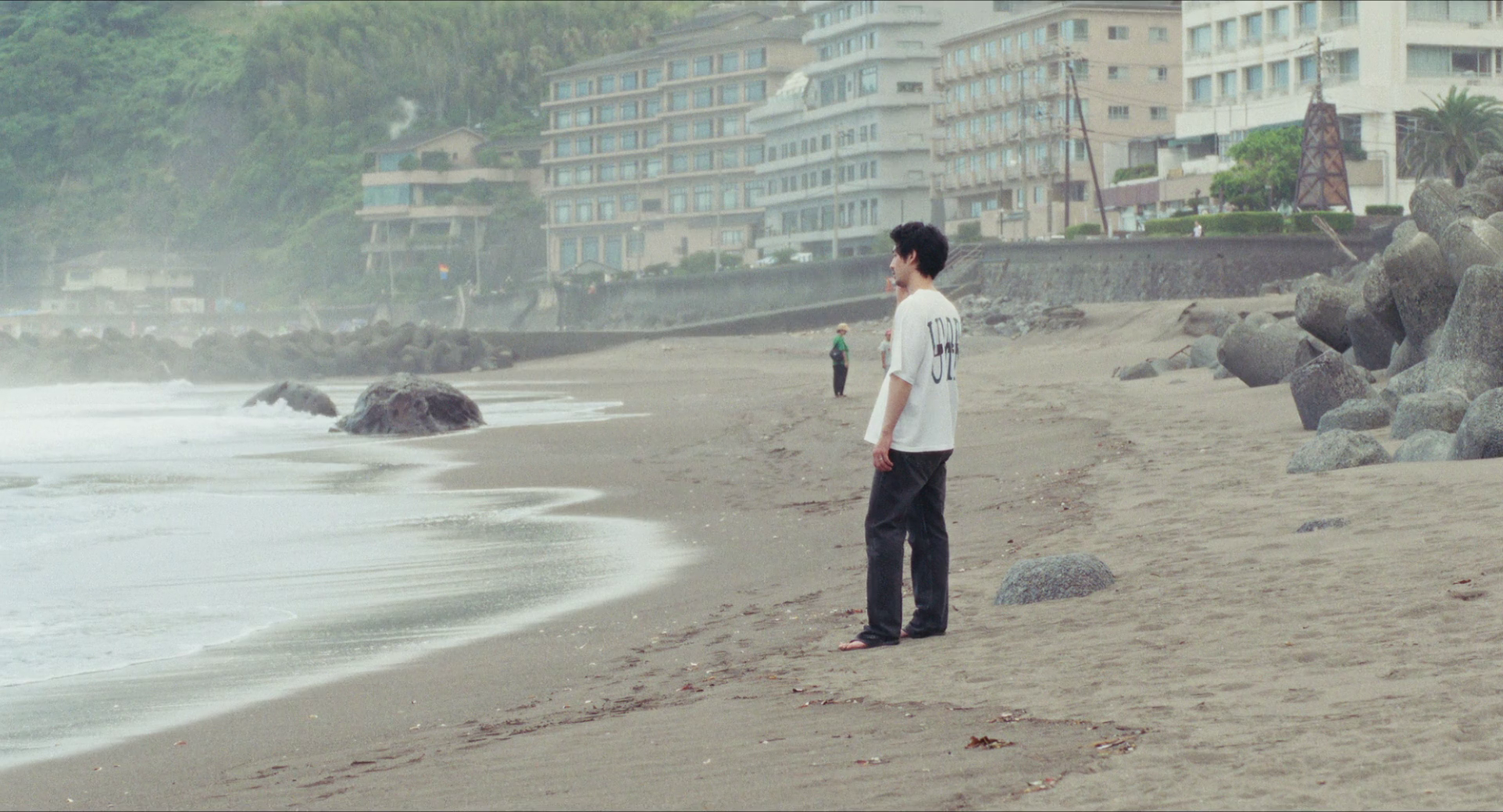
In the simplest terms, the missing cap invites the spectator to pose two interrelated questions: Why does he try to find what has been lost? And, what does he aim to recover by finding the cap? The spectator does not need to wait long to receive a possible answer: the cap, which belonged to his wife, seems to functions as an object that would, upon acquiring, help him embark on the path of grieving her death.
At the same time, Igarashi invites the spectator to associate the missing cap with the disruptive absence of Nagi to overthrow the positivity of the title of the film: the mere reality of death punctures the fantasy of being happy forever. Moreover, any hope the spectator harbours concerning Sano’s marital happiness with Nagi is brutally purged by him: “Nagi wasn’t happy. I was very cowardly and selfish”.
The contrast between Miyata (Yoshinori Miyata), enlightened by the new-age spiritual seminar called Super Happy Forever, and Sano, inhibited by a guilt-infested state of grief, helps Igarashi emphasize that the idea of happiness, rather than being an obtainable reality, is but a phantasmatic construction and that a belief in such fantasy can serve as a motor of superficial change, affecting how one presents oneself as ego via signifiers and acts in the societal field.
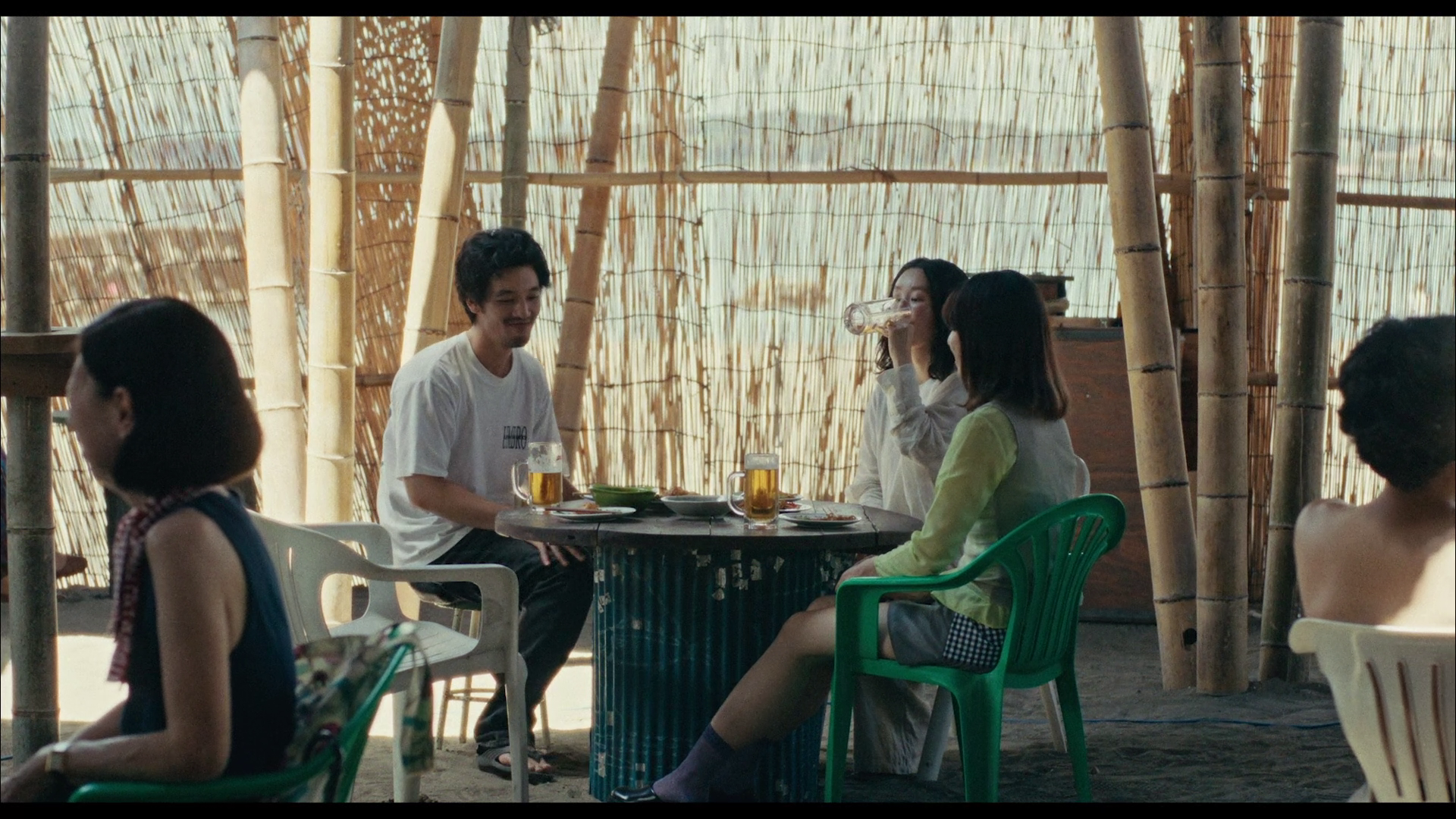
The crux of the conflict between Sano and Miyata lies in the fact that Sano, unable to hold onto any phantasmatic fragment of happiness, feels compelled to confront his friend with the overly-obvious fictionality of the spiritual ideas that inspire him and constitute his sense of happiness. However, the spectator easily perceives that Sano’s violence towards Miyata is an attack that does not only signal his struggle to work-through his loss but seeks to punish him for his unwillingness to make space for him to narrativize his loss – e.g. Miyata seeks to avoid Sano’s loss with his new-age spiritual statements.
The staging of the past – the first encounter between Sano and Nagi five years ago – serves no other aim than to expose that what, in many cases, lies at the birth of the subject’s fantasy of romantic happiness, the spark that makes him fall in love, is the encounter of sameness. However, the seductive encounter of an alter-ego of the other sex is nothing other than a rose-coloured trap of fiction that blinds the subject for the radical difference between him and the Other.
This sequence, furthermore, allows the spectator to finally determine the function of Sano’s search for the red cap and a series of other of his acts. Sano searches for this cap to escape the truth of their marital bond – the guilt he feels due to being the cause of her unhappiness – and seek some solace into the moment of shared happiness that formed the foundation of their marriage, into the moment of being-in-love where marital happiness was still imaginable. He seeks a material object that would proof the reality of that encounter, of that happy moment of imaginary connection and sameness.
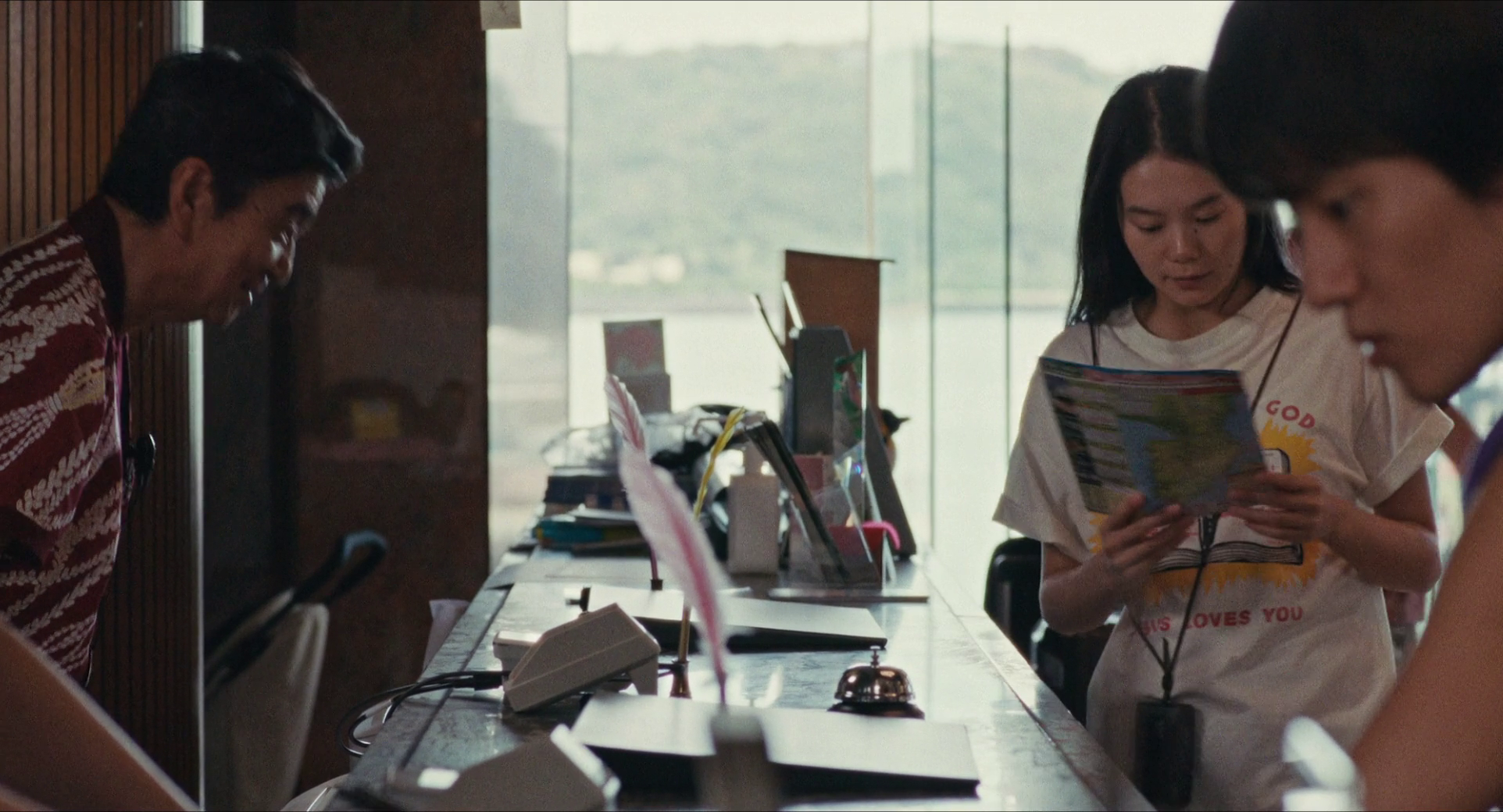
The composition by Igarashi features a restrained visual rhythm – he brings his narrative to life with longer takes and many static moments (Visual-note 1). Of course, there is also dynamism present within the composition. Yet, in many cases, Igarashi turns to brief moments of camera movement to ensure the restrained flow of his composition. Dynamism rather than the cut is used by Igarashi to shift the compositional frame.
Igarashi obviously opts for longer takes because his narrative is character-driven. He seeks to install a frame – often a well-composed one – that puts the emphasis on the performances, on the way the actor breathes life into the character he portrays with his physical presence. We are, in other words, not only invited to follow the effect of the signifier – the flow of the exchange of signifiers and its subjective reverberations, but also to take note of the silent weight of the unsaid as made present through the body.
The director must praise himself lucky to have found an actor (Hiroki Sano) and actress (Nari Yamamoto) that are more than up to the task to bring his thematical exploration of the fictional status of the elusive feeling of happiness to life in an engaging manner.
Musical accompaniment is only used twice within Super Happy Forever. Rather than seeking to determine the overall mood of his narrative, Igarashi utilizes the ebb and flow of subtle and subdued music to emphasize the presence of the unsaid, of what silently plagues the subject and determines his presence, his acts and his signifiers.
Super Happy Forever is a compelling drama that traces out the effect of the unsaid on the subject and highlights the subjective need to have some sort of material proof to support a faded fantasy of harmonious union. Yet, the most salient point Igarashi makes with his narrative is not the idea that such fantasy has no true factual basis, but that a subject needs such fantasy to help him cope with his loss.

Notes
Visual-note 1: The visuals of Super Happy Forever are quite pleasing to watch due to the thoughtful colouring and the use of film grain.
 psychocinema