Profile
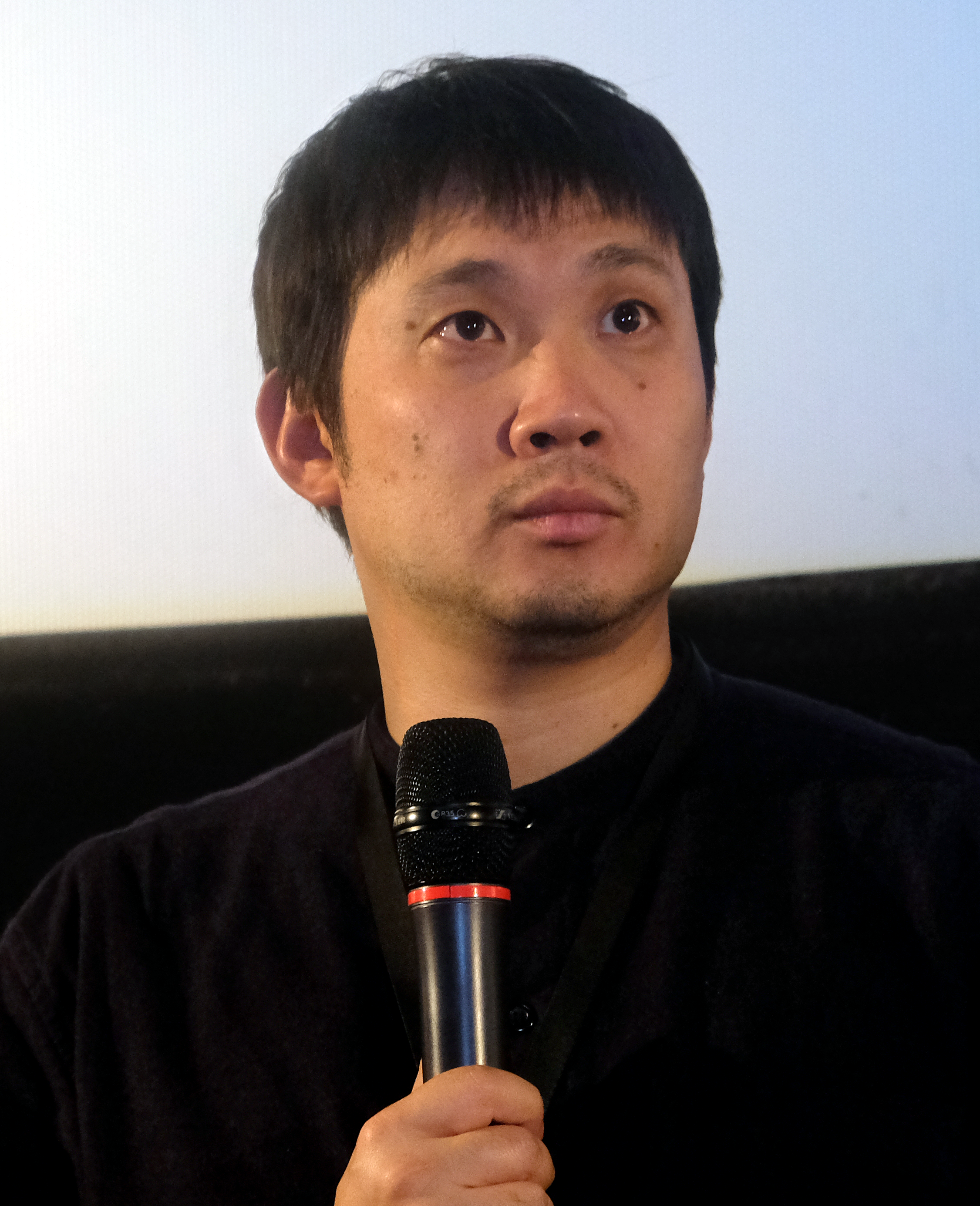
| Japanese name: 濱口 竜介 |
| Born: December 16, 1978, Kanagawa Prefecture, Japan |
| Education: University of Tokyo (Bachelor of Arts in Aesthetics) (Graduation 2003) Tokyo University of the Arts, Graduate School of Film & New Media (Master in Arts in Film) (Graduation 2008) |
| Professional Debut: Screening of his graduate-school feature film Passion (2008) at Tokyo Filmex Festival. |
| Occupations: film director, screenwriter |
Oeuvre
Feature-films
| 2007 Solaris | 2021 Drive My Car [ドライブ・マイ・カー] |
| 2008 Passion | 2023 Gift [ギフト] |
| 2010 The Depths | 2023 Evil Does not Exist [悪は存在しない] |
| 2011 The Sound of Waves [東北記録映画三部作 なみのおと] | 2026 All Of A Sudden |
| 2013 Intimacies [親密さ] | |
| 2015 Happy Hour [ハッピーアワー] | |
| 2018 Asako I and II [寝ても覚めても] | |
| 2021 Wheel of Fortune and Fantasy [偶然と想像] |
Short films and others
| 2001 Go To The Movies [映画を見に行く] | 2016 Heaven is Still Far Away [天国はまだ遠い] |
| 2003 Like Nothing Happened [何食わぬ顔] | |
| 2005 The Beginning [はじまり] | 2020 Wife Of Spy – screenwriter [スパイの妻] |
| 2005 Friend Of The Night | |
| 2006 Scent of Memory [記憶の香り] | |
| 2006 Attack [遊撃] | |
| 2009 I Love Thee For Good [永遠に君を愛す] | |
| 2013 Touching the Skin of Eeriness [不気味なものの肌に触れる] |
Background, his turn to cinema, and search to realize his ideal
While Hamaguchi watched a lot of films growing up – being a pure cinephile, the moment that determined his future path occurred during his years at university. While he did not enter the university of Tokyo nor join the university’s film club with the intention to become a filmmaker, his indulgence in the art of film – watching around 100 films a year – ultimately made him realize that the becoming a director was a subjective necessity.
What caused a shift in Hamaguchi’s thinking concerning cinema is the confrontation, at age of twenty, with the cinematic art of John Cassavetes and the film Husbands (1970) in particular. About the transformative encounter with Cassavetes, he tells us the following:
“In my third year […] I went to a retrospective of John Cassavetes, I was deeply moved — and I thought that if I could make that kind of work my career and keep doing it for my whole life, that would be incredible, so I thought I might become a film director after graduation.” (Takahashi, 2021, p. 21).
What moved him in Cassavetes’ work is the way emotions and subjectivity are approached and staged:
“When I was twenty, I saw Husbands, by John Cassavetes […] for some reason […] I felt as if their lives were more real and vivid than my own. […] I felt as if the film itself was just this very condensed vision of what life is” (Goi, 2021).
For Hamaguchi, Cassavetes did not only capture emotion, which swirls between subjects and determines the shape of their interactions with others, in a way he never thought possible, but showed him which kind of cinema he wanted to make, which cinematic ideal to strive for. Just like Cassavates, Hamaguchi wanted to deliver cinematic experiences that stage life more intensely than life itself and put the haphazardly hidden intensity of our emotional currents (i.e. what determines our presence within the Other and the way we interact with others) on display. Hamaguchi desired to utilize the filmic frame – the art of cinema – as an intensifier of what animates everyday life.
Yet, the path to turn this realization into a guiding philosophy – a philosophy to determine his artistic voice, the themes he wanted to explore and the style in which he wanted to stage his thematical explorations – would take many years. During his time at the university, he did not only write his thesis on John Cassavetes and his use of time and space, but also started to work-through the encounter with his oeuvre by making experimental short films on 8mm and DV. His short Like nothing Happened (2003), for instance, was heavily influenced by John Cassavetes’ Husbands (1970).
After graduating from Tokyo University, one of his professors wrote a recommendation letter to help him get into the world of commercial film. Yet, while this experience introduced him to the reality of filmmaking, he soon realized that this environment did not fit him. He “didn’t really know what to do as an assistant director (…) and (…) wasn’t really taught properly (…) the shoot just started moving in front of me” (Kurozo, 2024).
In another interview, he stated that he “wasn’t ready yet [and] was scolded a lot because [he] was totally clueless” (Zoom Japan, 2018). So, when Tokyo University of the Arts announced the establishment of a Film and New Media School, he did not hesitate and applied – securing his admittance on his second try. He was not only given access to directors like Kiyoshi Kurosawa – an encounter that would radically change the way he approached the making of films, but was also granted – finally – the time and space to experiment and take further steps into formalizing his own philosophy into a cinematographic style and discovering his preferred subject matter. While he learned countless things from Kurosawa, the main idea that this encounter etched into his creative mind was that “the camera is a machine that records reality” (Kim, 2018).
Furthermore, his time at the Tokyo University of Arts allowed him to formulate his directorial ideal “to capture the emotion of Cassavetes using the camera positions of Ozu”, Cassavetes informing his approach to performing emotions and Ozu guiding the formal way to spatially and formally stage these emotions (Daichi, 2015).
The search to approximate this ideal must be considered Hamaguchi’s driving force. Throughout his oeuvre, we can see Hamaguchi trying out various approaches to deal with and resolve the tension between fiction, reality, and emotion. In 2011, as co-director of the Tohoku trilogy, three documentary films about the immediate aftermath of the 2011 Tohoku earthquake, he consciously sought to develop an interview methodology that would maximise authenticity and counteract the ‘fictionalizing’ effect of the camera – the camera manipulating, by its mere presence as gaze, the ego of the subject.
Yet, how to attain the same authenticity in fiction film, how to shoot a feature film as if it was a documentary, how to use the camera to capture, within a fictional structure, something of a real truth (Tanaka, 2024)? Hamaguchi seeks to stage such authenticity by relying on real-life speech to craft his narratives and using workshops to allow hios cast to inhabit the narrative space he imagined in a natural way.
The former is the putting into practice of his realization – a realization he made during his university years – that one can take the mundane as narrative material and pick up material from one’s surroundings to construct narratives – the fabric of daily conversations which its tension, hesitations, unintended glances at the unconscious provides enough material to build narratives.
The use of workshops, on the other hand, constitute a creative attempt to express such kind of mundane reality sensibly on the screen. In these workshops, actors read their lines over and over – stripped of emotions – until the signifiers of their characters are completely absorbed, until the actors are able to animate the signifiers with their own subjectivity. In some cases, Hamaguchi also organizes character-interviews, where the cast, assuming their roles, interview each other.
The themes of his Oeuvre
We can organize the thematical fabric of Hamaguchi’s oeuvre roughly in four interacting and intertwining categories: subjective contradiction, the failure of communication, and the complexity of human relationships, and the subjective impact of the encounter. One could say that Hamaguchi continually seeks to work-through the conflict between the superficial harmony of human interactions and the irrational disturbance caused by the eruption of Otherness, of the bursting forth of one’s subjectivity.
Hamaguchi touches upon his interest in subjective contradictions in an interview with Eugene Kwon for Cineaste. Beyond underlining his attraction to characters who, through act and signifier, end up contradicting themselves – and end up signalling an unverbalized unconscious truth, he also emphasizes that only by creating “a strong sense of continuous time and space, these contradictory characters [can] become very compelling for viewers” (Kwon, 2023).
In another interview, he comes to realize that “the idea of the inability to communicate properly ultimately (…) [reflects his] own relationships and lived experiences (…) because ultimately every single person is living their own different lives” (Pak, 2024). He further emphasizes that he, in the process of creating fiction, holds on to the fictitious yet guiding assumption that his characters do not simply exist for his stories, that he just documents a very particular fragment within their subjective trajectory.
It is by combining his exploration of the way the subject’s unconscious forces contradictions to arise within the field of his ego and his elaboration of the failure that structures communication that Hamaguchi seeks to trace out the emotional complexity of social bonds in such a layered and naturalistic manner. The thematical importance he puts on human relationships becomes evident from the fact that, within his narratives, he seeks to generate drama from subtle disturbances and little shifts in the relationships of his characters.
It is, furthermore, obvious from his oeuvre that Hamaguchi fully understands that the best way to explore the subjectivity and the layered relational complexity is by exploring the impact of coincidences and chance encounters, by tracing out the reverberations of unexpected signifiers and acts on the subject and the way he relates to others.
Cinematographical Style
Given the fact that Hamaguchi aims “to capture the [raw] emotion[ality] of Cassavetes using the camera positions of Ozu”, it is not surprising to encounter, within his oeuvre, a calm, minimalistic and more distanced kind of framing (Daichi, 2015).
The first defining element of his cinematographical style – an element that might easily be overlooked – is the way he utilizes his camera to create a space where the actors can perform without any quantum of fear. Informed by his work on the Tohoku trilogy, he seeks, as much as possible to introduce the camera in a non-intrusive way within the narrative space. To capture emotional authenticity the camera cannot but be on absent-present objectal presence that limits itself to listening and observing.
While this might sound somewhat abstract, it shapes his approach to framing his narrative in a concrete manner. Hamaguchi favours long takes and restrained visual flows, transforming the camera into a still observer of naturalistic interactional rhythms and the elements that disturbs them, into an unobtrusive element that respects time and aims to capture the emotional outcome of clash between the frail imaginary relational harmony and surges of subjectivity. With this approach, he seeks to evoke within the spectator a sense that the visualized time on the screen is lived not staged.
One stylistic trick Hamaguchi often uses in his visual compositions is the placement of the camera in front of his characters, forcing the actors to deliver the signifiers of their character facing the gaze of the camera. By utilizing such shots within his composition, Hamaguchi seeks to establish a more direct connection with his audiences – implicate them in the subjective and emotional space of the character (General-note 1).
If we turn our attention towards to his shot-compositions, we quickly realize that Hamaguchi prefers to frame his characters in a stable, centred or gently off-centred position. His compositions are littered with moments of symmetrical framing, yet he ensures that a sense of realism is maintained by adding elements (e.g. door-frames, table edges, … etc.) within the frame that add a subtle dimension of asymmetry.
Hamaguchi also often plays with foreground-background layering in his shot-compositions – either by creating depth or erasing it. The former concerns the moments in Hamaguchi’s oeuvre where he puts a character slightly deeper within the narrative space than the other during speech-interactions. Whenever Hamaguchi turns to this kind of play with depth, he seeks to emphasize the lack of understanding that exists between characters – the void that separates them.
In the case of erasing depth, Hamaguchi reduces the distance between the camera/spectator and the object/subject. He creates such intimate frame by placing his characters closer to the camera, by placing them closer to each other within a ‘limited’ space, and by using longer lenses to efface the separating depth between background and foreground. Within his oeuvre, he mainly relies on such kind of framing to stage confessions or relational clashes (General-note 2).
By utilizing such intimate intrusion in the case of confessions, he does not merely seek to zoom in on the effect of vocalized signifier on the subject, but to force the spectator to intimately breathe in the conversational flow and perceive, in an uncomfortably close position, the way in which subjective undercurrents express themselves emotionally – either via subtle shifts in facial expressions or via moments of ‘heavy’ silence. In the case of interpersonal clashes, this effaced depth give the conflict a near oppressive intimacy. The characters are not only too close for comfort, but find themselves in a prison of proximity that forces characters to confront their and the other’s subjective tension.
Hamaguchi utilizes dynamism quite sparsely throughout his oeuvre and, generally speaking, only interweaves dynamism into his visual fabric to support the staging of emotions and emotional currents (General-note 3). He has, in Happy Hour (2015) for instance, used very slow dolly shots to imperceptibly increase the intimacy of certain conversational moments. In framing conversations, Hamaguchi often relies on a combination of slow pans and pivot pans to trace out the intensification of emotional currents.
The last element that determines his visual style is his approach to cutting. Within his compositions, Hamaguchi often relies on radical emotional cutting and elliptical interventions. The former concerns Hamaguchi’s inclination to cut scenes just after tonal changes happens – either due to an enunciated signifier or a subtle act – or at the point where emotional turmoil becomes most intense. One must consider these moments of cutting – of cutting conversations short – as Hamaguchi’s way to introduce (Lacanian) quilting points, punctuations that invite the ‘frustrated’ spectator to interpret the raw emotional currents and the subjective truth they delineate. With his elliptical interventions, Hamaguchi refrains, like Ozu before him, to stage important dramatic moments and contrast, more directly, the subject before and after the event. By skipping what many would consider the narrative climax, he forces the spectator to intimately read the character’s verbal and non-verbal presence to reflect on the various ways in which the event has affected him as subject.
Notes
General-note 1: Some readers might be surprised that Hamaguchi, in full knowledge of the fact that the camera forms an obstacle for naturalistic performances, would opt for such a risky set-up. However, he learned very early on that he could counter-act, up until a certain point, the presence of the camera by increasing the concentration of his cast by repeated rehearsals.
General-note 2: Hamaguchi also often utilizes empty space around his characters to signal unvocalized subjective conflicts/struggles.
General-note 3: There is also a different kind of dynamism in Hamaguchi’s oeuvre: dynamism dictated by architectural or topographical space. The camera follows characters as they move throughout interior spaces, their trajectory determined by the topography of the narrative space.
References:
エクリヲ編集部 (2018, September 3). 濱口竜介インタビュー:連載「新時代の映像作家たち」. 批評誌「エクリヲ」. https://ecrito.fever.jp/20180903221536
Zoom Japan (2018, May 11). No 61 [Showpiece] In the footsteps of Cassavetes. Zoom Japan.
https://www.zoomjapan.info/2018/05/11/no61-showpiecee-in-the-footsteps-of-cassavetes/
Daichi, Y. (2015, November 21).『ハッピーアワー』 濱口竜介監督インタビュー. https://kobe-eiga.net/webspecial/cinemakinema/2015/12/539/
Takahashi, T. (2021, May). インタビュー. LIBRA, 21(5), p 20–23. https://www.toben.or.jp/message/libra/pdf/2021_05/p20-23.pdf
Goi, L. (2021, November 26). On the Road: Ryusuke Hamaguchi on “Drive My Car.” MUBI. https://mubi.com/en/notebook/posts/on-the-road-ryusuke-hamaguchi-on-drive-my-car
Kurozu, N. (2024, April 26). 【映画と仕事 vol.26】人々の心をざわつかせる濱口映画はどうやってできる? 濱口竜介監督が語る、キャラクターの膨らませ方、ラストシーンの描き方. cinemacafe.net. https://www.cinemacafe.net/article/2024/04/26/91330.html
Kim, K. Y. (2025, November 5). Ryûsuke Hamaguchi. Metrograph. https://metrograph.com/ryusuke-hamaguchi/
Tanaka, Y. (2024, May 14). 「今回は、極上のエンターテインメントを作ったつもりです」 『悪は存在しない』濱口竜介監督【インタビュー】. OVO [オーヴォ]. https://ovo.kyodo.co.jp/interview/a-1960232
Kwon, E. (2023). Impure Cinema: An Interview with Ryûsuke Hamaguchi — Cineaste Magazine. Cineaste Magazine. https://www.cineaste.com/fall2023/impure-cinema-an-interview-with-ryusuke-hamaguchi
Pak, J. (2024, May 3). Ryusuke Hamaguchi on blurring reality and fiction – Washington Square News. Washington Square News. https://nyunews.com/arts/film/2024/05/03/hamaguchi-interview/
 psychocinema