Introduction
It’s that time of the year again, the time to introduce the best Japanese films of 2020. While making such a list is always fun, making such list always poses problems. On what basis does one decide the order? On what basis does one not include certain films? In our case, we decide the order by weighing up the relevance of the subject-matter for psychoanalysis or the Japanese subject and assess how powerful the film presents its subject-matter to the spectator.
Honourable mentions
Ainu Mosir by Takeshi Fukunaga
Ainu Mosir is a great narrative that offers a beautiful exploration of the peculiarities of Ainu culture from the perspective of the Ainu as such as well as an enlightening insight into the problematic position this Other culture holds within the broader Japanese Other and the subjective problems being born in two Others can cause. Fukagawa’s narrative might lack some much-needed emotionality, but his narrative does succeed in confronting the spectator with an enduring problem marking modernity: the problem of accepting the Otherness of the bi-cultured other.
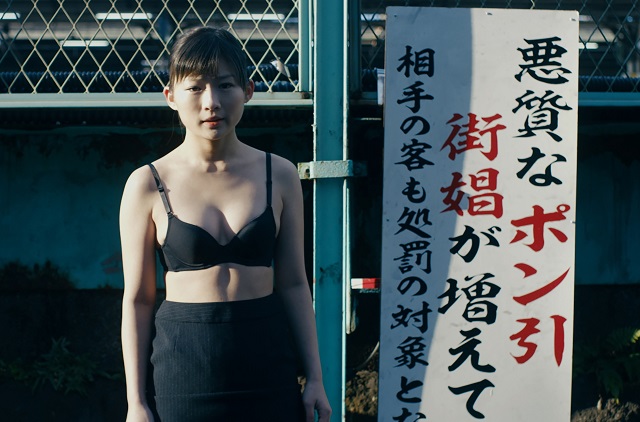
Red Post on Escher Street (2020) by Sion Sono
Red Post on Escher Street is a powerful formal experiment by Sion Sono. While some might argue that Sono’s latest lacks narrative density, those spectators do not realize that Sion Sono explores his theme, the vitality of desire, in a kaleidoscopic manner. With his characteristic visual and vocal poetry, Sion Sono does not only offer an eloquent celebration of the beauty of the crazy little thing called desire, but also delivers a truly powerful encouragement for the contemporary subject to unshackle himself from the societal or psychological imposed restrictions and fight for his/her inherently transgressive desire
Best Japanese Films
10: To The North by Bruce Nachbar .
Bruce Nachbar’s To the North delivers. Using the power of his actors and actresses, Nachbar has not only created a feel-good movie full of genuine emotions and satisfying romantic moments, but also succeeds in delivering an important message to (Japanese) young adults: Do not let your live be lived by others and society but live your own life by chasing your dreams and by finding a subject (of the other sex) supportive of your subjective cause.
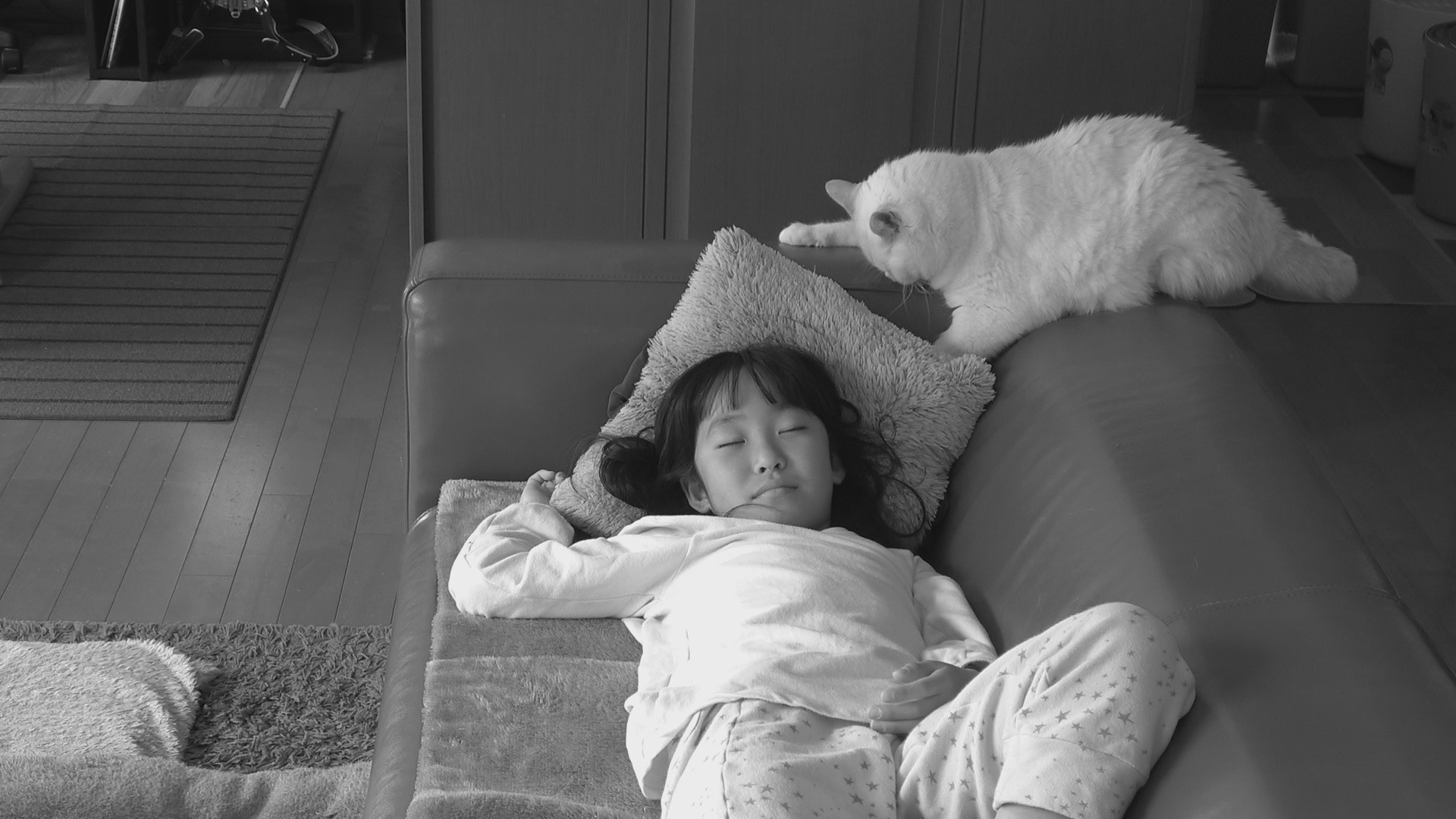
9: I’m Really Good by Hirobumi Watanabe .
I’m really Good is another amazing narrative by Hirobumi Watanabe. While this heartwarming and at times hilarious comical slice-of-life narrative might not test the limits of the cinematographical device like some of his previous films, his latest excels in generating a subtle nostalgic emotionality. By using a simple narrative contrast, Watanabe succeeds in celebrating the innocence of children as well as confronting us with the childish reality we have sadly lost forever.
8: Romance Doll by Yuki Tanada .
Romance Doll is a great romance narrative, but what makes Tanada’s film enjoyable is not its overindulgence in drama, but its refusal to exploit the dramatic turns of the narrative for easy tears. Tanada, by giving her narrative an understated atmosphere, gives the main actors the crucial responsibility in making the evolution of their relationship not only believable but also natural. As expected, Yu Aoi and Issey Takahashi do not evade their responsibility and succeed in delivering one of the most moving relational metamorphoses of recent years.
7: Mother (2020) by Tatsushi Ohmori .
Tatsushi Ohmori‘s Mother is a wonderful exploration of how a subjective drama – i.e. the subjective drama of not-being-good-enough – is able to structure all future relationships or, in other words, is able to dictate the relational dynamics. In a languid but highly transparent way, Ohmori confronts the spectator with the subjective and interpersonal ravage the insatiable desire for love and the need for a proof of the other’s love eventually causes. But what turns into Mother into a harrowing and haunting experience is not the way in which the narrative explores its themes as such, but how Masami Nagasawa, Sadao Abe, Hana Kino, …etc. breath realism into the unfolding of this tragedy of love.
6: Day of Destruction by Toshiaki Toyoda .
While Day of Destruction may seem like a badly developed narrative at first, spectators able to read the subtext – a subtext that becomes that much clearer if one has seen A Wolf’s Calling (2019)Day of Destruction Toyoda does not only offer a truly pleasing audiovisual experience but also a powerful poetic exploration of the ills of Japanese society and the need to change it for the better.
5: Malu by Edmund Yeo .
Edmund Yeo’s Malu is a wonderful narrative, but what makes the narrative so satisfying is not the narrative and its themes as such – i.e. the inability of two subjects to meet each other as the (broken) subjects they are, the impossibility to outrun one’s past and one’s unconscious feelings/desires, as well as the need to work-through one’s past in order to establish any kind of subjective happiness – but the very poetic way Yeo stages his narrative and its themes for the spectator. With Malu , Edmund Yeo proves that he is a master visual poet of the mundane and of the ‘cruel’.
4: It Feels So Good by Haruhiko Arai .
It Feels So Good offers a touching but titillating exploration of an addictive sexual desire that lies beyond any kind of love whatsoever. Arai’s sober cinematographical composition, a composition focused on staging subjectivity as such, does not only enables Kumi Takiuchi to mesmerize the spectator but also allows their chemistry to transform the narrative into more than just a concatenation of sexual acts. What Emoto and Takiuchi’s chemistry accomplishes is making the pulsating fatalism and the acceptance of the impending dissolution of their affair truly palpable. This lingering sense of impossibility and nothing else is what makes It Feels So Good a truly haunting experience.
3: Life: Untitled by Kana Yamada .
Life: Untitled is an amazing narrative that will nevertheless, due to its subtle political nature, divide audiences. Yamada’s narrative, which culminates in a powerful finale, forces the spectator to face the failure of society and its male subjects to value the very subjectivity of women. Life: Untitled shows, in a confronting way, the necessity for male subjects to lay down their eroticizing gaze and meet a woman as a subject, as someone who is driven by unconscious desires and own demands as well as marked by her own failure of understanding herself.
2: On The Edge of Their Seats by Jojo Hideo .
On The edge of their seats is one of the most powerful narratives concerning desire to date. The smartly designed story, which eventually turns the baseball game into a mirror of what happens within our adolescent protagonist, powerfully – and touchingly – communicates that, even when faced with failure and disappointment, one should never just surrender one’s desire and that, irrespective of the obstacles or impossibilities, there is always a way to find a proper place for one’s desire.
1: All The Things We never Said by Yuya Ishii.
All The Things We Never Said is a fabulous film about the destructive impact the inability to assume one’s subjectivity in the field of speech can have on other. That Ishii’s latest is so moving and impactful is, in fact, not due to Ishii’s brilliant composition or the natural and layered performances by Nakano Taiga and Yuko Oshima as such, but because these elements allows Ishii to explore the contemporary problem of subjects who are unable to overcome their anxiety and accede to a position of desire. All The Things We Never Said is not only a highly relevant narrative, especially for Japanese subjects, it might very well be the best Japanese film of this year.
VIDEO



 psychocinema
4 Comments Add yours